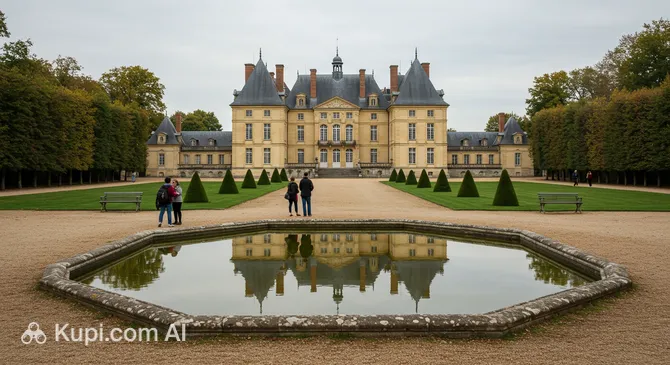
Château de Sceaux is a magnificent historical residence and museum complex located in close proximity to Versailles in France. This architectural ensemble is a jewel of the Hauts-de-Seine department and represents a harmonious blend of an elegant 19th-century castle and a vast park with a formal layout, created in the finest traditions of French garden art.
The modern castle building was erected between 1856 and 1862 for the Duke and Duchess of Treviso. Today, it serves as a home for a rich museum featuring collections that tell the story of the estate and the evolution of French artistic taste. Château de Sceaux attracts travelers not only for its architecture but also for its role as a significant cultural center, regularly hosting exhibitions and musical events.
Château de Sceaux. Illustration.
Source: Kupi.com AI
Traveler photos:
The castle is located in the heart of the vast Domaine départemental de Sceaux. The entire complex is known for its geometrically precise avenues, water cascades, and open panoramic views. It is an ideal spot for those seeking a peaceful getaway surrounded by classic beauty, offering a chance to touch the history of the French aristocracy away from the hustle and bustle of the metropolis.
Contacts
Before heading to the Château de Sceaux, we highly recommend checking the latest information on access and availability on official resources. Exhibition schedules and park access rules may vary depending on the season or special cultural events.
For your convenience, the primary contact details and the exact location of the residence in Versailles are provided below in the information block.
Inside the Château de Sceaux, visitors will find a fascinating journey into the world of French aesthetics. The museum's halls feature permanent exhibitions covering the period from the era of Louis XIV to the reign of Napoleon III. You can see authentic furniture, exquisite paintings, engravings, and decorative arts that offer a first-hand look at the lifestyle and tastes of the estate's owners.
Particular attention should be paid to a stroll through the adjacent park. Here, you can admire symmetrical flower beds, shaded alleys, and majestic fountains. The estate grounds are famous for their well-kept appearance and tranquil atmosphere, making it a popular spot for a leisurely promenade and photographing classic European landscapes. Many guests appreciate the opportunity to combine cultural enrichment within the museum walls with outdoor relaxation in one of the most beautiful gardens in the vicinity of Versailles.
Getting There
Château de Sceaux is located approximately 10 kilometers south of central Paris in the commune of Sceaux. If you are planning a trip from Versailles or the French capital, it is most convenient to use suburban transport or a car. The main landmark for public transport is the Sceaux district, from where the park entrance is just a few minutes' walk away.
For those traveling by private or rented vehicle, the exact address of the site is: All. d'Honneur, 92330 Sceaux, France. Upon arrival in the town, follow the signs to the entrances of the Domaine de Sceaux. GPS coordinates: 48.7743746, 2.3000777. The route passes through pleasant urban areas, making the journey comfortable and straightforward even for those visiting this part of France for the first time.
Nearest city: Versailles
History & Facts
The history of this picturesque location began in 1670, when Jean-Baptiste Colbert, the famous finance minister of Louis XIV, purchased the Sceaux estate. Under his leadership, the domain was transformed into a luxurious aristocratic residence surrounded by gardens designed to emphasize the owner's high status and proximity to the King.
However, the building that visitors see today is not the original 17th-century structure. The current castle was built much later — between 1856 and 1862. It was constructed in the Neo-Louis XIII style for the Duke and Duchess of Treviso on the old foundations, while preserving the atmosphere of French classicism.
Today, the Château de Sceaux holds the status of a state museum of the Hauts-de-Seine department. The museum's collection is dedicated not only to the history of the castle itself but also to the development of French decorative arts. The walls of the residence hold the memory of changing eras — from the grandeur of the "Sun King" to the times of Napoleon III, presenting visitors with a complete chronicle of aristocratic life in France.
Time Needed
To leisurely explore the main halls of the Château de Sceaux and get acquainted with the museum collections, you usually need about 1–1.5 hours. The exhibition is quite rich, so it's worth taking time to look at the interior details and artworks.
However, a visit to the domain is rarely limited to the building alone. To fully enjoy a walk through the magnificent landscaped park and see the fountains and sculptures, it is better to plan a visit with a total duration of 2 to 3 hours. In good weather, it is pleasant to spend even more time here, enjoying the silence and the classical garden layout.
Working Hours
According to the established schedule, the Château de Sceaux welcomes visitors from Tuesday to Sunday. Please note that the museum halls typically open in the afternoon — from 14:00 to 18:30. Monday is the traditional closing day when the castle is closed to the public.
Since the schedule may be adjusted based on the season, temporary exhibitions, or maintenance work, it is recommended to check the opening hours on the museum's official website before your trip. This will help you plan your time correctly and fully enjoy your visit to the estate.
Day
Opening hours
Monday
Closed
Tuesday
2:00 – 18:30
Wednesday
2:00 – 18:30
Thursday
2:00 – 18:30
Friday
2:00 – 18:30
Saturday
2:00 – 18:30
Sunday
2:00 – 18:30
Nearby
A visit to the Château de Sceaux can easily be combined with strolls to other interesting sites nearby. Very close by is the cozy Ménagerie Garden, which is perfect for peaceful nature observation. If you prefer active recreation, check out the Green Corridor of Southern Paris — a wonderful route for long walks connecting urban neighborhoods with green zones.
Exploring the surrounding attractions will allow you to feel the region's atmosphere more deeply and see how historical heritage harmoniously sits alongside the modern urban landscape.