Support

Kath. Kirche St. Martin

About

In the heart of the historic center, on an island between two branches of the Regnitz River, stands the majestic St. Martin's Catholic Church. This outstanding monument of Baroque architecture is one of the architectural landmarks for which Bamberg is famous. Built at the end of the 17th century by the Jesuit Order, it continues to impress residents and visitors alike with its austere yet solemn appearance.
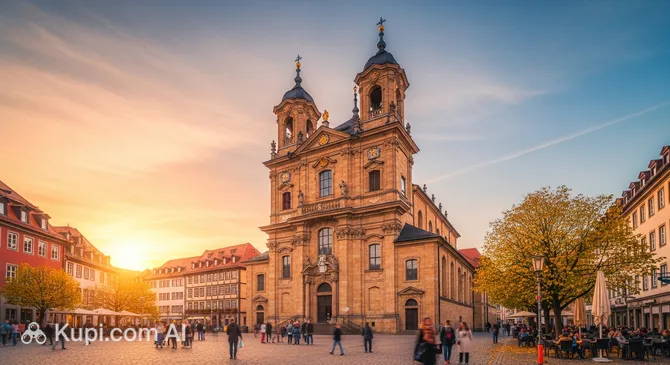
St. Martin
St. Martin's Catholic Church. Иллюстрация. Источник: Kupi.com AI

This church is recognized as the city's largest parish and an important cultural site that carefully preserves the traditions Germany is proud of. Its facade, overlooking the bustling Grüner Markt square, serves as a beautiful backdrop for everyday city life, reminding everyone of the region's rich spiritual heritage. Inside, visitors find an atmosphere of tranquility and exquisite Baroque finishes that create a sense of monumentality.

Today, the temple is not just a historic site or a religious object, but also an important symbol of the city. It attracts the attention of both believers and art lovers from all over the world who wish to touch living history and see the masterpieces of past masters in their original surroundings.

Contacts

For your convenience, we have gathered up-to-date contact information to help you plan your visit and clarify important details. If you would like to find out the schedule of holiday services or check the possibility of a guided tour, we recommend contacting the parish directly or visiting their website.

Below is the essential information for reaching the temple administration:

How to contactContact
AddressGrüner Markt 19, 96047 Bamberg, Германия
Phone+49 951 16093330
Websitewww.sb-bamberger-westen.de

What to Do

When visiting St. Martin's Church, the first thing to notice is its magnificent interior. The internal space of the temple strikes with its harmony of proportions and wealth of artistic elements. Be sure to take the time to examine the cycle of 14 paintings depicting the Stations of the Cross. These works, completed by artist Andreas Theodor Mattenheimer in 1807, are an important part of the parish's artistic heritage.

Music lovers will be interested in seeing the impressive Steinmeyer organ, installed here in 1894. Its powerful sound during services and concerts fills the ancient vaults with a special energy. Architectural details, from the stucco work to the altar designs, deserve detailed study through a self-guided or group tour.

In addition to viewing the artworks, you can simply take a break from the hustle and bustle of the noisy Grüner Markt market, immersing yourself in the contemplative atmosphere. For those interested in living tradition, attending a regular service is a great way to see how the ancient walls continue to serve their original purpose in the modern life of the city.

Getting There

Reaching this architectural treasure is easy, as the temple is located in the very heart of the city's historic district. Located at Grüner Markt 19, the church stands on an island formed by two branches of the Regnitz River, just a couple of minutes' walk from the famous Old Town Hall.

If you arrive at the train station, a pleasant walk to the church will take about 15–20 minutes. The route passes through picturesque streets, allowing you to immediately dive into the atmosphere of the old town. You can also use city buses that run to central stops near the pedestrian zone.

For those who prefer comfort, taxis are always available—the ride from the station or remote areas to the center will be quick; however, it's worth remembering that getting right to the church doors can be difficult due to its status as a pedestrian zone.

Ближайший город: Bamberg

History & Facts

The history of this site dates back to the 13th century, when a Carmelite monastery was located here. However, the modern appearance of St. Martin's Catholic Church is linked to the activities of the Jesuit Order. At the end of the 16th century, the diocese granted them these lands on the condition of building a majestic temple that would become a stronghold of faith in the region.

Construction, which began in 1686, was led by the famous architect Georg Dientzenhofer. After his death, his brother Leonhard continued the work. The masters took the Il Gesù church in Rome as a model, which is clearly visible in the austere yet solemn lines of the facade. By 1696, the finished bell tower already rose above the city, and the main altar was solemnly consecrated.

An interesting turn in the building's fate occurred in 1806 during the secularization process. The temple became the property of the city and changed its "Jesuit" dedication to the name of St. Martin, becoming the main parish church. For a long time, it also served as a university church, remaining a vital spiritual and educational center for the region.

Time Needed

To leisurely enjoy the interior decoration and examine all the details, 30–45 minutes is sufficient for most travelers. This time is enough to appreciate the grandeur of the vaults, study the altar area, and the unique paintings adorning the walls.

If you plan to attend an organ concert or want to stay longer in silence for prayer and reflection, you should budget about an hour for your visit. In any case, a visit to the church easily fits into a walking route through the old town without overloading a tourist's schedule.

Working Hours

The church doors are open to parishioners and tourists daily from 09:00 to 17:00. This allows you to conveniently plan your visit in both the morning and afternoon, combining a tour of the temple with a walk through the market square.

Please note that during church services, access to view the interiors may be restricted to avoid disturbing worshipers. Before your trip, it is recommended to check the parish's official website for the latest schedule and possible changes during holidays.

09:00–17:00

Nearby

The temple's location in the central part of the city allows tourists to easily combine their visit with a tour of other iconic sites. Exploring the surroundings of Grüner Markt will give you plenty of impressions, as the main symbols of Bavarian architecture and history are concentrated literally a few hundred meters away.

A stroll through the nearby streets is a great way to feel the spirit of old Europe and see how majestic residences and cozy old breweries harmoniously coexist. Here are some sites within walking distance:

NameDistance
Neptune Fountain (Gabelmoo)0.1 km
Bamberg Natural History Museum0.1 km
Bamberg Old Town0.2 km
Old Town Hall0.2 km
Zum Sternla Brewery0.3 km
Fässla Stub'n0.3 km
Bamberg Old Town0.3 km

Reached the end of the page?

That means the route is fully explored