Support

Olympic Stadium Berlin

About

The Olympic Stadium (Olympiastadion) is one of the most iconic and massive landmarks in Berlin, located in its western part. This grand sports complex is one of the largest arenas in all of Germany and attracts not only sports fans but also lovers of history and architecture. The stadium serves as a prime example of the monumental style of the 1930s, impressing with its classical forms and sheer scale.

Designed for the 1936 Olympic Games, the stadium’s architectural look is characterized by austerity and symmetry. Despite its historic status, it is a modern, multifunctional venue today. Following a major reconstruction, the arena gained a unique roof and state-of-the-art technical equipment, allowing it to host top-tier events. The stadium's capacity is approximately 74,500 spectators, making it the perfect location for major events.
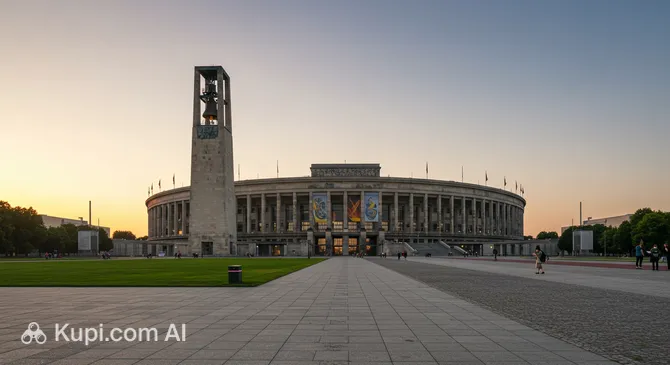
Olympic Stadium Berlin. Illustration.
Source: Kupi.com AI

Traveller photos:

Today, the Olympic Stadium is not just an architectural monument but a living and dynamic venue. It is the home arena for the famous football club Hertha BSC and regularly hosts the German Cup finals. Besides sporting events, it hosts massive concerts by world stars, festivals, and other cultural events that draw tens of thousands of visitors.

A visit to the Olympic Stadium is a compelling addition to any tourist's itinerary. Special tours are available for those wishing to dive deeper into its history. This is a unique opportunity to not only see the legendary arena from the inside but also to feel the atmosphere of great sporting victories and iconic cultural events that have taken place within these walls over the decades.

Contacts

To get the most up-to-date information on events, opening hours, or to book a guided tour, it is recommended to contact the Olympic Stadium administration directly. You can do this by using the contact details provided in the table below.

How to contactContact
AddressOlympischer Platz 3, 14053 Berlin, Germany
Phone+49 30 30688100
Websiteolympiastadion.berlin

What to Do

A visit to the Olympic Stadium in Berlin is an opportunity to immerse yourself in the world of major sports and grand shows. The arena is most famous for its football matches. The stadium is the home ground for Hertha BSC, and attending one of their games means experiencing the incredible energy of a crowd of thousands. Furthermore, the German Cup finals and major international tournaments are regularly held here. Beyond sports, the arena serves as a stage for concerts by world stars and large-scale festivals, attracting tens of thousands of spectators.

For those who want to peek behind the scenes, special stadium tours are organized. As part of the tour, visitors can walk through areas usually off-limits to the public: visit the athletes' locker rooms, the press center, exclusive VIP areas, and even step out to the edge of the pitch. This is a great chance to learn more about the history and architecture of this monumental structure. The observation platforms offer impressive panoramic views of the entire arena and the surrounding scenic Olympic Park.

In addition to organized tours, guests can explore the stadium grounds independently, enjoying its scale and atmosphere. During the summer season, the complex often hosts themed exhibitions, fairs, and various sports workshops, making a visit even more engaging. Whether you come for a specific event or just for a walk, the Olympic Stadium offers a unique experience combining sport, history, and culture.

Getting There

Getting to the Olympic Stadium in Berlin is very convenient, as it is perfectly integrated into the city's public transport system. The easiest and fastest way is by subway (U-Bahn) or suburban train (S-Bahn). You need the Olympiastadion station, which is served directly by the U2 subway line and the S3 and S9 S-Bahn lines. A trip from central hubs like Alexanderplatz or Zoologischer Garten takes an average of 20–30 minutes.

In addition to rail transport, the stadium can be reached by bus. For instance, routes M49 and 218 stop at the Flatowallee station, from which the stadium entrance is just a few minutes' walk. If you plan to arrive by car, ample parking is available around the complex on non-event days. However, during major events such as football matches or concerts, using public transport is recommended to avoid traffic jams and parking difficulties.

Nearest city: Berlin

History & Facts

The Olympic Stadium in Berlin is more than just a sports arena; it is a true witness to history. Its construction was commissioned for the XI Summer Olympics and took place between 1934 and 1936, based on the design of architect Werner March. The Games' opening ceremony on August 1, 1936, was a landmark event—it was broadcast live on television for the first time in history, a major technological breakthrough for that era. The stadium hosted key Olympic competitions, including athletics, football, handball, and equestrian sports.

The stadium's fate became closely intertwined with the dramatic events of the 20th century. During World War II, the arena was damaged by bombings. However, thanks to its sturdy construction, it survived and was restored in the 1960s, continuing to serve as a major sports venue for Germany. This restoration period allowed the historic site to be preserved for future generations and adapted to new realities.

A new chapter for the Olympic Stadium began in the 21st century. For the 2006 FIFA World Cup, a major reconstruction was carried out, finishing in 2004. The main goal was to preserve the monumental building's historic appearance while equipping it with the latest technology. As a result, the stadium received its famous membrane roof, which covers all spectator seats while keeping the field open. It has hosted final matches of the World Cup and the European Championship, as well as concerts by legendary global stars, confirming its status as one of the world's most prestigious venues.

Time Needed

When planning a visit to Berlin's Olympic Stadium, you should expect to spend between 1.5 and 3 hours exploring it. The exact duration depends on the type of visit you choose. For a self-guided walk through the public areas, including the stands and the grounds around the arena, 1.5 to 2 hours is usually enough. This time allows you to take photos, experience the scale of the structure, and visit the visitor center.

If you want to gain deeper insight into the stadium's history and architecture, joining an organized tour is recommended. A standard guided tour lasts about 60-75 minutes and includes access to areas closed to the general public, such as VIP zones, players' changing rooms, and underground warm-up halls. To explore in more detail, including the history of the Olympic Park, set aside up to three hours. You should plan separately if you are attending an event—a football match or a concert—in which case you will spend several hours at the stadium.

Working Hours

The Olympic Stadium in Berlin is generally open to visitors year-round, but its schedule is very flexible. On regular days when no major events are taking place at the arena, guests can visit from 10:00 to 18:00. This is enough time to walk through the stands independently or join one of the regular guided tours. Entry for visitors closes 30 minutes before closing time.

A key point to keep in mind: opening hours depend directly on the arena's event schedule. On days of football matches, concerts, or private events, the stadium may close to tourists early or be completely inaccessible. Therefore, it is strongly recommended to check the attraction's official website before your visit to verify the current schedule and any potential changes. It is best to book tour tickets in advance, especially during the peak tourist season, as group sizes are limited.

9:00 – 19:00

Nearby

Visiting the Olympic Stadium is a highlight in itself, but exploring its surroundings will make your trip to Berlin even more rewarding. The stadium is located in the upscale Charlottenburg district, rich in landmarks, which served as the heart of West Berlin until the fall of the Berlin Wall. This part of the city has retained its elegant and aristocratic character, offering tourists not only sporting spectacles but also immersion into the worlds of art, history, and park culture.

A stroll around the stadium's vicinity will let you discover other iconic sites in Germany. Just a few kilometers away are world-famous palaces, sprawling forest parks, and exhibition centers. Exploring nearby attractions is a great way to complement the impressions left by the grand arena and better understand the multifaceted nature of this part of the German capital.

NameDistance
Charlottenburg Palace3.9 km
Grunewald Forest4.4 km
Maxxim6.3 km
Flughafensee Beach6.7 km
Havellandhalle Resort7.6 km
Bürgerablage Beach8 km
Rüyam Gemüse Kebab8.3 km

Reached the bottom of the page?

Looks like you know this route inside out