Support

Zwinger Palace

About

The Dresden Zwinger is not just a landmark, but the true architectural heart of Dresden and one of the most impressive palace ensembles in Germany. This magnificent complex, built in the exquisite Baroque style, is breathtaking in its scale and beauty. Originally intended as an orangery and a stage for court festivities, today the Zwinger is one of Europe's most important cultural centers.
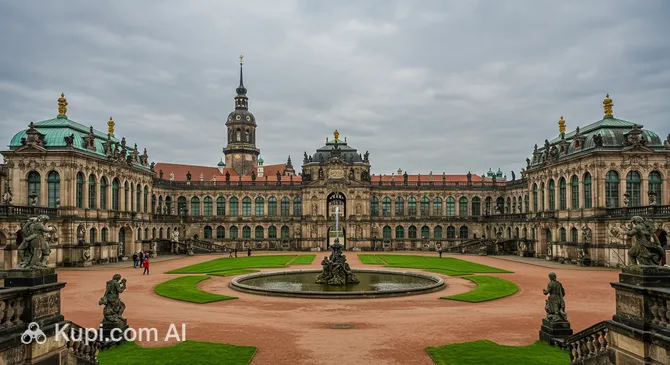
Zwinger Palace. Illustration.
Source: Kupi.com AI

Traveler photos:

Interestingly, the name "Zwinger" itself comes from a medieval fortification term used to describe the space between the outer and inner defensive walls. In such a place, the enemy would find themselves trapped in a crossfire. Fortunately, today this place "captures" visitors only with its splendor, rich history, and unique works of art.

The Zwinger is a true treasure trove for lovers of beauty, as its pavilions house world-famous museums. Here you will find the legendary Dresden Picture Gallery, also known as the Old Masters Picture Gallery, which houses Raphael's "Sistine Madonna." Additionally, visitors can admire the unique Porcelain Collection and discover fascinating scientific instruments in the Royal Cabinet of Mathematical and Physical Instruments.

A walk through the inner courtyard with its symmetrical gardens, fountains, and sculptures is a great pleasure in itself. The Zwinger is a place where history and art merge harmoniously, leaving an unforgettable impression on every guest.

Contacts

To plan your visit, confirm current gallery opening hours, or ask any questions, it is recommended to use the official contact details. All necessary information can be found on the website or by contacting the information center.

How to contactContact
AddressSophienstraße, 01067 Dresden, Germany
Phone number+49 351 49142000
Websitewww.der-dresdner-zwinger.de

What to Do

To make your visit to the Dresden Zwinger as fulfilling and comfortable as possible, it is worth planning a few things in advance. For a full exploration of its main museums and a walk around the grounds, allow at least 3-4 hours. If you want to save money, look for combined tickets that provide access to several museums of the Dresden State Art Collections, including those located in the Zwinger. Such a ticket will help you avoid lines at each individual ticket office.

Don't limit yourself to just the museum halls. Be sure to set aside time to explore the architectural ensemble itself. Find the "Nymphs' Bath" (Nymphenbad)—it is one of the most elegant Baroque fountains and a wonderful spot for photos. Walk along the upper galleries for the best views of the inner courtyard, or simply relax by the fountains. Entry to the courtyard is free, allowing you to enjoy its atmosphere at any time.

The Zwinger is not only a museum space but also a venue for cultural events. During the warmer months, classical music concerts are often held in its pavilions and courtyard, creating a unique atmosphere. Check the schedule before your visit—you might be able to attend one of these performances. After the cultural program, you can browse one of the souvenir shops or relax in a café located right on the complex grounds.

Getting There

Finding the Dresden Zwinger is easy—it is located in the very heart of Dresden, within the historic Old Town (Altstadt). Thanks to this prime location, this architectural masterpiece is easily accessible from any part of the city, making it simple to include in your travel itinerary.

The easiest way to get to the Zwinger is by public transport. Tram and bus stops are just a few minutes' walk from the complex. The largest nearby transport hub is Postplatz, where most routes arrive. If you arrive by train at the main station (Dresden Hauptbahnhof), the walk to the Zwinger will take you 15–20 minutes. Alternatively, you can take a tram for a few stops.

For those traveling by car, there are paid parking lots and underground garages nearby where you can leave your vehicle. To find the complex easily using a navigator, you can use its exact coordinates: 51.0529962° N and 13.7339266° E.

Nearest city: Dresden

History & Facts

The history of the Dresden Zwinger is inextricably linked to the ambitions of the Saxon Elector Augustus the Strong, who in the early 18th century decided to transform Dresden into the cultural capital of Europe. The construction of this Baroque masterpiece began in 1711 under the guidance of court architect Matthäus Daniel Pöppelmann. Initially, the complex was intended as an orangery and a venue for lavish court festivities. The official opening took place in 1719 to coincide with the grand wedding of the Elector's son, Prince Frederick Augustus II, and the Austrian Archduchess Maria Josepha. By this point, the main pavilions had already been built, although the full interior decoration was only completed by 1728.

Few people know that the Zwinger we see today is only part of a much more grand but unfulfilled vision. The original project involved creating a massive palace complex consisting of seven courtyards, where the Zwinger itself would have been just the grand entrance. The northeast side of the ensemble remained unfinished for a long time and was closed off by a temporary wall, as the main facade was planned to overlook the Elbe embankment. The scale of the vision is striking: by 1726, about 900,000 thalers had been spent on construction—a colossal sum for those times.

Unfortunately, these bold plans were not meant to be realized. The start of the Seven Years' War in 1756 and the death of Augustus the Strong's successor, Elector Augustus III, in 1763 brought an end to the ambitious project. These events marked the end of an era when Dresden was proudly called "Florence on the Elbe." Despite the fact that the grand palace complex was never completed, the Zwinger remains one of the most impressive examples of Baroque architecture in Germany and the world.

Time Needed

When planning a visit to the Dresden Zwinger, it's important to budget your time correctly to fully enjoy its beauty and rich collections. For a general overview of this magnificent architectural ensemble, including a walk through its famous courtyard and a brief tour of the key museums, it is recommended to allocate at least 3–4 hours. This time will be enough to get a first impression and see the most famous exhibits.

However, if you are a connoisseur of art and history and want to immerse yourself in the world of masterpieces without rushing, it is better to plan a whole day for your visit to the Zwinger. Detailed exploration of the collections at the world-famous Old Masters Picture Gallery, the unique Porcelain Collection, and the fascinating Royal Cabinet of Mathematical and Physical Instruments requires focus and attention. Such a leisurely approach will allow you to fully appreciate the treasures housed within the walls of this outstanding museum complex.

Working Hours

The museums located within the Dresden Zwinger are generally open to visitors year-round. Standard opening hours for the Old Masters Picture Gallery, the Porcelain Collection, and the Royal Cabinet of Mathematical and Physical Instruments are 10:00 AM to 6:00 PM. It is important to remember that Monday is a closing day for all the museums in the complex. However, the Zwinger courtyard itself, with its gardens and fountains, is usually open for walks daily and free of charge, allowing you to enjoy its architecture even during non-museum hours.

To avoid lines, especially during peak tourist season, it is recommended to purchase tickets online in advance. There are combined tickets available that allow access to several museums, which can be more cost-effective. Since opening hours may change due to events or other reasons, we strongly advise checking the latest information on the official website of the Dresden State Art Collections (SKD) before your visit.

6:00 – 20:00

Nearby

Visiting the Dresden Zwinger is an immersion into the world of art and architecture, but exploring its immediate surroundings can make your trip even more complete and memorable. Thanks to its central location, the Zwinger serves as an ideal starting point for exploring the historical heart of Dresden. Most iconic sites are just a stone's throw away, allowing you to create a rich one-day itinerary.

Walking around the Zwinger is not just moving between sights, but a real journey through time. Stepping outside the palace complex, you will immediately find yourself surrounded by other architectural and cultural masterpieces, each telling its own unique chapter of the city's history. Below is a list of interesting places located in the immediate vicinity.

NameDistance
Old Masters Picture Gallery0.1 km
Sophienkeller at Taschenbergpalais0.1 km
Green Vault0.2 km
Procession of Princes0.3 km
Schlossplatz0.3 km
Stallhof0.4 km
Dresden Transport Museum0.4 km

Have you reached the end of the page?

So the route has been studied inside and out