Support

Brühl's Terrace

About

Brühl's Terrace (German: Brühlsche Terrasse) is a famous architectural ensemble and embankment located in the heart of the historic center of Dresden, one of Germany's most beautiful cities. Stretching for about 500 meters along the high bank of the Elbe River, between the Augustus and Carola bridges, this terrace is rightfully nicknamed the "Balcony of Europe." It earned this name thanks to its magnificent panoramic views of the river and cityscapes, as well as its unique atmosphere of elegance and grandeur.
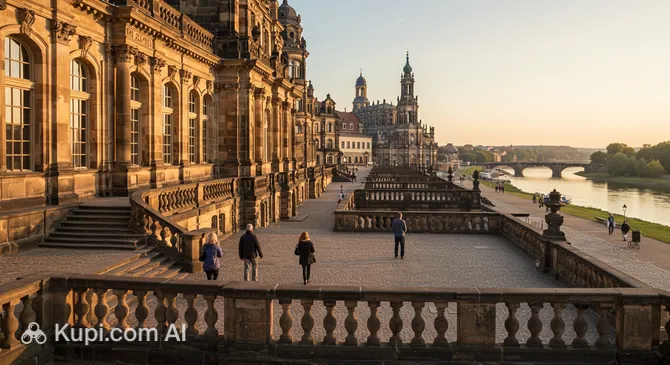
Brühl's Terrace. Illustration.
Source: Kupi.com AI

Traveler photos:

It is not just a walking area, but a true open-air museum. Here you can stroll leisurely, enjoying the fresh river air and admiring architectural masterpieces. Brühl's Terrace is a favorite spot for both tourists and locals, offering a unique opportunity to feel the spirit of old Dresden and take unforgettable photos.

Several prominent buildings, which are important architectural monuments, are located along the terrace. Among them is the majestic Academy of Fine Arts and other historic structures, built primarily in the Baroque and Rococo styles. A visit to Brühl's Terrace is a must for any guest in Dresden, as it not only provides aesthetic pleasure but also symbolizes the city's rich cultural and architectural heritage.

Contacts

Since Brühl's Terrace is a public architectural ensemble and embankment, no special contact information is usually required for a visit. It is located in the very heart of Dresden and can be reached on foot from many key points in the Old Town. Look for the Elbe River embankment between the Augustus and Carola bridges – you will easily find this famous "Balcony of Europe."

How to contactContact
AddressGeorg-Treu-Platz 1, 01067 Dresden, Germany
Phone number+49 351 501501
Websitewww.der-dresdner-zwinger.de

What to Do

At Brühl's Terrace, an unforgettable walk along the picturesque Elbe embankment awaits you. Breathtaking panoramic views of the river, the historic center of Dresden, and the city's famous bridges open up from here – an ideal place for impressive photos. The unique architectural details and unfolding vistas make every photo session special. During your walk, you might also encounter street musicians and artists whose creativity adds even more charm to this place.

Besides the magnificent views, Brühl's Terrace is rich in interesting details. Look out for the numerous sculptures decorating the embankment and the wide, artistically designed staircase leading up to the terrace. The famous Academy of Fine Arts is located directly on the terrace, and other museums are nearby, which you can visit to dive deeper into Dresden's cultural life.

Brühl's Terrace is not just a viewpoint but a vibrant public space. Various cultural events and open-air exhibitions are often held here, making it attractive for visitors of all ages. It is a great place to feel the city's atmosphere, relax, and enjoy art surrounded by magnificent architecture.

Getting There

Brühl's Terrace is conveniently located in the heart of Dresden, making it easily accessible for all visitors. If you are staying in or strolling through the historic center, reaching the "Balcony of Europe" on foot is a true pleasure. From iconic landmarks like the Zwinger or Frauenkirche, it is just a few minutes' walk through picturesque streets.

For those preferring public transport, Dresden offers convenient routes. Brühl's Terrace can be easily reached by tram or bus. Numerous public transport stops are located in the immediate vicinity of the embankment, so you won't have to walk far. This is an excellent way to arrive quickly and comfortably, especially if you are not staying in the city center.

If traveling by car, it is worth noting that traffic and parking in the historic part of Dresden can be limited. Therefore, the best solution is to use one of the city's central parking lots and then walk to Brühl's Terrace, enjoying the atmosphere of the old city. Check the parking locations in advance to ensure your trip is as comfortable as possible.

Nearest city: Dresden

History & Facts

The history of Brühl's Terrace dates back to the 16th century, when it was an integral part of Dresden's powerful fortifications designed to protect the city. However, its appearance changed dramatically in the mid-18th century. It was then that the influential Saxon Prime Minister, Count Heinrich von Brühl, acquired this plot. His ambitious vision was to create a luxurious palace and park ensemble for his personal use, commissioning the architect Johann Christoph Knöffel for the task.

Thus, in place of the austere bastions, the so-called "Brühl's Delights" emerged – an exquisite complex that included a gallery, a library, the famous Belvedere, a palace, and a magnificent park. All these structures were built in the opulent styles of Late Baroque and Rococo, reflecting the tastes and grandeur of the era. Initially, it was a private space intended for the pleasure of the Count and his invited guests, a true oasis of luxury and art.

By the beginning of the 19th century, Brühl's Terrace underwent another transformation, becoming open to the general public. It quickly turned into a favorite spot for strolls and social gatherings for the Saxon elite, earning fame as one of Europe's most beautiful promenades. At the turn of the 20th century, the ensemble was reconstructed: some older buildings gave way to newer, more modern structures, such as the majestic Academy of Fine Arts. It is these buildings that largely define the terrace's recognizable appearance today, especially its panorama from the Elbe River side.

Time Needed

To fully enjoy Brühl's Terrace, a typical visitor is recommended to set aside approximately 1-2 hours. This time is usually enough to leisurely walk the entire length of the "Balcony of Europe," admire the magnificent views of the Elbe and the historic center of Dresden, and take memorable photos.

During these couple of hours, you will have time to examine the architectural details of the buildings along the terrace, appreciate the sculptural compositions, and simply soak up the atmosphere of this iconic spot. This window allows you to walk from one end of the terrace to the other without rushing, perhaps sitting on a bench to watch the river flow or the lively life around you.

If your plans include a more detailed study of the adjacent attractions, such as visiting the Academy of Fine Arts or other nearby museums, then significantly more time will be required. However, for the walk along Brühl's Terrace itself and to get a general impression, 1-2 hours will be quite sufficient.

Working Hours

Brühl's Terrace in Dresden is a public promenade that is open to visitors 24 hours a day, year-round. Admission to the terrace is free for everyone.

Since it is an open embankment, no advance ticket booking or registration is required. You can come here at any time convenient for you to enjoy a walk and the views of the Elbe and the city. Information regarding the opening hours of any individual establishments or exhibitions located on or near the terrace should be checked separately on their official websites or through local information sources.

Open 24 hours

Nearby

A visit to Brühl's Terrace will undoubtedly be a highlight of your trip to Dresden. However, to make your journey even more rewarding and complete, it is worth paying attention to the attractions located in the immediate vicinity. Exploring the surrounding area will allow you to dive deeper into the city's atmosphere, discover new interesting places, and gain a more comprehensive understanding of its rich history and culture.

Many of Dresden's iconic landmarks are just a few steps away from the "Balcony of Europe," making them easily accessible on foot. This is a wonderful opportunity to expand your route and see even more treasures of this amazing Saxon city. Below is a list of some interesting places nearby.

NameDistance
Las Tapas0.1 km
Church of Our Lady Dresden0.2 km
Procession of Princes0.3 km
Stallhof0.3 km
Schlossplatz0.3 km
Dresden Transport Museum0.3 km
Green Vault0.4 km

Have you reached the end of the page?

So the route has been studied inside and out