Support

House of Bavarian History

About

Have you ever wondered how life in the heart of Europe has changed over the last two centuries? The House of Bavarian History — an ultra-modern museum complex located in the picturesque city of Regensburg — provides the answer. It is not just a storehouse for antiquities, but a dynamic space dedicated to the 200-year journey of the Free State of Bavaria, starting from the fateful year of 1806.
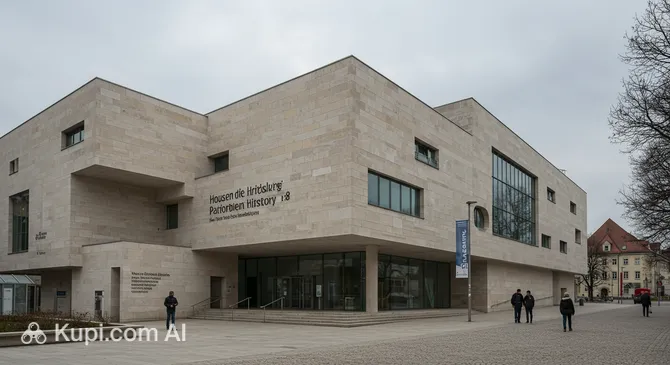
House of Bavarian History
House of Bavarian History. Иллюстрация. Источник: Kupi.com AI

The museum building, erected on the banks of the Danube, is an architectural masterpiece where high-tech materials meet the historical spirit of the region. The 2,500-square-meter exhibition is impressive in scale: it features about a thousand unique items, many of which were donated to the museum by the residents themselves, making the collection truly "of the people."

A visit to this site in Germany will be a discovery for both history buffs and casual travelers. Interactive elements, captivating installations, and the majestic Bavarian lion in the 17-meter foyer create an atmosphere of complete immersion into the cultural code of one of the world's most famous regions.

Contacts

To plan your visit and clarify details, you can use the museum's official contact information:

How to contactContact
AddressDonaumarkt 1, 93047 Regensburg, Germany
Phone+49 941 598510
Websitewww.museum.bayern

What to Do

Inside the museum, an exciting journey through time awaits you, divided into nine thematic sections called "generations." It's best to start your introduction with a 20-minute film in the panoramic cinema, which sets the right context for the rest of your walk. The exhibition masterfully balances classic displays and modern technology: here you can not only look but also interact with many objects.

Pay special attention to the central foyer, where visitors are greeted by the region's symbol — an impressive Bavarian lion. Walking through the halls, you will see both global historical artifacts and touching everyday objects that tell the story of "Bavarian success." For the convenience of international guests, all key materials are supplemented with English translations.

After immersing yourself in history, stop by the souvenir shop to pick up some memorable gifts, or relax in the cozy museum cafe. A visit to the House of Bavarian History can easily be combined with a stroll along the Danube embankment or a visit to the nearby Shipping Museum, creating a rich cultural itinerary for the whole day.

Getting There

The attraction is located in the heart of the city at Donaumarkt 1. Thanks to its location on the banks of the Danube, the museum is easy to find by following the river embankment in the historic center.

If you are arriving in the city by train, the walk from the central station (Regensburg Hauptbahnhof) will take about 15–20 minutes at a leisurely pace through picturesque streets. You can also use city buses that run regularly to stops in the Donaumarkt square area.

For those who prefer a taxi or a personal car, it is worth considering that traffic may be restricted in the historical zone. Paid parking is available in the vicinity, but public transport remains the most convenient way to reach the site. A walk from the museum along the embankment is a great way to continue exploring the city after visiting the exhibition.

Ближайший город: Regensburg

History & Facts

The history of this ambitious project is inextricably linked to 1806 — the moment the Kingdom of Bavaria was proclaimed. This milestone was chosen as the starting point for a narrative that reveals the region's path from an agrarian state to one of Europe's most high-tech centers. The museum in the city of Regensburg became the first permanent exhibition venue for the organization, whose headquarters is traditionally located in Augsburg.

The museum building itself is a monument to modern thought. Its architecture was designed to blend harmoniously with the unique landscape of the ancient city, which is a UNESCO World Heritage site. Approximately 80 million euros were spent on the construction of the complex, highlighting the site's significance for the region's cultural policy.

The fact that a significant portion of the exhibits consists of personal belongings and documents donated by ordinary residents of Germany adds special value to the collection. This makes the exhibition feel alive and human, turning dry historical facts into personal stories of the generations that built modern Bavaria.

Time Needed

To thoughtfully explore all nine sections of the exhibition and not miss important details, visitors are recommended to set aside 2 to 3 hours. This is enough time to watch the introductory film in the panoramic cinema, get acquainted with the main interactive installations, and relax in the museum cafe.

If you are deeply interested in history or plan to study each exhibit in detail, the visit can last for half a day. Given the abundance of multimedia content, the museum visit is dynamic and doesn't feel tiring, even for those who are usually far from academic history.

Working Hours

The museum is open to visitors from Tuesday to Sunday. Please note the operating hours to ensure your visit is as comfortable as possible:

  • Monday: Closed
  • Tuesday – Sunday: 09:00 – 18:00
DayWorking hours
ПонедельникЗакрыто
Вторник9:00 – 18:00
Среда9:00 – 18:00
Четверг9:00 – 18:00
Пятница9:00 – 18:00
Суббота9:00 – 18:00
Воскресенье9:00 – 18:00

Nearby

The museum's location on the banks of the Danube makes it an ideal starting point for further exploration of the old town. Just a few steps away, you will find evidence of the Roman past and majestic medieval monuments.

A stroll around the area will allow you to see famous bridges, ancient towers, and the ceremonial halls of the town hall, creating a complete picture of the region's rich heritage.

NameDistance
Porta Praetoria0.3 km
Dachshund Museum0.3 km
Regensburg Museum of History0.3 km
Regensburg Cathedral0.3 km
Stone Bridge0.4 km
Old Town Hall Regensburg0.5 km
Neupfarrplatz0.5 km

Reached the end of the page?

That means the route is fully explored