Support

Wiblingen Abbey

About

Imagine a place where the strictness of monastic rule meets the incredible luxury of European art. Wiblingen Abbey is a stunning architectural complex located in the southern part of Ulm. Founded by Benedictines in the late 11th century, it is today considered one of the primary treasures of the Baden-Württemberg region in Germany.
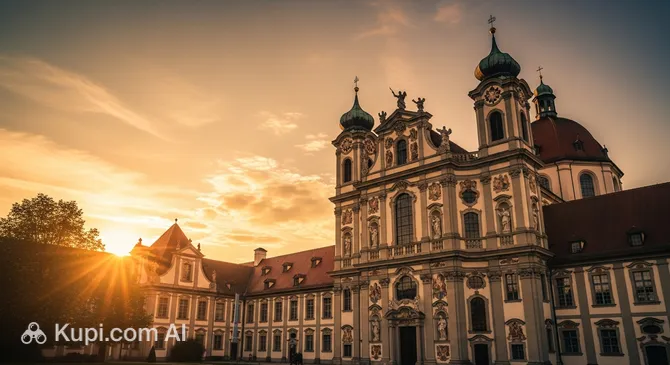
Wiblingen Abbey
Wiblingen Abbey. Иллюстрация. Источник: Kupi.com AI

The monastery's centerpiece is its legendary Library Hall. Built in the mid-18th century, it is recognized as one of the most beautiful Rococo interiors in the world. The hall is decorated with elegant gilded columns, allegorical sculptures, and grand frescoes that create the unique atmosphere of the Age of Enlightenment.

In addition to the library, the ensemble includes a majestic monastery church with a neoclassical facade and rich interior decoration. Today, Wiblingen Abbey is a multifunctional space where a museum of monastic culture, a branch of the university hospital, and residential buildings harmoniously coexist, carefully preserving the region's centuries-old history.

Contacts

For more details or to book a guided tour of Wiblingen Abbey, you can use the contact information provided below:

How to contactContact
AddressSchloßstraße 38, 89079 Ulm, Германия
Phone+49 731 27013500
Websitewww.kloster-wiblingen.de

What to Do

The highlight of any visit to Wiblingen Abbey is the Library Hall. Here, you can spend hours admiring Martin Kuhn's ceiling frescoes, which seem to come alive in the light streaming through the tall windows. Don't forget to look closely at the details of the wooden sculptures—each carries a deep symbolic meaning, representing science or Christian virtue.

The monastery church is also a must-see for the masterpieces of Januarius Zick. Its monumental interior and circular facade create a sense of solemnity and peace. For those who want to dive deeper into history, a museum is open in the former guest cells, displaying ancient manuscripts, religious artifacts, and detailed models showing the abbey's development over the centuries.

A walk through the monastery grounds will allow you to appreciate the skill of Baroque architects and enjoy the quiet away from the city bustle. Wiblingen Abbey is the perfect destination for those seeking aesthetic pleasure, interested in the spiritual heritage of the Benedictines, and wishing to see one of the most beautiful "treasure houses of books" in Europe.

Getting There

Wiblingen Abbey is located about 8 kilometers from the city center in a picturesque suburb. The most popular way to get here by public transport is to take bus lines 41 or 43, which depart from the main station (Hauptbahnhof Ulm). The journey to the "Kloster Wiblingen" stop takes approximately 20–30 minutes.

If you are traveling by car, follow the B10 or B28 highways toward the Wiblingen district. Parking is available on-site for visitors. For a more comfortable journey, you can take a taxi directly from the station or the historic city center.

For outdoor enthusiasts, there is a beautiful cycling route along the banks of the Danube. The one-way trip takes about half an hour and allows you to enjoy the natural beauty of Baden-Württemberg before immersing yourself in the atmosphere of Baroque architecture.

Ближайший город: Ulm

History & Facts

The foundation of the monastery dates back to 1093, when brothers Hartmann and Otto von Kirchberg donated land for a Benedictine abbey. One of the main treasures brought by the founders from the First Crusade was a fragment of the Holy Cross, gifted to them by Pope Urban II. For centuries, this relic defined the abbey's status as an important spiritual center.

The monastery complex underwent significant changes over the centuries, meaning few original medieval structures remain today. The magnificent Baroque ensemble seen today began to take shape in 1714. Master architects of the era, including Christian Wiedemann and Michael Fischer, worked on the project, creating one of the region's most impressive architectural landmarks.

In 1806, during the period of secularization, the monastery was dissolved. Its premises were used as a royal residence and later served various administrative purposes in the mid-19th century. Systematic restoration began in the mid-20th century, allowing Wiblingen Abbey to once again become a site of cultural pilgrimage and a home for valuable historical collections.

Time Needed

Tourists typically need about 2–3 hours to thoroughly explore the abbey grounds, including its famous library hall and church. This is enough time to view the museum exhibits and take beautiful photos of the Rococo interiors.

If you plan on a leisurely stroll through the surrounding area or attending a service, it is worth setting aside half a day for your visit. Also, consider the travel time from the city center, as the site is located some distance from the main tourist districts.

Working Hours

When planning your trip, please note that access to the interior of Wiblingen Abbey may be limited. Traditionally, the main tourist sites, such as the museum and library, are open to visitors on Saturdays and Sundays from 12:00 to 16:00.

On weekdays, the monastery complex may follow a different schedule or be closed for interior tours. To ensure your visit goes smoothly, we highly recommend checking the current schedule on the official website before you go, especially if you are planning a trip during the holidays.

DayWorking hours
понедельникЗакрыто
вторникЗакрыто
средаЗакрыто
четвергЗакрыто
пятницаЗакрыто
суббота12:00–16:00
воскресенье12:00–16:00

Nearby

Exploring the area around Wiblingen Abbey will help you delve deeper into the culture and history of the region. The city is rich not only in Baroque monuments but also in historic fortifications and charming old quarters that perfectly complement your journey.

Below are interesting sites located within a few kilometers of the abbey:

NameDistance
Hotel & Gasthof Löwen0.4 km
Ulm Arena2.4 km
Wiley Sports and Leisure Park2.6 km
Glacis Park2.9 km
Deins und Meins Café3.7 km
Glacis Gallery3.7 km
Ulm City Wall3.8 km

Reached the end of the page?

That means the route is fully explored