Support

Wilhelmsburg

About

Majestically perched on a hilltop overlooking the city of Ulm, Wilhelmsburg Fortress is one of the most imposing 19th-century defensive structures in the entire country. It was built in the 1830s as the central part of the Federal Fortress, designed to protect the interests of the German Confederation. This massive stone giant still captures the imagination with its austere aesthetics and the scale of its engineering.
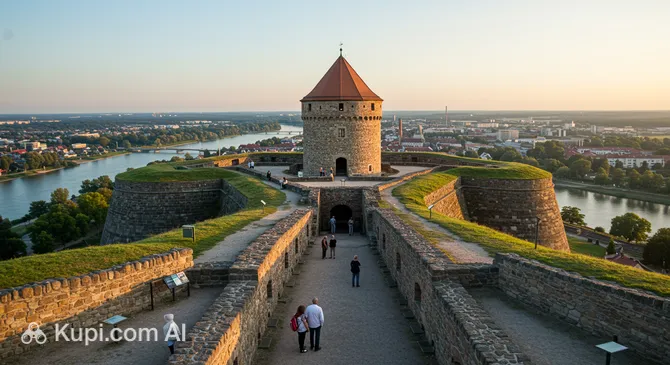
Wilhelmsburg Fortress
Wilhelmsburg Fortress. Иллюстрация. Источник: Kupi.com AI

Today, this landmark, of which Germany is justly proud, is a unique historical monument. The mighty walls, bastions, and towers of the fortress are perfectly preserved, creating an immersive atmosphere of the Napoleonic war era and the decades that followed. This place attracts not only military history buffs but also those seeking tranquility away from the city bustle, as it offers breathtaking panoramic views of the Danube Valley.

Wilhelmsburg is considered a "hidden gem" of the region: with a high rating among travelers, it maintains its authenticity and offers guests the chance to explore casemates and open platforms that once served to house artillery. It is a perfect blend of architectural grandeur and natural beauty, surrounding the city with a stone ring of former glory.

Contacts

For further information about events or special tours at this historic location, you can use the official communication channels. The fortress keeps its details up to date via its website and contact phone number.

How to contactContact
AddressPrittwitzstraße 100, 89075 Ulm, Germany
Phone+49 731 1598779
Websitewww.die-wilhelmsburg.de

What to Do

A visit to this site is, first and foremost, an opportunity for walking tours through grounds where every stone breathes history. You can study the fort architecture in detail, walk along the high curtain-like walls, and peek into the surviving casemates. One of the main rewards for those who climb to the upper tiers is the panoramic views of Ulm and the winding ribbon of the Danube—an excellent spot for landscape photography.

For a deeper dive into the subject, it is worth booking a themed tour, during which guides share secrets of fortification and the daily life of 19th-century soldiers. Exploring the artillery platforms and inner courtyards allows you to see the power of past engineering firsthand. Thanks to the abundance of open space and green areas, you can often find families relaxing in the fresh air or having small picnics in the shade of the ancient walls.

Many tourists combine a visit to the fortress with active recreation, using the marked trails for light hiking or cycling. The atmosphere here contrasts with the busy city center, offering peace and seclusion. The site is also popular among photographers due to the play of light and shadow on the massive stone surfaces, creating ideal conditions for atmospheric photoshoots.

Getting There

The site is located at Prittwitzstraße 100, on an elevation that offers an excellent view of the historical center. You can reach it from the heart of the city even on foot: a walk from the famous Ulm Minster takes about 20–30 minutes, though you should keep the uphill climb in mind.

If you prefer public transport, use tram or bus lines 1, 2, or 3. They stop at the foot of the hill, from where it is only a short walk to the citadel entrance. The journey from the main railway station (Hauptbahnhof) by transport, including the short walk, takes no more than 15–20 minutes. For those arriving from other cities, such as Stuttgart or Munich, the train ride to Ulm takes between 1 and 1.5 hours.

Travelers by car can take advantage of free parking spaces directly by the fortress walls or along Prittwitzstraße. Additionally, taxis are always available from any point in the city, which is particularly convenient if you prefer not to exert yourself on the walk uphill.

Ближайший город: Ulm

History & Facts

The history of this massive structure began in the 1830s, when it became a key link in the Federal Fortress of Ulm. During that period, the German Confederation sought to secure its western borders against potential incursions from France, creating one of the most powerful defensive systems in Europe at the time.

The design and construction utilized the most advanced achievements of 19th-century fortification science. Massive stone walls and deep moats were intended to withstand long sieges and artillery fire. Interestingly, despite its formidable power and readiness for battle, the fortress never became a scene of large-scale military action—the major conflicts of that century passed it by.

In the 20th century, Wilhelmsburg gradually lost its military relevance, but thanks to its structural durability and architectural value, it was preserved as a historical monument. Today, these walls serve as a living reminder of the era when a unified Germany was taking shape and stand as an important cultural heritage site, open to anyone interested in the military engineering of the past.

Time Needed

To leisurely explore the main forts, walk along the massive walls, and take high-quality photographs, an average visitor will need between 1.5 and 3 hours. This time is quite sufficient for getting to know the external architecture and visiting the accessible internal areas.

If you plan to join an organized tour or wish to linger at the observation decks to wait for the sunset over the Danube, it is worth setting aside about 4 hours for your visit. Given the scale of the structure and the pleasant green zones surrounding it, time here passes unnoticed.

Working Hours

When planning your visit, you don't need to worry about strict time limits: the site's territory is open to visitors daily and around the clock. This makes the fortress an ideal place for both morning walks in the rays of the rising sun and evening views of the city illuminated by lights.

According to official data, Monday, Tuesday, Wednesday, Thursday, Friday, Saturday, and Sunday are working days in 24-hour mode. However, please note that access to some internal rooms or museum exhibits may be limited by the timing of special events or guided tours.

Круглосуточно

Nearby

The location of the fortification complex allows tourists to explore more than just one site. The surroundings of the hill and the adjacent areas of the old town offer many interesting sights that help visitors better understand the region's history and enjoy its unique architecture.

A walk down from the fortress walls toward the Danube will lead you to ancient gates and fragments of the city fortifications that once formed a single defensive line. Below is a table of the nearest points of interest:

NameDistance
Mauritius Ulm0.9 km
Museum of Bread and Art – Forum World Food1.3 km
Del Tufo – Authentic Neapolitan Pizza1.4 km
Elinaki Mezedopolion1.5 km
Botanical Garden of the University of Ulm1.5 km
X-Lounge1.6 km
Ulm Minster1.6 km

Reached the end of the page?

That means the route is fully explored