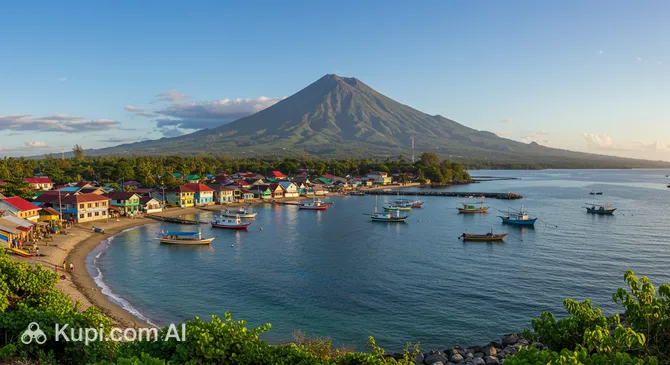
The public transport system in Larantuka is simple, informal, and reflective of the town's modest size. Visitors will not find complex networks of subways, trams, or large city buses here. Instead, the local transportation relies heavily on road-based micro-mobility and traditional services that are easy to navigate once you understand the local customs.
The most common form of public transit is the bemo (public minibus). These converted vans serve as the backbone of shared transport, running on fixed routes that typically connect the harbor, the market, and outlying residential areas. Bemos are easily recognizable, often decorated with colorful stickers and playing loud music. There are no designated bus stops; you simply wave a hand to flag one down from the side of the road and tell the driver to stop when you are close to your destination.
For more direct and flexible travel, ojeks (motorcycle taxis) are the primary solution. You will find ojek drivers waiting at street corners, near the port, and outside the main market. Since the streets in Larantuka can be narrow and the terrain towards the mountain slopes is steep, motorcycles are often the most efficient way to navigate. Unlike in major metropolitan areas where ride-hailing apps are dominant, the system here is traditional; you approach a driver and negotiate the destination and price before the ride begins.
Given Larantuka's status as a port city, sea transport is an integral part of the public network. Small wooden boats and ferries constantly shuttle passengers across the narrow strait to the neighboring islands of Adonara and Solor. These boats function much like a bus service on water, departing when full or according to a loose schedule throughout the day. They are essential for locals commuting for work or trade and offer tourists a scenic and inexpensive way to island-hop.
Payment for all forms of local transport is exclusively in cash. There are no travel cards, electronic passes, or validation machines. When taking a bemo, you pay the driver or the conductor when you exit. For ojeks and boats, payment is made directly to the operator. Fares are generally very low, but it is crucial to carry small denominations of the local currency, as drivers often struggle to provide change for large bills.
Operating hours are somewhat limited compared to big cities. Bemos and boats are most active from early morning until late afternoon. By sunset, the frequency of public transport drops significantly, and by early evening, finding a bemo can be difficult. Ojeks are usually available into the evening, but it is wise to arrange a return trip in advance if you plan to be out late.
For those who prefer self-reliance, renting a scooter is a popular alternative. Rental shops are not formalized chains but are often small local businesses or guesthouses offering bikes for a daily rate. This option gives you the freedom to explore the coastal roads and the foothills of Mount Ile Mandiri at your own pace. Car rentals are also available but typically come with a driver, which is a recommended option for comfort and safety on the winding regional roads.