Support

Ruteng

About

Nestled in the lush highlands of western Flores, Ruteng offers a refreshing escape from the tropical heat often associated with the region. As the capital of the Manggarai Regency, this bustling market town serves as a crucial hub for travelers exploring the diverse landscapes of Indonesia. With a population of approximately 54,000 people, it balances the vibrancy of a regional center with the laid-back atmosphere of a mountain retreat.

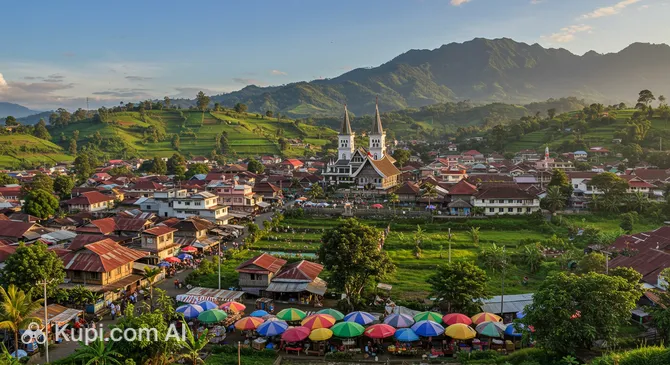
The town is geographically defined by its elevation, sitting about 1,200 meters above sea level at the foot of the Mandosawu mountain range. This location blesses Ruteng with a cool, crisp climate that is distinct from the coastal areas, often requiring a light jacket in the evenings. The surrounding scenery is dominated by rolling green hills, coffee plantations, and misty peaks, creating a picturesque backdrop for visitors.

Ruteng. Source: Kupi.Binoculars

Culturally, the region is rich and deeply rooted in tradition. Visitors interested in the history of Ruteng and the Manggarai people can explore nearby traditional villages like Ruteng Pu'u to see the iconic circular ceremonial houses. One of the most famous sights just outside the town is the Spider Web Rice Fields (lingko) in Cancar, a unique agricultural marvel designed to distribute land fairly among families. Another significant site is Liang Bua, the limestone cave where remains of the "Hobbit" (Homo floresiensis) were discovered, adding a layer of prehistoric intrigue to the area.

Whether you are passing through on the Trans-Flores Highway or planning a dedicated stop, Ruteng provides a unique cultural and natural experience. Its cooler weather, fascinating heritage, and proximity to unique geological formations make it a worthwhile destination for any adventurer seeking to understand the heart of Flores.

Weather Overview

Due to its high elevation, the town enjoys a refreshing highland climate that feels noticeably cooler than Indonesia's coastal regions. Temperatures remain remarkably consistent throughout the year, typically ranging from nighttime lows of around 19°C to daytime highs reaching nearly 29°C in October. This moderate heat makes exploring the area comfortable, though visitors should be prepared for crisp evenings.

The local climate is defined by distinct wet and dry periods. The detailed weather in Ruteng shows a significant wet season from November through March, where precipitation is frequent and rain can occur on up to 31 days in a month. Conversely, the dry season, spanning from June to September, brings much clearer skies; August is particularly pleasant with only about 5 wet days, making it an ideal time for trekking and sightseeing.

Interesting Facts

Beyond the misty hills and sprawling coffee plantations, Ruteng hides stories of ancient human history and unique agrarian traditions found nowhere else on Earth. This highland town is not just a scenic stopover; it is a repository of cultural secrets that define the heart of Flores.

  • Home of the Real-Life "Hobbit": Just a short drive from the city center lies the limestone cave of Liang Bua, the site of one of the most significant archaeological discoveries of the 21st century. In 2003, scientists unearthed the remains of Homo floresiensis, a previously unknown ancient human species that stood only about 1 meter (3.5 feet) tall. These "Hobbits" lived in the region until approximately 50,000 years ago, hunting pygmy elephants and giant storks.

  • The "Spider Web" Land System: The iconic rice fields in nearby Cancar are not designed this way for aesthetics but are the result of a complex customary law called Lingko. The land is divided from a central pole known as the lodok, with slices radiating outward like a pie or spider web. Traditionally, the size of each slice was determined by the number of fingers the head of the family held up against the central pole, ensuring a fair distribution based on family size and status.

  • The "Rome of Flores": Ruteng is often nicknamed the "City of a Thousand Churches" due to its exceptionally high density of religious buildings and monasteries. As the center of Catholicism on the island, the town is dominated by the imposing St. Joseph's Cathedral and serves as a major education hub for seminarians, creating a unique atmosphere where morning church bells chime amidst the tropical mountain air.

  • The Sacred Stone Altars: In traditional Manggarai villages like Ruteng Pu'u, the layout is strictly circular and centered around a stone altar called a compang. This sacred structure is believed to be the dwelling place of ancestors and serves as the focal point for ritual sacrifices, including the offering of buffaloes during important ceremonies to ensure the village's prosperity.

How to Get There

Reaching the highland town of Ruteng is an adventure defined by the winding curves of the Trans-Flores Highway. Although the town is served by the local Frans Sales Lega Airport (RTG), flight schedules can be irregular and capacity is limited. Consequently, most visitors opt to fly into one of the larger neighboring regional hubs and continue their journey overland. This road trip is an experience in itself, showcasing the island's dramatic topography. For detailed information on routes and transportation methods, you can read more about how to get to Ruteng.

The most popular gateway is Komodo Airport (LBJ) in Labuan Bajo, situated to the west. While the straight-line distance is short, the mountainous terrain means the drive takes approximately 4 hours. The route climbs from the coast into the clouds, offering spectacular views of rice terraces and lush forests. Travelers should be prepared for a serpentine road with countless turns, which significantly extends travel time compared to flat landscapes.

For those approaching from the east, Bajawa Soa Airport (BJW) in Bajawa is a convenient option. The drive from Bajawa to Ruteng also takes around 4 hours through similarly scenic and winding highlands. Further east lies H. Hasan Aroeboesman Airport (ENE) in Ende. While it serves as a major entry point for Flores, the journey to Ruteng is a long haul, typically taking 8 to 9 hours by car or bus. This route traverses a significant portion of the island's spine, requiring patience but rewarding travelers with incredible vistas.

Below is a summary of the nearest airports based on direct distance. Please note that while the airports in Labuan Bajo, Bajawa, and Ende are on Flores and connect via the winding mountain roads described above, Tambolaka and Waingapu are located on the neighboring island of Sumba and would require an additional flight or sea crossing to reach Ruteng:

Airport Name City Passenger Traffic Distance (km)
Komodo Airport Labuan Bajo High 65.1
Bajawa Soa Airport Bajawa Small 62.6
H. Hasan Aroeboesman Airport Ende Medium 134.2
Tambolaka Airport Tambolaka Medium 160.4
Waingapu Airport Waingapu Medium 117.3

Main Attractions

While often treated as a stopover, Ruteng serves as the perfect base for exploring some of Flores' most intriguing cultural and historical sites. The cool highland air makes touring the area pleasant, and the surrounding region is dotted with unique landmarks that range from prehistoric caves to marvels of traditional agriculture.

One of the most significant sites is Liang Bua, a large limestone cave located roughly 14 kilometers from the town center. This archaeological gem gained global fame as the discovery site of Homo floresiensis, the ancient "Hobbit" species. Visitors can explore the cavernous interior where these small hominids once lived and view a small museum near the entrance that displays replicas of the fossils and explains the excavation history. It is a fascinating destination for anyone interested in human evolution and prehistory.

Just a short drive west of the city in the Cancar district lies the spectacular Spider Web Rice Fields (Lingko Cancar). Unlike typical terraced paddies, these fields are laid out in a web-like pattern, a visual representation of the traditional Manggarai land division system known as lodok. Tourists can hike up a small hill to a viewing platform that offers a panoramic perspective of the lush green "webs" spreading across the valley, providing one of the most iconic photo opportunities on the island.

For a deep dive into local culture without traveling far, Ruteng Pu'u is an accessible traditional village located just a few kilometers from the market area. This site features well-preserved mbaru niang (circular ceremonial houses) with conical thatched roofs and a central stone altar used for rituals. It offers a quiet and authentic glimpse into the daily life and architectural heritage of the Manggarai people, making it an essential stop for cultural enthusiasts.

Nature lovers should not miss Ranamese Lake, a serene crater lake nestled in a dense protected forest about 21 kilometers east of Ruteng. The lake's calm waters reflect the surrounding greenery, often shrouded in a mystical mist. It is an excellent spot for birdwatching, gentle trekking, or simply enjoying a peaceful picnic away from the bustle of the Trans-Flores Highway. The area also features a waterfall nearby, adding to its natural charm.

For the best views of the town itself, a morning hike to Golo Curu is highly recommended. This hill, located just north of the city center, offers a sweeping vantage point over Ruteng’s red-roofed houses, the cathedral, and the sprawling rice terraces that frame the valley. It is particularly beautiful at sunrise, where the interplay of light and mist over the Mandosawu mountains creates a magical atmosphere.

Local Cuisine

The culinary scene in Ruteng is heavily influenced by its cool highland climate, distinguishing it from the coastal areas of Flores. The refreshing mountain air creates the perfect appetite for warm, hearty meals and, most notably, the region's world-renowned coffee. A gastronomic tour here is not just about eating; it is about experiencing the warmth of Manggarai hospitality through simple yet flavorful ingredients sourced from the fertile volcanic soil.

No visit to Ruteng is complete without tasting the legendary Manggarai Coffee. Known for its distinctively rich and non-acidic flavor, this coffee is grown in the plantations surrounding the town. Whether you prefer Arabica or Robusta, you will find it served everywhere, from humble roadside stalls to modern cafes. It is traditionally brewed strong and black, often accompanied by a local snack, making it an essential part of the daily rhythm in the highlands.

The perfect companion to a cup of hot coffee is Kompiang, often referred to as the "Ruteng bagel." This oval-shaped bread is dense, chewy, and generously crusted with sesame seeds. It was introduced by Chinese traders long ago and has since become the signature snack of the city. Locals typically eat it for breakfast or as an afternoon treat, dipping the hard crust into their coffee to soften it.

For a substantial meal, look for dishes featuring Se'i, the famous smoked meat of Nusa Tenggara. While it originated in Timor, it is widely enjoyed in Ruteng, typically made from pork or beef. The meat is slow-smoked using firewood, giving it a distinct aroma, and is thinly sliced. It is almost always served with a side of Rumpu Rampe, a savory stir-fry made from papaya flowers and cassava leaves. The bitterness of the flowers is expertly balanced with spices, creating a unique flavor profile that pairs perfectly with rice and spicy sambal.

Adventurous travelers might want to try the local traditional liquor known as Sopi or Moke. Distilled from the tapping of sugar palm trees, this strong spirit plays a vital role in traditional ceremonies and social gatherings. While it can be potent, tasting a small amount offers a glimpse into the communal culture of the island. For a more sober exploration of local ingredients, a visit to the bustling Pasar Inpres Ruteng (Ruteng Market) is highly recommended, where you can see the vibrant array of organic vegetables, spices, and fresh fruits that fuel the city's kitchen.

Travel Tips

Visiting Ruteng requires a bit more preparation than the typical coastal destinations in Indonesia due to its unique highland environment and strong cultural traditions. These practical tips will help you navigate the "Rome of Flores" with ease, ensuring a comfortable and respectful journey through this misty mountain town.

  1. Dress for the Altitude: Unlike the sweltering heat of the coast, Ruteng sits at 1,200 meters and can get surprisingly chilly, especially in the evenings and early mornings. Bring a warm sweater, a light jacket, and long trousers. Since rain can be unpredictable, especially between November and March, a waterproof raincoat or poncho is essential gear.

  2. Transportation Options: For getting around the town center, local minivans known as bemos are the most common and affordable public transport; they follow specific color-coded routes. For more flexibility, you can hire an ojek (motorcycle taxi), but always agree on the price beforehand. If you plan to visit surrounding sites like the Spider Web Rice Fields, renting a car with a local driver is highly recommended due to the steep and winding roads.

  3. Cash is King: While some hotels and larger restaurants may accept credit cards, cash is absolutely necessary for daily transactions, local markets, and entrance fees to attractions. There are several ATMs in the town center (Bank BNI, BRI, and Mandiri), but they can occasionally be offline, so it is wise to withdraw sufficient Indonesian Rupiah (IDR) before heading into more remote villages.

  4. Health and Road Safety: The Trans-Flores Highway leading to and from Ruteng is famous for its endless sharp turns. If you are prone to motion sickness, stock up on anti-nausea medication (Antimo is a popular local brand) before your trip. Pharmacies (Apotek) are available in town, but specific prescription medicines should be brought from home.

  5. Stay Connected: Wi-Fi is available in most guesthouses and cafes, but speeds can vary. For mobile data, Telkomsel is the most reliable provider in Flores, offering the best coverage in the highlands and rural areas. It is advisable to buy a SIM card in a larger city like Labuan Bajo or upon arrival in Ruteng to ensure you have navigation and translation tools handy.

  6. Respect Local Etiquette: Ruteng is the heart of Catholicism in Flores and is generally more conservative than Bali. Dress modestly when walking around town and especially when visiting churches or traditional villages. Always use your right hand for eating, giving, or receiving items, as the left hand is considered impolite.

  7. What to Avoid: Avoid public displays of affection, which are frowned upon in this conservative society. Additionally, when visiting the lingko (spider web rice fields), do not walk on the rice bunds (walls) without a guide or permission, as these are active agricultural lands and damaging them is disrespectful to the farmers.

  8. Morning Market Hack: To experience the true pulse of the city, visit the Pasar Inpres (central market) between 5:00 AM and 7:00 AM. This is when the market is most vibrant, with fresh produce arriving from the mountains, and you can grab a fresh, hot kompiang bread right out of the oven for breakfast.

By keeping these practicalities in mind, you will be well-equipped to enjoy the cool air, warm hospitality, and stunning vistas of Ruteng. A little preparation goes a long way in this mountainous region, allowing you to focus on the incredible cultural and natural experiences that await.

Entertainment & Nightlife

Entertainment in Ruteng is a reflection of its cool highland climate and conservative culture. You will not find pulsing nightclubs, neon-lit party districts, or 24-hour bars here. Instead, the town offers a cozy, laid-back atmosphere where the "nightlife" revolves around warming up with a hot drink, enjoying live acoustic music, or singing your heart out at a family karaoke venue. The streets tend to quiet down early, making it a place to unwind and recharge rather than party until dawn.

The social heart of the evening is undoubtedly the local coffee shop or warung kopi. Given the region's reputation for producing world-class beans, locals and tourists alike gather in cafes to socialize over strong cups of Manggarai coffee. Kopi Mane is one of the most popular spots to experience this culture, offering a comfortable setting to sip local brews and chat with travelers. For a meal with a view, Spring Hill provides a pleasant evening ambiance, often serving as a gathering point for visitors looking for good food and a relaxed vibe after a day of exploring.

For those seeking a bit more energy, karaoke is the primary form of late-night entertainment. Several venues around town offer private rooms where groups can sing everything from Indonesian pop hits to Western classics. If you prefer an outdoor atmosphere, head to the area around the town square, Lapangan Motang Rua. In the evenings, this area transforms into a modest culinary night market. It is the best place to mingle with locals, try roasted corn, or sample hot bowls of bakso (meatball soup) to ward off the mountain chill.

Daytime entertainment in Ruteng is distinct from the typical city experience of malls and cinemas. The town lacks large amusement parks or theaters. Instead, leisure time is best spent immersing yourself in the local culture at the bustling Pasar Inpres market or visiting nearby traditional villages like Ruteng Pu'u to see the ceremonial houses. The entertainment here is organic, driven by nature and heritage rather than commercial attractions.

Practical advice for a night out in Ruteng centers on the climate and timing. Most venues close relatively early, often by 9:00 PM or 10:00 PM, so plan to eat and socialize earlier in the evening. The temperature drops significantly at night, so a warm jacket or sweater is essential—do not underestimate the highland cold. The town center is generally safe for walking, but street lighting can be dim in areas away from the main road. Taxis are not common; instead, ojeks (motorcycle taxis) are the main mode of transport, though they become harder to find late at night.

Parks & Museums

While Ruteng is primarily known as a transit hub, it serves as a gateway to some of Flores' most significant protected forests and cultural heritage sites. The town does not boast vast urban parks or large national museums in the traditional sense; instead, its "green spaces" are the misty, jungle-clad mountains that surround it, and its "museums" are often the living villages and historical sites that preserve the Manggarai way of life.

Ruteng Nature Recreation Park (Taman Wisata Alam Ruteng) is the premier natural attraction in the region, encompassing a vast area of protected rainforest around the Mandosawu mountain range. This park is a biodiversity hotspot and a paradise for birdwatchers, home to endemic species such as the Flores Hanging Parrot and the Flores Crow. The dense canopy offers a cooling retreat and numerous trekking paths where visitors can immerse themselves in the sounds of the jungle, surrounded by ancient ferns and moss-covered trees.

For a more accessible green escape, Golo Curu serves as a hilltop park located just north of the town center. It acts as a spiritual and recreational viewpoint, featuring a shrine to the Virgin Mary and offering panoramic views of Ruteng’s red rooftops against the backdrop of rice terraces. It is a favorite spot for locals to jog or take a morning walk, providing a peaceful atmosphere to enjoy the fresh mountain air and watch the sunrise break over the valley.

In terms of cultural education, the Liang Bua Information Center stands out as a small but crucial museum facility located at the famous "Hobbit Cave" site. While the cave itself is a geological wonder, the adjacent building houses displays and replicas of the Homo floresiensis skeletons and stone tools found during excavations. It provides essential context for tourists, explaining the timeline of the discovery and the prehistoric environment of Flores, effectively turning the archaeological site into an educational experience.

Although not a museum in a building, the traditional village of Ruteng Pu'u functions as a living gallery of Manggarai architecture and custom. Visitors can observe the mbaru niang (drum houses) and the sacred stone altar (compang) in the center of the village courtyard. Unlike a static exhibit, this site offers a dynamic look at how ancestral traditions are maintained in modern times, with local guides often available to explain the complex social structures and rituals of the community.

Architecturally, the St. Joseph's Cathedral is a landmark that dominates the town's skyline and reflects the deep-seated Catholic history of the region. Built with a mix of European and local influences, the church is not only a place of worship but also a monument to the missionary history of Flores. Its high ceilings and imposing facade make it a focal point for those interested in the religious heritage and colonial-era architecture of the island.

For a truly authentic experience, wander through the smaller paths behind the Ruteng Nature Recreation Park office. Here, you might stumble upon small, hidden waterfalls or patches of wild orchids that are not marked on standard tourist maps. Engaging with local rangers can often lead to guided walks into the deeper parts of the forest, where the chance of spotting rare wildlife increases significantly.

Getting Around

The public transport system in Ruteng is simple, informal, and perfectly scaled to the size of this highland town. Unlike major metropolitan areas, there are no metros, trams, trains, or large city buses here. Instead, the local transportation network relies almost exclusively on small minibuses and motorcycles, which navigate the narrow and winding streets with ease. For tourists, getting around is an authentic experience that offers a glimpse into the daily rhythm of local life, though it requires a bit of patience and a willingness to communicate with drivers.

The backbone of the city's transport is the bemo (public minibus), often referred to locally as angkot or mikrolet. These modified passenger vans follow loose fixed routes connecting the town center with residential neighborhoods and the outskirts. They are easily recognizable by their bright colors and often loud music. Bemos do not have designated stops in the traditional sense; you simply stand on the side of the road and wave your hand to flag one down. When you want to get off, just say "Kiri" (Left) or tap on the window to signal the driver to stop.

For a faster and more direct way to reach a specific destination, ojeks (motorcycle taxis) are the most popular alternative. You will find ojek drivers waiting at street corners, markets, and near hotels. They are ideal for short trips or for navigating steep hills where bemos might not venture. Since there are no meters, you must negotiate the fare before hopping on. It is helpful to ask your hotel reception for the standard rate to your destination so you have a baseline for bargaining.

The payment system in Ruteng is entirely cash-based. There are no travel cards, electronic passes, or mobile payment apps for public transport. Passengers pay the driver directly upon exiting the vehicle. Fares for bemos are very affordable and generally fixed for trips within the town limits. It is essential to carry small denominations of the local currency, as drivers may not always have change for large bills. For ojeks, payment is also in cash immediately after the ride.

Operating hours for public transport are somewhat limited compared to big cities. Bemos typically start running around 6:00 AM to accommodate students and market-goers, but their frequency drops significantly after 5:00 PM. By sunset, finding a bemo can be difficult, and you may need to rely on ojeks or arrange private transport. If you plan to be out late for dinner, it is wise to arrange a return ride in advance or ask the restaurant staff to help call a driver for you.

Regarding alternatives, ride-hailing apps widely used elsewhere are generally not active or reliable in Ruteng. Car rentals are available but almost always come with a driver; self-drive rentals are rare due to the challenging nature of the winding mountain roads. For those comfortable on two wheels, renting a scooter is a possible option to explore at your own pace, though you should be an experienced rider to handle the terrain. However, given the town's cool climate and relatively compact center, walking is often the most pleasant way to explore the main market areas and nearby churches.

Finally, travelers should be aware of the two main transit terminals if they plan to leave the city. Mena Terminal to the north serves routes heading towards Labuan Bajo, while Karot Terminal to the east handles transport going towards Bajawa and Ende. Local bemos connect the town center to these terminals, acting as a bridge between intra-city transport and the long-distance buses that traverse the island.

Accommodation

Accommodation in Ruteng is characterized by its humble charm and practicality, reflecting the town's role as a transit hub and a base for highland exploration. Unlike the luxury resorts found in Labuan Bajo, the options here are predominantly small, family-run guesthouses, comfortable mid-range hotels, and religious lodgings. The focus is on cleanliness and warmth rather than opulence, with many establishments offering a cozy atmosphere that complements the cool mountain climate.

For most travelers, the choice of location falls into two main categories: the town center and the outskirts. Staying in the center, near the cathedral and the market, offers the convenience of being within walking distance of local warungs (eateries) and transport terminals. Alternatively, choosing a place slightly outside the main grid often rewards you with quieter surroundings and sweeping views of the rice terraces and the Mandosawu mountains directly from your window.

While large international chains are absent, there are several well-regarded local establishments. Spring Hill Hotel is a favorite among travelers seeking comfort, known for its wooden architecture and terraces that offer beautiful views of the surrounding hills. For a truly unique experience specific to Ruteng, many visitors recommend staying at Susteran MBC (Wisma Bunda Maria), a guesthouse run by Catholic nuns. It is famous for being exceptionally clean, peaceful, and affordable, offering a rare glimpse into the town's religious culture. Another reliable option for a standard hotel experience is Hotel Sindha, which is centrally located and provides modern amenities.

Booking Tip: Since Ruteng is a high-altitude town, nights can be surprisingly cold. When booking, prioritize accommodation that explicitly offers hot water showers, as this is not a guarantee in budget homestays but is essential for comfort here. Additionally, while walk-ins are often possible, it is highly advisable to book in advance if you are visiting during the peak dry season (July and August), as the best rooms fill up quickly with overland tour groups.

Prices in Ruteng are generally very affordable compared to other tourist hotspots in Indonesia. Budget travelers can find homestays and basic rooms for as little as $10 to $20 USD per night, while more comfortable mid-range hotels typically range from $30 to $50 USD. While major hotels may accept credit cards, many smaller guesthouses only accept cash, so ensure you have enough Indonesian Rupiah on hand before checking in.

Nearby Cities

For those looking to explore the surroundings, Ruteng serves as an excellent base for day trips to several interesting nearby locations. While the major regional hubs listed in the table below are separated by sea and require significant travel time, there are smaller towns within driving distance on Flores Island that offer a delightful change of pace and scenery. **Borong** Located approximately 50 kilometers south of Ruteng, Borong is the capital of the East Manggarai Regency. The drive itself is a highlight, taking you through winding roads flanked by dense rainforests and misty valleys before descending to the warmer coastal plains. Borong offers a distinct contrast to the cool highlands, featuring black sand beaches like Cepi Watu, where visitors can relax by the sea and enjoy fresh seafood. **Reo** To the north lies the town of Reo, a historical port settlement situated about 60 kilometers from Ruteng. The journey descends from the mountains to the northern coast, passing through scenic rice paddies and river valleys. Reo has a quieter, old-world charm with remnants of colonial architecture and acts as a gateway to the calm waters of the Flores Sea. It is an ideal spot for those wishing to see the quieter side of the island's coastal life.
City Population Distance (km)
Makassar 1,338,663 398
Kupang 433,970 386
Baubau 152,143 416
Bima 136,492 190
Raba 106,101 190
These nearby destinations offer a glimpse into the diverse culture and landscapes of the region, ranging from the misty highlands to the tropical coasts. Visitors should note that the distances listed in the table represent direct paths, and travel within the archipelago often involves ferries or flights.

Shopping & Souvenirs

Shopping in Ruteng is an authentic cultural experience rather than a hunt for luxury brands or high-street fashion. The town does not have the gleaming retail complexes found in Indonesia's metropolitan centers; instead, commerce here is driven by bustling traditional markets, small family-owned shops, and roadside stalls. For tourists, this offers a unique opportunity to engage directly with local traders and discover goods that are deeply rooted in the agricultural and artistic traditions of the Manggarai people.

The main hub of commercial activity is concentrated in the town center, particularly along the streets surrounding the central market. Jalan Motang Rua and the adjacent roads are lined with a variety of small stores selling everything from electronics and clothing to daily necessities. Walking through this district allows you to soak in the local atmosphere, where the sidewalks are often busy with pedestrians and the air is filled with the aroma of street food and fresh produce.

Travelers should be aware that there are no large modern shopping malls in Ruteng. You will not find international department stores, cinema complexes, or global fast-fashion chains. Instead, the retail landscape features local "toserba" (convenience stores) and mini-markets that stock essential travel supplies, snacks, and toiletries. If you need specific trekking gear or specialized electronics, it is advisable to purchase them in larger cities before arriving.

The undisputed highlight of the local shopping scene is the Pasar Inpres Ruteng (Ruteng Central Market). This sprawling market is the lifeblood of the city and a feast for the senses. It is best visited in the early morning when stalls are piled high with fresh vegetables, exotic fruits, and aromatic spices grown in the fertile volcanic soil of the highlands. Beyond food, the market is also a good place to find simple clothing and household items, offering a genuine glimpse into the daily lives of the local community.

When it comes to souvenirs, Manggarai Coffee is the most popular item to take home. Known for its rich, robust flavor and lack of acidity, this high-altitude coffee is available in the market as whole beans or freshly ground powder. Another prized local product is Songke Manggarai, the traditional hand-woven ikat fabric of the region. Distinctive for its black base with brightly colored geometric patterns, these textiles are crafted by local women and can be bought as sarongs, scarves, or raw cloth directly from weavers or specialty shops in town.

For a smaller, edible memento, pick up a bag of Kompiang. These oval-shaped, sesame-crusted breads are a signature snack of Ruteng. While they are best eaten fresh, they are durable enough to survive a journey and make for a tasty gift. You can find them at the market or at dedicated bakeries scattered around the town center, usually sold fresh from the oven in the mornings.

Regarding practicalities, most shops in Ruteng open around 8:00 AM and close by 8:00 PM or 9:00 PM. The traditional market starts much earlier, often before dawn, and winds down by late afternoon. Payment is almost exclusively in cash (Indonesian Rupiah). While a few larger hotels might accept credit cards, market vendors and small shopkeepers do not. Ensure you have sufficient small notes for bargaining and small purchases.

Tax-free shopping and VAT refunds are not available in Ruteng. The tax refund scheme in Indonesia is generally limited to specific registered retailers in major international gateways like Jakarta and Bali. In this highland town, the price you see (or the price you negotiate) is the final price you pay.

Reached the end of the page?

That means the route is fully explored