Support

Mukomuko

About

Mukomuko is a picturesque town and the administrative center of the eponymous regency in Bengkulu Province. Located on the west coast of Sumatra, this corner of the world offers travelers a peaceful atmosphere and a chance to experience the authentic life that Indonesia is famous for. Thanks to its location by the Indian Ocean, the town enjoys a pleasant tropical climate, and its population of about 35,000 creates a cozy and welcoming feel, far from the hustle and bustle of major metropolises.
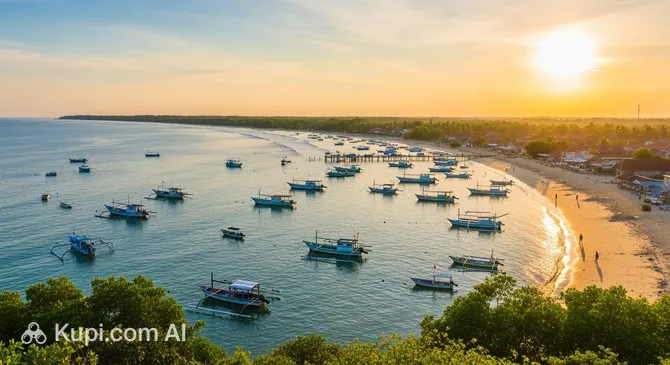
Mukomuko. Illustration.
Source: Kupi.com AI

For curious travelers, Mukomuko's history is particularly interesting. In the past, this region played a significant role in trade routes, and echoes of the colonial era can still be found here. One of the main historical attractions is the ruins of Fort Anna (Benteng Anna), founded by the British, which serves as a reminder of the city's long history and strategic importance.

The region's natural beauty will not leave ecotourism enthusiasts indifferent. One of the city's hallmarks is Lake Nibung (Danau Nibung), surrounded by green hills and jungle — an ideal spot for birdwatching and relaxing in nature. Also popular is Pandan Wangi Beach with its characteristic views, where you can enjoy the sea breeze and beautiful sunsets.

Mukomuko is an excellent choice for those exploring Sumatra and seeking a combination of cultural heritage and untouched natural landscapes. Be sure to include this town in your itinerary to see a different, quieter, and more measured side of the country.

Weather Overview

Mukomuko is characterized by a stable tropical climate, featuring a warm and humid atmosphere throughout the year. The average air temperature fluctuates within a narrow and comfortable range of 26–27°C. During the day, the thermometer often rises to 29–30°C, especially in April and May, while nights bring only slight coolness with figures around 23–24°C.

A characteristic feature of the local climate is the large number of rainy days: precipitation occurs regularly here, from 22 to 27 days per month, regardless of the season. To correctly plan your excursions and beach vacations, we recommend finding out in advance what weather in Mukomuko is expected on the dates of your trip.

Expect consistently warm days with a high probability of precipitation throughout the year. Even in relatively "dry" months like July, rain remains a frequent companion for travelers, so a light raincoat will be an indispensable item in your luggage.

Average monthly temperature

Average monthly precipitation

Interesting Facts

Although Mukomuko may seem like a quiet provincial corner, it possesses several unique features that make it stand out on the map of Indonesia. Here are some interesting details to help you better understand the character of this place:

  • The Legend of the Underground Passage. An intriguing story is associated with the ruins of the British Fort Anna. Local old-timers speak of a secret tunnel that allegedly connected the fortress to the ocean coast for emergency evacuation or clandestine delivery of supplies. Although no archaeological evidence has been found yet, the legend adds a special touch of mystery to walks through the historical part of town.

  • Gastronomic Pride. The main culinary symbol of the region is Sambal Lokan. This dish is made from river mollusks caught in the waters of the Mukomuko River. The mollusks are slow-cooked in coconut milk with a rich array of spices until the sauce thickens, resembling the famous rendang in texture but with a unique seafood flavor.

  • The Gandai Dance. The cultural life of the regency is unimaginable without the traditional Gandai dance (Tari Gandai). It is rooted in an ancient legend about Prince Malin Deman and a celestial maiden. Originally performed at the courts of local nobility, today this dance has become an important element of folk festivals and a symbol of the local population's identity.

  • Land of Rafflesia. Mukomuko is located in Bengkulu Province, which is often called the "Land of Rafflesia." In the forests surrounding the town, you can encounter this giant flower — the Rafflesia Arnoldii. Seeing the world's largest flower bloom in its natural habitat is a stroke of great luck for any naturalist.

How to Get There

When planning a trip to this picturesque corner of Sumatra, keep in mind that logistics will take some time, as there are no direct international flights to the town itself. The journey usually involves flying to one of the larger nearby cities followed by an overland trip. You can find out more about how to get to Mukomuko by exploring all available route options.

Mukomuko itself does not have a large airport that accepts long-haul flights, but you can fly to Fatmawati Soekarno Airport (BKS) in Bengkulu, which is about 197 km from Mukomuko. This is the provincial capital, and transfers are often organized from here. The travel time by taxi or car is approximately 5 hours and 15 minutes.

Another convenient option is Minangkabau International Airport (PDG), located in Padang. The distance to Mukomuko is about 219 km. This is a major transport hub with many flights. The drive along the scenic coastal road or through the hills takes about 5 hours and 50 minutes.

Travelers might also consider Silampari Airport Lubuklinggau (LLJ) in Lubuklinggau, which is about 215 km away. The journey from there takes around 5 hours and 40 minutes.

For convenience, here is a summary of the main airports:

AirportPassenger trafficDistance
Muara Bungo26 366165 km
Fatmawati Soekarno Airport607 361197 km
Lubuk Linggau Silampari Airport84 067215 km
Minangkabau International Airport2.5 mln219 km
Sultan Thaha Airport1.0 mln300 km

As for trains, there is no railway station in Mukomuko itself, and rail service in this part of the island is underdeveloped. Tourists are advised to rely on road transport: rental cars, taxis, or intercity buses running from the airports of neighboring large cities.

Main Attractions

Mukomuko is a place where history intertwines with the beauty of tropical nature. Although the town is not overcrowded with tourists, there are several iconic locations that allow you to feel the spirit of the region and enjoy its landscapes.

Fort Anna (Benteng Anna)
These historical ruins are not just remnants of walls, but witnesses to Indonesia's colonial past. The fortress was built by the British at the end of the 18th century on the banks of the Selagan River. Today, it is an atmospheric place where you can walk among old cannons and brickwork, imagining what garrison life was like centuries ago. The fort offers a peaceful view of the river and the ocean, making it an excellent spot for memorable photos, especially at sunset.

Lake Nibung (Danau Nibung)
Located in the Bandar Ratu district, this lake is considered one of the main natural gems of the regency. The body of water is surrounded by dense forests and hills, creating a sense of complete isolation from the outside world. People come here for the silence, birdwatching, and outdoor picnics. The infrastructure around the lake is gradually developing, with gazebos and observation decks appearing, perfect for admiring the panorama of the calm water.

Air Manjuto Dam (Bendungan Air Manjuto)
This grand hydraulic structure has become a popular vacation spot for both locals and visitors to the region. The dam, built to irrigate rice fields, is impressive in its scale and the power of its water flows. Tourists often stop here to enjoy the coolness and take striking photos against the backdrop of the engineering structure and green surroundings. It is a great example of how a vital infrastructure object can become a point of attraction.

Pandan Wangi Beach (Pantai Pandan Wangi)
The Mukomuko coastline is famous for its beaches, and Pandan Wangi is one of the coziest. Its distinguishing feature is the presence of shady trees and large stones scattered across the sand, giving the landscape a unique character. It is a pleasant place to walk barefoot, listen to the sound of the Indian Ocean surf, and find beautiful shells. The beach is ideal for a relaxed break after a busy day.

Local Cuisine

Mukomuko's cuisine is a vivid reflection of Sumatra's gastronomic traditions, dominated by rich flavors, an abundance of spices, and the extensive use of coconut milk. Local dishes are often spicy, which is characteristic of a region at the junction of Bengkulu and neighboring West Sumatra cultures. Food here is not just about sating hunger, but is an important part of the cultural code, uniting gifts from the ocean, rivers, and fertile land.

The undisputed king of the local table is Sambal Lokan. This dish, which has become the city's culinary hallmark, is made from river mollusks harvested from the Mukomuko River. The cooking process resembles making the famous rendang: the mollusks are slow-cooked in a thick sauce of coconut milk with the addition of chili, lemongrass, galangal, and other spices. The result is an incredibly aromatic and filling dish with a deep flavor that pairs perfectly with hot white rice.

Another dish worth trying in this region is Pendap. This traditional delicacy of Bengkulu province is fish seasoned generously with a mixture of grated coconut, garlic, onion, and chili, wrapped in taro (keladi) leaves. The bundles are boiled for several hours, allowing the fish to be infused with the aromas and making the leaves soft and edible. Pendap has a unique texture and a piquant taste.

Exotic food lovers should pay attention to Tempoyak — a fermented durian paste. In Mukomuko, it is often used as a base for sauces or added to fish soups (Gulai Ikan). The specific sweet-and-sour taste and sharp aroma of durian combined with hot peppers create a gastronomic composition that is hard to find outside Indonesia.

Among drinks, Kalamansi Syrup (Sirup Kalamansi) is particularly popular. This citrus, widely grown in Bengkulu province, yields a refreshing juice with a characteristic tartness and rich aroma. It is served both cold with ice (Es Jeruk Kalamansi) and hot. It is the perfect way to cool down on a hot tropical day. Locals also love coffee, especially the Robusta grown in the surrounding highlands.

The dining culture in Mukomuko is democratic and relaxed. You won't find pretentious fine-dining restaurants here; instead, life thrives in small family cafes called warungs (warung) or Rumah Makan. Tourists and locals eat side by side, often using their right hand instead of cutlery, which is considered traditional and makes the food taste better. In the evenings, street food stalls (kaki lima) come to life, where you can buy fried rice (Nasi Goreng), satay, or sweet martabak pancakes.

Travel Tips

A trip to Mukomuko is an immersion into the calm and authentic atmosphere of Sumatra, far from mass tourism. To make your trip to this cozy town as comfortable as possible and without organizational difficulties, we have prepared a list of practical recommendations to help you feel confident.

  1. Clothing and Equipment. The climate here is hot and humid year-round, so choose loose clothing made of natural fabrics such as cotton or linen. Since Indonesia is a country with strong traditions, modesty is recommended outside of beach areas: cover your shoulders and knees (especially for women). Be sure to bring a light raincoat and a waterproof phone case — tropical downpours here are frequent and sudden.
  2. Transport Specifics. In Mukomuko, there is no conventional public transport or developed taxi services like Grab/Gojek found in large metropolises. The most reliable way to get around is by renting a scooter (motorcycle) or arranging a ride with local motorcycle taxi drivers (ojek). If you do not ride a bike, consider renting a car with a driver for trips to remote attractions.
  3. Money and Payment. The town has a "cash culture." Credit cards are accepted only in rare hotels or chain mini-markets. Be sure to stock up on a sufficient amount of cash Rupiah. ATMs of BRI, BNI, or Mandiri banks are available in the center, but they may not service some types of foreign cards or may be empty on weekends.
  4. Health and Hygiene. Protection against insects is always relevant in the tropics: have repellents with you, especially if you plan evening walks by the lake or river. Drink only bottled water, and it's also better to use it for brushing your teeth. There are pharmacies in town, but the selection of specific medications is limited, so pack a basic first-aid kit at home.
  5. Communication and Language. Few people in Mukomuko know English, mostly young people or administration staff. Download an offline translator and learn a few basic phrases in Indonesian ("Terima kasih" — thank you, "Berapa?" — how much?). For stable internet, it is better to buy a SIM card from the operator Telkomsel, which has the best coverage in Bengkulu province.
  6. Local Etiquette. Indonesians are very friendly. When greeting or passing anything (money, food), use only your right hand, as the left is considered "unclean." When entering a private home or a mosque, be sure to remove your shoes. A smile is a universal way of communication that will open many doors for you.
  7. What to Avoid. Never raise your voice or show aggression publicly. In the local culture, this is considered a loss of face and extremely rude behavior. Also, do not point at people or objects with your finger (it's better to use a gesture with your right thumb) and avoid touching the heads of locals, even children.
  8. Tip for Foodies. If you want to try authentic cuisine in local warungs (cafes), come early, before 1:00 PM. Food here is prepared in the morning, and by evening the selection of dishes is significantly reduced. And remember: if you don't like very spicy food, the phrase "Tidak pedas" (not spicy) should be one of the first things you learn.

Mukomuko is a place where sincerity and simplicity are more important than external polish. By following these simple rules, you can easily find common ground with the locals and safely enjoy the unique flavor of this corner of Bengkulu province.

Entertainment & Nightlife

Nightlife in Mukomuko is significantly different from that of noisy metropolises or popular resorts like Bali. Here, you won't find the neon signs of huge night clubs or discos operating until dawn. Evening leisure in this town is steeped in an atmosphere of coziness, friendly socializing, and the local "nongkrong" culture — which in Indonesia refers to the tradition of gathering in groups to chat over a cup of coffee or a light dinner.

The centers of attraction in the evening are coffee shops and street food courts. The main activity begins after sunset, around 7:00 PM, and continues until midnight. The liveliest areas are the vicinity of Bandar Ratu and the zone around the Mukomuko Town Roundabout (Bundaran Kota Mukomuko). This is where local youth and families gather to enjoy the cool air after a hot day.

If you are looking for a place with a lively atmosphere, be sure to check out Batuah Street Food. This is a popular open-air venue in the roundabout area. On weekends, live acoustic music often plays here, creating a festive mood. It's a great place to try local snacks like "pisang rambut" (fried bananas) or satay and feel the rhythm of the city.

For those looking for a more modern setting, Caffe Kalio, located in the Bandar Ratu area, is a good choice. This establishment is considered one of the trendiest ("hits") among local youth. It features a stylish interior, a diverse drink menu, and a relaxed atmosphere perfect for long conversations. Another cozy spot is Lamongan Coffee in Ujung Padang village, where you can have excellent coffee and a kebab snack.

Singing enthusiasts should look out for family karaokes, which are a popular form of entertainment in the city. One well-known venue is Riris Karaoke. It offers comfortable private rooms with good soundproofing, where you can have fun with your group. This is a safe and affordable leisure option, as room rental prices are usually quite democratic.

Practical tips for evening walks:

  • Safety: Mukomuko is a quiet town, and walking in the center (especially in the Bandar Ratu area) is safe. However, streets can be poorly lit, so it is better to get around by taxi or rented bike rather than walking long distances.
  • Dress Code: The clothing style is casual but modest. Avoid overly revealing outfits out of respect for local traditions.
  • Transport: Public transport does not run at night. It is recommended to arrange a ride with a driver in advance or use a rented scooter.
  • Alcohol: Most establishments do not serve alcohol. Nightlife here revolves around coffee, tea, and non-alcoholic cocktails.

In the daytime, entertainment in Mukomuko is more contemplative. There are no large amusement parks or theaters, but travelers can visit the historical Fort Anna or go for a walk to Lake Nibung to enjoy nature. The town is ideal for those who know how to find joy in simple things and sincere communication.

Parks & Museums

Mukomuko is a city where the boundaries between urban life and wild nature are blurred, and cultural heritage is stored not so much in glass display cases as under the open sky. Although you won't find huge museum complexes or capital-scale botanical gardens here, the city and its surroundings offer cozy green zones and historical locations that allow you to touch the past and present of the region.

Mukomuko Alun-Alun (Alun-Alun Kota Mukomuko)
As in many cities for which Indonesia is famous, the center of public life here is the main town square — the Alun-Alun. This is the heart of the city, a spacious green area in front of the government building complex. In the evenings, the park comes alive: locals come here for jogs, families have picnics on the grass, and vendors with traditional snacks line up around the perimeter. For tourists, it is the best place to observe the steady rhythm of city life and rest in the shade of trees after a hot day.

Nature Park at Lake Nibung
The territory around Lake Nibung essentially serves as the main natural park of the region. It is not just a body of water, but a landscaped zone with a hilly terrain covered in tropical vegetation. There are walking trails, gazebos, and observation decks. It is an ideal location for ecotourism: here you can see endemic plants and observe wild birds in their natural habitat without traveling far from civilization.

Fort Anna Historical Complex (Benteng Anna)
Although this place is not a museum in the classical sense (with tickets and audio guides), the ruins of Fort Anna serve as the main open-air historical monument. The remains of the 18th-century British fortification tell of the colonial era and the struggle for influence in the region. Visitors can explore the surviving wall fragments and old cannons. This place has a special atmosphere, allowing you to literally touch history while standing on the high riverbank.

Traditional Architecture and Culture
Instead of indoor galleries, Mukomuko's culture is best studied through its architecture. In and around the city, you can find buildings styled after traditional houses (Rumah Adat). These structures, with their characteristic curved roofs and wood carvings, are a living embodiment of the art of local craftsmen. Often, such buildings are used for administrative purposes or ceremonies, but their appearance itself serves as an exhibit demonstrating the unique style of Bengkulu province.

Insider Tip: For those seeking solitude and beauty, we recommend heading to the mouth of the Selagan River (Muara Sungai Selagan) at sunset. It is not an official park, but one of the most picturesque spots in the city where the river meets the ocean. Here you can see local fishermen returning with their catch in their colorful boats — a sight that tells more about the city's life than any museum exhibit.

Getting Around

The public transport system in Mukomuko has its own specifics and differs significantly from what residents of metropolises are used to. Since the town is small, there is no metro, trams, or an extensive network of large municipal buses. The transport infrastructure is simple and adapted to the steady pace of life that characterizes provincial Indonesia.

The most popular and affordable way to get around is angkots — local route taxis. These are minibuses easily recognized by their bright colors (usually blue, yellow, or red) depending on the route. Angkots do not have strictly fixed stops: to get on, just wave your hand to the driver on the roadside, and to get off, just say "Kiri" (which means "left" or "stop here"). They run along the main streets, connecting residential areas with markets and the center.

For faster and more direct trips, ojeks (motorcycle taxis) are widely used. They are ideal if you need to get to a place where angkots don't go. Ojek stands are usually located at intersections or near crowded places. It is important to remember that there are no meters here, so the price of the trip must be negotiated with the driver in advance, before boarding. Bargaining is appropriate and even encouraged.

In terms of payment, traditional rules apply in Mukomuko's public transport: only cash is accepted. Credit cards or travel passes are not used here. Payment is made to the driver at the end of the trip. Travelers are strongly encouraged to carry a supply of small bills (denominations of 2,000, 5,000, and 10,000 Rupiah), as change for large banknotes is not always available.

The transport operating schedule also has its peculiarities. Active movement is observed during daylight hours, from approximately 06:00 AM to 06:00 PM. After sunset, the number of minibuses and moto-taxis on the streets decreases sharply. If you are planning a late dinner or an evening walk, it is worth arranging a return trip with an ojek driver in advance or looking into alternative ways to get around.

Online taxi services popular in large cities (such as Grab or Gojek) may operate with limitations in Mukomuko: waiting times are often long due to the small number of drivers. Therefore, many tourists prefer to rent a scooter. This is the most convenient way to explore the town and its surroundings, providing complete freedom of action and independence from public transport schedules.

Accommodation

The hotel scene in Mukomuko reflects the character of the town itself: it is modest, functional, and primarily oriented toward local travelers, business visitors, and those exploring Sumatra independently. Here you will not find luxury five-star resorts of global chains or massive hotel complexes. The bulk of the accommodation consists of small budget hotels, guest houses (known in Indonesia as wisma or losmen), and mid-range options offering basic comfort.

When choosing a place to stay, it is recommended to focus on the town's administrative center and the Bandar Ratu area. By staying here, you will be in close proximity to government buildings, main dining spots, and shops. This is the most convenient location in terms of logistics, as it is easy to reach both the airport and the main attractions, including Lake Nibung. Another popular option is the areas along the main Trans-Sumatran Highway, where transit tourists often stay.

The price range for accommodation in Mukomuko can be described as "budget" and "lower-middle." The cost per night here is significantly lower than in popular tourist centers like Bali or Jakarta. For a very modest amount, a traveler will get a clean room with air conditioning, a private bathroom, and possibly a simple breakfast. Hot water is not available everywhere, so this point should be clarified during check-in.

Regarding booking, there are some nuances. Although Indonesia is actively digitalizing, many small guest houses in Mukomuko may not be represented on international booking platforms. It is most effective to use local Asian aggregators (such as Traveloka) or look for hotel contacts via Google Maps and book directly by phone or WhatsApp. In the low season, you can often find a room just upon arrival, but if your trip falls during national holidays (such as Eid al-Fitr), you should take care of accommodation well in advance.

Nearby Cities

For those who want to explore the surroundings, Mukomuko serves as an excellent starting point for day trips to several interesting nearby places:

Just a few hours' drive away is Bengkulu — the provincial administrative center and a city with a rich colonial past. Here, travelers can visit the famous Fort Marlborough, built by the British, and the house where Indonesia's first president, Sukarno, served his exile. Nature lovers will appreciate the long beaches and the opportunity to see the rare Rafflesia flower in the nearby botanical gardens.

A little further north, in the neighboring province, lies Padang. This city is world-famous for its unique "Nasi Padang" cuisine and the distinctive culture of the Minangkabau people. Tourists come here to see the legendary Malin Kundang stone on Air Manis Beach, admire traditional houses with roofs shaped like buffalo horns, and enjoy picturesque sunsets on the Siti Nurbaya Bridge.

Also worth noting is Jambi, located on the banks of the wide Batanghari River. This destination is especially interesting for history and archaeology buffs, as the Muaro Jambi temple complex — one of the largest and oldest Buddhist centers in Southeast Asia, surrounded by mysterious jungle — is located near the city.

CityPopulationDistance
Sungai Penuh101 32565 km
Kerinci85 km
Painan14 425149 km
Sipora164 km
Bengkulu360 495185 km

These nearby destinations provide an insight into the diverse culture and landscapes of the region.

Shopping & Souvenirs

Shopping in Mukomuko is an opportunity to immerse yourself in the authentic atmosphere of provincial Indonesia. You won't find the multi-story shopping malls with international brands familiar to large metropolises here. Instead, the town offers travelers colorful traditional markets and small private shops where you can purchase everyday goods, fresh produce, and unique items from local artisans. Shopping here is more of a cultural experience and a way to support small businesses than a classic shopping tour.

The main trading activity in the city is concentrated in the Bandar Ratu area and along the main streets leading to the administrative center. Here you will find rows of traditional shophouses (ruko) selling everything from clothing and shoes to electronics and household items. Walking through these streets will allow you to find necessary items and feel the rhythm of life of the local population.

There are no large shopping malls in the conventional sense in Mukomuko. The role of supermarkets is filled by chain mini-markets (such as Indomaret or Alfamart) and local department stores, where you can buy food, drinks, and hygiene products at fixed prices. If you need a more extensive shopping experience, locals usually head to Bengkulu or Padang, where the choice is significantly wider.

The heart of trade in the region is the traditional markets, or "pasars." The most famous and busiest place is Pasar Koto Jaya. It is worth coming here early in the morning to find the richest selection of fresh fish, exotic fruits, vegetables, and spices. The market is a noisy and vibrant place where you can not only make purchases but also chat with vendors, many of whom will be happy to see foreign guests.

As souvenirs from Mukomuko, tourists most often bring back gastronomic gifts. Be sure to look for rendang lokan — a spicy dish of river mollusks that is sometimes sold in canned or vacuum-packed form for long-term storage. Local Robusta coffee and traditional snacks like fish crackers (krupuk) are also popular. Textile lovers should look for fabrics with traditional patterns of the province, such as batik with motifs of the Rafflesia flower or Arabic calligraphy (Batik Besurek), which is the pride of the region.

Most shops in the town open around 08:00–09:00 AM and operate until 08:00–09:00 PM. Traditional markets live by their own schedule: they open at dawn and wind down trade by noon. Cash Rupiah remains the main method of payment. Credit cards are accepted only in some chain mini-markets, so be sure to withdraw money from an ATM before going shopping. Bargaining is appropriate and welcome at markets and private shops, but prices are fixed in stores with price tags.

The Tax Free system does not operate in Mukomuko, as there are no shops participating in the international VAT refund program for tourists. This destination is oriented toward the domestic market, so prices initially include all taxes and fees.

Reached the end of the page?

That means the route is fully explored