Support

Karbala

About

Karbala is a city with a profound spiritual heritage and a unique atmosphere, holding immense significance for millions of people around the world. It is a place of pilgrimage steeped in history and tradition, where every stone seems to hold centuries-old secrets and tells the story of events from the distant past.

Located approximately 100 kilometers southwest of Baghdad, in the heart of Iraq, Karbala attracts travelers with its unique aura. The city is situated in a desert area, resulting in hot summers and mild, comfortable winters, which are considered the most favorable time to visit.
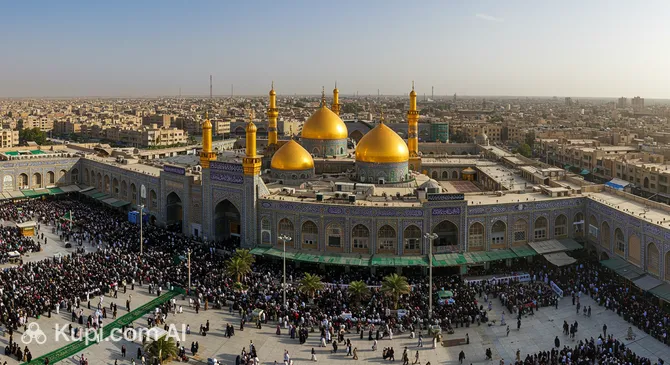
Karbala. Illustration.
Source: Kupi.com AI

The main shrines and centers of attraction in Karbala are the majestic Imam Husayn and Al-Abbas Mosques. These architectural masterpieces, adorned with intricate patterns, gold leaf, and calligraphy, are not only stunning in their magnificence but also serve as vital centers of spiritual life. In addition to these iconic religious structures, the city is interesting for its distinct culture, lively markets, and the opportunity to touch the ancient history of the region.

A visit to Karbala is a chance to immerse yourself in a completely different world, feel the power of faith, and discover a rich cultural heritage. This city leaves a lasting impression and provides food for thought to everyone who decides to discover it and explore its unique corners.

You can find more interesting facts on the history of Karbala page.
Weather Overview

The weather in Karbala is determined by its location in a desert zone, which results in a hot and arid climate. Expect very hot and dry summers, especially from June to September, when daytime temperatures often exceed +40°C (the average temperature in July is 37.5°C, and in August – 37.3°C), and precipitation during this period is practically non-existent. Winters here are mild, with average temperatures in January around 12.5°C and in December around 14.3°C. In the winter months (January, February) and late autumn (November), a small amount of precipitation is possible, about 1 mm, but overall the year is characterized by very few rainy days. For more detailed information on climate conditions and monthly data, please visit the Karbala Climate page.

Average monthly temperature

Average monthly precipitation

Interesting Facts

Beyond its world-famous shrines, Karbala hides many surprising details and stories that not everyone knows. Here are just a few interesting facts that will help you look at this ancient city from a new perspective:

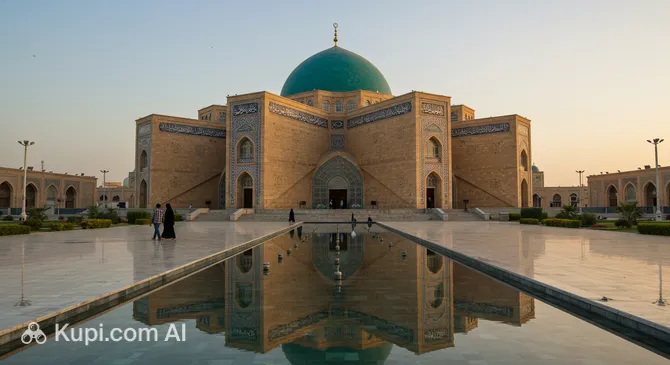
Imam Hassan Mujtaba Visitor City. Illustration.
Source: Kupi.com AI

Traveler photos:

  • The origin of the name Karbala is still a subject of debate among historians and linguists. Some versions link it to an Akkadian word meaning "closeness to God," or an Aramaic one translated as "soft earth."

  • During major pilgrimages, such as Arbaeen, Karbala transforms into a veritable "city within a city." To accommodate millions of believers, entire complexes exist here, such as the Imam Hassan Al-Mujtaba Pilgrims' City, specifically built for these purposes.

  • Soil from the vicinity of the shrines in Karbala, known as "turba," holds special significance for believers. Small tablets (mohr) are made from this clay and used during prayer, symbolizing prostration on holy ground.

  • Despite being located in an arid region, Karbala has flourished for centuries thanks to a complex system of irrigation canals diverting water from the Euphrates River. One of these historical canals – the Husayniya – still plays an important role in the water supply of the city and its surroundings.

How to Get There

The most convenient way to reach Karbala is by air, using one of the international airports located in neighboring cities. There is no direct airport in Karbala itself, but the developed transport infrastructure of Iraq makes it quite easy to get to the city from nearby air hubs.

The main option for international travelers is Baghdad International Airport (BGW). This is a major international airport located in the country's capital, Baghdad, approximately 75 km northeast of Karbala. From here, Karbala can be reached by taxi or bus; the trip will take roughly 2 – 2.5 hours, depending on traffic conditions.

Another important airport serving pilgrims and tourists headed to Karbala is Najaf International Airport (NJF). It is located in the city of An-Najaf, approximately 77 km southeast of Karbala. This airport also accepts international flights and is a popular arrival point. The journey from Najaf airport to Karbala by taxi or shared taxi usually takes about 2 hours 15 minutes.

For clarity, here is summary information on the main airports used to reach Karbala:

AirportPassenger trafficDistance
Baghdad International Airport3.4 mln75 km
Al-Najaf International Airport3.2 mln76 km
Ilam Airport150 000248 km
Nasiriyah Airport275 km

In addition to air travel, Karbala can be reached by land transport from other cities in Iraq. There are bus services as well as the option to hire a taxi. It is recommended to check current routes and schedules in advance, especially if you are planning a trip during periods of major religious events.

Main Attractions

Karbala, in addition to its main shrines, offers travelers other notable places that help visitors better understand the history and modern life of this ancient city. Here are several attractions that deserve your attention:

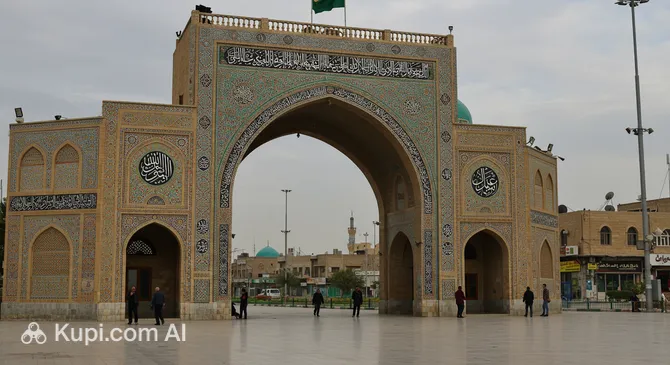
One interesting historical structure is the White Arch of Karbala. This architectural landmark, which likely once served as a gate or a commemorative sign, attracts attention with its form and is part of the city's historical character. Visiting the arch provides an opportunity to touch Karbala's past and take memorable photographs.

White Arch of Karbala. Illustration.
Source: Kupi.com AI

Traveler photos:

For those interested in the cultural and religious heritage of the region, the Museum of Islamic Memory will be of interest. Its exhibition features artifacts, documents, and works of art that tell the story of key events in Islamic history related to Karbala. This place allows for a deeper understanding of the city's significance and its role in the Islamic world.

Islamic Memory Museum. Illustration.
Source: Kupi.com AI

Traveler photos:

Imam Hassan Al-Mujtaba Pilgrims' City is a large-scale complex built to receive and accommodate the numerous believers arriving in Karbala. This modern facility demonstrates how the city handles the enormous flow of pilgrims, especially during major religious events. Touring this complex gives an idea of the hospitality infrastructure in the holy city.

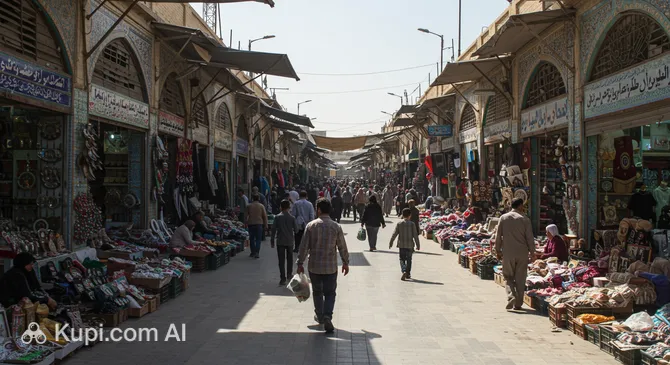
To feel the atmosphere of local life and perhaps purchase fresh produce or souvenirs, it is worth stopping by the Jannat Al-Fawakih Market. The name, which can be translated as "Paradise Garden of Fruits," hints at the abundance of fresh natural gifts. Visiting the market is an excellent opportunity to observe the daily life of the citizens, try local delicacies, and experience the flavor of an oriental bazaar.

Janat Al-Fawakih Market. Illustration.
Source: Kupi.com AI

Traveler photos:

Local Cuisine

The cuisine of Karbala is a vivid reflection of the rich culinary traditions of Iraq and the entire Middle East. It will delight you with aromatic spices, fresh local produce, and hearty dishes prepared with soul. The city's gastronomic scene offers both traditional flavors and the chance to encounter modern interpretations that will not leave any gourmet indifferent.

Be sure to try the famous Iraqi kebabs – juicy meat cooked over an open fire, served with rice or fresh bread. Another iconic dish is quzi (or kibbeh), which consists of roasted lamb or mutton, often stuffed with rice, nuts, and aromatic spices. Various types of dolma (vegetables stuffed with rice and meat) and hearty meat or vegetable stews (margat) are also popular. Don't miss the opportunity to enjoy freshly baked flatbreads, which perfectly complement any dish and are an integral part of the meal.

Among drinks, tea (chai) is ubiquitous in Karbala – it is drunk hot and sweet at any time of day and is a symbol of hospitality. You can refresh yourself with ayran (laban) – a traditional fermented milk drink, or freshly squeezed juices from local fruits, especially pomegranate or orange. As for alcoholic beverages, due to the city's religious significance, their availability is extremely limited, and public establishments generally do not offer them; the focus is primarily on traditional non-alcoholic drinks.

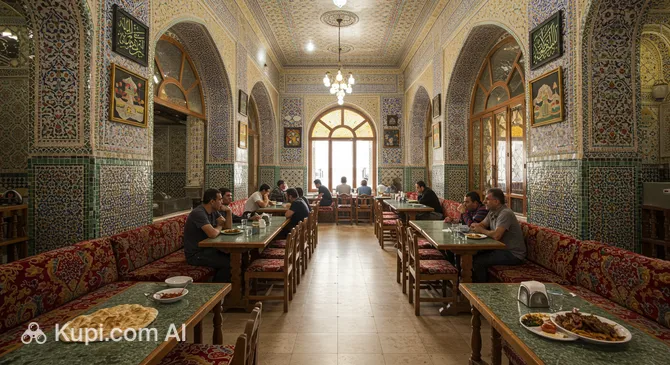
You can get acquainted with the local cuisine in numerous cafes and restaurants offering both traditional Iraqi dishes and more familiar European options. One such establishment where you can spend a pleasant time and taste delicious dishes in a comfortable setting is The Baron Hotel Restaurant.

The Baron Hotel Restaurant. Illustration.
Source: Kupi.com AI

Traveler photos:

Don't overlook the local markets, such as the colorful Jannat Al-Fawakih Market, where you can not only buy the freshest fruits, vegetables, dates, spices, and oriental sweets but also try authentic street food. Street food in Karbala is a separate chapter of the gastronomic journey, offering quick, inexpensive, and tasty snacks such as shawarma, falafel, or various pastries.

Travel Tips

Welcome to Karbala, a city of deep spiritual significance! To make your trip as comfortable and rewarding as possible, we have prepared some practical tips to help you navigate better and understand the local culture more deeply.

  1. Clothing and Essentials: Karbala has a hot desert climate, so choose light, breathable clothing made from natural fabrics. It is extremely hot here in summer and moderately cool in winter. Given the religious significance of the city, especially when visiting shrines like the Imam Husayn Mosque and Al-Abbas Mosque, a modest dress code is mandatory: women are recommended to cover their heads, arms, and legs; men should wear long trousers and shirts with sleeves. Don't forget comfortable shoes for long walks, sunscreen, a hat, and a universal adapter for electronics.
  2. City Transport: Public transport in Karbala is limited. The most common way to get around is by taxi. Always agree on the fare in advance or ensure the driver turns on the meter. Some taxi-hailing apps might work, but it's better to check locally. Car rental is usually not recommended for tourists due to local driving conditions. Central areas, especially around the shrines, are well-suited for walking.
  3. Finance: The official currency is the Iraqi Dinar (IQD). US Dollars may also be accepted, especially in hotels and for large purchases, but it's better to have local currency for small expenses. You can exchange money at banks or exchange offices. Credit card use is limited, mostly accepted in large hotels. ATMs are available, but there may be issues with international cards, so carrying a sufficient supply of cash is recommended. A rough daily budget can vary greatly, but for a comfortable stay (accommodation, meals, minor expenses), you should aim for $50-100 USD per person, excluding large purchases or donations. Prices can rise significantly during major religious holidays. Tipping is appreciated but not always mandatory; it's customary to leave about 10% of the bill in restaurants.
  4. Health and Safety: Pharmacies are available in the city, but it's better to bring a basic first-aid kit and any specific medications you need. For medical assistance, contact clinics or your hotel. 24-hour pharmacies may not be everywhere, so in case of nighttime emergencies, it's best to ask your hotel staff for help or go directly to the nearest hospital, which usually has emergency services. Karbala is a major pilgrimage center, and security, especially around the shrines, is maintained at a high level. Nevertheless, always be vigilant, watch your belongings, avoid displaying valuables, and stick to well-lit, crowded areas, especially after dark. Before your trip, check the latest travel advice for Iraq.
  5. Communication: The official language is Arabic. English is not very widely spoken, mostly by tourism sector workers and younger people. Learning a few basic phrases in Arabic, such as "Assalamu Alaikum" (Hello) and "Shukran" (Thank you), will significantly ease communication. A local SIM card for calls and mobile internet can be purchased upon arrival. Wi-Fi is available in most hotels and some cafes. Download offline maps and translator apps to your smartphone in advance – they can be very useful if internet access is limited or there is a language barrier.
  6. Local Etiquette: Greetings play an important role; a simple "As-salamu alaykum" is appropriate. Dress modestly, especially women. Public displays of affection are not accepted. When interacting with locals, be polite and respectful, especially with elders. If offered tea or coffee, it is considered polite to accept. When giving or receiving something, or during meals, try to use your right hand.
  7. What to Avoid: It is strictly recommended not to photograph people, especially women, without their explicit permission. Avoid loud behavior and noisy conversations, particularly near religious sites. Public consumption of alcohol is prohibited, and it is practically unavailable in the city.
  8. Special Tip – Timing Your Visit: Karbala is one of the holiest cities for Shia Muslims. If your trip is not related to major religious events like Ashura or Arbaeen, when millions of pilgrims flock to the city, it is better to choose a different time to visit. During big holidays, expect massive crowds, road closures, and increased security measures; finding accommodation will be extremely difficult and expensive.

We hope these tips help you plan an unforgettable and spiritually enriching journey to Karbala. We wish you a pleasant trip!

Entertainment & Nightlife

Evening and night life in Karbala has its own unique character, closely intertwined with its status as a holy city. You will not find noisy nightclubs or bars in the traditional sense here. Instead, evenings in Karbala are enveloped in a special, peaceful atmosphere, particularly in the areas adjacent to the main shrines – the Imam Husayn and Al-Abbas Mosques. As dusk falls, these places come alive with thousands of pilgrims and local residents, creating a unique sense of spiritual unity and tranquility. Strolling through the illuminated streets and squares around the shrines is a memorable experience in itself.

The main places for evening leisure and socializing are the numerous restaurants and tea houses. Here you can enjoy a leisurely dinner with local cuisine or have tea with friends and family. The atmosphere in such establishments is usually calm and welcoming. Many restaurants stay open until late evening. For example, a pleasant evening can be spent at The Baron Hotel Restaurant, known for its hospitality. Prices in Karbala's restaurants can range from budget to moderate, offering both simple local dishes and more refined options; dinner for one person can cost between $10 and $30 USD, depending on the level of the establishment.

The Baron Hotel Restaurant. Illustration.
Source: Kupi.com AI

Traveler photos:

For those who prefer evening shopping, the doors of some markets and shopping centers are open. While many traditional bazaars close at sunset, modern retail outlets may stay open longer. This is a good opportunity to buy souvenirs, local products, or simply observe the daily life of the locals. One such place where you can shop in the evening is the bustling Jannat Al-Fawakih Market. You can also visit the Al-Harith Shopping Center for a more modern shopping experience. In markets like Jannat Al-Fawakih, you can find souvenirs and local products at negotiable prices; it is important to know how to bargain here. In shopping centers, prices are usually fixed and may be slightly higher, but the range of goods is more diverse.

Janat Al-Fawakih Market. Illustration.
Source: Kupi.com AI

Traveler photos:

Al-Harith Mall. Illustration.
Source: Kupi.com AI

Traveler photos:

When planning your evening leisure, keep in mind that most establishments not directly related to pilgrimage may close earlier than in large metropolitan areas. For moving around the city after dark, taxis remain the most convenient and safe option; don't forget to agree on the fare in advance. The areas around the main shrines are well-lit and considered safe for walking, but it is always wise to take standard precautions and watch your personal belongings, especially in crowded places.

During the day, Karbala offers its guests a chance to touch history and culture. You can visit the Museum of Islamic Memory to better understand the region's rich heritage or view iconic sites like the White Arch of Karbala. Some hotels, such as the Al-Hussein Family Resort, may offer their own recreational facilities, although their primary function is to accommodate pilgrims and tourists.

Islamic Memory Museum. Illustration.
Source: Kupi.com AI

Traveler photos:

Parks & Museums

Karbala, being one of the most important spiritual centers, offers its guests not only a deep immersion into religious history but also the opportunity to get acquainted with cultural heritage through museums and iconic architectural sites. While extensive urban parks in the traditional sense may not be as common here, certain complexes and public spaces provide areas for relaxation and contemplation.

For those seeking a deeper understanding of the region's history and culture, the key location is the Museum of Islamic Memory. Its exhibition features artifacts, manuscripts, and art objects that tell the story of Karbala's rich Islamic heritage and its historical significance. Visiting the museum allows for a better appreciation of the spiritual and historical depth of this city, which is holy to millions of people.

Among the architectural landmarks reflecting both the historical and modern development of the city, the White Arch of Karbala stands out. This monument is one of the recognizable symbols of the city and often serves as a starting point for exploring its appearance. The arch is interesting for its architecture and the significance it holds for local residents and pilgrims arriving in the city.

White Arch of Karbala. Illustration.
Source: Kupi.com AI

Traveler photos:

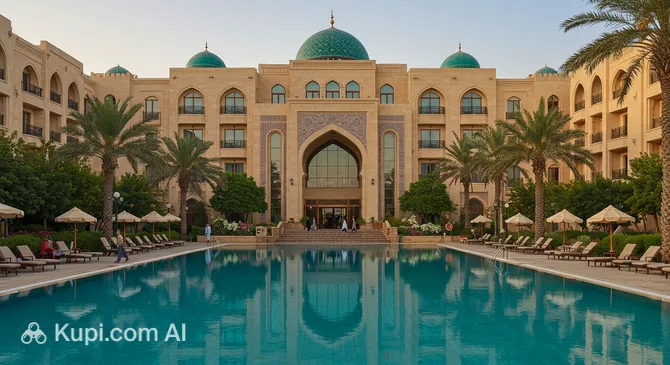
Another significant site attracting many visitors and pilgrims is the Imam Hassan Al-Mujtaba Pilgrims' City. This is a large-scale modern complex created to comfortably receive and accommodate believers. It is of interest not only as an important element of the pilgrimage infrastructure but also as an example of spatial organization, where landscaped areas for rest may be provided.

Imam Hassan Mujtaba Visitor City. Illustration.
Source: Kupi.com AI

Traveler photos:

Regarding parks and green zones, in Karbala, they are most often not standalone large objects but are integrated into the territories of religious shrines, hotel complexes, or are part of modern residential areas. For example, some resort hotels, such as the Al-Hussein Family Resort, may offer well-maintained green areas to their guests. Peaceful and shady courtyards at mosques also traditionally serve as places for serene rest and reflection, especially during the hot time of day.

For a more authentic acquaintance with the cultural life of the city, besides visiting the main attractions, it is worth paying attention to lesser-known corners. A walk through old residential quarters, away from the main pilgrimage routes, can reveal interesting details of local architecture and the daily lives of Karbala's residents.

Getting Around

Getting around Karbala for a tourist has its own peculiarities, as public transport systems familiar to Europeans, such as subways or trams, are absent here. The foundation of the city's transport system consists of taxis and, to a lesser extent, shared taxis.

Taxis are the most common and convenient way to move around Karbala, especially for tourists. You can hail a car on the street or order one through your hotel. The key point is to always agree on the cost of the trip before starting or ensure that the driver is using a meter, if one is present and working. While some international taxi apps may theoretically work, in practice, a more reliable method is to use local services or drivers. Payment is made in cash in Iraqi Dinars.

In addition to individual taxis, shared taxis (sometimes called "keya" or similar local terms for collective taxis) can be found in Karbala, as in many cities in the region. These are usually minibuses or cars that follow certain, often not strictly fixed, routes and pick up passengers along the way. This is a more economical option, but it requires some knowledge of local directions and a readiness for less comfortable conditions. Payment is usually made in cash to the driver upon entry or exit, and the cost is typically low.

As for buses, a regular and extensive network of city bus routes convenient for tourists is poorly developed in Karbala or may be oriented primarily towards local residents and specific directions, such as remote areas or intercity travel. It is best to check for information on such routes locally. There are no subway, tram, or trolleybus systems in the city.

To pay for travel in taxis and shared taxis, you will need cash – Iraqi Dinars. Specialized transport cards or apps for paying for public transport, with the exception of some taxi services, are generally not available. Transport operating hours depend on the specific type: taxis are available almost around the clock, especially in busy areas, while shared taxis may have a more limited schedule.

Alternatively, the central districts of Karbala, especially around the main shrines, are quite suitable for walking. This allows you not only to save on transport but also to better feel the city's atmosphere. Car rental is generally not recommended for tourists due to the peculiarities of local traffic and difficulties with parking. Options such as city bike rental or car-sharing have not yet become widespread for tourists in Karbala.

Accommodation

In Karbala, as one of the most important pilgrimage centers, there is a wide range of accommodation options to suit the needs of both pilgrims and tourists with various budgets and preferences. The choice of housing ranges from modest budget hotels and guesthouses to mid-range hotels and more comfortable resort hotels. There is also the possibility of renting apartments, although this option may be less common for short-term tourist trips.

Most hotels and guesthouses are concentrated in the areas adjacent to the main shrines – the Imam Husayn and Al-Abbas Mosques. Staying here provides easy access to these holy sites, which is particularly valued by pilgrims. These central districts are also convenient due to their proximity to markets, restaurants, and other infrastructure. Among the available options, you can find both large hotel complexes and small family-run hotels. For example, for a comfortable stay, you might consider options such as the Master of Regents City Hotel or the Al-Hussein Family Resort, which offer various amenities for guests.

Master of Regents City Hotel. Illustration.
Source: Kupi.com AI

Traveler photos:

When planning a trip to Karbala, it is strongly recommended to book accommodation well in advance, especially if your visit coincides with major religious holidays such as Ashura or Arbaeen. During these periods, the demand for accommodation increases many times over, and prices can rise significantly. The price range for accommodation in Karbala is quite wide: from budget options where the cost can be very moderate, to medium and high-class hotels with corresponding price levels. You can book accommodation through popular international online booking platforms, directly on hotel websites (if available), or through local travel agencies, especially when organizing group trips.

Nearby Cities

For those who want to explore the surrounding areas, Karbala serves as an excellent starting point for day trips to several interesting nearby locations:

CityPopulationDistance
Al Hindiya84 10020 km
Musayyib76 45430 km
Al Hillah541 03441 km
Alexandria100 60044 km
Al Kifl22 80053 km

Each of these cities offers something unique, allowing for a deeper acquaintance with different aspects of Iraqi culture and history:

Baghdad: The capital of Iraq, this city with a thousand-year history stretches along the banks of the Tigris River. Travelers can explore its bustling markets, discover its rich cultural heritage, and see historical landmarks reflecting the greatness of ancient Mesopotamia and subsequent eras. It is the country's largest city and its political and cultural center.

An-Najaf: One of the holiest cities for Shia Muslims, known primarily as the final resting place of Imam Ali and the majestic mosque dedicated to him. A day trip here allows you to experience a deep spiritual atmosphere and see impressive religious architecture that attracts millions of pilgrims annually.

Al-Hilla: This city attracts those interested in ancient history, as it is located near the ruins of legendary Babylon. Visitors can explore the remains of this ancient metropolis, one of the most important centers of the ancient world, and touch millennia of history.

Fallujah: Located on the Euphrates River, Fallujah is a significant regional center. A trip here can provide an insight into the life of a typical Iraqi city, its local markets, and traditional way of life, allowing you to see another side of the country.

Ash-Shamiya: This is a small town that can offer travelers the chance to see the everyday life of the Iraqi province, away from the noise of large urban and pilgrimage centers. It's an opportunity to get acquainted with local culture and daily life in a calmer and more authentic setting.

These nearby destinations provide a glimpse into the diverse culture and landscapes of the region. Each trip can enrich your journey with new impressions and knowledge about Iraq.

Shopping & Souvenirs

Shopping in Karbala is an immersion into the atmosphere of an oriental city, where modern retail outlets stand alongside traditional markets. Although Karbala is primarily known as a holy city and a pilgrimage center, you can find interesting goods here that reflect local culture and traditions, as well as satisfy daily needs.

The main shopping areas are concentrated around the major shrines – the Imam Husayn and Al-Abbas Mosques. The streets adjacent to these holy sites abound with numerous stalls and shops offering a wide range of goods, from religious paraphernalia to clothing and food. It is always lively here, especially in the evening and during religious holidays.

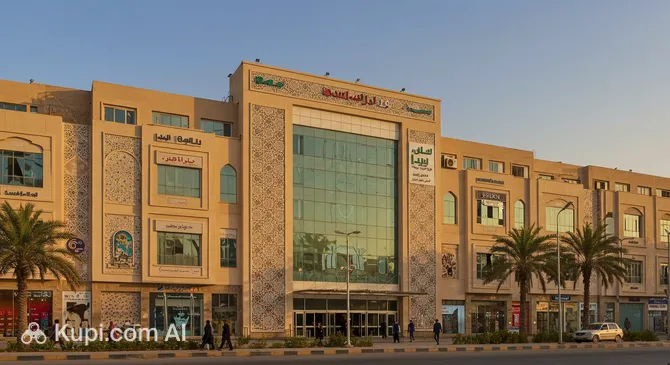
For those who prefer a more modern shopping format, there are shopping centers in Karbala. One notable example is the Al-Harith Shopping Center. Here you can find clothing stores, electronics, household goods, and a food court. This place offers a more familiar shopping experience for many tourists in an air-conditioned space.

Markets occupy a special place in Karbala's commercial life. Traditional bazaars (souks) are the heart of oriental trade. Here you can find fresh produce, spices, sweets, textiles, handicrafts, and much more. One popular spot is the Jannat Al-Fawakih Market, which features a wide selection of fruits, vegetables, and other goods. Visiting the market is not just shopping, but an opportunity to plunge into local color and practice the art of bargaining, which is quite common here.

As souvenirs from Karbala, tourists most often bring home religious items: prayer beads (misbaha), prayer rugs, miniature replicas of shrines, and calligraphy with verses from the Quran. Local sweets, dates, spices, traditional clothing, and handmade products such as ceramics or textiles with local patterns are also popular. Don't forget to look at clay and copper products, which can become unique reminders of your trip to Iraq.

Shops in Karbala usually operate from morning until late evening, often with a break for afternoon rest, especially during the hot season. On Friday, the holy day for Muslims, some shops may be closed or operate on a reduced schedule. The primary means of payment is cash Iraqi Dinars (IQD). Credit cards are accepted limitedly, mostly in large hotels and some modern shopping centers. Therefore, it is recommended to always have a sufficient supply of cash on hand.

Information on the Tax-Free return system for tourists in Karbala and in Iraq in general is not widespread, and as a rule, such a service is not provided. It is best to clarify this point directly in large stores, but you should not count on it heavily.

Reached the end of the page?

That means the route is fully explored