Support

Kufa

About

Kufa is a city that acts as a bridge connecting ancient history and modern life, nestled on the banks of the great Euphrates River in the heart of Iraq. Located about 170 kilometers south of Baghdad, Kufa has played a key role since its founding in 638 AD, rapidly becoming one of the most important political, cultural, and religious centers of Mesopotamia and one of the region's first Arab cities.
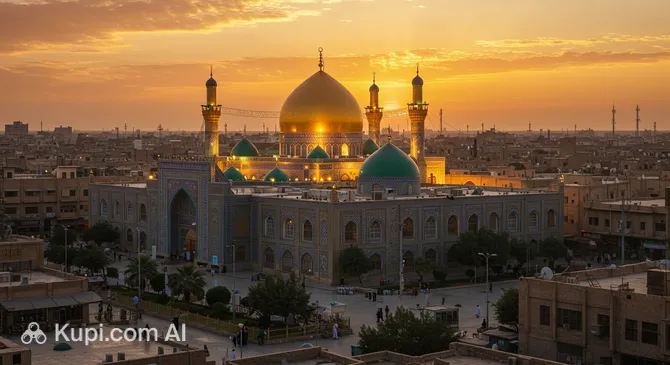
Kufa. Illustration.
Source: Kupi.com AI

Today, Kufa is home to approximately 166,100 people. Administratively, the city is part of the Najaf Governorate and is closely linked with the city of the same name, forming a single metropolitan area while maintaining its own unique atmosphere, steeped in an air of antiquity and tranquility.

For travelers, Kufa offers a unique opportunity to touch history. One of the city's main gems is the Great Mosque of Kufa, one of the oldest and most revered mosques in the Islamic world, attracting pilgrims and architecture enthusiasts alike. Equally interesting are the colorful local markets, where you can experience the authentic spirit of the East, purchase traditional goods, and enjoy local hospitality.

A visit to Kufa is an immersion into a rich cultural heritage, an introduction to ancient traditions, and an opportunity to discover the hospitality and unique atmosphere of this historic Iraqi city.

You can find more interesting facts on the history of Kufa page.

Weather Overview

The climate in Kufa is characterized by very hot, dry summers and mild winters. During the peak summer season, especially in July and August, the average air temperature stays around 37-38°C, with maximum highs potentially exceeding 45°C. In winter, for example in January, the average temperature is a comfortable 12-13°C.

Precipitation in Kufa is a rare occurrence. Most months of the year pass with virtually no rain, and the total amount of precipitation is minimal. Expect very hot and arid summers and mild winters with minimal rainfall. For more detailed information and to plan your trip according to weather conditions, visit the Kufa climate page.

Average monthly temperature

Average monthly precipitation

Interesting Facts

In addition to its famous shrines and historical significance, Kufa hides many surprising details and legends that make it even more attractive to curious travelers. Here are just a few of them:

  • According to ancient legends, it was in Kufa that Noah's Ark was built, and the Great Flood began from here, making this place an object of special interest and pilgrimage.

  • Many do not know that the famous male headscarf, known as the keffiyeh, got its name specifically in honor of the city of Kufa.

  • Archaeological finds testify to the extensive trade links of ancient Kufa: coins minted in the city have been discovered as far away as northern Russia.

  • The architectural style of Kufa represents a unique heritage in which elements of pre-Islamic Persian and Byzantine cultures are harmoniously interwoven, creating a unique look for the city.

  • Kufa was the last capital of the Rightly Guided Caliph Ali ibn Abi Talib, one of the key figures in Islamic history, which gives the city special spiritual and historical significance.

How to Get There

When planning a trip to this historic city, it is important to think through the logistics in advance. Kufa is located in close proximity to the city of Najaf, so the main flow of travelers passes through its neighbor's transport hubs. You can find all the ways to get to the city by studying the detailed information below.

The most convenient way to reach Kufa is by air. Kufa itself does not have its own airport, but you can fly into Najaf International Airport (IATA: NJF) in the city of Najaf, which is only about 6.6 km from Kufa. This is a major transport hub with high passenger traffic, receiving flights from many countries in the region. Due to its close proximity, a taxi or car ride from the terminal to the center of Kufa will take only about 20–30 minutes.

An alternative option is Baghdad International Airport (IATA: BGW), located in the country's capital, Baghdad. It is approximately 135 km from Kufa. This is the country's main air gateway with very high passenger traffic. The journey from Baghdad airport to Kufa by taxi or intercity bus will take significantly longer—approximately 2.5–3 hours, depending on road traffic.

For convenience, here is summary information on the main airports:

AirportPassenger trafficDistance
Al-Najaf International Airport3.2 mln7 km
Baghdad International Airport3.4 mln135 km
Nasiriyah Airport211 km
Ilam Airport150 000256 km
Rafha Airport81 508281 km

Regarding rail travel, direct passenger trains to Kufa itself are not the primary method of transport for tourists. The railway network in the region is being restored, and while trains occasionally run from Baghdad to neighboring Najaf (especially during major pilgrimage periods), regular schedules can change. Most travelers prefer to reach the city by car or by buses that run regularly from Baghdad and other major cities in the province.

Main Attractions

Kufa, a city with a rich history and deep spiritual significance, attracts pilgrims and enthusiasts of Islamic culture from all over the world. It is home to shrines and sites inextricably linked to key figures and events of early Islam, offering visitors a unique immersion into history.

The main gem of the city is undoubtedly the Great Mosque of Kufa (Masjid al-Kufa al-Mu'azzam). It is one of the oldest and most revered mosques in the Islamic world. It is believed that several prophets prayed on its grounds, and it served as the center of government for the fourth Rightly Guided Caliph, Ali ibn Abi Talib. Its majestic architecture and special atmosphere make it a must-visit site.

Located near the Great Mosque is the House of Imam Ali. This is a modest dwelling where, according to tradition, Imam Ali lived with his family during his time in Kufa. A visit to this house allows one to touch the simple lifestyle of one of the most significant figures in Islam and feel the spirit of that era.

Another important shrine in Kufa is the Mausoleum of Muslim ibn Aqil. Muslim ibn Aqil was the cousin and messenger of Imam Hussain. His tragic fate in Kufa was a precursor to the events of Karbala. The mausoleum attracts many pilgrims who come to honor his memory.

Also a significant pilgrimage site is the Mausoleum of Hani ibn Urwa, the companion who sheltered Muslim ibn Aqil. Visiting these sites allows for a deeper understanding of the historical context and spiritual heritage of Kufa, making a trip here truly informative and memorable.

Local Cuisine

The gastronomic scene in Kufa is a true immersion into the rich traditions of Middle Eastern cuisine, where every dish tells a story. The basis of local culinary art consists of lamb and chicken dishes, generously seasoned with aromatic spices that create a unique flavor bouquet. A signature dish of Iraqi cuisine that you must try in Kufa is masgouf—fish caught from the Euphrates and expertly grilled over charcoal. This dish is often served with rice, fresh vegetables, and traditional flatbreads, and is rightfully considered a culinary symbol of the region.

Sweet lovers will find a real paradise in Kufa. Local desserts such as baklava, halva, and especially dates with nuts and honey deserve special attention. Dates grown in the city's surroundings are famous for their rich taste and are considered among the best, offering natural sweetness and nutritional value. This is not just a treat, but a part of the local culture and hospitality.

Street food in Kufa is its own gastronomic adventure. In busy markets and alleys, you can taste a variety of snacks: sambusek (savory pastries with meat or cheese), crispy falafel, smooth hummus, and, of course, the freshest flatbreads baked right before your eyes. This is a great way to get to know authentic flavors and observe the daily life of the city.

No meal in Kufa is complete without the traditional drink—tea. Here, it is brewed very strong, served with sugar, and often flavored with cardamom for a special aroma. Tea accompanies both friendly conversations and business meetings, being an important element of local etiquette and hospitality. Alcoholic beverages are less common due to cultural traditions.

The food culture in Kufa is deeply rooted in family values and traditions. Locals prefer to gather in large groups, whether at home or in the numerous cafes and restaurants, where guests are always welcomed with a warm reception and generous Eastern treats. Gastronomic festivals and communal feasts are an integral part of social life, highlighting the importance of food as a way to bring people together and preserve culinary heritage.

Travel Tips

Welcome to Kufa, an ancient city with a rich history and spiritual heritage! To make your journey through this significant place in Iraq as comfortable, safe, and filled with positive impressions as possible, we have prepared some practical tips for you.

  1. Clothing and Essentials: The climate in Kufa is hot and desert-like, so choose light, breathable clothing made of natural fabrics (cotton, linen) that covers most of the body for sun protection and out of respect for local traditions. Be sure to bring a hat, sunglasses, and sunscreen with high SPF. For visiting religious sites, such as the Great Mosque of Kufa, women will need a headscarf and clothing that covers shoulders and knees; men should also choose modest clothing (long trousers). Don't forget comfortable closed-toe walking shoes and a universal power adapter (in Iraq, socket types C, D, and G are used).

  2. Getting Around the City: The primary method of transport for tourists in Kufa will likely be taxis. It is recommended to agree on the fare in advance or ensure the driver uses a meter if available. Public transport may consist of buses and minibuses, but it may not always be convenient for tourists. Renting a car can be difficult due to local traffic patterns; if you are not confident in your driving skills in such conditions, it is better to use taxi services.

  3. Finances and Payments: The local currency is the Iraqi Dinar (IQD). You can exchange currency at banks or official exchange offices; avoid street money changers. Acceptance of bank cards (Visa, Mastercard) is limited and mostly possible in large hotels. It is recommended to carry enough cash for daily expenses. ATMs exist, but their availability and the reliability of international cards can be unstable. Tipping is welcome in restaurants (usually 5-10% of the bill) and for service staff.

  4. Health and Safety: Before your trip, obtain medical insurance that covers Iraq. Bring a first-aid kit with necessary medications, as the selection in local pharmacies may differ. Drink only bottled water. Follow general safety precautions: keep an eye on your belongings, and avoid walking alone in poorly lit or deserted areas after dark. Always stay informed of the current situation through official sources or your hotel administration.

  5. Communication and Connectivity: The official language is Arabic. English is limited, primarily found in the tourism sector and among the youth. Learn a few basic phrases in Arabic, such as "As-salamu alaykum" (Hello), "Shukran" (Thank you), "Min fadlik" (Please)—this will be appreciated by locals. For mobile communication and internet, you can purchase a SIM card from local operators. Wi-Fi is available in most hotels and some cafes, but speeds can vary.

  6. Local Etiquette and Traditions: Show respect for local customs and Islamic traditions, especially given the religious significance of Kufa. When greeting men, a handshake is customary. When interacting with women, it is best to wait for them to initiate. Dress modestly, especially when visiting religious sites (women should cover their head, shoulders, and knees; men should wear long trousers). Shoes must be removed before entering a mosque. Do not take photos of people without their explicit permission, especially women and near religious objects.

  7. What to Avoid: Refrain from public displays of affection. It is strictly not recommended to consume alcohol in public places, given the religious status of the city. Avoid discussing sensitive political or religious topics unless you are sure of your interlocutor's reaction. Do not take photos of military facilities, police, or government buildings.

  8. Special Tip – Great Mosque of Kufa: This is the heart of the city and one of the most important holy sites for Shia Muslims. Visiting the mosque is a unique experience, but be sure to check the rules for non-Muslims (if any) and visiting hours. Strictly follow the dress code and rules of conduct on the grounds of the shrine. This place requires special reverence and respect.

We hope these tips help you better prepare for your trip to Kufa and gain truly deep and unforgettable impressions from visiting this ancient and spiritually rich city. We wish you an interesting and safe journey!

Entertainment & Nightlife

Entertainment and nightlife in Kufa differ significantly from the usual European format. As it is a holy city with deep religious traditions, you will not find noisy nightclubs, discos, or bars serving alcohol here. "Nightlife" here primarily consists of leisurely strolls, socializing in colorful tea houses, and visiting shrines that look particularly majestic under evening illumination.

The center of evening attraction for locals and tourists alike is the Euphrates River embankment. After sunset, when the daytime heat subsides, the riverbanks come alive. This is the best place for a promenade: families walk here, enjoying the cool breeze from the water and dining at numerous open-air restaurants and cafes. The atmosphere here is relaxed and friendly.

The role of bars and pubs in Kufa's social life is filled by traditional chaihanas (tea houses). This is where the real life of the city hums: men gather to discuss the news, play dominoes, and drink strong, sweet Iraqi tea or coffee. Establishments serving hookah (nargile) are also popular. Tourists should visit these places to experience the authentic spirit of the East, though it is worth remembering that the clientele in traditional tea houses is predominantly male.

Another important part of evening leisure is the night markets and shopping streets around the Great Mosque of Kufa. Life here does not stop until late at night. Sweet shops, souvenir stalls, and street food vendors stay open late, serving pilgrims and city residents. It is a great time to try local pastries or buy dates without the scorching daytime sun.

Practical tips for evening walks:

  • Timing: The city comes alive after the evening prayer (Maghrib). The most active time is from 20:00 until midnight.
  • Dress Code: Kufa is a conservative city. In the evening, as during the day, modesty in clothing should be observed. Women are advised to cover their heads, shoulders, and legs, while men should avoid wearing shorts.
  • Safety: The areas around the main shrines and the embankment are considered safe for walking. However, for traveling between distant areas at night, it is better to use official taxis or call a car through your hotel.
  • Alcohol: There is a strict ban on alcohol in the city. It is impossible to find it for sale or on restaurant menus.

Regarding daytime entertainment, it is more educational and contemplative in nature. Besides visiting historical ruins and religious sites, you can take a boat trip on the Euphrates. This allows you to see the city from a new perspective and enjoy the natural scenery. During the day, you can also visit small local libraries or stroll through the palm groves in the surrounding areas, which are the pride of the region.

Parks & Museums

The city of Kufa, one of the oldest and most historically significant cities in Iraq, offers travelers a unique immersion into a rich cultural and spiritual heritage. While Kufa may not be famous for vast modern parks or traditional museums in the Western sense, its true treasure lies in its ancient mosques, shrines, and historical ruins, which are themselves living witnesses to centuries of history.

Instead of typical city parks, moments for relaxation and contemplation in Kufa can be found in the spacious courtyards of its majestic mosques or in public squares where local life hums. These spaces, steeped in history, offer a special atmosphere. The urban fabric itself, with its ancient streets, represents a kind of open-air museum where every stone holds echoes of the past.

The central place embodying the spirit and history of Kufa is undoubtedly the Great Mosque of Kufa (Masjid al-Kufa al-Mu'azzam). It is not just a place of worship, but a vast historical and religious complex, considered one of the oldest mosques in Islam. Its monumental walls, ancient columns, and shrines, such as the tombs of Muslim ibn Aqil and Hani ibn Urwa, attract pilgrims and history researchers from all over the world. Visiting the mosque allows you to touch the origins of Islamic civilization and architecture.

Near the Great Mosque are other iconic sites. The area associated with the House of Imam Ali, one of the most revered figures in Islam, is of special significance, offering a deeper understanding of his life and legacy. Also of interest are the ruins of Dar al-Imara (the Emirate Palace or Governor's Palace)—remains of an ancient administrative center that testify to the political importance of Kufa in the early Islamic period. These ruins provide an idea of the architecture and urban planning of that time.

Another important shrine worth visiting is the Al-Sahla Mosque. Located slightly away from the center, this mosque is also associated with the names of many prophets and imams and is revered as a place of special spiritual power. Its calm and peaceful atmosphere offers a contrast to the busy Great Mosque complex and invites reflection.

In Kufa, there are no numerous museums with exhibits in display cases, but the city itself and its shrines serve as living guardians of history and culture. For a truly authentic experience, wander through the old quarters surrounding the main religious sites, observe the daily life of the locals, or visit small markets. Perhaps in these lesser-known corners and through interaction with the residents, you will discover the true soul of ancient Kufa.

Getting Around

Getting around Kufa can be done in several ways, although the public transport system here may differ from what is usual in large metropolises. The basis of the transport network consists of more local and traditional types of movement, which tourists should adapt to.

The main types of public transport in Kufa are buses and minibuses (shared taxis). They run along the city's main streets, connecting various districts. Routes are not always clearly marked, so you often have to rely on drivers' shouts or ask locals. There is no metro, tram, or trolleybus system in the city.

The payment system on buses and minibuses is generally cash-based. Payment is made directly to the driver upon entering or exiting. Specialized transit cards or mobile apps for fare payment likely do not exist. The cost of a trip is usually low, but it is better to carry small change. It is recommended to confirm the fare with the driver or other passengers before the trip.

Tourists planning to use public transport in Kufa should be prepared for the fact that schedules can be loose, and transport often departs when full. Stops are not always clearly marked, and a bus or minibus can be hailed with a wave of the hand. Knowing a few phrases in Arabic can be helpful for clarifying the route. Public transport is usually most active during the day.

As an alternative to public transport, taxis are widespread in Kufa. This is a more comfortable, though more expensive, way to get around. It is recommended to agree on the fare with the driver in advance, before getting into the car, as taximeters are not always used. Car-sharing services or developed bike-sharing systems are generally absent in the city. For short distances in central areas, walking may be suitable.

Accommodation

When planning a trip to Kufa, you will find various accommodation options to suit different preferences and budgets. The city offers a choice from modest guesthouses to mid-range hotels. Apartment rental options may also be available, which can be convenient for families or long-term stays.

When choosing a place to stay in Kufa, you should pay attention to areas located near main attractions and transport hubs. This will provide you with easy access to places of interest and simplify moving around the city. Central districts or those near significant religious and historical sites are generally more popular with visitors.

While specific names of large international hotel chains may not be as widely represented, there are local hotels in Kufa offering comfortable stays. It is recommended to check available options on popular online booking platforms or contact local travel agencies for up-to-date information and recommendations.

To ensure the best choice and prices, especially if your trip coincides with periods of high demand—such as during religious holidays or major events—it is recommended to book accommodation in advance. This will help you avoid inconvenience and choose an option that best meets your expectations.

The price range for accommodation in Kufa can vary from budget options to more expensive offers. Most hotels and guesthouses can be booked through well-known international online travel services, as well as directly by contacting the administration of the chosen accommodation.

Nearby Cities

For those looking to explore the surrounding area, Kufa serves as an excellent starting point for day trips to several interesting nearby locations:

CityPopulationDistance
Najaf724 7005 km
Al Kifl22 80020 km
Ash Shamiyah300 00024 km
Al Hashimiyah37 30040 km
Ghammas140 00041 km

Among them, a few destinations particularly stand out. A trip to Najaf and Karbala provides an opportunity to visit major religious centers of immense importance to the Muslim world. The country's capital, Baghdad, despite its complex history, holds many historical artifacts and offers an immersion into the rich cultural heritage of Iraq.

These nearby destinations provide an insight into the diverse culture and landscapes of the region.

Shopping & Souvenirs

Shopping in Kufa offers tourists an immersion into the atmosphere of traditional Eastern trade. The city is not famous for large modern malls, but here you can find unique local goods and souvenirs reflecting the region's rich history and culture. The main focus should be on markets and small shops, where you can bargain and find something truly authentic.

The main shopping areas in Kufa are concentrated around historical and religious centers, as well as on the busy streets of the old city. This is where numerous shops are located, offering a variety of goods—from food to handicrafts. A walk through these areas is an interesting experience in itself, allowing you to better appreciate the local flavor.

There are likely not many large shopping centers in the European sense in Kufa. Shopping here is more oriented toward traditional formats. However, in more modern parts of the city, one may find small shopping complexes with stores selling clothing, electronics, and everyday goods.

Markets are the heart of trade in Kufa. Local bazaars, or "souks," offer a huge selection of goods. Here you can find fresh fruits, vegetables, aromatic spices, sweets, as well as textiles, handmade carpets, ceramics, and copperware. Visiting the market is a great opportunity not only to make purchases but also to observe the daily life of the citizens.

As souvenirs from Kufa and Iraq as a whole, it is worth paying attention to traditional items. These might include small carpets or kilims with national patterns, ceramic dishes, chased copper items, beautiful prayer beads (misbaha), as well as famous high-quality Iraqi dates. Incense and traditional clothing are also popular.

Shops and stalls in Kufa usually operate from morning until late evening; however, many may close for a few hours in the middle of the day for lunch and prayer, especially on Friday. Regarding payment, in small shops and markets, preference is given to cash—Iraqi Dinars. In larger establishments, bank cards might be accepted, but it is always better to have some cash on hand.

Information on the Tax Free system for tourists in Kufa, as in Iraq in general, is quite limited, and such a system is likely not widely applied. If you make a large purchase in a specialized store, you can clarify this with the seller, but you should not count on it heavily.

Reached the end of the page?

That means the route is fully explored