Support

Piazza Maggiore

About

Piazza Maggiore is not just the main square, but the true historical and cultural heart of the city of Bologna, located in Italy. It is the starting point for getting to know the city—a place where past and present merge into one, creating a unique atmosphere.
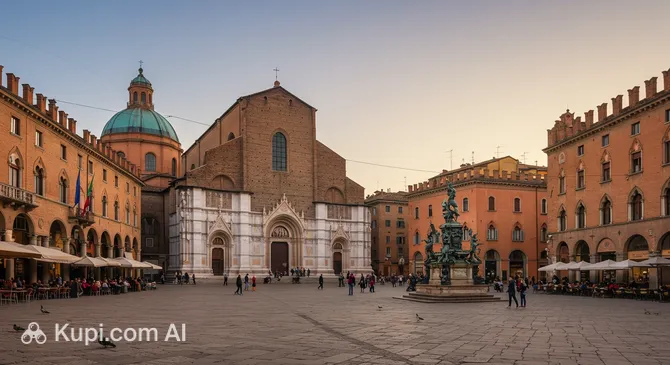
Piazza Maggiore. Illustration.
Source: Kupi.com AI

Traveler photos:

The square is surrounded by majestic buildings that are witnesses to centuries of history. Here you will see the famous Basilica of San Petronio, Palazzo d'Accursio (the City Hall), Palazzo del Podestà, and the Palace of the Notaries. The harmonious combination of architectural styles from different eras gives this place a special sense of monumentality.

Piazza Maggiore is not a static open-air museum, but a lively space loved by both tourists and locals. City festivals, fairs, concerts, and other events are constantly held here. It's the perfect place for a leisurely stroll, a cup of coffee in one of the cafes, or simply to sit on the steps of the basilica and watch life go by.

Visiting this square allows you to fully feel the spirit of Bologna—a city where art, history, and modern culture harmoniously complement each other. It's a place that leaves a vivid impression and beckons you to return again.

Contacts

Piazza Maggiore is a central square and public space, so the square itself does not have a single contact center. However, the main tourist information office, Bologna Welcome, is located right on the square, where you can get all the necessary information about the city, book tours, and purchase tickets for events.

How to contactContact
AddressPiazza Maggiore, 40124 Bologna BO, Italy
Websitewww.bolognawelcome.com

What to Do

At Piazza Maggiore, travelers will find Bologna's main treasures. First and foremost, the majestic Basilica of San Petronio, famous for its unique unfinished facade, catches the eye. Nearby are historical palaces that can be explored: Palazzo d'Accursio, which today houses the City Hall, and Palazzo del Podestà. Not far from the square is another iconic symbol of the city—the monumental Fountain of Neptune, which, along with other architectural monuments, creates a unique ensemble in the historic center.

The square is not only an open-air museum but also a center of public life. In the warmer months, street concerts, exhibitions, and various cultural events are often held here. It is an ideal place for leisurely walks, vibrant photo sessions against the backdrop of ancient buildings, and observing the dynamic life of the city. You can relax in one of the numerous cafes, enjoying a cup of coffee with a view of the historic facades, or simply sit on the steps, soaking up the atmosphere of ancient Bologna.

Getting There

Piazza Maggiore is located in the very heart of Bologna, making it easily accessible on foot from any part of the historic center. A walk to the square is a great opportunity to enjoy the views of the ancient arcades and feel the city's unique atmosphere. Convenient routes and numerous pedestrian signs will help you easily find your way to the main attraction.

For travelers arriving in the city by train, the walk from Bologna's central railway station (Bologna Centrale) to the square takes about 15–20 minutes. If you prefer public transport or have luggage, you can use the many city buses that run through the center. Taxis are also available, with a stand located near the station.

If you are traveling by car, keep in mind that traffic in Bologna's historic center is restricted (ZTL zone). Therefore, the best solution is to leave your car in one of the city's parking lots outside this zone and continue on foot. For those who prefer two wheels, the city has a well-developed bicycle infrastructure, making it easy to reach the square comfortably.

Nearest city: Bologna

History & Facts

The history of Piazza Maggiore dates back to the 13th century, when the authorities of Bologna began deliberately purchasing houses and land. The goal was to create a unified space for trade, public gatherings, and important city events, symbolizing the growing power of the city in medieval Italy. From its inception, this square was intended as the center of public life, and over the centuries, it has fulfilled this role brilliantly, becoming the true heart of Bologna.

Over the centuries, the square has constantly changed, becoming surrounded by the majestic buildings that form its unique architectural appearance today. This place has witnessed many iconic historical moments. One of the most significant events was the coronation of the Holy Roman Emperor, Charles V, which took place in 1530 in the Basilica of San Petronio, located right on the square. This fact highlights the exceptional importance of Piazza Maggiore not only for the city but for European history as a whole.

Interestingly, the square did not always bear its current name. It wasn't until the 16th century that the name "Piazza Maggiore" became established, and it was only officially adopted in 1945. Before that, it was known by other names that changed along with historical eras. Today, Piazza Maggiore is not just an architectural monument, but a living and dynamic space where the past harmoniously intertwines with the present, continuing to be the center of Bologna's cultural and social life.

Time Needed

When planning a visit to Piazza Maggiore, you should budget different amounts of time depending on your interests. For a brief acquaintance with the square, a stroll, and a look at the facades of the surrounding buildings, 1 to 2 hours is usually sufficient. During this time, you will have the chance to feel the atmosphere of this historic place in Bologna, take photos with the Basilica of San Petronio in the background, and simply relax while watching the city life.

If you want to dive deeper into the history and culture of Italy, you should dedicate half a day to exploring Piazza Maggiore and its attractions. This will allow you to leisurely visit the museums located in the Palazzo d'Accursio, go inside the basilica, or climb one of the observation decks. This approach will give you the opportunity to study the architectural monuments in detail and fully appreciate the cultural heritage concentrated in the very heart of the city.

Working Hours

Piazza Maggiore is an open-air public space, so the square itself is accessible for visiting 24/7, year-round. You can enjoy its atmosphere, take a walk, or take photos at any time convenient for you, whether it's early morning or late evening. Entrance to the square itself is free and does not require tickets.

However, it is worth remembering that each of the majestic buildings surrounding the square—the Basilica of San Petronio, the museums in the Palazzo d'Accursio, or the Clock Tower—has its own operating schedule and visiting rules. Tickets may be required to enter these attractions, and opening hours may change depending on the season. To avoid inconvenience, it is recommended to check current information and opening hours on the official websites of specific museums or on the Bologna tourism portal before your visit.

Nearby

A visit to Piazza Maggiore is just the beginning of your acquaintance with Bologna's rich heritage. To fully experience the city's atmosphere, it's worth exploring its immediate surroundings. Just a few steps from the main square are iconic landmarks that will complement your experience and reveal new facets of this amazing city.

A stroll through the adjacent streets will allow you to discover hidden gems: from monumental palaces and ancient libraries to lively markets and cozy osterias. Each of these places is within walking distance and is an integral part of Bologna's historical and cultural landscape.

NameDistance
Fountain of Neptune0.1 km
Palazzo Re Enzo0.1 km
Osteria del Sole0.1 km
Palazzo d'Accursio0.1 km
Mercato di Mezzo0.1 km
Archiginnasio Municipal Library0.2 km
Sfoglia Rina0.3 km

Have you reached the end of the page?

So the route has been studied inside and out