Support

La Scala

About

La Scala (Teatro alla Scala) is not just a theatre, but a true legend of the world opera stage, located in the heart of Milan, the cultural capital of Italy. It is rightfully considered one of the most prestigious opera houses in the world and is a must-visit for all lovers of classical art. The theatre opened in 1778 and has since become a global center of opera culture.
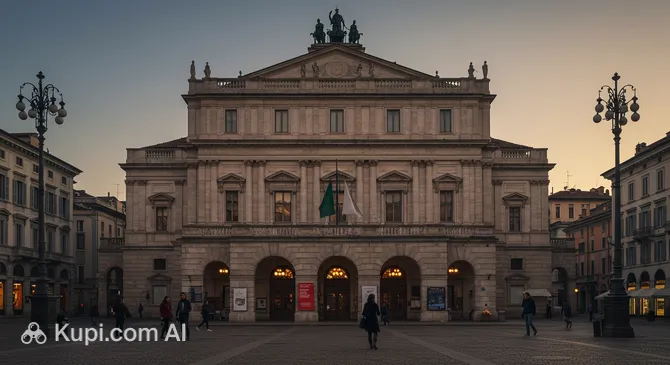
La Scala. Illustration.
Source: Kupi.com AI

Traveler photos:

Designed by architect Giuseppe Piermarini in the Neoclassical style, the theatre building might appear somewhat understated from the outside. However, inside, visitors will find dazzling luxury and, most importantly, unique acoustics that have made La Scala famous worldwide. The auditorium, decorated in white, silver, and gold tones, can accommodate about 2,030 spectators, creating an incredibly solemn atmosphere.

The La Scala stage has seen performances by the greatest talents in music history. It was here that Maria Callas and Luciano Pavarotti shone, and composers like Giuseppe Verdi and Giacomo Puccini presented their immortal works to the world. Attending a performance at La Scala is an opportunity to touch a great history and feel the magic that has reigned within these walls for centuries.

In addition to the main stage, the theatre has its own ballet school and museum. The La Scala Museum is dedicated to the rich history of opera and theatre, offering visitors a look at costumes, scores, and personal belongings of great artists. This makes a visit to the theatre a complete cultural immersion, interesting even for those who do not plan to attend a performance.

Contacts

To get the most up-to-date information on the repertoire, ticket availability, and theatre opening hours, it is recommended to contact La Scala directly or visit the official website. For your convenience, we have gathered the essential contact details.

How to contactContact
AddressV. Filodrammatici, 2, 20121 Milano MI, Italy
Websitewww.teatroallascala.org

What to Do

Visiting La Scala offers several ways to experience this legendary venue. The main event, of course, is the chance to attend one of the performances. The theatre's repertoire is extremely rich: you can see classic opera and ballet productions as well as world premieres that attract art lovers from all over the globe. Buying a ticket for an evening performance is a chance to fully experience the solemn atmosphere and the theatre's legendary acoustics.

For those who want to dive deeper into its history, the La Scala Theatre Museum is open to the public. Its halls house a rich collection of rare musical instruments, stage costumes, posters, and personal items of the great artists who have performed on this stage. It is a true journey into the past of operatic art. Additionally, visitors can peek into the auditorium from the theatre boxes and admire its luxurious decor, provided no rehearsal is taking place at the time.

In addition to a self-guided museum visit, you can join a guided tour. These tours allow you not only to see the grand halls but also to look backstage, learn more about the building's architectural features, and hear stories about the prominent figures whose lives were intertwined with the theatre. For younger visitors and anyone interested, special educational programs and themed exhibitions are often organized, making a visit to La Scala informative and engaging for the whole family.

Getting There

La Scala is conveniently located in the very heart of Milan, just a few steps away from the famous Piazza del Duomo. Reaching it by public transport is very easy. The most convenient way is to take the metro: the nearest station is Duomo, where the M1 and M3 lines intersect, located just a few minutes' walk from the theatre. Additionally, numerous city buses and trams stop in the immediate vicinity, making it easy to arrive from anywhere in the city.

For tourists arriving at Milan Central Station (Milano Centrale), the journey to the theatre is also straightforward. You can take the metro (line M3 will take you directly to Duomo station) or take a taxi for more comfort. It is worth noting that the city's historical center is perfect for walking, so a visit to La Scala can easily be combined with exploring other attractions while enjoying the atmosphere of the ancient streets.

Nearest city: Milan

History & Facts

The history of La Scala began with a decree by the Austrian Empress Maria Theresa in 1776. The decision to build a new theatre was made after a fire destroyed Milan’s main royal theatre. Interestingly, the theatre's name was not chosen by chance: it was built on the site of the demolished Gothic church of Santa Maria alla Scala. Thus, the name of the modest church was immortalized in the title of one of the world's greatest opera houses.

The grand opening took place on August 3, 1778, and the first performance was the opera "Europa riconosciuta," written by composer Antonio Salieri specifically for the occasion. Since then, the theatre's stage has been the site of great premieres that have forever entered music history. This is where masterpieces by Giuseppe Verdi, such as "Nabucco" and "Otello," were first performed. The talent of outstanding conductors also shone within these walls, with Maestro Arturo Toscanini holding a special place among them.

The theatre's fate has not always been cloudless. The building was seriously damaged during the 1940s but was restored with remarkable speed and precision. Despite numerous renovations, the most recent of which took place in the early 2000s, La Scala has managed to preserve its unique historical atmosphere and, most importantly, its flawless acoustics, which continue to delight performers and audiences from all over the world.

Time Needed

When planning a visit to La Scala, consider that the duration of your stay will depend on how you choose to experience the theatre. For a full immersion, including a museum visit and a tour or a performance, it is recommended to set aside 2 to 4 hours. This will be enough time to leisurely browse the exhibits, peek into the auditorium, and perhaps learn something new from a guide.

If your goal is a quick visit, seeing the La Scala Theatre Museum alone will take about 1–1.5 hours. During this time, you can explore the collection of costumes, musical instruments, and personal items of great artists. However, if you wish to attend a full performance—an opera or a ballet—plan to dedicate the entire evening, as a show with intermissions can last 3-4 hours or more. Thus, your visit time can easily be adapted to your interests and schedule in Milan.

Working Hours

You can visit La Scala in different ways, and the opening hours depend on your plans. The theatre itself opens its doors to audience members approximately 2-3 hours before the start of performances, which take place throughout the year. As for the La Scala Theatre Museum, it is open to visitors daily, from Monday to Sunday, from 9:30 AM to 5:30 PM, with the last entry at 5:00 PM. It is important to remember that the museum may be closed on major holidays such as Christmas, New Year's Day, and Easter, as well as during special events at the theatre.

Given the theatre's worldwide fame, it is highly recommended to book tickets for opera and ballet productions, as well as for tours, in advance. Ticket sales on the official website usually open several months before the performance date. Before your visit, be sure to check the current museum and theatre schedule on the official website, as it may change due to rehearsals or private events that could limit access to the auditorium.

Nearby

Visiting La Scala is undoubtedly a highlight, but its central location in Milan makes it an ideal starting point for exploring other iconic city landmarks. Exploring the surrounding area will allow you to dive deeper into the rich history and culture of the Lombard capital, turning an opera visit into a complete journey through the heart of Italy.

Many key attractions are just a few steps away from the theatre. A leisurely stroll through the elegant streets surrounding La Scala will reveal magnificent architectural masterpieces, famous squares, and world-renowned museums. This is a great opportunity to create a full-day itinerary, complementing an evening at the opera with daytime discoveries.

NameDistance
Piazza della Scala0.1 km
Galleria Vittorio Emanuele II0.2 km
Brera Art Gallery0.5 km
Royal Palace of Milan0.5 km
Hotel Milano0.5 km
Gloria Osteria0.7 km
Sforza Castle0.9 km

Have you reached the end of the page?

So the route has been studied inside and out