Support

Venice Jewish Ghetto

About

The Venetian Ghetto is more than just a neighborhood; it is an iconic historical site in the heart of Venice, Italy. It is known worldwide as the first official ghetto, founded at the beginning of the 16th century. For centuries, this area served as the home and center of life for the city's Jewish community, leaving a profound mark on its history and culture.
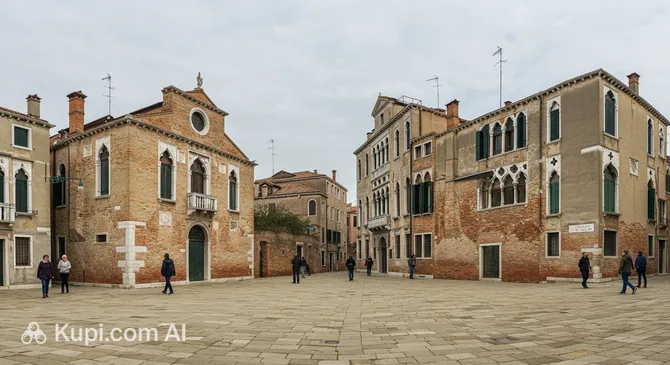
Venice Jewish Ghetto. Illustration.
Source: Kupi.com AI

Traveler photos:

Geographically, the ghetto is an isolated island surrounded by canals. In the past, connection to the rest of Venice was maintained via three bridges, whose gates were locked at night. This feature emphasized the community's isolated status at the time and gave the district its unique character.

Today, the Venetian Ghetto is a unique corner of the city that carefully preserves its authentic atmosphere, distinctive architecture, and rich cultural heritage. Walking through its narrow streets, you will see characteristic tall houses—the result of the need to house a growing population in a limited area. Here you will also find ancient synagogues, each with its own unique history, and the Jewish Museum, whose exhibits tell the story of the community's life and traditions in detail.

A visit to the Venetian Ghetto is an opportunity to touch centuries of history, feel the spirit of the past, and better understand the multifaceted character of Venice. This district remains one of the most important symbols of Jewish history and culture, not only in Italy but in all of Europe, attracting travelers interested in history and those seeking off-the-beaten-path routes.

Contacts

For detailed information on visiting the Venetian Ghetto, specifically the Jewish Museum, which is a major cultural component of the area, you can use the following contact details. They will help you check the current opening hours, ticket prices, and available tours.

How to contactContact
AddressCampo del Ghetto Nuovo, C. del Magazzen, 2882, 30121 Venezia VE, Italy
Phone number+39 055 298 9815
Websitewww.ghettovenezia.com

What to Do

While immersing yourself in the atmosphere of the Venetian Ghetto, be sure to visit its historic synagogues. There are five in total, and each reflects the unique traditions of the different Jewish communities that once lived here: the Great German School (Schola Todesca), the Canton School (Schola Canton), and the Levantine, Spanish, and Italian schools. Many of these synagogues are open to visitors, offering guided tours, and their interiors are striking for their remarkable combination of simplicity and hidden grandeur. Equally interesting is the Jewish Museum of Venice, whose exhibits detail the centuries-old history, culture, and daily life of the local community.

A walk through the ghetto itself is a pleasure in its own right. As you wander the narrow, picturesque streets, take note of the so-called "Venetian skyscrapers"—houses reaching 7-8 stories in height, which was a unique solution for medieval Venice necessitated by the lack of space. Stop by local cafes to try traditional kosher cuisine, or visit authentic bookstores and souvenir shops where you can find interesting artifacts and commemorative gifts related to the history of this amazing place.

Getting There

The Venetian Ghetto is located in the atmospheric Cannaregio district, in the northern part of the historic center of Venice. Reaching this iconic site is easy, with several convenient routes available depending on your starting point and preferred mode of transport.

If you arrive in Venice by train, the ghetto is within walking distance of Santa Lucia station. This pleasant stroll takes only about 10 minutes and allows you to immediately immerse yourself in the city's unique atmosphere. Another popular way to get around Venice is, of course, by vaporetto (water bus). The closest stop to the Jewish Ghetto is called Guglie, which is just a stone's throw from the entrance to the quarter.

For those starting from the heart of Venice, such as the famous St. Mark's Square, a walk to the Venetian Ghetto will take approximately 25–30 minutes. This is a great opportunity to explore the city by following signs or using a map. The district itself is perfect for leisurely walks, and you will easily find the entrance near the picturesque Ponte delle Guglie bridge, which serves as a prominent landmark.

Nearest city: Venice

History & Facts

The history of the Venetian Ghetto is inextricably linked to the very concept of the "ghetto." It was established in 1516 by decree of the Venice authorities, who allowed the Jewish community to settle on an isolated island that formerly housed an old foundry—"getto" or "geto" in the Venetian dialect (pronounced "jetto"). It is from this word that the world-famous term for segregated Jewish quarters originated. Thus, the Venetian Ghetto became the first of its kind in Europe.

From the beginning of its existence, the district quickly became multi-ethnic. Various groups of the Jewish population found refuge here: Ashkenazim from Germany and Eastern Europe, Sephardim expelled from Spain and Portugal, as well as Italian and Levantine (from the Eastern Mediterranean) Jews. Each community brought its own traditions, languages, and customs, creating a unique cultural environment. Due to the limited territory and ever-growing population, houses in the Venetian Ghetto were built very densely and grew upwards, sometimes reaching seven or eight stories. These structures are still among the tallest in old Venice and are a striking architectural feature of the quarter.

For centuries, life in the ghetto was governed by strict rules. The gates separating the quarter from the rest of the city were locked at night, and the keys were kept by Christian guards. Jews were required to wear special identifying marks on their clothing, were forbidden from owning property outside the ghetto, and their choice of professions was strictly limited (mostly trade, money-lending, and medicine). These restrictions were only lifted at the end of the 18th century with the arrival of Napoleon Bonaparte in 1797. French troops abolished the discriminatory laws, the ghetto gates were symbolically destroyed, and the Jewish community was granted equal rights with other residents of Venice, opening a new chapter in the history of this iconic site.

Time Needed

When planning a visit to the Venetian Ghetto, you should allow 2-4 hours to fully explore this unique historical district. This time is generally enough to take a leisurely stroll through its atmospheric streets, visit the Jewish Museum, and see at least one or more of the five ancient synagogues that are the heart of the quarter.

Of course, the duration of your visit may vary. If you want to dive deep into history, carefully study the museum exhibits, and perhaps join a tour of the synagogues (which is often recommended for a full understanding of their significance), it is better to set aside closer to the upper end of this range—about 3-4 hours. If your time is limited, even a one-hour walk will allow you to feel the special aura of the ghetto, but for a deeper impression, it is worth planning for more time.

Working Hours

When planning a visit to the Venetian Ghetto, it is important to consider the opening hours of its main attractions, such as the Jewish Museum of Venice and the synagogues. They are usually open to visitors from 10:00 to 17:30. However, keep in mind that these sites are closed on Saturdays and during Jewish holidays. Since the schedule can vary depending on the season and religious dates, it is highly recommended to check the current opening hours on the official museum website or through other reliable local information sources before your visit.

While the Venetian Ghetto itself, as a historic district of Venice, is accessible for walking at any time, it may be advisable to check in advance if ticket booking is required for visiting the museum and participating in synagogue tours, especially during the high tourist season. This will help you plan your visit in the best possible way and avoid potential inconveniences. Checking official information will also help you find out if the sites you are interested in are open year-round or if there are seasonal variations in their operation.

DayOpening hours
Monday10:00 – 18:00
Tuesday10:00 – 18:00
Wednesday10:00 – 18:00
Thursday10:00 – 18:00
Friday9:00 – 17:30
SaturdayClosed
Sunday10:00 – 18:00

Nearby

A visit to the Venetian Ghetto is undoubtedly a profound and memorable experience. However, to make your journey to Venice even more fulfilling, do not limit yourself to this single iconic location. The surroundings of the ghetto, like the rest of the city, are full of amazing places that can offer new impressions and expand your understanding of the rich history and culture of this unique city on water.

Exploring nearby attractions will allow you to better appreciate the many facets of Venice, seeing the contrasts and harmonious blend of different eras and styles. Very close by, you might find equally interesting museums, ancient churches, picturesque squares, or authentic bars where you can take a break and enjoy the local atmosphere.

NameDistance
Ca' Pesaro International Gallery of Modern Art0.6 km
Arcicchetti Bakaro0.9 km
Bacareto da Lele1 km
Scuola Grande di San Rocco1 km
Fondaco dei Tedeschi1.1 km
Palazzo Contarini del Bovolo1.3 km
Venice Jazz Club1.4 km

Have you reached the end of the page?

So the route has been studied inside and out