Support

Engyo-ji Temple

About

Engyo-ji Temple (Engyoji) is an impressive ancient Buddhist temple complex sprawling across the summit of Mount Shosha (also known as Mt. Syosha) in the city of Himeji, Japan. This temple is not only an important religious center for the Tendai Buddhist sect but also a significant historical monument, attracting pilgrims and tourists with its peaceful atmosphere and scenic location.
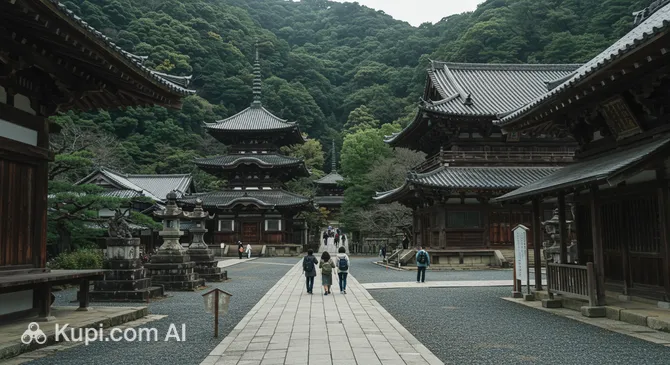
Engyo-ji Temple. Illustration.
Source: Kupi.com AI

Traveler photos:

The heart of the temple complex is the Maniden—the main building, whose name comes from the Sanskrit word "mani," meaning "as you wish." Originally built in 970, it was meticulously restored in 1932 following a fire in 1921, while maintaining its historical appearance and spiritual significance. The Maniden’s wooden architecture blends harmoniously into the surrounding mountain landscape.

In addition to the Maniden, the Engyo-ji complex includes several other monumental wooden structures grouped under the name Mitsunodo. Among them are the Daikodo (large lecture hall), Jikido (dining hall and monk quarters), and Jodo (practice hall). Interestingly, the Jikido building was used as a filming location for a scene in the famous Hollywood movie "The Last Samurai," which brought the temple international fame.

A visit to Engyo-ji Temple is an opportunity to experience centuries of Japanese history and culture, enjoy the silence and beauty of nature, and see a site immortalized in world cinema. It is a journey into the past that leaves a deep impression and brings peace of mind.

Contacts

For up-to-date information on operating hours and admission fees for Engyo-ji Temple, it is best to check its official website. You can also visit tourist information centers in the city of Himeji.

To reach the temple, which is located on Mount Shosha, you can take a bus from Himeji Station to the Mt. Shosha Ropeway, then take the cable car and walk a short distance through the scenic grounds.

How to contactContact
Address2968 Shosha, Himeji, Hyogo 671-2201, Japan
Phone number+81 79-266-3327
Websitewww.shosha.or.jp

What to Do

Visitors to Engyo-ji Temple immerse themselves in the unique spiritual atmosphere of this ancient site while learning about its rich cultural heritage. The central pilgrimage site is the Maniden, which houses a statue of the Goddess of Mercy carved by the temple's founder, Shoku. This six-armed goddess holds a "Nyoi-hoju" in one of her hands—a legendary wish-granting pearl that attracts many believers and curious visitors.

A particularly interesting event takes place annually on January 18th. Only on this day do visitors have the rare opportunity to see the temple's main statue and its four guardians—the Heavenly Kings. These figures, masterfully carved from a single piece of Japanese Hinoki cypress in the Ichiboku-zukuri style, are recognized as National Treasures of Japan and are only open for viewing once a year, making this day a particularly significant time to visit.

Beyond the Maniden, there are other noteworthy structures on the temple grounds. The Jikido building, which once served as a refectory and monk quarters, now houses the temple's treasures. This is also where a scene from the well-known Hollywood movie "The Last Samurai" was filmed, adding cinematic fame to the site. It is also worth visiting the Jogodo, where ceremonial music and dance performances were held in the past, allowing you to imagine the vibrant cultural life of the temple in bygone days.

Getting There

Engyo-ji Temple is located atop Mount Shosha (also known as Mt. Shosha) in the city of Himeji, Hyogo Prefecture, Japan. Therefore, the first step of your journey to this peaceful place is arriving in Himeji itself. This city is famous not only for its temple complex but also for the iconic Himeji Castle, so you can easily plan a visit to include both of these outstanding landmarks.

To get from Himeji to Engyo-ji Temple, the most popular route is using public transport. From the central Himeji Station, take Shinki Bus No. 8 bound for the "Mount Shosha Ropeway" stop. The bus ride takes approximately 30 minutes.

At the foot of Mount Shosha, you will find the Shoshazan Ropeway station. The cable car ascent to the mountain peak where the temple complex is located takes about 4-5 minutes and is an adventure in itself, offering beautiful views of the surrounding area. After arriving at the upper ropeway station, it is a pleasant 10-15 minute walk along a forested path to the main buildings of Engyo-ji Temple. You can also reach the lower ropeway station by taxi from Himeji.

Nearest city: Himeji

History & Facts

The history of Engyo-ji Temple dates back to the year 966. It was then that a Buddhist priest named Shoku, following a spiritual quest, founded this secluded temple atop Mount Shosha. Legend has it that Shoku achieved enlightenment in this picturesque and tranquil spot, which sparked the creation of a sanctuary that eventually became an important center for Tendai Buddhism.

One of the key buildings in the complex is the Maniden, with its original construction dating back to 970, just four years after the temple's founding. Unfortunately, this magnificent structure was severely damaged by fire in 1921. However, thanks to restoration efforts, the Maniden was reborn in 1932, preserving its historical authenticity and continuing to serve as the heart of the temple complex, drawing pilgrims and visitors with its spiritual atmosphere.

Over the centuries, Engyo-ji Temple played a significant role not only as a religious center but also as a major educational institution. The Daikodo, which served as Engyo-ji's main building during certain historical periods, was known as a prestigious training center where generations of Buddhist priests were educated. This enlightening activity helped spread the teachings and strengthen the temple's influence.

Today, Engyo-ji Temple is recognized as a UNESCO World Heritage site, highlighting its immense historical and cultural value not only to Japan but to the entire world. This recognition is a testament to the temple's unique architecture, its rich history, and the role it has played in the country's spiritual life. Visiting this place is an opportunity to connect with centuries-old traditions and feel the special energy of an ancient sanctuary.

Time Needed

To fully enjoy the atmosphere and explore the main structures of Engyo-ji Temple, visitors usually need 2 to 3 hours. This vast temple complex, located on Mount Shosha, includes several significant buildings, and to truly soak in its spirit, it is worth dedicating enough time rather than rushing through.

If you wish not only to see the main halls but also to take a leisurely stroll along all the paths, explore lesser-known corners, take plenty of photos, and fully experience the serenity of the place, then feel free to plan for about half a day. Don't forget to factor in the time for the ropeway ride and the walk from the upper station to the temple itself (approximately 10-15 minutes each way), which will add to the total time of your adventure in Himeji.

Working Hours

Engyo-ji Temple typically welcomes visitors throughout the year. As a rule, access to its vast grounds is possible from morning until the late afternoon. However, it is important to remember that exact operating hours may vary slightly depending on the season, the day of the week, or special temple events and festivals.

To ensure your visit is as smooth as possible and to avoid unexpected schedule changes, it is highly recommended to check the current operating hours just before your trip. You can find the most reliable information on the official Engyo-ji Temple website or by contacting tourist information centers in Himeji. As for advance booking, it is generally not required for individual tours, but if you are planning a group excursion or wish to participate in special ceremonies, it is best to inquire in advance.

8:30 – 17:00

Nearby

A visit to the majestic Engyo-ji Temple will undoubtedly be a highlight of your trip to Himeji. However, to make your journey even more rewarding and complete, it is worth exploring other interesting sites located nearby. Exploring the surroundings will allow you to dive deeper into the culture and history of this region of Japan, complementing the peaceful atmosphere of the temple with new discoveries.

The city of Himeji and its environs offer a variety of attractions to suit the interests of all kinds of travelers. From historical monuments to scenic parks and cultural centers, everyone will find something for themselves here. Below is a list of some interesting places located near Engyo-ji Temple, along with their approximate distances.

NameDistance
Highland Villa Himeji4.5 km
Himeji City Science Museum5.1 km
Himeji City Museum of Literature5.9 km
Himeji Castle6.3 km
Himeji Castle Main Keep6.3 km
Koko-en Garden6.4 km
Himeji City Museum of Art6.4 km

Have you reached the end of the page?

So the route has been studied inside and out