Support

Kashima Shrine

About

Kashima Shrine, also known as Kashima-jingu, is one of the three major Shinto shrines in eastern Japan and a significant landmark in the city of Himeji. This ancient sanctuary holds National Treasure status and is among the country's most important religious sites. The shrine is dedicated to Takemikazuchi-no-Mikoto, a powerful deity of thunder, swordsmanship, and martial arts, who in Japanese mythology is also considered a patron of warriors and a protector against earthquakes.
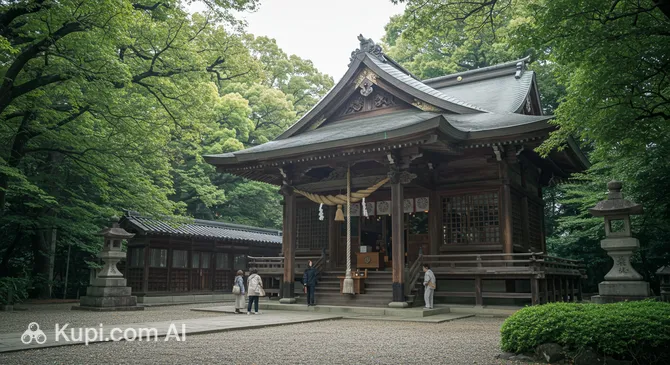
Kashima Shrine. Illustration.
Source: Kupi.com AI

Traveler photos:

Kashima Shrine belongs to the jingu category—shrines of the highest rank in the Shinto hierarchy—emphasizing its special importance. Historically, during the Heian period (794-1185), it was ranked alongside Ise-jingu and Katori-jingu as one of Japan's three most esteemed shrines. Additionally, Kashima-jingu was one of the sixteen chokusaisa shrines, where emperors would send special envoys with offerings for the deities, testifying to its deep connection with the imperial court.

A visit to Kashima Shrine is an opportunity to touch centuries of Japanese history and spiritual tradition. Travelers are drawn not only by its religious significance but also by its majestic architecture, the peaceful atmosphere of the sacred forests surrounding the temple, and the chance to learn more about Shintoism and its role in Japanese culture. For many, it is a place of power and spiritual purification, as well as a unique chance to see one of the most revered shrines in the country.

Contacts

To obtain up-to-date information on Kashima Shrine's operating hours or available contact methods, we recommend consulting the official tourism resources of Himeji or Japan's travel portals. Typically, such significant cultural sites can be reached by public transport from the city center, but it is best to confirm the exact route and schedule on-site or at local tourist information centers.

How to contactContact
AddressJapan, 〒676-0828 Hyogo, Takasago, Amidachō, Jitoku 279番地
Phone number+81 79-447-4676
Websitewww.kashimajinja.or.jp

What to Do

A visit to Kashima Shrine in Himeji offers a chance to experience traditional Japanese Shinto culture. Here, you can appreciate the shrine's architectural features and stroll through its grounds. Often, such sites include traditional buildings and well-maintained landscape elements, such as small gardens that create an atmosphere of peace and tranquility. Many shrines bearing the Kashima name are dedicated to the deity Takemikazuchi-no-Mikoto, revered as a patron of martial arts and a protector.

At Kashima Shrine, visitors can usually take time for prayer or quiet reflection, immersing themselves in the spiritual atmosphere of the place. It is also a good opportunity to get a sense of local beliefs and customs. As with many Shinto sanctuaries in Japan, there may be an opportunity to purchase traditional Japanese omamori amulets, which serve as charms or lucky talismans and make a meaningful souvenir of your journey.

Getting There

Reaching Kashima Shrine, located in the city of Himeji, is usually possible through several methods typical of Japanese cities with well-developed transport infrastructure. Since Japan is famous for its punctuality and efficient public transport, this is generally the most convenient and cost-effective option for tourists.

Most often, such shrines can be reached by local buses departing from central railway stations or key transport hubs in Himeji. It is recommended to check the route number and schedule in advance on the city's official tourist information website or directly at the bus stop. Sometimes, depending on the shrine's location, a short walk from the nearest stop may be required.

Alternatively, you can use taxi services. This is a more expensive but more comfortable way, especially if you are traveling with luggage or in a small group. A taxi ride from central Himeji to Kashima Shrine will take less time, and the driver will take you directly to the entrance. It is helpful to have the name of the shrine in Japanese or its address ready to facilitate communication with the driver.

Nearest city: Himeji

History & Facts

Kashima Shrine in Himeji is part of Japan's rich spiritual heritage. While the specific historical details of this particular shrine in Himeji may be unique and inextricably linked to local history, the name "Kashima" itself is widely known thanks to Kashima-jingu—one of the country's oldest and most revered Shinto centers, located in Ibaraki Prefecture. Traditions trace the founding of Kashima-jingu back to the legendary year 660 BC, the dawn of the Yamato state, with the first reliable written mentions dating to the 7th century.

The history of the famous Kashima-jingu (in Ibaraki) is closely intertwined with key figures and clans in Japanese history. It initially served as a stronghold for the influential Nakatomi clan, who managed religious affairs at the imperial court, and later came under the patronage of the powerful Fujiwara clan, who effectively ruled the country for four centuries. The mythological roots of Kashima-jingu, including accounts from the ancient text "Hitachi no Kuni Fudoki" about the appearance of the deity Kashima to the legendary first Emperor Jimmu, emphasize its deep symbolic significance. A major milestone was the establishment of one of Japan's first Shinto-Buddhist complexes (jingu-ji) at this shrine in 750 AD.

Returning to Kashima Shrine in Himeji, one can assume that, like other Shinto sanctuaries in Japan, it plays a vital role in the life of the local community. Such places traditionally serve for the worship of kami (deities), the performance of rituals, and seasonal festivals, acting as guardians of local cultural traditions. A visit to this shrine in Himeji provides an opportunity to touch the city's spiritual atmosphere and feel the connection across eras that is characteristic of Japanese culture.

Time Needed

When planning a visit to Kashima Shrine in Himeji, most visitors should expect to spend approximately 1-2 hours exploring it. This time is usually sufficient to take a leisurely stroll through the shrine grounds, examine the main structures, soak in the atmosphere, and perhaps participate in traditional rituals if any are being held during your visit.

Within this timeframe, you will be able to appreciate the shrine's architectural features, take photographs, and experience its spiritual significance. If you wish to study the history and details of each object on the grounds more deeply, visit any small museums or exhibitions at the shrine (if available), or simply spend more time in meditative contemplation, the duration of your visit may increase.

It is also worth considering that on festival days or during special ceremonies, the shrine grounds can be much busier, and the tour may take longer due to larger crowds and additional activities. Overall, Kashima Shrine offers a compact but rich experience for getting acquainted with Japanese culture and traditions.

Working Hours

Exact information regarding the operating hours of Kashima Shrine in Himeji may vary, so it is highly recommended to check the shrine's official website or confirm details at local tourist information centers before your visit. Many Shinto shrines in Japan are open to the public year-round, although access to the main buildings and for performing rituals may be limited to certain times of day.

Generally, no advance ticket booking is required to visit the shrine itself, unless you plan to participate in special ceremonies or events that might require prior registration. Confirming this information in advance will help you plan your visit effectively and avoid any potential inconvenience.

Open 24 hours

Nearby

Visiting an iconic landmark like Kashima Shrine is just the starting point for discovering the rich culture and history of Himeji. To truly immerse yourself in the atmosphere of the city and its surroundings, it is worth setting aside time to explore nearby points of interest. Each additional stop can reveal new facets of your journey and provide unforgettable impressions.

Exploring the area around Kashima Shrine will allow you to build a more complete picture of this amazing region of Japan. Nearby, you may find other historical monuments and scenic parks, as well as cozy spots to experience local cuisine. This approach will enrich your trip and make it even more rewarding. Here are some of the attractions located nearby:

NameDistance
Ishi-no-Hoden3.5 km
Oshiko Shrine3.5 km
Himeji Central Park6.9 km
Harima Sosha Shrine7.6 km
Hotel Monterey Himeji Restaurant7.7 km
Kohouseki7.7 km
Otemae Park7.9 km

Have you reached the end of the page?

So the route has been studied inside and out