Support

Asakusa Shrine

About

Asakusa Shinto Shrine (浅草神社, Asakusa-jinja), also known as Sanja-sama, meaning "Shrine of the Three Deities," is one of the most significant Shinto shrines. It is located in Koto, Japan. This shrine holds a special place in spiritual life as it is dedicated to the three men who, according to legend, founded the famous neighboring Buddhist temple, Senso-ji.
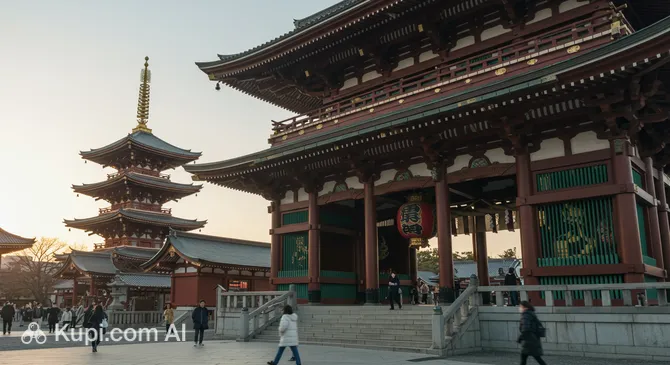
Asakusa Shrine. Illustration.
Source: Kupi.com AI

Traveller photos:

Asakusa-jinja is not just a standalone sanctuary but an integral part of a vast temple complex where Buddhist and Shinto structures harmoniously coexist. This unique combination vividly demonstrates the peaceful coexistence of the two main religions characteristic of Japanese culture, offering visitors a chance to better understand the country's spiritual traditions.

The architectural style of the shrine, known as gongen-zukuri, is typical of Shinto sanctuaries built during the Edo period. Asakusa Shrine was constructed in 1649 by order of the Shogun Tokugawa Iemitsu. It has been beautifully preserved to this day and is revered not only as an active place of worship but also as an important architectural and historical monument of Japan, attracting many tourists and pilgrims.

Contacts

For the most up-to-date information regarding opening hours and available tours at Asakusa Shinto Shrine, it is recommended to visit the shrine's official website or contact tourist information centers in Koto. Typically, such iconic landmarks are easily accessible by public transport or taxi.

As Asakusa Shinto Shrine is a popular tourist destination, information about it can also be found in most travel guides to Japan.

How to contactContact
Address2-chōme-3-1 Asakusa, Taito City, Tokyo 111-0032, Japan
Phone+81 3-3844-1575
Websitewww.asakusajinja.jp

What to Do

Visiting Asakusa Shinto Shrine offers a unique opportunity to experience traditional Japanese rituals. Guests often participate in rites aimed at attracting good luck, such as tossing coins into special offering boxes. You can also perform a ritual purification at the shrine's water pavilions, an essential Shinto practice, and, of course, offer prayers for well-being and health. These actions allow for a deeper connection with the sanctuary's atmosphere and an understanding of its spiritual significance for locals.

One of the most vibrant features of Asakusa Shinto Shrine is its central role in the Sanja Matsuri, one of Tokyo's largest and most colorful festivals. This grand event takes place annually in May, attracting thousands of participants and spectators. During the festival, richly decorated portable shrines known as mikoshi are ceremoniously carried through the shrine grounds and surrounding streets. The area comes alive with festive processions, traditional music, and dancing, creating an unforgettable spectacle for all visitors.

Beyond spiritual practices and festival events, a visit to Asakusa Shinto Shrine would not be complete without a stroll along the famous Nakamise-dori shopping street. This bustling lane, leading directly to the shrine's main gates, is an attraction in its own right. It is home to many traditional shops offering a wide range of Japanese souvenirs, from handicrafts to kimonos, as well as various local sweets and treats. It is an excellent place to pick up commemorative gifts and try authentic Japanese delicacies while immersing yourself in the country's culture.

Getting There

Asakusa Shinto Shrine is one of the most iconic landmarks in Japan. It is important to note that the shrine is not located in the Koto Special Ward, but in the neighboring historical district of Asakusa, which is part of the Taito Special Ward in Tokyo. However, if you are staying in Koto or planning a trip from there, reaching this sanctuary is easy thanks to Tokyo's excellently developed transport network.

The most convenient and popular way to get to Asakusa Shrine is via the Tokyo Metro. The station closest to the shrine is appropriately named "Asakusa". You can reach this station via several lines: the Tokyo Metro Ginza Line, the Toei Asakusa Line, and the Tsukuba Express. This makes it simple to plan a route from various parts of Tokyo, including Koto.

From the exits of Asakusa Station, the shrine complex is only about a 5-minute walk. The Asakusa district is very popular with tourists, so it is easy to navigate thanks to numerous signs in both Japanese and English. In addition to the metro, the shrine can be reached by city buses, many of which stop nearby. Taxis are also always an option. A pleasant bonus is that the shrine grounds are open to the public 24 hours a day, allowing you to choose the most convenient time for your visit.

Nearest city: Koto

History & Facts

Asakusa Shinto Shrine, located in the Asakusa district (Taito Special Ward, Tokyo), Japan, is not just an ancient sanctuary, but a place that holds a fascinating origin story. It was built in 1649, nearly a millennium after the events that led to the founding of the famous Buddhist temple, Senso-ji. Legend has it that in 628 AD, two fisherman brothers, Hinokuma Hamanari and Hinokuma Takenari, pulled a priceless statuette of the Bodhisattva Kannon from the waters of the Sumida River. This event became the starting point for the founding of Senso-ji, and subsequently, for the emergence of Asakusa Shrine.

Asakusa Shinto Shrine was built specifically to honor these two brothers and a local wealthy man, Haji no Nakatomo, who helped hand over the sacred relic to the clergy. Grateful descendants immortalized the memory of the three founders, and the shrine earned the popular nickname Sanja-sama, which means "Shrine of the Three Gods." This story highlights deep respect for ancestors and the events that shaped the region's spiritual landscape.

Over the centuries, Asakusa-jinja (another name for the shrine) has played a key role not only as an important religious site but also as a symbol of historical continuity and the unique interaction between Japan's two main religions—Buddhism and Shintoism. The shrine remains a center of spiritual life for many Japanese people and a venue for colorful, large-scale folk festivals that attract visitors from all over the world.

Time Needed

When planning a visit to Asakusa Shinto Shrine, located in Tokyo's famous Asakusa district, you should allow between 1.5 to 3 hours for your visit. This time is generally sufficient to take a leisurely stroll through the shrine complex, see its main buildings, and soak in the atmosphere of this significant site.

This timeframe includes not only the tour of the shrine itself but also a walk along the adjacent Nakamise-dori shopping street, where you can find traditional souvenirs and local treats. If you wish to dive deeper into the culture and participate in any rituals, purchase omamori (amulets), or visit the shrine during festival events, your stay may be longer.

Thus, to get a full impression of Asakusa Shinto Shrine and its surroundings, it is best to set aside about two to three hours in your schedule. This will allow you to enjoy your visit without rushing, take photos, and perhaps witness interesting local customs.

Working Hours

Asakusa Shinto Shrine is pleased to welcome visitors to its grounds 24 hours a day. It is important to note that the shrine itself is located in Tokyo's famous Asakusa district (Taito Special Ward), and not in Koto, as is sometimes mistakenly thought. This provides a wonderful opportunity to explore the shrine complex and its surroundings without rushing, even early in the morning or late in the evening. The main halls, where religious services and ceremonies take place, are typically open to worshippers and visitors from 9:00 AM to 4:30 PM. Thanks to this 24-hour access to the grounds, the shrine is available for visits throughout the year.

Generally, no advance booking or ticket purchase is required to visit the grounds of Asakusa Shinto Shrine and view its architecture. However, if you plan to attend special events, participate in specific rituals, or book a guided tour, it is highly recommended to check the official shrine website in advance for registration requirements and conditions, or contact local tourist information centers. This will help you get the most current information, avoid potential inconveniences, and plan your visit in the best possible way.

DayOpening hours
Monday9:00 – 16:00
Tuesday9:00 – 16:00
Wednesday9:00 – 16:00
Thursday9:00 – 16:00
Friday9:00 – 16:00
Saturday9:00 – 16:30
Sunday9:00 – 16:30

Nearby

Visiting such an iconic site as Asakusa Shinto Shrine is a highlight in itself. However, to truly immerse yourself in the atmosphere of the Asakusa district (Taito Ward, Tokyo) and feel the multifaceted nature of this part of Japan, it is worth exploring the surrounding area. Often, short walks to neighboring attractions reveal unexpected sides of the city and offer new experiences.

Exploring what lies nearby allows you not only to expand your cultural itinerary but also to better understand the context of the main object of your visit. Perhaps just a few steps away from Asakusa Shinto Shrine, other equally interesting places await that will complete your travel experience and make it even more rewarding.

NameDistance
Sensō-ji Five-Story Pagoda0.2 km
Hatoya Asakusa0.4 km
Nakamise Shopping Street0.4 km
Samurai and Ninja Museum0.7 km
Kappabashi Street1 km
MOGRA2.5 km
Akihabara Electric Town2.9 km

Reached the bottom of the page?

Looks like you know this route inside out