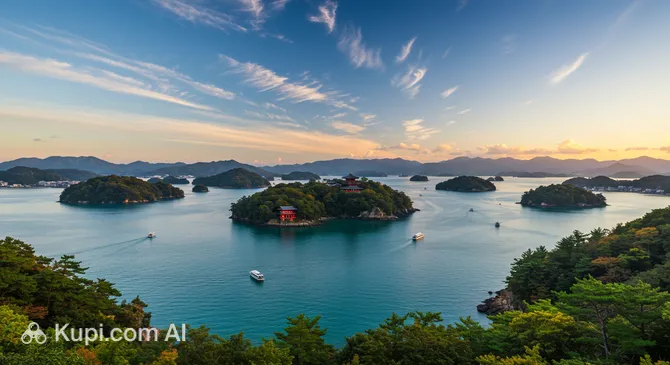
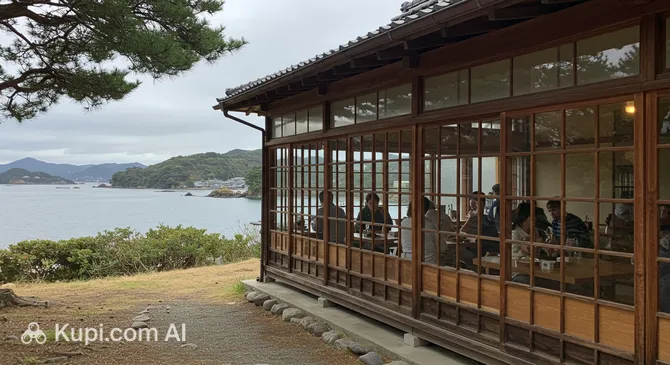
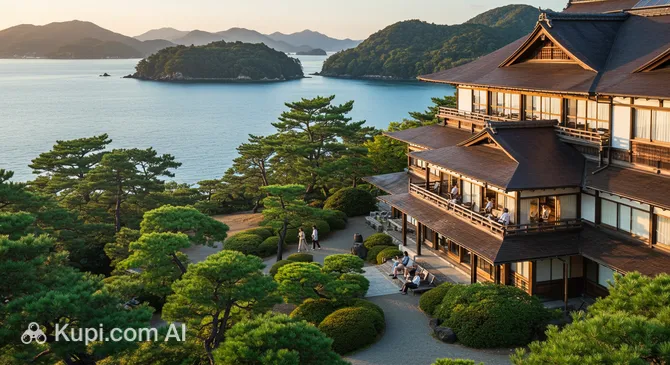
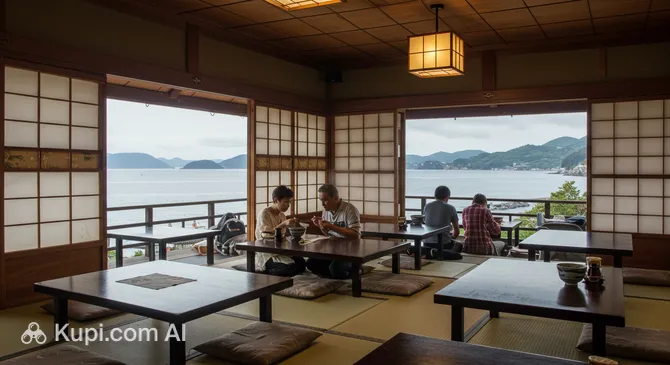
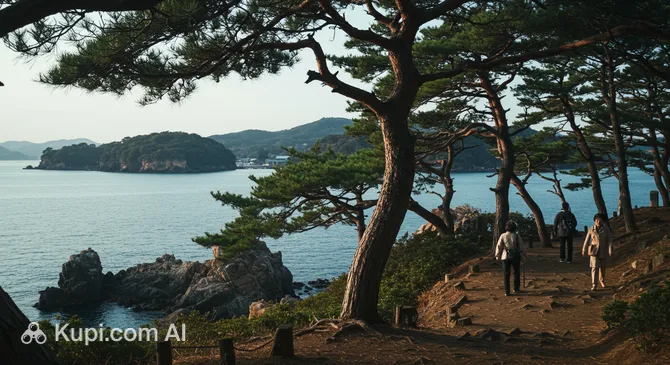
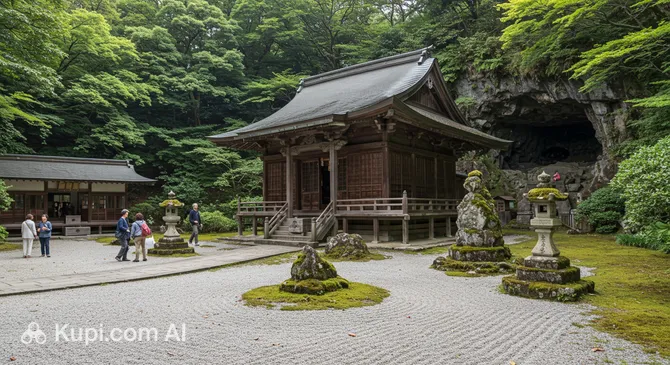
Matsushima is not just a city, but one of the "Three Views of Japan," a true jewel of Miyagi Prefecture. Located on the Pacific coast, this cozy town with a population of about 13,000 is famous for its peaceful atmosphere and, of course, the breathtaking views of Matsushima Bay, which is dotted with over 260 small pine-covered islands.
Matsushima. Illustration.
Source: Kupi.com AI
The main attraction of Matsushima, drawing travelers from all over the world, is the bay itself. Boat tours allow you to see the whimsical shapes of the islands, each with its own name and history. Other iconic sites include Zuigan-ji Temple—an important Zen Buddhist temple with a rich history—and the charming Godaido Pavilion, picturesquely situated on a small island connected to the shore by a graceful red bridge.
A trip to Matsushima promises unforgettable impressions from contemplating unique natural beauty and exploring a rich cultural heritage. This town is the ideal destination for those seeking tranquility, inspiration, and a chance to see one of the most iconic panoramas in the Land of the Rising Sun.
The weather in Matsushima is characterized by distinct seasonal changes, making the city an attractive destination year-round. Summers here are warm and humid, especially in July and August, when average temperatures range between +24°C and +25.3°C, and the number of rainy days can reach 18–20 per month. Winters in Matsushima are relatively mild yet cool, with an average January temperature of around +1.6°C. The winter months see the least amount of precipitation (around 2 mm), although overcast days are not uncommon.
Spring and autumn offer pleasant weather, ideal for strolling and sightseeing. For instance, the average air temperature in May is approximately +16°C, and in October, it is about +15.6°C. During these transitional seasons, rainfall is moderate. Generally, expect warm summers with occasional rain and cool winters with low precipitation. For more detailed information on climatic conditions, you can explore the Matsushima climate.
Average monthly temperature
Average monthly precipitation
Interesting Facts
In addition to its world-famous beauty, Matsushima holds many curious details and stories that make this corner of Japan even more alluring. Here are a few facts that might surprise you and help you look at Matsushima from a new perspective:
The famous poet Matsuo Basho, visiting Matsushima in the 17th century, was reportedly so struck by its beauty that legend says he was unable to compose a traditional haiku, deeming any words insufficient to describe the bay's splendor.
The small Godaido temple, which is a symbol of Matsushima, houses five statues of guardian deities. They can only be seen once every 33 years—the next such event is expected in 2039 (the previous one was in 2006).
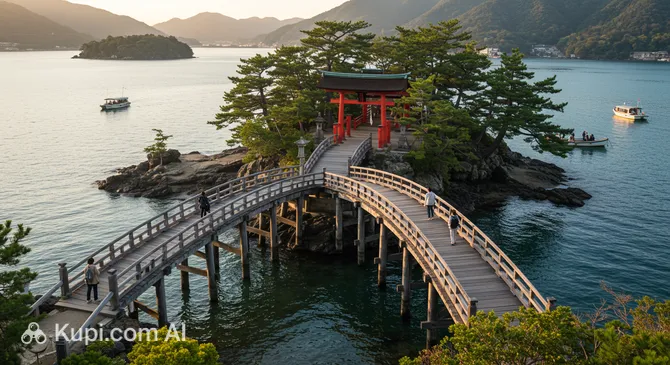
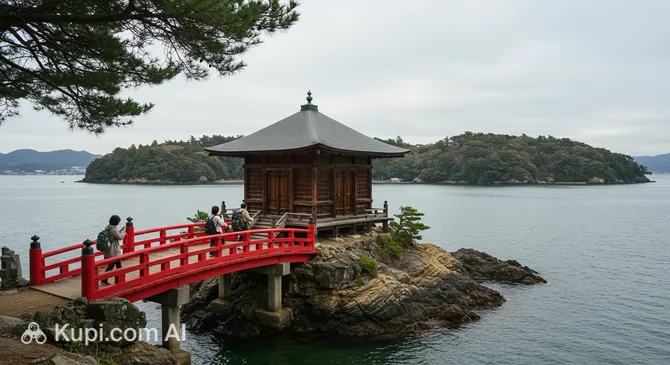
A long red bridge called Fukuurabashi (252 meters) leads to Fukuura Island. Locals call it the "Encounter Bridge" or "Matchmaking Bridge," believing that walking across it brings luck in love.
There are four traditional viewpoints known as "Shidaikan" (The Four Great Views of Matsushima), each offering a unique panorama of the bay. One of them is Tamonzan, from which the "Grand View" (Sokan) can be seen.
Matsushima is famous for its oysters, which are farmed in the bay year-round. The fresh oyster season runs from October to March, during which time you can try many dishes made from them, including the famous "kaki-goya"—small restaurants specializing in grilled oysters.
Fukuura Island. Illustration.
Source: Kupi.com AI
Traveler photos:
How to Get There
Matsushima, one of the three famous scenic views of Japan, attracts travelers with its unique beauty. You can get here in several ways, but the most common for international and long-distance travel is a flight to one of the nearest airports.
The main and most convenient option for traveling to Matsushima is Sendai Airport (SDJ). This major international airport is located in the city of Sendai, only about 30 km from Matsushima. Thanks to its convenient location and good transport links, most tourists choose this airport. A taxi or bus ride from the airport to your destination in Matsushima takes about 1 – 1.5 hours.
Another possibility is Junmachi Airport (GAJ), located in Yamagata. The distance from this regional airport to Matsushima is about 61 km. The journey to Matsushima from here will take approximately 1.5 – 2 hours. This option might be convenient depending on your overall itinerary in Japan.
Besides air travel, Matsushima can be reached by other means. For example, by train, arriving at the major rail hub in Sendai, from where local trains (JR Senseki Line) and buses run regularly directly to Matsushima. Traveling by train in Japan is a fascinating journey in itself, allowing you to enjoy the country's scenery. Another option is traveling by rental car, which provides more freedom and flexibility in planning stops along the way.
For clarity, here is a summary of the main airports that can be used for a trip to Matsushima:
Matsushima, one of the three most scenic views in Japan, offers travelers not only breathtaking landscapes but also unique cultural treasures. Here are several key attractions that are definitely worth including in your itinerary through this charming town:
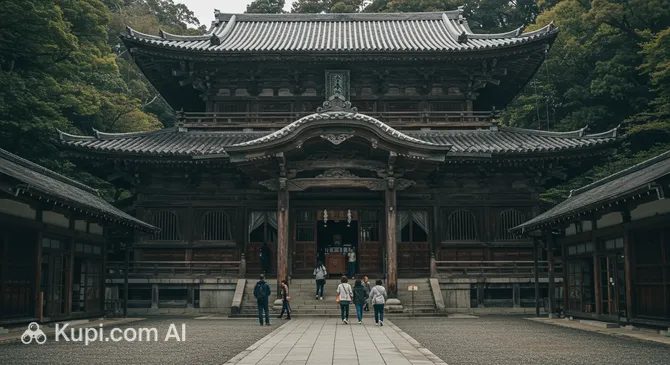
One of the main shrines in Matsushima is Zuigan-ji Temple, designated as a National Treasure of Japan. This significant Zen Buddhist temple was founded back in 828, though its current majestic structures were built in the early 17th century by order of the powerful daimyo Date Masamune. Visitors are impressed not only by the architecture and rich history but also by the magnificent painted fusuma (sliding screens) in the main hall, as well as the quiet cedar-lined paths and ancient meditation caves carved into the rocks on the approach to the temple complex. This is a place where deep spirituality intertwines with centuries of history.
Zuiganji Temple. Illustration.
Source: Kupi.com AI
Traveler photos:
It is impossible to imagine Matsushima without Godaido—a small but incredibly photogenic pavilion that has become a true symbol of the city. It sits elegantly on a tiny island reached by the distinctive red Sukashibashi bridge. The bridge's construction, with gaps between the planks, is intentional: it serves as a reminder to be mindful and focused on the path to spiritual enlightenment. The pavilion houses statues of the five Great Wisdom Kings, which can only be seen once every 33 years. The island offers peaceful views of the bay.
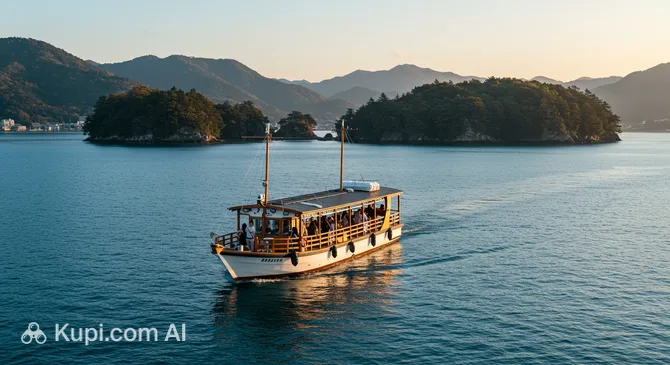
To fully appreciate the beauty of one of "Japan's three famous landscapes," be sure to take a boat trip around Matsushima Bay. This sea excursion will take you past more than 260 picturesque pine-clad islands, each with its unique shape, name, and often a legend associated with it. There are several routes available, allowing you to enjoy different perspectives of the famous archipelago and take unforgettable photographs. It is the best way to experience the magic of the Matsushima islands.
Matsushima Bay Sightseeing Cruise. Illustration.
Source: Kupi.com AI
Traveler photos:
Near Zuigan-ji is another remarkable site—Entsu-in Temple. It is known for its Sankeiden mausoleum, the resting place of Date Mitsumune, the grandson of Date Masamune. The uniqueness of the mausoleum lies in its interior decorations, featuring motifs rare in traditional Japanese art, such as roses and crosses, believed to have been brought from Europe by the mission of Hasekura Tsunenaga. The temple is also famous for its beautiful gardens: a karesansui-style rock garden, a moss garden, and a rose garden. Entsu-in is particularly beautiful in autumn when the maples turn vibrant colors and the temple hosts evening illuminations.
Local Cuisine
Matsushima, blessed by the sea, offers a gastronomic experience centered around the freshest seafood. The main star of the local cuisine is undoubtedly Matsushima oysters, renowned for their exquisite taste and high quality. A trip here would not be complete without tasting these marine delicacies.
Oysters are served here in all possible forms: raw with a drop of lemon or soy sauce, deep-fried (known as kaki-fry), grilled directly in their shells, or as part of hearty hot dishes. Especially popular during the season (usually from October to March) are the so-called "kaki-goya"—specialized establishments where you can enjoy your fill of oysters cooked on a large open grill. In addition to oysters, be sure to try kaisendon—an appetizing bowl of rice generously topped with various fresh seafood such as tuna, salmon, sea urchin, and roe. One place to sample this popular dish is the Fisherman's Kaisendon restaurant.
Fisherman's Kaisendon. Illustration.
Source: Kupi.com AI
Traveler photos:
Matsushima's food scene isn't limited to just oysters and kaisendon. Here you can also enjoy other treasures from the sea, such as anago-meshi (rice with tender sea eel) or simply fresh fish skillfully grilled. For those who prefer hearty noodles, udon is an excellent choice. For instance, you can visit Inaiwa Udon Takisawaya to get acquainted with this traditional Japanese dish. Locals and tourists also highly prize dishes made from seasonal vegetables and mushrooms, which harmoniously complement the seafood delicacies.
Regarding drinks, look out for local sake from Miyagi Prefecture, which is considered to pair perfectly with seafood, enhancing its flavor. Various types of Japanese beer and shochu (a strong distilled spirit) are also popular. Among non-alcoholic drinks, green tea remains the constant favorite, served almost everywhere and forming an integral part of a Japanese meal. In some cozy cafes, you can also find desserts using local ingredients, such as green tea ice cream or traditional sweets.
The dining culture in Matsushima is primarily focused on small, often family-run restaurants and cafes, many of which specialize in the freshest seafood. Traditions and the quality of ingredients are highly valued here. Many ryokans (traditional Japanese inns) also offer their guests exquisite kaiseki dinners featuring seasonal local delicacies. Although street food is not as widespread as in major cities, near popular tourist routes you can find stalls offering various snacks, such as fried oysters on skewers or fish cakes (kamaboko).
Gastronomic impressions in Matsushima are an essential and very pleasant part of the journey. The freshness of ingredients gifted by the generous sea, the skill of local chefs, and the often picturesque views accompanying the meal make every sit-down special. Seafood lovers will find a true paradise here, and getting to know unique local dishes like the famous oysters or aromatic kaisendon will be one of the brightest memories of a trip to this beautiful corner of Japan.
Travel Tips
Welcome to Matsushima, one of the three most scenic spots in Japan! To make your journey through this charming corner as comfortable and pleasant as possible, we have prepared some practical tips.
Clothing and Essentials:
The climate in Matsushima, as in all of Japan, has distinct seasonality. In summer (June-August), it is warm and humid, so bring light, breathable clothing and a raincoat. In winter (December-February), it is cool; a warm jacket, hat, and gloves will be useful. Spring and autumn are the most comfortable seasons, and layered clothing is ideal. A key element of your wardrobe is comfortable shoes, as you will be doing a lot of walking while exploring the islands and temples. Don't forget an adapter for your electronics (Japan uses type A and B sockets, voltage 100V). When visiting temples such as Zuigan-ji or Entsu-in, show respect by choosing more modest clothing that covers shoulders and knees.
Transportation in Matsushima:
Matsushima itself is a small town, and many attractions in the coastal area are easy to get around on foot. To see the famous islands of Matsushima Bay, the primary mode of transport is the cruise boats departing from the pier. If you are arriving from other cities, such as Sendai, it is convenient to use the JR Senseki Line trains (Matsushima-Kaigan Station). Taxis are available but can be expensive. Renting a car just for moving around Matsushima is usually not necessary and can create parking problems.
Financial Matters:
The local currency is the Japanese yen (JPY, ¥). While credit cards (Visa, Mastercard) are accepted in many hotels, large restaurants, and shops, cash remains very important, especially for paying in small shops, some temples, buying boat tickets, or at local markets. You can exchange currency at the airport, banks, or post offices (Japan Post Bank). ATMs that accept international cards are most commonly found in 7-Eleven stores (Seven Bank ATMs) and at the post office. Tipping is not customary in Japan and may cause confusion; good service is already included in the price.
Health and Safety:
Matsushima, and Japan in general, is a very safe place for tourists. Observe standard precautions. Drugstores sell over-the-counter medicines. It is highly recommended to take out travel medical insurance before your trip. If serious medical assistance is needed, major hospitals are located in nearby Sendai. Be aware of the possibility of earthquakes and typhoons, especially if your trip falls during typhoon season (August-October).
Language and Communication:
The official language is Japanese. In tourist areas such as information centers, hotels, and popular attractions in Matsushima, staff may speak basic English. However, knowing a few simple Japanese phrases like "Konnichiwa" (Hello), "Arigato" (Thank you), and "Sumimasen" (Excuse me/Sorry) will be very helpful and appreciated by locals. For constant internet access, consider buying a travel SIM card or renting a pocket Wi-Fi router. Free Wi-Fi is available in some hotels and public spaces.
Local Etiquette:
Japanese people highly value politeness and respect. Instead of a handshake, a slight bow (o-jigi) is often used. In public places, especially on transportation, try to speak quietly. Remove your shoes before entering temples, traditional ryokans, and some restaurants (there is usually a special place for this, and slippers may be provided). It is not customary to eat or drink while walking on the street unless you are in specifically designated areas.
What to Avoid:
To avoid offending locals and awkward situations, try not to point your finger at people or sacred objects (it's better to use an open palm). Also, while eating, do not stick your chopsticks vertically into a bowl of rice, as this is associated with funeral rituals.
Special Tip for Foodies:
Matsushima is famous for its oysters! If your trip falls between October and March, be sure to take the opportunity to try the freshest local oysters. They are served raw, fried, grilled, and as part of various dishes. During this time, special "kaki-goya" (oyster huts) often operate, where you can enjoy this delicacy to the fullest. This is an unforgettable gastronomic experience that will be a highlight of your trip to Matsushima.
We hope these tips help you better prepare for your trip and get the most out of your stay in Matsushima. We wish you unforgettable impressions from contemplating its unique beauty and experiencing Japanese culture!
Entertainment & Nightlife
Matsushima, known primarily for its peaceful landscapes and rich cultural heritage, offers guests a calm and measured evening experience that harmoniously complements the day's activities. Here you won't find loud night clubs or districts bustling until dawn like in major metropolises. Matsushima's nightlife is more about the opportunity to enjoy a delicious dinner, spend time in a cozy bar, or simply admire the quiet bay under the stars.
The foundation of evening entertainment in Matsushima consists of restaurants and traditional Japanese pubs—izakayas. Many of them are located along the waterfront or on the central streets, offering dishes made from the freshest seafood for which the region is so famous. The atmosphere in such places is usually relaxed and welcoming, perfect for a leisurely dinner with friends or a romantic evening. Some hotels, such as the Hotel Matsushima Taikanso, may have their own bars or lounge areas where you can enjoy drinks with a view of the bay.
Hotel Matsushima Taikanso. Illustration.
Source: Kupi.com AI
Traveler photos:
For dinner, you might consider establishments like Fisherman's Kaisendon, which serves famous bowls of rice topped with seafood, or Inaiwa Udon Takisawaya if you prefer traditional Japanese noodles. Most restaurants and izakayas stay open until late evening, but keep in mind that in smaller towns, establishments may close earlier than in large centers, especially on weekdays. The dress code is generally casual and informal.
Inaniwa Udon Takisawaya. Illustration.
Source: Kupi.com AI
Traveler photos:
Practical tips for evening relaxation:
Timing: It's best to plan dinner or a bar visit between 7:00 PM and 10:00 PM. Some venues may stay open longer, especially on weekends.
Prices: The cost of dinner in a mid-range restaurant can vary, but overall, prices in Matsushima are moderate. Drinks in bars also have standard pricing for Japan.
Transport: You can move around the central part of Matsushima on foot in the evening. If your hotel is further away, it's better to check the schedule for the last buses in advance or use taxi services. You can call a taxi through the hotel reception or find one at designated stands.
Safety: Matsushima, like all of Japan, is a very safe place. Evening walks here are pleasant and worry-free. However, standard common-sense precautions are always recommended.
As for daytime entertainment, Matsushima offers many options for an active holiday. Besides the famous bay cruises and island visits, you can explore historical temples like Zuigan-ji Temple or Entsu-in Temple, stroll through the scenic Saigyo Modoshi-no-Matsu Park, or visit small local museums detailing the region's history and culture. There are no large amusement parks or big theaters in the town; the focus is on natural beauty and spiritual heritage.
Evening in Matsushima is a wonderful opportunity to relax after a busy day, enjoy local cuisine, and the peaceful atmosphere of one of Japan's most beautiful places.
Parks & Museums
Matsushima, one of the three famous views of Japan, fascinates not only with its picturesque islands but also with a rich cultural heritage that can be explored through its parks, temples, and historical sites. Here, nature and history intertwine to create a unique atmosphere for travelers.
For those seeking a connection with nature and breathtaking vistas, Matsushima offers several wonderful green areas. One of the most famous is Saigyo Modoshi-no-Matsu Park, located on a hill. From here, stunning panoramas of the bay open up, especially beautiful during the cherry blossom season. It is an ideal spot for leisurely walks and photo sessions.
Saigyo Modoshi no Matsu Park. Illustration.
Source: Kupi.com AI
Traveler photos:
Another iconic location is Fukuura Island, connected to the mainland by a long red bridge. The island features a natural botanical garden with a variety of plants and convenient walking trails that allow you to enjoy the silence and beauty of the coastal landscapes. Lovers of panoramic views should also visit Tamonzan, one of the four famous viewpoints of Matsushima, which offers a classic view of the pine islands.
Fukuura Island. Illustration.
Source: Kupi.com AI
Traveler photos:
The cultural heart of Matsushima beats in its ancient temples, which are essentially living museums of history and art. The most prominent is Zuigan-ji Temple, a National Treasure of Japan. This Zen Buddhist temple, founded in the 9th century and rebuilt by the famous daimyo Date Masamune in the early 17th century, impresses with its architecture, painted screens, and serene atmosphere. Its treasury houses valuable artifacts that tell the story of the region's rich history.
Zuiganji Temple. Illustration.
Source: Kupi.com AI
Traveler photos:
Nearby is Entsu-in Temple, known for its beautiful gardens, including a Western-style rose garden unique to Japan and a traditional Japanese karesansui moss garden. The temple also houses the mausoleum of Date Masamune's grandson, Sankeiden, decorated with Western motifs that testify to the region's early contacts with Europe. This site offers a deep immersion into history and aesthetics, where you can admire details for hours and find peace.
Entsuin Temple. Illustration.
Source: Kupi.com AI
Traveler photos:
The symbol of Matsushima is Godaido—a small, picturesque pavilion dedicated to the five great guardian deities. It is situated on an islet connected to the shore by elegant red Sukashibashi bridges and is one of the most photographed attractions. Although the pavilion itself is only open to the public once every 33 years, its exterior and the surrounding scenery are impressive at any time, embodying the beauty of the bay.
Godaidō Hall. Illustration.
Source: Kupi.com AI
Traveler photos:
To complete your experience of Matsushima, do not limit yourself to land-based walks. A boat trip around Matsushima Bay will allow you to see the famous islands from the water and appreciate the full scale of this natural wonder. And to capture the spirit of the town without the crowds, try visiting lesser-known viewpoints at sunrise or sunset when the light is particularly soft and the atmosphere is filled with tranquility. For example, the view from Umanose Rock offers a different perspective on the bay.
Getting Around
Getting around Matsushima and its surroundings is fairly simple, especially if your goal is to see the main attractions. The town is compact, and many interesting places are within walking distance of each other. However, for a more comprehensive exploration of the region and for arriving in Matsushima, various types of transport will be useful.
The primary way to reach Matsushima from major cities like Sendai is by train. The JR Senseki Line will take you directly to Matsushima-Kaigan station, which is located in the heart of the tourist zone. The journey from Sendai takes about 30-40 minutes. For paying the fare on JR trains, it's convenient to use rechargeable IC cards (such as Suica or Pasmo) or buy single tickets at station vending machines.
Within Matsushima itself, a system of local buses operates, including the Matsushima Town Bus. These can be useful if you want to reach more distant points or if you prefer not to walk long distances. Payment on buses is usually made in cash when disembarking (often exact change is required) or also with IC cards if the system supports it. Schedules and routes can be checked at the station or the tourist information center.
A key element of Matsushima's transport system, especially for tourists, is the sightseeing boats and ferries. These allow you to enjoy the famous views of the hundreds of islands in Matsushima Bay. Several companies offer various cruise routes, differing in duration and the islands they cover. Ferry tickets are purchased at the ticket offices near the piers. The cost of a cruise usually starts from 1,500 yen and up, depending on the chosen route.
As for the payment system, IC cards are most convenient for JR trains and some buses. For buying ferry tickets and paying on most local buses, it's better to have cash. Train tickets can be bought at machines or ticket offices at stations; bus fares are often paid directly to the driver; and ferry tickets at the pier ticket offices. Public transport hours can vary: trains run according to a schedule, buses are usually less frequent—especially in the evening—and ferries operate primarily during daylight hours.
Among alternative ways to move aroundMatsushima, walking stands out—it's the best way to explore the coastal zone, temples, and parks. Bicycle rentals are also popular, allowing you to comfortably explore the area at your own pace. Rental points can be found near the station or tourist centers. Taxis are also available but are more expensive and can be useful for trips with luggage or to places not served by public transport.
A unique feature of Matsushima's transport system is that the bay cruises themselves are not just a way to get from point A to point B, but a complete tourist experience, allowing you to see the region's main gem. It's also worth noting the picturesque pedestrian bridges connecting the mainland with some islands, such as Fukuura Island or Godaido, which are attractions in their own right and part of your "route."
Accommodation
In Matsushima, travelers will find various accommodation options to suit different budgets and preferences. You can stay in traditional Japanese ryokans featuring onsens (hot springs) and exquisite local cuisine, or in more modern hotels, guesthouses (minshuku), and hostels. Some ryokans and hotels offer magnificent views of the famous Matsushima Bay.
Most accommodation options are concentrated in the area adjacent to Matsushima-Kaigan Station and along the waterfront. This is very convenient, as main attractions like Zuigan-ji Temple, Godaido, and the sightseeing boat piers are within walking distance. Choosing accommodation here ensures easy access to everything interesting in Matsushima.
Notable accommodation options include, for example, Hotel Matsushima Taikanso, which offers spacious rooms and bay views, or Matsushima Ichinobo, known for its hospitality and traditional atmosphere. These hotels are often popular with tourists seeking a comfortable stay with beautiful scenery.
Hotel Matsushima Taikanso. Illustration.
Source: Kupi.com AI
Traveler photos:
When planning a trip to Matsushima, especially during peak seasons (such as the cherry blossom season in spring or autumn foliage viewing), it is recommended to book your accommodation in advance. Popular ryokans and hotels with good reviews can be fully booked several months ahead. This also applies to national holiday periods in Japan.
The price range for accommodation in Matsushima varies from budget options in hostels and some minshuku to the medium and high price segments in hotels and ryokans with full board and onsens. You can book your stay through popular international online booking platforms, directly on hotel websites, or via Japanese travel agencies. Comparing prices and conditions across different resources will help you find the best option for your trip.
Nearby Cities
For those who want to explore the surrounding area, Matsushima serves as an excellent starting point for day trips to several interesting nearby locations:
These nearby destinations provide insight into the diverse culture and landscapes of the region. For example, Sendai, the largest city in the Tohoku region, is known for its rich history associated with the Date clan, modern shopping streets, and the Tanabata Festival. Tagajo boasts ruins of an ancient fortress and administrative center that was important in Japanese history. Each of these trips will offer new experiences and complement your journey to Matsushima.
Shopping & Souvenirs
Shopping in Matsushima is not about chasing brands in huge shopping centers, but rather a pleasant immersion into local flavor and the search for unique souvenirs. The town is famous for its handicrafts, seafood products, and goods that reflect the beauty of the famous bay. Most shops here are small, family-run establishments where you can find something truly special to remember your trip to Japan.
The main shopping spots are concentrated along the main street leading from the Matsushima-Kaigan railway station to the major attractions like Godaido and Zuigan-ji Temple, as well as on the waterfront. Here you will find many souvenir shops, stalls with local delicacies, and handicrafts. Strolling through these streets is a pleasure in itself, allowing you to combine sightseeing with shopping. There are no large shopping malls in the conventional sense in Matsushima; the focus is on small specialized stores.
Special attention should be paid to the Matsushima Fish Market (Matsushima Sakana Ichiba). This is not just a market, but a true gastronomic center where you can buy the freshest seafood, including famous local oysters (in season), as well as a variety of processed marine delicacies that make excellent edible souvenirs. You can also have a snack here at one of the small restaurants offering dishes made from freshly caught seafood.
Among popular souvenirs from Matsushima, traditional Japanese kokeshi dolls stand out, as they are a characteristic craft of Miyagi Prefecture. Items featuring images of the pine trees and islands of Matsushima Bay—from postcards and magnets to ceramics and textiles—are also popular. Don't forget local sweets, such as seafood senbei (rice crackers) or unique ice cream flavors. History buffs can find souvenirs related to daimyo Date Masamune, who played an important role in the region's history.
Most shops in Matsushima are open approximately from 9:00 AM or 10:00 AM until 5:00 PM or 6:00 PM. During the tourist season, hours may be slightly extended. Regarding payment, many small shops and the market prefer cash, though larger souvenir stores and hotels accept credit cards. For foreign tourists, a Tax Free system is available in some shops for purchases over a certain amount (usually 5,000 yen). Look for the corresponding signs and remember to present your passport when making a purchase.