Support

Kairakuen

About

Kairakuen is not just a park, but one of the three most famous traditional gardens in Japan, alongside Kenrokuen in Kanazawa and Korakuen in Okayama. Located in the city of Mito, the administrative center of Ibaraki Prefecture, Kairakuen is an outstanding example of Japanese landscape gardening and a significant cultural attraction.
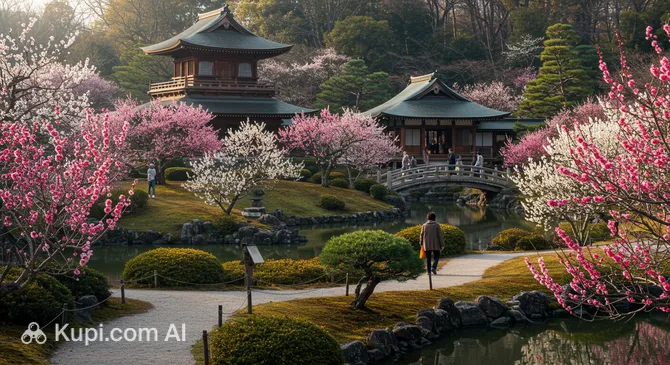
Kairakuen. Illustration.
Source: Kupi.com AI

Traveller photos:

The park, founded in 1842 by Tokugawa Nariaki, the ninth daimyo of the Mito domain, covers an impressive area of more than 130,000 square meters. Its name translates as "a park for joint enjoyment," reflecting the ruler's innovative idea at the time to make it accessible not only to the nobility but also to common people. Kairakuen is famous for its unique Japanese garden-style landscape design, which harmoniously combines traditional elements with solutions that were advanced for their time.

The crown jewel and symbol of Kairakuen is its extensive plum grove (ume), featuring about 3,000 trees of more than 100 different varieties. Every year in late February – early March, the famous Plum Blossom Festival (Ume Matsuri) is held here, attracting thousands of visitors from all over the country and abroad. In addition to the plum trees, the park features picturesque bamboo groves, cedar alleys, and the historic Kobuntei building. Due to its beauty and historical significance, Kairakuen is open to the public and remains a favorite holiday destination, allowing visitors to experience the refined aesthetics of a traditional Japanese garden.

Contacts

To obtain up-to-date information on opening hours, ticket prices, or special events at Kairakuen Park, it is recommended to contact the park administration. You can clarify all the details you are interested in via the phone number provided.

How to contactContact
Address1-chōme-3-3 Tokiwachō, Mito, Ibaraki 310-0033, Japan
Phone+81 29-244-5454
Websiteibaraki-kairakuen.jp

What to Do

Kairakuen is a place where visitors can immerse themselves in the beauty of Japanese nature at any time of year. The main event drawing many tourists is the famous Mito Plum Blossom Festival (Mito Ume Matsuri), held in late February and March. During this period, thousands of plum trees bloom, filling the air with a delicate fragrance and creating a truly magical sight. It is the perfect time for walking and admiring the blossoms.

Beyond the plum festival, Kairakuen offers unique experiences in other seasons as well. In summer, guests can enjoy the coolness and tranquility of the dense bamboo groves, while in autumn, the park is transformed by the vibrant colors of Japanese maple leaves, creating picturesque landscapes. In winter, when snow falls, Kairakuen takes on a special, almost fairy-tale charm, offering quiet and peaceful walks.

During a visit to Kairakuen, you can take a leisurely stroll along the well-maintained paths, exploring different corners of the park. It is definitely worth visiting the traditional Japanese Kobuntei pavilion, which offers beautiful views, including of the scenic Lake Senba. This is an excellent spot to take beautiful souvenir photos and enjoy the silence and harmony characteristic of Japanese gardens. Kairakuen is a wonderful choice for those who appreciate Japanese culture and nature and are looking for a place for contemplative relaxation.

Getting There

Getting to Kairakuen Park, located in the city of Mito, is quite simple, especially if you are starting your journey from Tokyo. Mito is located about 120 kilometers northeast of the Japanese capital. The most convenient way to reach Mito is by using the JR Joban Line train, which departs from Ueno Station in Tokyo. The journey takes approximately 70 to 90 minutes, depending on the type of train.

Upon arrival at Mito railway station, you will have several options to reach Kairakuen Park directly. If the weather is pleasant and you have some time, you can take a nice walk – the path on foot takes about 20-25 minutes. Alternatively, buses regularly run from Mito Station and stop right near the park entrance, making this a quick and convenient option.

It is worth noting that during the famous Plum Blossom Festival, which usually takes place from late February to March, visiting Kairakuen Park becomes even more convenient. During this period, a special temporary railway station, Kairakuen Station, opens right at the park's main entrance. This allows tourists to save time and immediately immerse themselves in the festive atmosphere and the beauty of the blooming plum trees.

Nearest city: Mito

History & Facts

Kairakuen Park, located in the city of Mito, is one of the three most famous gardens in Japan and boasts a rich history. Its foundation dates back to 1841, when Tokugawa Nariaki, the ninth daimyo (ruler) of the Mito domain, ordered its creation. The park opened to the public in July 1842, a landmark event as Kairakuen was originally intended as a place accessible to all classes of people, not just the privileged nobility like most gardens of that time.

The name of the park itself, "Kairakuen," carries deep meaning and reflects its unique concept. The word "kairaku" translates to "joint enjoyment" or "enjoying together." This idea was revolutionary for feudal Japan and highlighted Tokugawa Nariaki's desire to create a space where both samurai and commoners could admire the beauty of nature. This approach made Kairakuen not just a garden, but a symbol of unity and common heritage.

The history of Kairakuen has seen its challenges. The park suffered significant damage in the mid-20th century but, thanks to the efforts of local residents and authorities, it was carefully restored by 1958, regaining its former glory. Today, Kairakuen holds the honorary status of a National Historic Site of Japan and continues to delight visitors with its beauty, especially during the blooming of over three thousand plum trees, serving as a living embodiment of the harmony between nature and culture.

Time Needed

When planning a visit to the famous Kairakuen garden, located in the city of Mito, Japan, you should allow at least 2–3 hours for exploration. This time is usually enough to walk through its main parts without rushing and soak in the atmosphere of this wonderful place, which is one of the three most beautiful landscape gardens in the country.

In these few hours, you will have time to stroll along its famous plum alleys (the garden has over a hundred varieties!), especially if your visit coincides with the blooming season in early spring. You can also enjoy panoramic views from the park's higher elevations and visit the historic Kobuntei Pavilion, a traditional Japanese building. Of course, you will have plenty of time to take beautiful photos to remember your visit to Kairakuen.

If you wish to explore every corner in more detail, including the bamboo grove or the cedar forest, or simply spend more time in a peaceful setting enjoying nature, your visit may take longer. However, for a general introduction to Kairakuen, 2-3 hours will be quite sufficient.

Working Hours

Kairakuen Park in Mito is open to visitors daily, but its opening hours depend on the season. From March 1st to September 30th, you can enjoy the park's beauty from 6:00 AM to 7:00 PM. In the autumn-winter period, from October 1st to February 28th, the park is open from 7:00 AM to 6:00 PM.

Generally, admission to Kairakuen Park itself is free, making it accessible to everyone. However, please note that a separate fee may be charged for visiting certain sites on the grounds, such as the Kobuntei Pavilion. While advance booking is usually not required for a walk in the park, it is always recommended to check the official Kairakuen website or local tourist information centers for the latest information on opening hours, admission fees for individual pavilions, and any special events before your visit.

7:00 – 18:00

Nearby

A visit to Kairakuen will undoubtedly leave a lasting impression. However, to make your trip to Mito truly unforgettable, it is worth spending some time exploring the surroundings of this famous garden. There are many other interesting places near Kairakuen that will help you dive deeper into the culture and history of the region.

Exploring nearby attractions will not only broaden your horizons but also allow you to see Mito from different perspectives, revealing new facets of this amazing city in Japan. Below is a list of some interesting sites located nearby.

NameDistance
Kobuntei0.2 km
Tokiwa Shrine0.2 km
Ibaraki Prefectural Museum of History0.5 km
Senba Park0.5 km
Mito Arena0.7 km
Senba Park Kodomo no Mori0.8 km
Art Tower Mito1.2 km

Reached the bottom of the page?

Looks like you know this route inside out