Support

Shinsekai (New World)

About

Shinsekai, which translates to "New World," is a unique historical district located in Japan. While trips here are often planned from hubs like Nara, the area itself is a living monument to early 20th-century urban planning. It is often called a "time capsule" where the atmosphere of post-war city life, with its unmistakable charm and retro aesthetic, has been frozen in time.
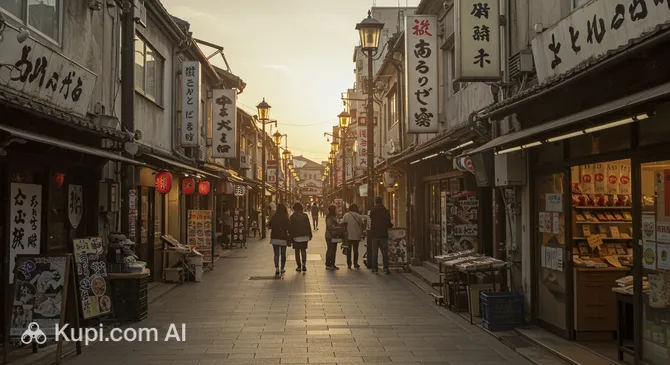
Shinsekai (New World). Illustration.
Source: Kupi.com AI

Traveler photos:

The famous Tsutenkaku Tower serves as the central landmark and main symbol of the district. Surrounding it is a network of narrow streets densely packed with eateries, game halls, and shops. Shinsekai is famous for its giant neon signs, 3D pufferfish figures, and brightly decorated facades that create the feeling of an endless festival or a bustling fair.

This neighborhood is worlds away from the modern business districts of Japanese megacities. You won't find mirrored skyscrapers here; instead, you'll encounter old izakayas and traditional stalls at every turn. For travelers, it’s one of the best locations to see the authentic, "unpolished" side of Japanese urban culture and enjoy genuine street food in a mid-century setting.

Contacts

Since Shinsekai is an open urban area rather than a closed museum site, it does not have a single official phone number or a general information desk. Before visiting this colorful corner of Japan, we highly recommend checking official tourism portals for the latest information on the operating hours of specific establishments and major attractions.

How to contactContact
Address2 Chome-5 Ebisuhigashi, Naniwa Ward, Osaka, 556-0002, Japan

What to Do

A stroll through Shinsekai is, first and foremost, an immersion into the visual culture of the past. The main highlight here is a leisurely exploration of photogenic retro signs and shop windows, which look particularly striking in the evening when thousands of neon lights flicker to life. Photography enthusiasts will find endless subjects here, from the futuristic tower to cozy, bustling alleyways.

The district's culinary scene deserves special attention. Shinsekai is considered a "mecca" for fans of kushikatsu—the famous deep-fried skewers of meat, seafood, and vegetables. Dozens of specialized restaurants serve this dish, filling the streets with its signature aroma. It’s also worth stopping by local stalls for takoyaki and okonomiyaki to fully experience the taste of real Japanese street food.

For those seeking traditional entertainment, the neighborhood offers old-school gaming centers with classic arcade machines and "shogi" (Japanese chess) parlors, where locals can often be found playing. If you want to see the "New World" from above, be sure to head up to the observation deck of the Tsutenkaku Tower, which offers panoramic views of the dense urban landscape.

Getting There

Shinsekai is very easily accessible by transport, located in close proximity to several major railway hubs. The exact address of the central part of the district is 2 Chome-5 Ebisuhigashi, Naniwa Ward, Osaka. The easiest landmarks for travelers are the Shin-Imamiya and Dobutsuen-mae stations, which are just a 5–6 minute walk from the heart of the neighborhood.

If you are traveling by metro, the most convenient option is the Midosuji line (exit at Dobutsuen-mae station) or the Sakaisuji line, where you should get off at Ebisucho station—in this case, the walk to the main attractions will take no more than 3 minutes. It is also easy to take a taxi from the city center; simply give the driver Tsutenkaku Tower as your destination.

Nearest city: Nara

History & Facts

The history of Shinsekai began in 1912 when the district was designed as an ultra-modern entertainment hub. Its creators drew inspiration from the architectural styles of Paris and New York: the northern part of the neighborhood imitated the strict geometry of the American metropolis, while the southern part was modeled after the French capital with its parks and elegant forms.

The centerpiece of this ambitious project was the first Tsutenkaku Tower, whose design combined elements of the Eiffel Tower and the Arc de Triomphe. In those years, it was home to a massive amusement park called "Luna Park," as well as numerous cinemas and kabuki theaters, making it the most popular leisure destination in the entire region.

After World War II, the district went through periods of decline, and large-scale modernization bypassed it for decades. It was this very circumstance that allowed Shinsekai to preserve its historical appearance almost in its original state. Today, its "outdated" architecture and signage from past decades have transformed from a sign of decline into a valuable tourism asset, attracting thousands of retro-style fans from around the world.

Time Needed

For a first introduction to Shinsekai and a relaxed stroll along its main thoroughfares, 2–3 hours is usually sufficient. This is enough time to take vibrant photos, soak in the atmosphere, and browse a few souvenir shops. However, if you plan on having a full meal at one of the popular kushikatsu restaurants, keep in mind that queues often form at the most famous spots.

For a deeper exploration, including a trip up the Tsutenkaku Tower observation deck and visits to nearby cultural sites, it’s better to set aside about 4–5 hours or even an entire afternoon. Evening visits often stretch out longer, as the neon lights and lively izakayas invite visitors to relax and explore the nightlife of this distinctive neighborhood.

Working Hours

As an open urban district, Shinsekai is accessible to visitors 24 hours a day. You can stroll through its streets and admire the unique architecture at any time of day or night. According to official information, access to this public neighborhood is not restricted by time, making it a convenient stop on any traveler's itinerary.

However, please note that most restaurants, gaming parlors, and shops operate on their own schedules, typically opening around noon and closing late at night. The Tsutenkaku Tower observation deck and large entertainment complexes also have set operating hours, which are recommended to be checked immediately before your visit.

Open 24 hours

Nearby

Exploring the surroundings of Shinsekai offers a full picture of the many facets of Japanese culture. Nearby stands the majestic Tsutenkaku Tower, which is not only an observation deck but also a symbol of the locals' belief in good luck. Also within walking distance is one of the country's oldest Buddhist temples, Shitennoji, offering peace and tranquility as a counterpoint to the noisy streets of the commercial district.

For those who want to see the contrast between retro style and modernity, a visit to the Abeno Harukas skyscraper is an excellent option. Combining a walk through the historical "New World" with a visit to ultra-modern architectural landmarks will make your trip truly rich and memorable.

NameDistance
Shitennō-ji1 km
Nara Rare Animal Zoo2.3 km
Osaka Museum of Natural History4.8 km
Osaka Tenmangu Shrine5 km
Beer Museum12.4 km
Susuruka29.5 km
Mizuya Chaya31.3 km

Have you reached the end of the page?

So the route has been studied inside and out