Support

Ogaki

About

Ogaki is a picturesque city nestled in the western part of Gifu Prefecture, in the heart of Honshu, Japan. Thanks to its strategic location at the crossroads of major transport routes, Ogaki has historically served as a unique gateway between bustling metropolises and the peaceful rural areas of the Tokai region. Here, urban infrastructure and enchanting nature blend harmoniously: the city is surrounded by green rice fields and the clear Suimon River flows through it.

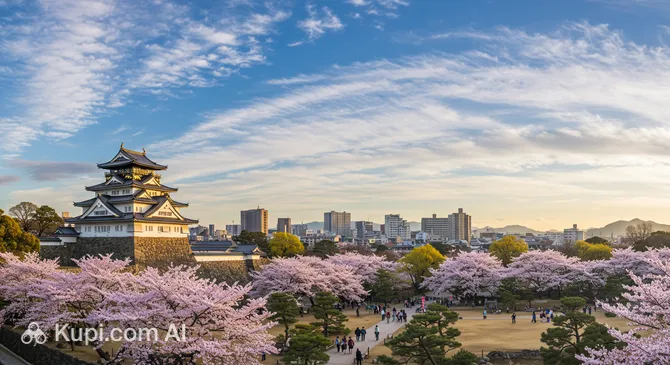
Ogaki. Illustration.
Source: Kupi.com AI

With a population of about 158,000, Ogaki is not only a significant administrative center but also a city with a vivid personality. A special atmosphere of the serene Japanese province reigns here, where ancient traditions are organically interwoven with modernity, and every corner seems imbued with the spirit of history and local hospitality. The city is known for its unique charm: cozy streets, historical buildings, and a leisurely pace of life attract those seeking peace and authenticity.

Among the key features that make Ogaki attractive to tourists are its rich history, reflected in ancient castles, and a lively cultural life manifested in numerous festivals. Travelers come here to discover the real Japan, far from noisy tourist routes, and enjoy its genuine charm.

Ogaki is definitely worth a visit for those seeking authentic experiences, interested in history, and wanting to immerse themselves in the atmosphere of a real Japanese province. This city offers something special for everyone, whether it's exploring historical monuments or participating in vibrant cultural events.

You can find more interesting facts on the history of Ogaki page.

Weather Overview

The weather in Ogaki is characterized by a distinct change of seasons. Summer, especially in July and August, is warm here, with average temperatures reaching 25-27°C and maximums around 28-30°C. This period is also the most humid, with the highest rainfall and rainy days in July. Winters, by contrast, are cool: in January, the average temperature is about 3.3°C, with night frosts. Precipitation in winter is moderate. Spring and autumn offer milder temperatures and a transitional weather pattern.

Overall, expect a warm summer with occasional rain and cool winters. For a more detailed forecast and monthly information, you can visit the Ogaki Climate page.

Average monthly temperature

Average monthly precipitation

Interesting Facts

Beyond its scenic canals and historical castle, Ogaki hides many surprising stories and traditions that not everyone knows about. This city in Gifu Prefecture is ready to surprise you with its lesser-known sides.

  • Ogaki holds the unofficial title of "City of Water" for a reason. Its numerous canals and rivers create an atmosphere often compared to a miniature Venice. Here, you can take a ride on a traditional boat, admiring the reflection of old buildings in the water.

  • The historical heart of the city, Ogaki Castle, played a key role in one of the most important events in Japanese history. It was here in 1600 that Ishida Mitsunari's troops gathered before the legendary Battle of Sekigahara, which changed the course of Japan's history.

  • Ogaki is a landmark site for Japanese literature. The great haiku master, Matsuo Basho, completed his famous poetic journey "The Narrow Road to the Deep North" (Oku no Hosomichi) right here in Ogaki. A monument to the poet has been erected in the city, and festivals are held annually in his honor.

  • One of the most vibrant and unusual traditions of Ogaki is the annual Water Festival. During this time, residents organize colorful boat processions, decorate the city with lanterns, and hold theatrical performances right on the water, creating a truly mesmerizing sight.

How to Get There

Ogaki enjoys excellent transport accessibility thanks to its location in the central part of Honshu island. The city is a major railway hub, and its proximity to large metropolises makes it easy to plan your route. You can find out more about how to get to Ogaki to choose the most suitable method for you, and below we will look at the main arrival options.

There is no airport in Ogaki itself, but you can fly into Chubu Centrair International Airport (IATA: NGO) in Nagoya, which is about 58 km from Ogaki. This is the nearest and most convenient international air hub. A taxi or bus ride will take approximately 1 hour and 50 minutes, though most tourists prefer using the trains that run directly from the airport.

An alternative option, especially for domestic flights, is Itami Airport (IATA: ITM), located in Osaka. It is about 125 km from Ogaki. This airport handles a huge flow of passengers and offers many flights from different parts of the country. A car trip from here will be longer and take about 3 hours and 30 minutes.

For clarity, here is summary information on the main airports:

AirportPassenger trafficDistance
Nagoya Airport735 00031 km
Chubu Centrair International Airport12.3 mln58 km
Komatsu Airport1.8 mln116 km
Itami Airport14.8 mln125 km
Matsumoto Airport112 618148 km

Railway communication is one of the most popular and efficient ways to reach the city. The main gateway is Ogaki Station, located in the city center. It is a key stop on the JR Tokaido Main Line. It is very easy to get here from Nagoya: frequent express trains cover the distance in just 30-35 minutes. It is also convenient to travel from Kyoto and Osaka by transferring at Maibara Station. The railway ensures a fast and comfortable arrival right in the heart of Ogaki.

Main Attractions

The city of Ogaki, located in Gifu Prefecture, offers travelers several interesting sites that immerse them in the history and culture of Japan. Here, everyone will find something for themselves, from ancient castles to places associated with famous poets.

One of the city's main gems is Ogaki Castle. This beautifully reconstructed fortress has a rich history, particularly known for its role in the famous Battle of Sekigahara. Visitors can climb to the top floors for a panoramic view of the city and explore the local museum's exhibits detailing the region's samurai past. Ogaki Castle is not just a historical monument, but a true symbol of the city.

For connoisseurs of Japanese literature, the Oku no Hosomichi Musubi-no-chi Memorial Hall is a must-visit. This site is dedicated to the legendary haiku poet Matsuo Basho, who ended his famous journey, described in the book "The Narrow Road to the Deep North" (Oku no Hosomichi), right here in Ogaki. In the memorial hall, you can learn more about Basho's life and work, his travels, and that era, as well as see themed exhibitions.

Not far from Ogaki, but closely linked to its history, is Sunomata Castle, also known as the "One Night Castle" (Ichiya-jo). According to legend, this fortress was erected by the warlord Toyotomi Hideyoshi in just one night, which was a major strategic move. Today's reconstruction of the castle attracts tourists with its unique history and picturesque location, which is especially beautiful during the cherry blossom season. There is also a museum inside the castle.

For peaceful relaxation and walks, Ogaki Park, which sprawls around the castle of the same name, is perfect. It is a popular spot among locals and tourists, especially in spring when the cherry blossoms bloom and in autumn when the foliage turns vibrant colors. City festivals and events are often held in the park, allowing for a deeper dive into the local culture.

Local Cuisine

Ogaki, a city known for its pure waters, offers unique gastronomic experiences. The local cuisine here is closely linked to nature's bounty, especially freshwater fish, making it attractive for foodies and connoisseurs of authentic flavors.

The main culinary symbol of Ogaki is considered to be unagi – freshwater eel. It is masterfully grilled and served with a special sweetish sauce, the secrets of which many restaurants carefully guard and pass down through generations. To try this dish is to touch the true taste of the city and its centuries-old traditions.

Another iconic dish that is definitely worth tasting in Ogaki is soba, buckwheat noodles. It is served with seasonal vegetables and a signature broth that emphasizes the natural taste of the ingredients. In summer, refreshing cold soba is particularly popular, while in the colder months, hot soba seasoned with local spices will warm you up. This dish perfectly demonstrates Japanese attention to detail and the seasonality of products.

On the streets of Ogaki and in local markets, you can taste other local specialties. Look out for crispy croquettes filled with local potatoes and vegetables, as well as the freshest onigiri (rice balls) with various fillings—an excellent option for a quick and filling snack. For those with a sweet tooth, keep an eye out for traditional Japanese wagashi desserts, which in Ogaki are often prepared with seasonal fruits and delicate adzuki bean paste.

Traditional drinks accompanying a meal in Ogaki include various types of sake and shochu, which perfectly complement the flavors of local dishes. Among non-alcoholic options, aromatic green tea is always popular, as are various fruit drinks reflecting the richness of local orchards.

The gastronomic life of Ogaki is concentrated not only in restaurants that carefully preserve culinary traditions but also in lively street markets where you can feel the true atmosphere of the city. Furthermore, Ogaki regularly hosts gastronomic festivals. These events are a great opportunity not only to try many authentic dishes but also to participate in exciting workshops on making sushi, soba, or traditional Japanese sweets, learning more about Ogaki's culture through its unique tastes and aromas.

Travel Tips

Welcome to Ogaki! This charming city in Gifu Prefecture is ready to reveal its secrets to you. To ensure your trip goes smoothly and leaves only pleasant impressions, we have prepared some practical tips.

  1. Seasonal Clothing and Useful Items: In Ogaki, as in all of Japan, there are four distinct seasons. In summer (June-August), it is hot and humid, so choose light, breathable clothing. In winter (December-February), it can be chilly, so don't forget warm clothes. Spring and autumn are the most comfortable times. Be sure to bring comfortable shoes for walking around the city and its surroundings, as well as an adapter for electrical appliances (Japan uses Type A and B sockets). If you plan to visit temples, choose clothing that covers your shoulders and knees out of respect for local traditions.
  2. Getting Around the City: Ogaki is a relatively small city, and many of its central parts are pleasant to explore on foot or by bicycle. Public transport is mainly represented by buses and local trains that connect Ogaki with other cities in Gifu Prefecture. Taxis are available but can be expensive. For trips outside the city, you might consider renting a car (an international driving permit is required), but for Ogaki itself, this is not always practical due to potential parking difficulties.
  3. Financial Matters: The official currency is the Japanese yen (JPY, ¥). It's best to exchange currency at the airport upon arrival or at major banks. ATMs that accept international cards can usually be found at post offices (Japan Post Bank) and 7-Eleven convenience stores. Credit cards (Visa, Mastercard) are accepted in many hotels, large stores, and restaurants, but always carry some cash with you for small establishments, markets, and fares. Tipping is not customary in Japan—good service is included in the price.
  4. Health and Safety: Pharmacies (薬, kusuri, or ドラッグストア, drug store) are easy to find, but staff do not always speak English, so it is useful to have a list of necessary medications or a translator app. If you need medical assistance, contact local clinics or hospitals; travel insurance is highly recommended. Ogaki, like Japan in general, is considered a very safe city. Observe standard precautions, especially in crowded places. Emergency numbers: 110 (police), 119 (fire and ambulance).
  5. Language and Connectivity: The official language is Japanese. English is limited, mainly in tourist spots and hotels. Learn a few basic phrases: "konnichiwa" (hello), "arigato" (thank you), "sumimasen" (excuse me/sorry). For connectivity, purchase a travel SIM card (at the airport or electronics stores) or rent a pocket Wi-Fi router. Free Wi-Fi is available in many hotels, cafes, and some public areas. Useful apps: Google Maps for navigation and transport schedules, as well as translator apps.
  6. Local Etiquette and Traditions: Greetings are usually accompanied by a slight bow; handshakes are less common but acceptable when communicating with foreigners. In public places, especially on transport, try to speak quietly. Eating and drinking on the go is not customary (except at festivals). Important: remove your shoes when entering private homes, some temples, traditional restaurants, and ryokans (Japanese-style inns).
  7. What to Avoid: Try not to talk loudly on the phone in public transport. It is not customary to point at people or objects with one finger—use an open palm. Also, remember that sticking chopsticks vertically into rice is considered bad manners, as it is associated with funeral rituals.
  8. The Essence of Ogaki—City of Water and Poetry: Ogaki is known as "Mizu no Miyako" (水の都)—"City of Water," thanks to its numerous canals and the Suimon River. Be sure to stroll along the picturesque embankments. The city is also closely linked with the great poet Matsuo Basho, who completed his famous journey here, described in "Oku no Hosomichi" ("The Narrow Road to the Deep North"). Visit sites associated with Basho to deeply immerse yourself in the city's atmosphere.

We hope these tips help you better prepare for your trip and enjoy every moment in Ogaki. Have a great journey!

Entertainment & Nightlife

Ogaki, a city in Gifu Prefecture, might not overwhelm you with the scale of its nightlife like Tokyo or Osaka, but when evening falls, there are definitely places to relax and have fun. The nightlife in Ogaki offers a cozy and authentic atmosphere, ideal for a pleasant evening with friends or meeting locals in a traditional Japanese style.

The main center of evening entertainment is traditionally the area around Ogaki railway station. It is here and in the adjacent streets that various bars, restaurants, and other points of attraction are concentrated. An evening walk through this area will allow you to better feel the local flavor and choose a venue to your taste. The atmosphere here is usually lively, especially on weekends, but without the excessive hustle and bustle of megacities.

The choice of venues in Ogaki is diverse enough to satisfy different tastes. You will find traditional Japanese pubs—izakaya—where you can enjoy sake, local beer, and various snacks in a relaxed setting. There are also more modern bars with a wide selection of cocktails. Karaoke bars, an integral part of Japanese entertainment culture, are also popular and offer a fun way to spend time. The style of most establishments is casual, although a neater look may be appropriate for some more elegant restaurants. Most bars and restaurants are open until late at night, and some even longer, especially on Friday and Saturday.

As for specific establishments, you will find many options for evening relaxation in Ogaki, especially in the central station area. While the provided data does not list specific bars or nightclubs, this does not mean there is no choice. We recommend checking for current spots at your hotel or searching for reviews on local travel portals and specialized apps. Look for the signs of traditional izakaya to try local drinks and snacks, or look for modern bars with a cocktail menu. Sometimes you might discover small venues with live music or themed parties by asking around locally, which adds an element of pleasant discovery to the evening. It is worth noting that night markets, as common as they are in some other Asian countries, are not a characteristic feature of Ogaki's evening life. The main focus here is on permanent establishments—bars, restaurants, and izakayas.

When planning an evening out, keep in mind that the best time to experience Ogaki's nightlife is Friday and Saturday evenings, when the city comes alive and locals head out to relax. Prices in Ogaki venues are generally more moderate compared to major Japanese metropolises, making evening leisure more accessible. Getting back to your hotel at night is most convenient by taxi. Taxi stands are usually located at the station, or you can ask the staff at the venue to call a car for you. It is important to remember that public transport, including trains, stops running relatively early in the evening.

Ogaki, like most cities in Japan, is considered a very safe place. Night walks along well-lit central streets usually carry no risks. Nevertheless, it is always wise to observe basic precautions, especially if you are in an unfamiliar area or after consuming alcoholic beverages. You can also call a taxi through specialized apps if they are available in the region, or by asking your hotel or restaurant staff for help.

In addition to evening entertainment, Ogaki also offers interesting leisure options during the day. You can visit historical sites such as the famous Ogaki Castle, stroll through picturesque city parks, or learn about local culture in one of the museums. The city is closely linked to the name of the great poet Matsuo Basho, with several cultural sites and exhibitions dedicated to him. While Ogaki is not known for major theatrical productions or large amusement parks, you can catch local cultural events or festivals if your trip coincides with them.
Parks & Museums

Ogaki, picturesquely situated in Gifu Prefecture and known as the "City of Water," offers its guests wonderful opportunities for outdoor relaxation and exploring a rich cultural heritage. Here, well-maintained parks, historical monuments, and interesting museums harmoniously blend, each telling the story of this unique place in its own way.

One of the city's main green oases is Ogaki Park. It surrounds the famous Ogaki Castle, creating a peaceful atmosphere for walking and relaxation. The park is especially beautiful in spring during the cherry blossom season and in autumn when the maples turn crimson. It's a great place to take a break from the city bustle and enjoy nature in a historical setting.

Another noteworthy spot is Sunomata Ichiya-jo Park, famous for its historical reconstruction of Sunomata Castle, which legend says was built in just one night. In addition to its historical value, the park attracts visitors with beautiful landscapes, especially during the cherry blossom season. A walk here allows you to touch ancient legends and enjoy the views.

The main magnet for history buffs is undoubtedly Ogaki Castle. Although the original structure was heavily damaged, the restored castle now functions as a museum with exhibits detailing the city's history, the role of the Toda clan, and samurai traditions. The upper floors of the castle offer a magnificent view of Ogaki and its surroundings.

For those interested in Japanese literature and poetry, the Oku no Hosomichi Musubinochi Memorial Hall is a must-visit. This museum is dedicated to the great poet Matsuo Basho, who ended his famous journey "The Narrow Road to the Deep North" right here in Ogaki. Here you can learn more about Basho's life and work, as well as the significance of the city in his travels.

Beyond the castle and the memorial hall, the city of Ogaki itself is rich in historical corners related to its past as an important transport hub and a place marked on Basho's path. Walking through the old quarters and along the numerous canals can reveal much of interest to the curious traveler.

To deeply feel the atmosphere of the "City of Water," take a leisurely stroll along one of the many canals, for example, in the Funamachi area. Here you can see traditional boats, picturesque bridges, and feel how water has shaped the city's life over the centuries. It is also a wonderful opportunity to find a cozy cafe or observe the daily life of the locals.

Getting Around

Public transport in Ogaki is quite convenient for moving around the city and its surroundings. The transport system is based on buses and trains, which will help you reach most interesting places.

The city bus network covers many areas of Ogaki and is a good way to reach various attractions and residential neighborhoods. In Japan, boarding a bus is often done through the rear door, where you can take a ticket with a stop number (if the system does not involve a flat fare). Payment is made in cash upon exiting through the front door, directly to the driver. It is recommended to have small change with you, although some buses may have machines for exchanging coins and bills.

Ogaki railway station serves as an important transport hub. Lines of the state company JR (Japan Railways) pass through it, as well as potentially routes from other private railway operators. Trains provide convenient connections between Ogaki and the region's major cities and neighboring prefectures. You can purchase train tickets at special machines located at stations or at railway ticket offices.

For paying for bus rides, cash is most commonly used. For trains, tickets are purchased for a specific trip. Throughout Japan, rechargeable transport IC cards (such as Suica, Pasmo, ICOCA) are widely used and may be accepted on Ogaki's public transport, which significantly simplifies the process. We recommend checking the possibility of using such cards on local routes upon arrival. Sometimes, day passes for buses may be available for tourists, which can be advantageous if you plan to make many trips during the day.

Bus and train schedules are usually posted at stops and stations, and they are generally followed with high precision. Public transport in Ogaki usually runs from early morning until late evening. For route planning, you can use online maps or specialized Japanese transport apps if they are available with an interface in a language you understand.

In addition to public transport, you can always use taxi services in Ogaki. Taxi stands are usually located at the railway station and near major facilities. Taxis in Japan are known for their comfort and high level of service but are a relatively expensive mode of transport. For leisurely strolls through the city center or along the picturesque canals that Ogaki (known as the "City of Water") is famous for, bicycle rental can be a wonderful alternative. Rental points can often be found near the railway station or in tourist information centers.

Accommodation

In Ogaki, travelers will find a variety of accommodation options to suit different preferences and budgets. The city offers a wide choice: from budget-friendly guest houses and hostels, ideal for backpackers and thrifty tourists, to more comfortable mid-range hotels that provide a good balance of price and quality.

When choosing a place to stay, look for areas near Ogaki railway station—this guarantees easy access to transport for traveling around the city and its surroundings. Accommodation options in the central part of the city are also popular, as they provide easy access to key attractions, shops, and restaurants. Overall, Ogaki is quite compact, making many of its neighborhoods convenient for pleasant walks.

While Ogaki might not offer the same abundance of luxury five-star resorts as major metropolises, you will find cozy business hotels that meet modern standards of comfort. Special attention should be paid to traditional Japanese inns (ryokans), including those located in the picturesque outskirts of the city, which offer a unique opportunity to immerse yourself in local culture. For finding and booking suitable accommodation, it is convenient to use popular online platforms such as Booking.com, Agoda, or Expedia. You can compare prices, check conditions, and read reviews from other travelers. Some hotels also offer direct booking through their official websites.

It is recommended to book accommodation in advance, especially if your trip coincides with popular tourist seasons in Japan, such as the cherry blossom period or autumn holidays. Accommodation prices can vary significantly depending on the season, the category of the chosen accommodation, and its location. Overall, you can find options for any budget in Ogaki, from budget to mid-range, making the city an attractive destination for a wide range of tourists.

Nearby Cities

For those looking to explore the surroundings, Ogaki serves as an excellent starting point for day trips to several interesting nearby locations:

CityPopulationDistance
Anpachi14 3305 km
Godo18 5056 km
Yoro26 5657 km
Tarui26 5588 km
Kitagata18 30811 km

These nearby destinations offer insight into the region's diverse culture and landscapes.

Shopping & Souvenirs

Ogaki offers pleasant shopping opportunities, especially if you are looking for local goods and souvenirs. Although the city is not a large metropolis with huge shopping districts, you can find everything you need and discover unique Japanese products. Ogaki is famous for its traditional sweets and items related to its history as the "water capital."

The main shopping spots are usually concentrated around Ogaki Station. Here and in the adjacent streets, including the covered shopping arcades (shotengai), you can find a variety of shops: from small family-run stores to chain retailers. A walk through these areas will allow you to soak up the local atmosphere and find interesting products.

One of the notable shopping centers in Ogaki is Aqua Walk Ogaki, located directly at Ogaki Station. This modern mall offers a wide selection of clothing stores, household goods, electronics, as well as restaurants and cafes. It is a convenient place for comprehensive shopping, especially in bad weather.

While Ogaki is not famous for large traditional markets like some other Japanese cities, you can find small local markets or fairs, especially on weekends or holidays, where farmers sell fresh produce and craftsmen sell their wares. It is also worth checking out specialized food stores offering local delicacies.

As souvenirs from Ogaki, it is worth bringing back traditional Japanese sweets (wagashi), especially those associated with water, such as mizu manju. Also popular are wooden products, particularly masu—square wooden boxes for sake, for which the city is famous. You can also find other local handicrafts, ceramics, or textiles from Gifu Prefecture. Don't forget classic Japanese souvenirs: tea, fans, and chopsticks.

Most shops in Ogaki, including shopping centers, are usually open from 10:00 or 11:00 AM to 7:00 or 8:00 PM. Small private shops may have their own schedules. Large supermarkets often stay open longer. Credit cards (Visa, Mastercard) are widely accepted, but it is always useful to have some cash with you, especially for purchases in small shops or at markets.

For foreign tourists in Japan, a Tax Free system is in place. In stores marked with the corresponding logo, you can get a refund of the consumption tax when purchasing goods over a certain amount (usually over 5,000 yen excluding tax). You will need to present your passport for this. Check the conditions directly in the stores.

Reached the end of the page?

That means the route is fully explored