Support

Yoro

About

Yoro is a charming town, nestled comfortably among the picturesque hills of the Chubu region in central Japan. It is a place where nature and centuries-old traditions blend harmoniously, creating a unique atmosphere for a leisurely getaway far from the city bustle. Yoro attracts visitors with its authenticity and tranquility, offering travelers a unique immersion into the Japanese countryside.
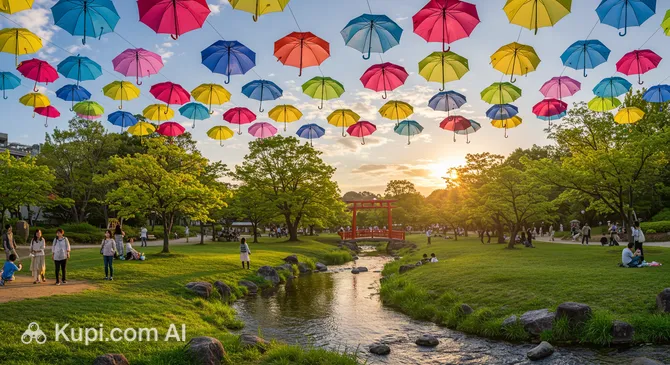
Yoro. Illustration.
Source: Kupi.com AI

The town is located at the junction of Gifu and Aichi prefectures, surrounded by majestic mountains, dense forests, and scenic valleys, making it particularly attractive to nature lovers. With a population of about 26,565 people, Yoro retains the intimacy and charm of a provincial Japanese town. Its compact size, clean streets, cozy cafes, and hospitable residents allow you to quickly feel right at home.

The main magnets for tourists in Yoro are its natural beauty: numerous parks where you can enjoy the silence, and the famous waterfalls, striking in their power and beauty. Walks in the surrounding area offer peaceful landscapes and the chance to truly relax your soul. Visiting Yoro is an opportunity to discover the Land of the Rising Sun off the beaten path, feel the spirit of the traditional province, and recharge with the energy of untouched nature.

If you are looking for peace, inspiration, and want to see the authentic, non-touristy side of the country, then Yoro will be a pleasant discovery for you. This town invites you to slow down, enjoy every moment, and take home a piece of its unique charm.

You can find more interesting facts on the Yoro's city history page.
Weather Overview

The weather in Yoro is characterized by noticeable seasonal changes. Summer, especially in July and August, is quite warm here, with average temperatures reaching 25-27°C and maximums around 28-30°C. These months also see the highest amount of precipitation and rainy days. Winters, conversely, are cool: average temperatures in January and December hover around 3-5°C, sometimes dropping to zero or slightly below. Precipitation in winter is minimal. Thus, in Yoro, you can expect a warm and humid summer, followed by a cool and drier winter. Spring and autumn are transitional seasons with moderate temperatures and rainfall. Expect a warm summer with occasional rain and cool, relatively dry winters. For more detailed information, you can visit the Yoro Climate page.

Average monthly temperature

Average monthly precipitation

Interesting Facts

In addition to its main attractions, Yoro holds several surprising secrets and little-known features that make it a truly intriguing destination for travelers.

Yoro Park. Illustration.
Source: Kupi.com AI

Traveler photos:

  • One of the most famous legends of Yoro is connected to its celebrated waterfall. It is said that its waters possess miraculous powers, capable of granting youth and health to those who taste them.

  • The town is home to the amazing Yoro Park, the main highlight of which is the "Site of Reversible Destiny" installation. This is a surreal landscape created by artists where the usual laws of physics seem to cease to apply, offering visitors a unique experience.

  • The surroundings of Yoro are famous for rare black hot springs. It is believed that bathing in their dark, mineral-rich waters not only relaxes but also imparts strength.

How to Get There

You can reach this picturesque corner of Japan in various ways, combining air and ground transport. If you want to learn all the nuances and create the perfect route, we recommend reading more about how to get to Yoro in our dedicated guide.

There is no airport in the town of Yoro itself, but thanks to the Chubu region's developed transport network, getting here is easy. The most convenient option for international and domestic flights is Chubu Centrair International Airport (NGO). It is located in Nagoya, approximately 55 km from Yoro. This is a large, modern aviation hub with a high passenger flow, receiving flights from all over the world. The journey from the airport to Yoro by car or taxi will take a little over an hour; you can also use the convenient rail connection via Nagoya.

An alternative option, especially for those planning to visit the Kansai region, could be the Osaka airports. Kansai International Airport (KIX) and Itami Airport (ITM) are located between 115–155 km from Yoro. Although they are further away than the airport in Nagoya, high-speed trains allow you to cover this distance comfortably. A taxi ride from these airports will take significantly longer—about 2 to 2.5 hours.

For convenience, here is summary information on the main airports:

AirportPassenger trafficDistance
Nagoya Airport735 00034 km
Chubu Centrair International Airport12.3 mln55 km
Itami Airport14.8 mln118 km
Komatsu Airport1.8 mln121 km
Kobe Airport3.6 mln143 km

Rail travel is one of the most popular ways to get to the town. Although there are no direct Shinkansen high-speed trains to Yoro itself, you can travel to major transfer hubs like Ogaki Station or Kuwana Station. From there, local trains of the private Yoro Railway line run, taking you directly to Yoro Station. The trip from Nagoya to Ogaki on a JR train takes about 30–40 minutes, followed by a short transfer to the colorful local train.

Main Attractions

The town of Yoro, located in Gifu Prefecture, offers tourists several interesting sites where they can get acquainted with nature and Japan's unique art. Despite its small size, Yoro is capable of surprising and delivering vivid impressions.

One of the main gems of the town is Yoro Park. This is a vast green area, perfect for leisurely strolls and outdoor relaxation. The park is famous for its picturesque landscapes, especially beautiful in the spring during the cherry blossom season and in the autumn when the foliage turns crimson. Here you can enjoy the tranquility of nature and take wonderful photographs.

Yoro Park. Illustration.
Source: Kupi.com AI

Traveler photos:

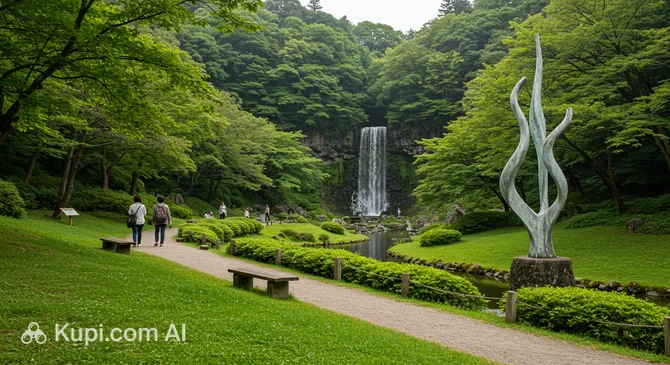
Within Yoro Park is the famous Yoro Waterfall. This waterfall, about 32 meters high and 4 meters wide, is considered one of the symbols of the region. It not only impresses with its natural beauty but is also shrouded in an ancient legend about a dutiful son for whom the spring water miraculously turned into sake to heal his sick father. This place attracts many visitors wishing to see the beauty of the waterfall and touch the local culture.

Another unique attraction located within Yoro Park is the Site of Reversible Destiny (Yoro Park). This is an unusual art object and theme park created by artists Shusaku Arakawa and Madeline Gins. It is a labyrinth of bizarre architectural structures, hills, and valleys designed to disorient visitors and force them to experience their body and space in a new way. Visiting this place is a true adventure that challenges conventional perception and leaves unforgettable impressions.

Local Cuisine

Yoro’s culinary scene is a true reflection of the rich nature of the Chubu region, where special emphasis is placed on the freshness and seasonality of ingredients. The local cuisine will delight you with authentic flavors based on the gifts of the rivers and fertile lands, offering a journey into the world of traditional Japanese dishes.

One of the culinary hallmarks of Yoro is undoubtedly its tofu dishes. It is believed that the pure water from the famous Yoro Waterfall gives this product a special tenderness and flavor. Try fresh tofu, which is often served with simple but exquisite toppings like soy sauce, grated ginger, and green onions. It is also worth paying attention to dishes made from fresh river fish and traditional Japanese soups, which are warming and satisfying.

Those with a sweet tooth will also find something to enjoy in Yoro. Be sure to try traditional Japanese sweets known as wagashi, which are made here from rice flour and sweet anko bean paste. In local farmers' markets, you can find fresh seasonal fruits, among which local varieties of plums and peaches stand out if your trip falls during their harvest time.

Speaking of drinks, one cannot fail to mention Yoro's famous pure water, which is the basis not only for making tofu but also for many local beverages. Traditionally, green tea is popular in Japan and perfectly complements any meal. Among alcoholic beverages, it is worth paying attention to local sake, if available, as the quality of water plays a vital role in its production.

The food culture in Yoro is diverse. You can enjoy exquisite dishes in cozy restaurants offering both traditional and modern interpretations of Japanese cuisine. Visit local markets to experience the authentic atmosphere and taste the freshest products. Special color is added to the city's gastronomic life by food festivals, where you can sample various street foods, such as aromatic yakisoba or delicious fried fish balls, and get acquainted with local culinary traditions.

Travel Tips

Planning a trip to the charming town of Yoro? Excellent! To ensure your journey through this corner of Japan goes smoothly and leaves only pleasant impressions, we have prepared some practical tips for you.

  1. Clothing and Essentials:

    The climate in Yoro, as in Gifu Prefecture, is temperate with four distinct seasons. In summer (June–August), it can be hot and humid, so choose light, breathable clothing. In winter (December–February), it is cool, sometimes with snow—don't forget warm clothes. Spring and autumn are the most comfortable seasons with pleasant temperatures. Be sure to bring comfortable shoes, as you will be walking a lot, especially if you plan to visit Yoro Park and its famous waterfall. Don't forget an adapter for electrical appliances (Japan uses type A and B sockets, 100V voltage). When visiting temples and shrines, try to dress modestly (shoulders and knees should ideally be covered).

  2. Local Transport:

    Yoro is a relatively small town, so you can get around on foot or by bicycle, which will allow you to better feel the local atmosphere. For longer trips or if you are tired, you can use local buses or taxis. If you plan to actively explore the surroundings of Gifu Prefecture, renting a car could be a good option, but keep in mind that driving in Japan is on the left and an international driving permit may be required.

  3. Finances:

    The local currency is the Japanese Yen (JPY). It is best to exchange currency at the airport upon arrival or at banks in major cities, as finding an exchange office in Yoro may be more difficult. Credit cards are accepted in many hotels, large shops, and restaurants, but always have some cash with you, especially for small establishments, markets, and temples. ATMs that accept international cards can usually be found in post offices (Japan Post Bank) and convenience stores (e.g., 7-Eleven). Tipping is not customary in Japan—good service is already included in the bill.

  4. Health and Safety:

    Yoro, and Japan as a whole, is considered a very safe place. However, standard precautions never hurt: keep an eye on your belongings and be careful in crowded places. Pharmacies (薬, kusuri) are easy to find, but explaining yourself to a pharmacist can be difficult without knowing Japanese; carry a basic set of medicines with you. For medical assistance, tourists are better off going to large hospitals where there is a chance of finding English-speaking staff. Travel insurance is recommended.

  5. Communication:

    The official language is Japanese. In tourist areas of Yoro, staff may speak a little English, but overall English proficiency may be low. Learn a few basic Japanese phrases like "konnichiwa" (hello), "arigato" (thank you), and "sumimasen" (excuse me/sorry)—this will be greatly appreciated by the locals. For connectivity, we recommend purchasing a tourist SIM card or renting a pocket Wi-Fi router upon arrival in Japan. Free Wi-Fi is available in some hotels and public places. Translation apps and navigation maps will be useful.

  6. Local Etiquette:

    Japanese people are very polite and value respect. A greeting is usually accompanied by a bow. In public places, especially on transport, try not to speak loudly on the phone. When entering a Japanese home, some temples, and traditional restaurants (ryokans), it is customary to remove your shoes. Do not point your finger at people. If you are offered a business card (meishi), accept it with both hands.

  7. What to Avoid:

    Try not to eat while walking on the street unless it is a place specifically intended for it (e.g., food festivals). Also, never stick your chopsticks vertically into your rice—this is associated with funeral rituals and is considered bad manners.

  8. Yoro Specialty:

    Be sure to set aside time to visit Yoro Park, known for its waterfall and the unusual "Site of Reversible Destiny"—a unique architectural park that will make you look at space and balance in a new way. This is truly an iconic place for Yoro.

We hope these tips help you better prepare for your trip and enjoy every moment of your stay in Yoro. We wish you an unforgettable journey!

Entertainment & Nightlife

Evening Yoro envelops its guests in an atmosphere of peace and tranquility, far from the noisy nightlife of megacities. It is important to understand that you will not find quarters with neon signs of famous nightclubs or large bars with loud music operating until dawn here. The town invites a more intimate and authentic style of relaxation, where evening entertainment is centered around traditions and local flavor.

Instead of looking for specific, well-known establishments, evening entertainment in Yoro revolves around traditional Japanese restaurants and, most importantly, numerous small, cozy izakaya (Japanese pubs). It is in these places that you can truly feel the local spirit, try regional cuisine, and enjoy drinks. The atmosphere here is usually very friendly and conducive to conversation, with local residents being the primary patrons. A characteristic feature of Yoro is that its evening life is focused not in large, famous bars or nightclubs that usually end up in tourist guides, but in these informal izakaya. This is why finding specific "loud" names with pre-prepared links in databases can be difficult; the charm of Yoro lies in the spontaneous discovery of these authentic places by following local signs and the atmosphere in the central part of town or on the streets adjacent to major transport hubs.

If you plan to spend the evening outside your hotel, the best time to visit local establishments is from approximately 19:00 to 22:00. Most of them close relatively early, usually by 22:00 or 23:00. Prices in the restaurants and izakayas of Yoro are generally moderate, allowing you to enjoy dinner without significant expense. Keep in mind that public transport may run less frequently in the evening, so plan your return route in advance or use taxi services.

Yoro, like most towns in Japan, is considered a safe place for evening strolls. Nevertheless, do not forget standard precautions. You can try to call a taxi through your hotel reception or find one at specialized stands if they are available in the town.

During the day, Yoro also offers opportunities for interesting leisure activities. The town and its surroundings are famous for beautiful nature and cultural sites. One of the main places for walking and relaxation is Yoro Park, where you can enjoy picturesque landscapes and unique art installations. There may also be small local museums or temples in town that will introduce you to the history and culture of the region.

Thus, while Yoro cannot boast of vibrant nightlife in the traditional sense, it charms with its quiet and authentic atmosphere. It is an ideal place for those looking for a peaceful holiday and the opportunity to immerse themselves in local culture away from the tourist crowds, enjoying conversation and local cuisine in small family establishments.

Parks & Museums

The town of Yoro invites travelers to enjoy both picturesque natural landscapes and to get acquainted with its cultural heritage. Here you can find peace in green areas and discover unique art objects.

The town's main natural gem is undoubtedly Yoro Park. This is a vast territory, famous not only for its beautiful scenery and the Yoro Waterfall but also for its unique open-air art object – the "Site of Reversible Destiny - Yoro Park". This park offers visitors more than just a walk; it is a real adventure where you can look at familiar things in a new way and test your senses. It is perfect for family holidays, meditative walks, and for those seeking inspiration in the combination of nature and modern art.

Yoro Park. Illustration.
Source: Kupi.com AI

Traveler photos:

In addition to the park itself, the surrounding Yoro Mountains also offer great opportunities for nature lovers. Here you can find hiking trails of varying difficulty levels leading to observation decks with breathtaking views of the surrounding area. These natural zones are a great place for those who want to take a break from the city bustle and enjoy the fresh air.

While Yoro may not have a large number of traditional museums in the classical sense, the aforementioned "Site of Reversible Destiny" in Yoro Park is itself a significant cultural and artistic object that functions as a kind of open-air museum. This large-scale installation, created by artists Shusaku Arakawa and Madeline Gins, encourages reflection on the perception of space and human life. Visitors can interact with unusual architectural forms, making the visit unforgettable. For a deeper immersion into local culture and history, it is worth paying attention to small local exhibitions or information centers that may tell stories about the traditions of the Gifu region.

For those seeking authentic experiences, we suggest exploring not only the main attractions but also walking through the streets of Yoro town itself, paying attention to the local architecture and small shrines that may be encountered along the way. Sometimes it is in such little-known places that you can feel the true spirit of Japan.

Getting Around

When planning your travel around Yoro, you will find that the public transport system here is compact and primarily oriented toward bus services and a railway line. The main transport hub is Yoro Station, served by the Yoro Line (Yoro Railway), which connects the town to larger transport hubs like Ogaki and Kuwana. This line can be useful not only for trips to neighboring cities but also for accessing some local attractions. Local buses run within the town itself and for trips to the immediate surroundings.

The fare payment system in Yoro is fairly standard for Japanese regions. On the Yoro Line, tickets can be purchased at station vending machines or ticket offices. Buses typically involve paying in cash upon exiting (you often need to take a numbered ticket upon boarding if the system is zone-based) or using rechargeable IC cards such as Suica, Pasmo, or TOICA, if they are accepted by local bus companies. It is recommended to have cash on hand, especially for bus trips, as not all regional operators may support all types of IC cards. The fare usually depends on the distance.

Tourists using public transport in Yoro should pay attention to the schedule, especially for buses, as service intervals in small towns can be significant, particularly in the evening and on weekends. Schedule information can be found at stops, railway stations, or tourist information centers. When boarding a bus, passengers usually enter through the rear or middle door and exit through the front, paying the driver. At railway stations, tickets are checked at turnstiles or by staff.

As an alternative to public transport, taxi services are always available in Yoro and can be found at the railway station or called by phone. For more independent exploration of the town and its picturesque surroundings, such as Yoro Park, you might consider renting a bicycle—this is a popular way to get around in small Japanese towns. Renting a car may be convenient if you plan to explore Gifu Prefecture more broadly.

A unique feature of Yoro's transport system is the Yoro Railway line itself, which offers scenic views during the journey. Additionally, for access to some tourist sites, such as the summit of Mount Yoro, a ropeway (Yoro Ropeway) may operate, which is an attraction in its own right and a way to enjoy panoramic views. Check its seasonality and operating hours in advance, as it is more of a tourist service than regular city transport.

Accommodation

When planning a trip to Yoro, you will find various accommodation options suitable for a peaceful holiday and getting to know the local culture. The town features traditional Japanese inns (ryokans), offering full immersion into Japanese life, cozy family guest houses (minshuku), as well as small hotels. The range of offers usually covers both budget and more comfortable mid-range options, aimed at tourists who value authenticity and nature.

Many travelers prefer to stay in areas with easy access to the town's main attraction, Yoro Park. Accommodation near the park or along convenient routes to it can be particularly advantageous for those who plan to spend a lot of time exploring it. It is also worth considering options located in quiet corners of the town, allowing you to enjoy the peaceful atmosphere of Gifu Prefecture.

To guarantee yourself the best accommodation option, especially if your trip coincides with popular tourist seasons (such as the cherry blossom period in spring or the autumn leaves viewing) or weekends, it is recommended to book your Yoro accommodation in advance. This will allow you to choose from a larger number of available options and potentially find better deals.

The price range for accommodation in Yoro varies: you can find budget spots in guest houses as well as more comfortable rooms in ryokans or small mid-range hotels. For booking accommodation, it is most convenient to use popular international online platforms. Some traditional ryokans and minshukus may also offer direct booking through their own websites (if they have them) or via email/phone.

Nearby Cities

For those who want to explore the surrounding area, Yoro serves as an excellent starting point for day trips to several interesting nearby locations:

Among them, Ogaki particularly stands out—the nearest city just 7 km away, known as the "Water Capital" due to its picturesque canals and the Suimon River, where you can enjoy peaceful walks. It is also worth visiting Gifu, a major regional center that attracts tourists with the famous Gifu Castle on Mount Kinka, offering panoramic views, and the unique opportunity to see traditional cormorant fishing on the Nagara River.

CityPopulationDistance
Ogaki158 3867 km
Tarui26 5588 km
Anpachi14 33010 km
Kaizu32 49312 km
Godo18 50513 km

These nearby destinations provide an insight into the diverse culture and landscapes of the region.

Shopping & Souvenirs

Shopping in Yoro offers more of an introduction to local flavor and unique souvenirs than a pursuit of famous brands. The town is not known for huge shopping malls, but here you can find authentic Japanese goods and handmade items that will serve as a wonderful reminder of your trip to Gifu Prefecture.

The main shopping opportunities in Yoro are likely to be concentrated in the central part of town, as well as near popular tourist spots like Yoro Park. It is here that you can find small shops offering local delicacies and souvenir products. You should not expect specialized shopping streets with world-brand boutiques here; the focus is on local goods.

There are likely no large shopping complexes in the traditional sense in Yoro due to its relatively small size. Instead, look for small family-run shops or general stores where you can purchase daily necessities as well as some local food and drinks.

As for markets, Yoro may occasionally host fairs for local farmers or craftsmen where you can buy fresh produce, seasonal vegetables and fruits, and handmade items. It is best to check for information on such events locally, as they may be irregular.

As souvenirs from Yoro, it is worth bringing back items that reflect the uniqueness of this region. Pay attention to products made from bottle gourds (hyotan), which are a traditional craft for this area. Local sake, produced using pure water from the famous Yoro Waterfall, is also popular. Of course, you can find more general Japanese souvenirs, as well as items related to Yoro Park.

Shops in Yoro, as in most small towns in Japan, are typically open from 10:00 or 11:00 AM to 7:00 or 8:00 PM. Small private shops may have their own schedules. Regarding payment, while credit cards are becoming more common, cash (Japanese yen) is still the preferred payment method, especially in small shops and markets. It is recommended to always have some cash on hand.

Tourists in Japan can take advantage of the Tax-Free refund system when making purchases over a certain amount in participating shops. Look for the "Japan Tax-free Shop" logo. This generally applies to goods taken out of the country, such as electronics, clothing, and souvenirs (excluding some consumables for which special rules apply).

Reached the end of the page?

That means the route is fully explored