Support

Maibara

About

Maibara is a charming city nestled on the picturesque shores of Lake Biwa, the largest freshwater lake in Japan. Located in Shiga Prefecture, in the very heart of the country, Maibara serves as an excellent starting point for exploring the natural and cultural treasures of this region.
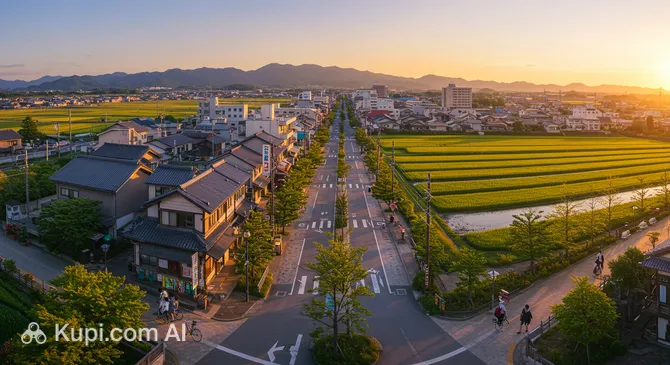
Maibara. Illustration.
Source: Kupi.com AI

With a population of about 37,000 people, Maibara maintains the atmosphere of a peaceful and welcoming small town. Thanks to convenient transport links, including a Shinkansen high-speed train station, the city is easily accessible for travelers seeking to discover authentic Japanese culture and daily life. Maibara plays an important role as a transport and cultural hub, connecting bustling metropolises with the serene countryside.

The city captivates with its unique harmony, where ancient traditions are seamlessly interwoven with a modern way of life. Natural beauty here is complemented by a rich historical heritage. Key attractions in Maibara include the opportunity to enjoy views of Lake Biwa and the surrounding mountains, explore ancient temples and castles, and immerse yourself in the atmosphere of local seasonal festivals.

Maibara is an ideal destination for those seeking a balance between nature, history, and comfort. If you appreciate leisurely walks, relaxing by the water, and sincere Japanese hospitality, this city will undoubtedly leave you with warm memories.

You can find more interesting facts on the history of Maibara page.

Weather Overview

When planning a trip to Maibara, be prepared for distinct seasonal changes. Expect warm and very humid summers, especially in July and August, when average temperatures hover around 25-27°C and the number of rainy days reaches its peak. Winters here are cold, with average temperatures around 3-5°C in January and February, and are also characterized by frequent precipitation, often in the form of snow.

For more detailed information on climate conditions and an up-to-date forecast, you can visit the weather in Maibara page.

Average monthly temperature

Average monthly precipitation

Interesting Facts

In addition to its picturesque landscapes and convenient location, Maibara holds many curious details and stories that are not always immediately obvious. Here are just a few interesting facts about this corner of Japan:

  • Maibara was not always a quiet provincial town. In the past, it played a strategic role, being located on the famous Nakasendo road. This ancient highway, connecting Kyoto to Edo (modern-day Tokyo), was not only a busy trade route but also an important channel for cultural exchange.

  • In Maibara, you can take a real journey back in time! The city has preserved entire blocks with old Japanese houses and shops that look as if they stepped out of Edo-period prints. These authentic streets often serve as living sets for colorful historical festivals and theatrical processions.

  • This city is the birthplace of more than one famous samurai and commander from the Sengoku period ("Warring States period"). There is even a legend that it was here, in the vicinity of Maibara, that one of the key secret meetings took place that influenced the future course of Japanese history.

  • Although the cherry blossom festival is a hallmark of all Japan, Maibara has its own especially revered places for admiring this wonder. In spring, locals and tourists flock to ancient parks and temples, where picnics under pink clouds of flowers take place in a particularly soulful atmosphere.

How to Get There

Maibara is one of the key transport hubs of the Kansai region, making it quite easy to get here from anywhere in the country. Thanks to the Shinkansen high-speed train station and proximity to major international airports, the city is open to tourists. You can find more details on how to get to Maibara on our dedicated page.

Maibara itself does not have its own airport, so travelers usually fly into the air hubs of neighboring large cities. The closest and most convenient option is Chubu Centrair International Airport (NGO), located in the city of Nagoya, about 70 km from Maibara. This is a major hub receiving many international flights. The journey from the airport to Maibara by train (with a transfer at Nagoya Station) takes about an hour, and by car, about 1.5–2 hours.

Another popular arrival option is Kansai International Airport (KIX), located in the city of Osaka. It is further away, about 137 km from Maibara, but offers a huge selection of international routes. The "Haruka" limited express train runs from Kansai Airport and stops in Maibara (or requires one transfer in Kyoto); the journey takes about 1.5–2 hours. You can also use Itami Airport (ITM) in Osaka, which specializes in domestic flights and is 97 km from the city.

For convenience, here is a summary of the main airports used to reach the city:

AirportPassenger trafficDistance
Nagoya Airport735 00059 km
Chubu Centrair International Airport12.3 mln70 km
Itami Airport14.8 mln97 km
Komatsu Airport1.8 mln120 km
Kobe Airport3.6 mln122 km

Rail service is perhaps the most convenient way to reach Maibara. Maibara Station is an important stop on the Tokaido Shinkansen high-speed line connecting Tokyo and Osaka. As a result, you can get here from Tokyo in just over 2 hours, and from Kyoto or Osaka in less than 30 minutes. The station is located right in the city center, making it an ideal starting point for your journey.

In addition to high-speed trains, the city is served by JR West lines (Hokuriku Line and Biwako Line) and the private Ohmi Railway. This makes it easy to reach Maibara from neighboring cities in Shiga Prefecture and the Hokuriku region via regular local and express trains.

If you prefer to travel by car, Maibara is conveniently located at the intersection of the Meishin and Hokuriku Expressways. This provides excellent transport accessibility for motorists heading from Nagoya, Osaka, or the Sea of Japan region.

Main Attractions

Maibara, cozily situated in Shiga Prefecture, offers travelers a unique combination of natural beauty and historical heritage. Despite its modest size, the city and its surroundings boast several remarkable places that will leave a vivid impression on every tourist.

One of the region's main treasures is undoubtedly Lake Biwa, the largest freshwater lake in Japan. Maibara is located on its eastern shore, providing wonderful opportunities for admiring water landscapes, walking along the coast, and enjoying the peaceful atmosphere. Water sports are popular here in the summer, while picturesque sunsets over the lake attract photographers and romantics alike.

For lovers of active recreation and panoramic views, Mount Ibuki is a must-visit. This majestic mountain, one of the "One Hundred Famous Mountains of Japan," is known for its rich diversity of alpine plants and hiking trails of varying difficulty. The ascent to the summit, part of which can be covered by a funicular, is rewarded with breathtaking views of Lake Biwa and the surrounding landscapes.

You can immerse yourself in the atmosphere of old Japan in Samegai-juku (Samegai Juku), a former post station on the historical Nakasendo trail. This charming place has preserved traditional houses and crystal-clear streams, along which it is a pleasure to stroll. It is especially beautiful here in summer when rare aquatic flowers called baikamo (Ranunculus nipponicus var. submersus) bloom in the transparent water.

If you are looking for a place for a relaxing break in nature and family entertainment, look no further than Rosa & Berry Tawada. This is an extensive theme park with beautiful English gardens, a sheep farm, cafes, and restaurants. You can spend the whole day here, enjoying the beauty of the flowers and fresh air, participating in workshops, or simply relaxing on the well-kept lawns.

Local Cuisine

The gastronomic scene in Maibara is a true immersion into the authentic tastes of Japan, where traditions are harmoniously combined with the freshness of local products. The city offers unique culinary experiences capable of surprising even the most sophisticated gourmet.

The main culinary pride of Maibara is undoubtedly dishes made from freshwater fish caught in the famous Lake Biwa. A special place among them is occupied by "funazushi"—a unique type of fermented sushi made from carp. This dish, with centuries of history, has an unusual, rich flavor that will be a real discovery. High-quality rice is also grown in the vicinity of the city, serving as the basis for many local dishes. Local women lovingly prepare traditional Japanese breakfasts, including fresh rice, seasonal vegetables, and aromatic miso soup.

Regarding beverages, it is worth paying attention to the local sake, which can often be tasted at gastronomic festivals. Non-alcoholic options include a variety of Japanese teas and fresh juices. These festivals are also a great opportunity to meet local producers, try artisanal sauces and sweets, and participate in workshops on cooking traditional dishes.

The food culture in Maibara is diverse. Locals and tourists enjoy food both in cozy restaurants offering classic Japanese dishes and at lively farmers' markets. At the markets, you can find the freshest vegetables, fruits, and homemade sweets. Street food is also popular: be sure to try fried vegetable pies or onigiri rice balls with various fish and vegetable fillings. It's a great way to have a quick and tasty snack while getting to know the city.

If you are looking for gastronomic discoveries and dream of the true taste of Japan, Maibara is your ideal choice. The focus on fresh fish, quality rice, and unique products like "funazushi" makes the local cuisine vibrant and memorable.

Travel Tips

Planning a trip to Maibara, a charming city and important transport hub on the shores of Lake Biwa? To ensure your journey through this corner of Japan goes smoothly and leaves only pleasant impressions, we have prepared some practical tips.

  1. Clothing and Essentials: What to Pack

    The climate in Maibara is temperate with distinct seasons. Summers can be hot and humid, so choose light, breathable clothing. Winters are cool, and snow is possible – don't forget warm clothes. Spring and autumn delight with comfortable weather ideal for walking – layered outfits will come in handy here. Be sure to bring comfortable shoes, as exploring the surroundings is best done on foot. Don't forget an adapter for electrical appliances (Japan uses Type A and B sockets, 100V voltage). When visiting temples and shrines, choose modest clothing that covers shoulders and knees, and be prepared to remove your shoes before entering.

  2. Transportation: Getting Around the City and Environs

    Maibara is a major railway hub; Shinkansens (high-speed trains) pass through Maibara Station, making it an excellent starting point for traveling around the region. Within the city itself, you can use local JR trains and buses. Public transport is quite convenient for trips to Lake Biwa or neighboring cities like Hikone. Taxis are available but can be expensive. Renting a car could be an option if you plan to actively explore the countryside, but remember the need for an international driving permit and left-hand traffic.

  3. Finances: Currency, Payment, and Tipping

    The local currency is the Japanese Yen (JPY, ¥). Despite the growing prevalence of bank cards, especially in hotels and large stores, it is highly recommended to always have enough cash with you. Small establishments, local markets, and some temples may only accept cash. You can exchange currency at the airport upon arrival or at banks (working hours may be limited). ATMs that accept international cards are most often found in post offices (Japan Post Bank) and convenience stores (7-Eleven, Lawson, Family Mart). Tipping is not practiced in Japan – high-quality service is already included in the price.

  4. Health and Safety: Peace of Mind

    Japan is one of the safest countries in the world, and Maibara is no exception. The crime rate is low. Pharmacies (薬局, kusuriya) are easy to find, but staff may not always speak English, so it's useful to have a translator app or write down the names of necessary medications. It is recommended for tourists to have travel insurance covering medical expenses. In case of emergency, hotel staff can help call a doctor or provide guidance.

  5. Communication: Language and Connectivity

    The official language is Japanese. English proficiency among the local population may not be high, especially outside tourist zones. However, Japanese people are very helpful and will try to assist even if they don't speak English. Learn a few basic phrases in Japanese: "konnichiwa" (hello), "arigato gozaimasu" (thank you very much), "sumimasen" (excuse me/sorry). For convenience, purchase a local SIM card or rent a pocket Wi-Fi router at the airport. Free Wi-Fi is available in many hotels and some public places.

  6. Local Etiquette: Respecting Traditions

    Japanese culture is rich in traditions and rules of etiquette. When greeting, Japanese people bow; a slight nod is also appropriate. In public places, especially on transport, try to speak quietly and not disturb others. Remove your shoes before entering homes, many temples, traditional restaurants, and ryokans (Japanese-style inns). When using chopsticks (o-hashi), do not stick them vertically into rice and do not pass food from chopsticks to chopsticks.

  7. What to Avoid: Staying Out of Trouble

    Avoid loud phone conversations on public transport – it is considered impolite. It is also not customary to eat or drink while walking down the street; it's better to stop and have a snack in a designated area or an establishment. Japan takes waste sorting very seriously, so pay attention to the labeling on containers.

  8. Extra Tip: Explore the Surroundings

    Maibara is the gateway to Japan's largest freshwater lake, Biwa. Be sure to set aside time for a walk along its picturesque shores or a visit to nearby Hikone Castle. For history and hiking buffs, it may be interesting that the ancient Nakasendo trail passed through this region.

We hope these tips help you better prepare for your trip to Maibara and enjoy every moment of your stay in this interesting region of Japan. Have a nice trip!

Entertainment & Nightlife

Evening Maibara invites travelers to immerse themselves in the authentic atmosphere of a Japanese town, where nightlife flows at a steady and cozy pace. Don't expect the noisy club districts of megacities here—the population of Maibara is about 37,000—but you will certainly find soulful places for a pleasant end to the day.

The center of evening entertainment is the area around Maibara Station and its adjacent streets. This is where traditional Japanese pubs—izakaya—are concentrated, where you can enjoy local dishes and sake in a relaxed setting. Small restaurants serving dinner and, of course, karaoke bars—a favorite pastime for Japanese people of all ages—are also popular. The atmosphere in such places is usually very welcoming, and the clientele is predominantly local. Most establishments are open until late evening, typically until midnight or one in the morning.

When planning your evening, keep in mind that the best time to visit an izakaya is early evening, especially on weekends. You can get back to your hotel at night by taxi, which usually wait for passengers at the station, or by calling a car, as public transport finishes its service before midnight. Prices in local establishments will pleasantly surprise you with their moderation, making an evening out quite affordable.

Maibara, like most cities in Japan, is famous for its safety. Evening walks, especially in the central areas near the station, are generally completely safe, although basic precautions never hurt. You are unlikely to find large nightclubs with dance floors and DJs here, but the special charm lies in the intimacy of the local bars and restaurants and the opportunity to chat with the townspeople.

While the choice of well-known bars or clubs in Maibara may be small, finding an authentic spot for an evening out is not difficult. Look for signs with the characters 「居酒屋」(izakaya) or the inscription 「スナック」(sunakku—a small bar with light snacks). It is these establishments that will allow you to feel the true spirit of local life.

During the day, Maibara and its picturesque surroundings offer other forms of entertainment. You can spend time exploring local temples and shrines, enjoy the beauty of nature by the legendary Lake Biwa, or go on an excursion to nearby historical sites. Even if the city itself doesn't have large museums or world-class theaters, its convenient location makes Maibara an excellent starting point for exploring the Shiga region.

Parks & Museums

Maibara, cozily nestled on the shores of Lake Biwa, offers its guests a harmonious combination of natural beauty and cultural discoveries. Here you can enjoy the tranquility of green zones and get acquainted with the region's rich heritage through its museums and historical corners.

One of Maibara's main natural gems is undoubtedly Lake Biwa, Japan's largest freshwater lake. Along its shores in the city's vicinity lie picturesque recreation areas, ideal for walking and contemplating the water's surface. For instance, Green Park Santo (グリーンパーク山東) offers various opportunities for active outdoor recreation, including camping, sports fields, and walking trails, making it attractive for families and active lifestyle enthusiasts. Another notable spot is Rissei-no-oka (リッセイの丘), which offers beautiful views, including Mount Ibuki, and where you can enjoy the peace and beauty of nature.

For a deep dive into the history and culture of the region, it is worth visiting the local museums. The Maibara City Museum of History and Folklore (米原市歴史民俗資料館) houses exhibits telling the story of daily life, traditions, and the development of this area over centuries. It will be of interest to those who want to learn more about local identity. Special attention should be given to the Kashiwabara-juku History Museum (柏原宿歴史館), dedicated to one of the former post stations on the ancient Nakasendo trail. Visitors can learn about the history of this important transport and trade route, the lives of travelers, and the station's significance to the region. This place will be especially interesting for lovers of Edo-period history.

As in many Japanese cities, ancient temples and shrines can be found in Maibara and its surroundings. These quiet and peaceful places are not only architectural monuments but also allow you to touch the spiritual life of Japan. A stroll through preserved old streets, where they exist, can also reveal interesting examples of traditional Japanese architecture and lifestyle, especially in the area of the former Kashiwabara post station.

For more authentic impressions, don't be afraid to veer off the beaten tourist paths. Explore the residential areas of Maibara, where you can observe the daily lives of local residents. Duck into small local shops or cafes to try regional delicacies and feel the true spirit of this lakeside town on Lake Biwa.

Getting Around

Maibara, being an important transport hub, offers several convenient ways to get around the city and its surroundings. The core of public transport here consists of trains and buses, providing connections between various districts and attractions.

Rail transport plays a key role in Maibara. Maibara Station is a major interchange hub where JR West lines (such as Tokaido and Hokuriku) and JR Central's Shinkansen high-speed trains intersect. To move around the city and nearby suburbs, local trains on these lines are used, as well as trains from the private company Ohmi Railway, which also has a station in Maibara. Trains run according to a schedule, which can be found at stations or online.

The bus network complements the rail service, covering areas that trains do not reach. Local buses primarily depart from Maibara Railway Station, following various city and suburban routes. This is a good option for reaching certain local attractions or hotels located away from the stations.

The fare payment system in Maibara, as in many Japanese cities, is quite convenient. The most popular method is rechargeable IC cards, such as ICOCA (common in the Kansai region) or other nationwide cards (like Suica, Pasmo). These cards can be used on both trains and buses. You can buy or top up an IC card at machines at railway stations. Single paper tickets are also available, purchased from machines or ticket offices at stations before travel. On buses, payment is usually made upon exiting; if the system doesn't involve a fixed fare, you need to take a numbered zone ticket when entering and pay the amount corresponding to your distance when exiting.

Practical tips for tourists: Purchase train tickets and IC cards at railway stations. To validate an IC card, simply tap it against the reader at the ticket gate when entering and exiting the station, or against the validator on the bus. Paper tickets are inserted into special slots at the gates. Public transport usually operates from early morning until late evening, but service frequency may decrease in the evening hours and on weekends, especially on bus routes. Schedules are always available at stops and stations.

Among alternative ways of moving around Maibara, you can consider taxis, which are usually available at the railway station. This is a more expensive but comfortable option. For a leisurely exploration of the city and its immediate surroundings, bicycle rental is excellent. Several bike rental points can be found near Maibara Station, which is particularly convenient for exploring the picturesque shores of Lake Biwa, located nearby.

Accommodation

In Maibara, tourists will find a variety of accommodation options to suit different preferences and budgets. The core consists of comfortable mid-range hotels, often geared towards business travelers and tourists, as well as more budget-friendly guesthouses. While luxury resorts are rarer here, comfortable options with a good range of services can be found. For those who prefer more independence and home comfort, apartment rentals are possible, although this option may be less common compared to larger cities.

The most convenient area to stay in Maibara is undoubtedly the territory around Maibara Station. This is a major transport hub, making it easy to reach the main attractions of both the city itself and neighboring regions, including the picturesque Lake Biwa. Staying here provides easy access to trains, including Shinkansen high-speed lines, and bus services, making it an ideal base for exploring Shiga Prefecture.

The price range for housing in Maibara varies from affordable options in guesthouses to more expensive rooms in hotels with expanded service. You can book accommodation through popular international online booking platforms, as well as directly on hotel websites. Some traditional Japanese inns (ryokans), if available in the city or its immediate surroundings, may offer a unique cultural experience and require booking through specialized Japanese services or directly.

To guarantee the best choice and prices, especially if your trip falls during peak tourist seasons, such as the cherry blossom period in spring or the autumn foliage (momiji) season, it is recommended to book accommodation in advance. It is also worth considering that during local festivals or major events, demand for hotels can increase significantly, so early booking will help avoid inconvenience.

Nearby Cities

For those who want to explore the surroundings of Maibara, it serves as an excellent starting point for exciting day trips. For example, just a few kilometers away is Hikone, famous for its magnificent castle, one of the few surviving original castles in Japan. Nearby is the city of Nagahama, which attracts tourists with its historical Kurokabe Square district, featuring glass workshops and picturesque views of Lake Biwa. These and other nearby cities offer diverse opportunities for short trips and exploring the region's culture:

CityPopulationDistance
Hikone113 1915 km
Nagahama113 7407 km
Hikone115 4417 km
Aisho20 91318 km
Tarui26 55823 km

These nearby destinations allow for a deeper dive into the diverse culture, history, and natural beauty of Shiga Prefecture, making Maibara a convenient hub for exploration.

Shopping & Souvenirs

When planning a shopping trip in Maibara, you should look forward to finding authentic goods and getting to know the local commercial culture rather than visiting huge malls. The city offers opportunities to buy daily necessities, local products, and perhaps unique souvenirs from Shiga Prefecture. Here you are more likely to find small specialized shops and boutiques than large retail chains.

Main shopping spots in Maibara are likely concentrated around Maibara Railway Station and on the adjacent streets. Here you can find shops offering a variety of goods: from food and clothing to souvenirs and household items. A walk through these areas will allow you to feel the local atmosphere and perhaps discover interesting finds.

Regarding large shopping centers, in a city the size of Maibara, they may not exist in the conventional sense. Instead, you might encounter small shopping complexes or department stores oriented towards the needs of local residents. The main focus of shopping here is on small family businesses and shops offering quality goods.

While Maibara may not be famous for large and noisy markets, it is worth paying attention to potential local fairs or temporary markets, especially if your visit coincides with any holidays or festivals. At such markets, you can often buy fresh local products, handmade items, and unique souvenirs directly from producers.

As souvenirs from Maibara and Shiga Prefecture, you can consider traditional Japanese items. Look for local ceramics (Shiga Prefecture is known for its Shigaraki ware), textiles, and wooden products. Local sweets (wagashi), sake, and products related to Lake Biwa, the largest freshwater lake in Japan, are also popular. Classic Japanese souvenirs like green tea, chopsticks, fans, and small decorative items would also be good choices.

Shops in Maibara usually operate on a standard schedule for Japan: roughly from 10:00-11:00 to 19:00-20:00. Small private shops may have individual working hours. Regarding payment, most shops accept credit cards, but cash (Japanese yen) is still widely used and may be preferred in small shops or at markets. It is recommended to always have some cash with you.

Foreign tourists in Japan can take advantage of the Tax-Free refund system. Look for shops with the corresponding "Tax-Free Shop" logo. Usually, to qualify for a tax refund, you need to make a purchase of a certain amount (most often over 5,000 yen in a single receipt) and present your passport. The tax refund is typically processed directly in the shop when paying for the goods.

Reached the end of the page?

That means the route is fully explored