Support

Moriyama

About

Moriyama is a charming and welcoming city nestled on the eastern shore of the famous Lake Biwa, the largest freshwater lake in Japan. Located in Shiga Prefecture, just a few dozen kilometers from ancient Kyoto, Moriyama serves as an excellent starting point for exploring the Kinki region, where a rich history blends harmoniously with modernity.

Moriyama has a population of about 83,500. It is a city that has managed to preserve the steady pace of provincial life while complementing it with all the necessary modern amenities. There is no hustle and bustle of megacities here; instead, a soulful atmosphere and special hospitality characteristic of small Japanese towns prevail. Moriyama is part of the Otsu metropolitan area and plays a significant role in the transport and cultural life of the prefecture.
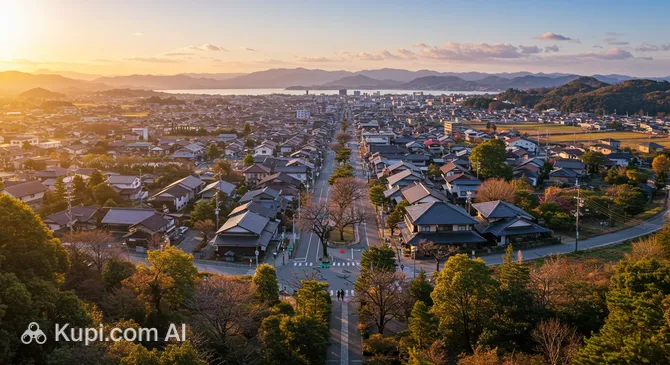
Moriyama. Illustration.
Source: Kupi.com AI

The city is famous for its clean air, picturesque views of Lake Biwa, and the surrounding green hills, which are especially beautiful in spring during the cherry blossom season and in autumn when the foliage turns vibrant colors. For the traveler, Moriyama offers a unique opportunity to experience Japan off the beaten track, see the country's daily life, and enjoy the tranquility often lacking in major centers.

In Moriyama, everyone will find something to their liking. Nature lovers will appreciate walks along the Lake Biwa embankment, while art enthusiasts can visit local art museums. The city is also known for its local festivals, where participation allows for a deeper immersion into Japanese culture. It is an ideal place for a leisurely holiday, meditative walks, and an introduction to the traditional Japanese way of life.

If you are looking for an authentic experience and want to take a break from the city bustle, Moriyama will gladly open its doors to you, offering peace and unforgettable impressions of meeting the real Japan.

You can find more interesting facts on the history of Moriyama page.

Weather Overview

The weather in Moriyama offers guests clearly defined seasons. Summer here is warm, especially in July and August, when average air temperatures hover around 26-27°C. Winters, by contrast, are cool, with an average January temperature of about 3.6°C. Precipitation occurs in Moriyama throughout the year; however, the summer months, particularly July, tend to be rainier.

Overall, when planning your trip, expect a warm summer with occasional rain and cool winters when the amount of precipitation decreases, though cloudy days are still frequent. The hottest month is August with an average temperature of 27.1°C, and the coldest is January (3.6°C). The highest amount of rainfall (about 9 mm) and rainy days (averaging 20) usually occur in July. To learn more about climate conditions, you can study detailed information on the climate of Moriyama page.

Average monthly temperature

Average monthly precipitation

Interesting Facts

Beyond the well-known routes and popular sights, Moriyama hides many surprising details and stories. This city in Japan is ready to surprise even the seasoned traveler with its unique features.

  • The Sagawa Art Museum in Moriyama is not just a gallery, but a true architectural masterpiece harmoniously integrated into the surrounding landscape. Here you can see works by both Japanese masters and foreign artists, making it one of the leading cultural centers of the region.

  • The famous Lake Biwa Bridge passes through the city, acting not only as an important transport artery connecting the shores of the largest freshwater lake in Japan but also as a true engineering marvel. The bridge offers breathtaking panoramic views that attract photographers and tourists alike.

  • Moriyama is home to the unique Digital Star Dome Hotaru planetarium. This is a place where, thanks to modern technology, you can take a virtual journey through the starry sky and learn a lot about space, which is especially popular with families with children.

  • The city is known for its colorful traditional Japanese festivals. During these events, the streets of Moriyama come alive with the sounds of music, filled with dancing and bright processions. Visitors can not only watch the festivities but also participate in workshops, such as calligraphy or the art of the tea ceremony.

How to Get There

When planning a trip to Shiga Prefecture, it is important to think through your route in advance and find out how to get to Moriyama. The city has good transport accessibility, being located near major megacities of the Kansai region, such as Kyoto and Osaka.

Moriyama itself does not have its own airport, so travelers usually fly into the airports of neighboring major cities. One of the most convenient options is Itami Airport (IATA: ITM), located in the city of Osaka, about 59 km from Moriyama. It primarily handles domestic flights, making it an excellent choice if you are flying from another region of Japan. A taxi or bus ride from here will take about 1 hour and 50 minutes. This is a major hub with high passenger traffic.

For international flights, the main hub is Kansai International Airport (IATA: KIX). It is also located in the city of Osaka but at a greater distance — about 98 km from Moriyama. This is one of the country's key airports. Travel by car will take approximately 2 hours and 45 minutes. From this airport, many tourists also reach Moriyama by train via Kyoto.

An alternative option could be Chubu Centrair International Airport (IATA: NGO) in the city of Nagoya, which is 77 km from Moriyama. Travel time by car is about 2 hours and 15 minutes.

For clarity, here is summary information on the main airports:

AirportPassenger trafficDistance
Itami Airport14.8 mln59 km
Chubu Centrair International Airport12.3 mln77 km
Kobe Airport3.6 mln84 km
Nagoya Airport735 00088 km
Kansai International Airport30.6 mln98 km

In addition to taxis and rental cars, the city can be reached by rail. Moriyama is integrated into the extensive Japan Railways (JR) network, allowing for a comfortable train journey from any of these airports with one or two transfers.

Main Attractions

Located in Shiga Prefecture on the shores of picturesque Lake Biwa, the city of Moriyama offers its guests a unique combination of cultural, historical, and natural attractions. If you are planning a trip, here are a few places you should definitely include in your itinerary.

One of the city's main gems is the Sagawa Art Museum. This is not just a gallery, but a true architectural masterpiece. The museum building, appearing to float on the water's surface, makes an indelible impression. Inside, you can discover works by prominent Japanese masters: painter Ikuo Hirayama, sculptor Churyo Sato, and ceramicist Raku Kichizaemon. The museum attracts connoisseurs of beauty with its peaceful atmosphere and the harmonious fusion of art and nature.

Nature lovers and those who appreciate beautiful landscapes should definitely visit Dai-ichi Nagisa Park. Located on the shores of Lake Biwa, this park is particularly famous for its fields of rapeseed (canola), which bloom in a bright yellow carpet in early spring, creating a breathtaking contrast with the blue of the lake and the view of the Hira Mountains. In summer, you can admire the sunflowers here. It is an ideal place for walks, picnics, and, of course, photos against the backdrop of Japan's largest freshwater lake.

Moriyama is also known as the "city of fireflies," and one of the most magical attractions is the area around the historic Uno-no-ie merchant house (Uno-ke Machiya), where you can observe myriads of fireflies in early summer. This amazing natural phenomenon turns an ordinary walk into a fairytale adventure. Visiting this place during the firefly season (usually June) will give you unforgettable memories and allow you to touch upon unique Japanese summer traditions.

For those interested in Japanese history and culture, a visit to Katsube Shrine is recommended. This ancient Shinto shrine is known nationwide for one of the three largest fire festivals in Shiga Prefecture – the Katsube-no Himatsuri. The festival takes place in January and is an impressive spectacle featuring torchlight processions. Even if your trip does not coincide with the festival, the shrine is interesting for its centuries-old history and authentic atmosphere.

Local Cuisine

The gastronomy of Moriyama offers a fascinating immersion into the culinary traditions of the Shiga region, where the bounty of Lake Biwa and fresh local produce take center stage. Travelers can expect to discover unique flavors that tell the story of this Japanese city's culture and history.

One of the main gastronomic symbols of Moriyama that you should definitely try is funa-zushi. This is an ancient dish made of fermented fish (usually crucian carp) with rice, possessing a rich, complex taste and aroma, which is a true delicacy and the pride of the region. Another iconic dish is unagi, or freshwater eel, grilled with a thick, sweet unagi sauce. Its tender meat and rich flavor will not leave fans of Japanese cuisine indifferent. In general, dishes made from various freshwater fish caught in Lake Biwa hold an important place on the local menu.

At Moriyama's farmers' markets, you can always find fresh seasonal vegetables, famous local rice, and juicy fruits used in many dishes. Sweet lovers should look out for traditional Japanese desserts such as moti (glutinous rice cakes) and various sweets based on adzuki bean paste. These treats pair perfectly with green tea, the main non-alcoholic beverage. For alcoholic beverages, you can sample local sake or shochu.

The dining culture in Moriyama offers a variety of options, from cozy restaurants specializing in local cuisine to lively farmers' markets where you can buy the freshest products. Street food is also popular: here you can try aromatic yakitori (chicken skewers), as well as fresh sushi and sashimi. The city is also known for its gastronomic festivals, which provide an excellent opportunity to experience local delicacies and even participate in culinary workshops, diving deeper into the authentic atmosphere of Japanese cuisine.

Travel Tips

Welcome to Moriyama! To make your journey to this charming corner of Japan as comfortable and memorable as possible, we have prepared some practical tips. We hope they will help you navigate easily and get the most out of your trip.

  1. Clothing and Essentials: What to Bring

    The climate in Moriyama, as in all of Japan, is clearly divided by seasons. In summer (June-August), it is hot and humid, so bring light, breathable clothing. In winter (December-February), it can be cool, sometimes with snow – don't forget a warm jacket, sweater, hat, and gloves. Spring and autumn are the most comfortable times with moderate temperatures. Be sure to bring comfortable shoes, as you will be doing a lot of walking. Don't forget an adapter for your electronics (Japan uses type A and B sockets, 100V voltage). When visiting temples and shrines, dress modestly (shoulders and knees should be covered) and be prepared to remove your shoes at the entrance.

  2. Transportation: Getting Around Moriyama

    The main way to get around Moriyama and its surroundings will likely be local buses and trains. The Japan Railways (JR) network is very developed and convenient for traveling between cities. To plan train routes, use apps like HyperDia or Jorudan. Taxis are available but can be expensive; taxi-hailing apps like JapanTaxi or Go can be useful. Renting a car might be justified if you plan to explore Shiga Prefecture and the shores of Lake Biwa, but remember left-hand traffic and the requirement to have an International Driving Permit.

  3. Finances: Currency, Cards, and Tipping

    The local currency is the Japanese Yen (JPY, ¥). It is recommended to exchange some money upon arrival at the airport or at banks. Credit and debit cards (Visa, Mastercard) are accepted in many hotels, large stores, and restaurants; however, always have enough cash with you, especially for payment in small establishments, markets, temples, and for some types of transport. ATMs that accept international cards can be found in convenience stores (7-Eleven, Family Mart, Lawson) and at the post office (Japan Post Bank). It is important to know that in Japan, tipping is not practiced and can be perceived as impolite.

  4. Health and Safety: Be Prepared

    Moriyama, like most cities in Japan, is considered a very safe place with a low crime rate. However, standard precautions like keeping an eye on your belongings are always a good idea. Pharmacies (look for the sign 薬 - kusuri) are easy to find, but many medications may require a prescription, and staff may not always speak English. It is strongly recommended to take out travel medical insurance before your trip. Japan is prone to earthquakes, so familiarize yourself with the basic rules of behavior in such situations.

  5. Communication: Language and Connection

    The official language is Japanese. The level of English proficiency among the local population may not be high, especially outside major tourist centers. Learn a few basic phrases: "Konnichiwa" (Hello), "Arigato" (Thank you), "Sumimasen" (Excuse me/I'm sorry). For ease of communication and navigation, it is recommended to purchase a tourist SIM card or rent a portable Wi-Fi router (pocket Wi-Fi) upon arrival at the airport. Free Wi-Fi is available in some hotels, cafes, and at stations. Google Maps and Google Translate apps will be very useful.

  6. Local Etiquette: Respect Traditions

    Japanese people value politeness and respect for traditions very highly. A slight bow (ojigi) is a common form of greeting. In public places, especially on transport, try to speak quietly and not disturb others. Avoid eating and drinking on the go (except in designated areas). Be sure to remove your shoes before entering private homes, some temples, traditional restaurants, and ryokans (Japanese inns). When using chopsticks (hashi), do not stick them vertically into rice or pass food from chopsticks to another person.

  7. What to Avoid: To Not Be Out of Place

    Try not to talk loudly on your phone in public transport – this is considered bad manners. Also, avoid taking photos of people without their permission, especially up close. In some temples and museums, photography may be prohibited – pay attention to the relevant signs. Blowing your nose in public (loudly) is considered impolite; it's better to go to the restroom or use disposable tissues discreetly.

  8. Additional Tip: Explore the Lake Biwa Surroundings

    Moriyama is located in Shiga Prefecture, right next to Japan's largest freshwater lake – Lake Biwa. Don't miss the chance to visit this picturesque spot! You can enjoy beautiful views, take a boat trip, engage in water sports, or ride a bicycle on specially equipped paths along the shore. Find out about local festivals or seasonal events that may be taking place in Moriyama or near Lake Biwa during your visit.

We hope these tips help you feel more confident and get the most out of your trip to Moriyama. We wish you an unforgettable experience exploring this beautiful region of Japan!

Entertainment & Nightlife

Evening and nightlife in Moriyama offer their own more intimate and authentic charm compared to the megacities of Japan. Here, you won't find massive nightclubs with world-famous DJs, but you can immerse yourself in a real Japanese atmosphere at local venues where the townspeople themselves relax.

The foundation of evening entertainment in Moriyama consists of traditional Japanese pubs – izakaya. These are great places to try local cuisine and sake and to socialize with residents. Also popular are dining bars, where you can have a delicious dinner in a stylish setting, and, of course, karaoke bars – an integral part of Japanese leisure culture. Some restaurants also stay open late, offering guests a relaxed atmosphere.

As a rule, most places to spend the evening are concentrated around the main Moriyama railway station. The atmosphere here is usually quiet and friendly. The crowd is mostly local, but tourists are welcomed hospitably. The dress code in most places is casual, unless it is a particularly upscale restaurant. Main activity begins after the workday and continues until midnight or slightly later, especially on Fridays and Saturdays.

While preparing this guide, we checked available data on establishments in Moriyama; however, we did not find specific bars or nightclubs in the 'bar' or 'night_club' categories for which direct links could be provided. Therefore, to find a suitable place for evening relaxation, we recommend checking local information resources, online maps, or simply taking a walk in the evening through the central streets, especially near the station. Often the best places are those popular with the locals. Look for signs saying 居酒屋 (izakaya) or バー (bar).

Practical tips: The best time to visit bars and izakayas is after 19:00. The average bill in an izakaya can vary, but in general, prices in Moriyama will be more affordable than in major tourist centers. Public transport usually stops running closer to midnight, so if you plan to stay out late, inquire in advance about calling a taxi. Moving around the central districts of the city at night is generally safe, but common precautions should always be observed.

During the day, there is also plenty to do in Moriyama. Although the city is not famous for large theme parks or world-renowned museums, you can find charming local temples, stroll through city parks, or attend cultural events if any are being held during your visit. This will allow you to better understand the daily life of the Japanese countryside.

Parks & Museums

The city of Moriyama, nestled in Shiga Prefecture on the shores of Lake Biwa, offers its guests a harmonious blend of picturesque natural spots and interesting cultural sites. Here, everyone will find something to do, whether it's strolling through blooming parks or exploring the rich heritage of the region.

Among Moriyama's green gems, Dai-ichi Nagisa Park particularly stands out. This place is famous for its seasonal flower fields: bright yellow rapeseed flowers (nanohana) bloom here in spring, and sunflowers in summer, creating stunning landscapes against the backdrop of Lake Biwa and the Hira mountain range. The park is ideal for leisurely walks and photo sessions. Another charming place for plant lovers is the Rose Garden at the Moriyama Agricultural Park, where you can enjoy the scent and beauty of various rose varieties while walking along well-kept paths.

For lovers of art and history, Moriyama also has several notable places. The undisputed star is the Sagawa Art Museum. This museum impresses not only with its collections of Japanese painting by Ikuo Hirayama, sculpture by Churyo Sato, and ceramics by Raku Kichizaemon, but also with its unique modern architecture, where buildings are harmoniously integrated into the water landscape, creating a sense of lightness and peace. To dive deeper into the city's past, it's worth visiting the Moriyama City Museum of History and Culture, which features exhibits telling the story of the region's development and traditions, including its role as a post station on the ancient Nakasendo highway.

In addition to parks and museums, Moriyama holds other evidence of its history. In the city and its surroundings, you can find ancient temples and shrines that are not only spiritual centers but also beautiful examples of traditional Japanese architecture. For example, Katsube Shrine is known for its spectacular annual fire festival and ancient history. A walk to such places will allow you to touch upon centuries-old traditions and enjoy an atmosphere of serenity.

For a more authentic experience of Moriyama, we recommend exploring the Lake Biwa waterfronts, perhaps by renting a bicycle for a leisurely ride along its picturesque shores. Also, look into small local craft shops or markets where you can find unique handmade souvenirs and observe the daily life of the townspeople. Such walks often provide the brightest and most unexpected discoveries.

Getting Around

When planning your travels around Moriyama, you will find that the city's transport system is quite convenient, although not as extensive as in megacities. The foundation of public transport here consists of trains and buses.

Railway Transport: The main transport artery is the JR (Japan Railways) line passing through Moriyama Station. JR trains connect the city with major centers of the Kansai region, such as Kyoto and Osaka, as well as with other settlements in Shiga Prefecture. This is the fastest way for intercity travel. Within the city, the rail network is less developed, but Moriyama Station serves as an important interchange hub.

Buses: Local bus routes provide connections within Moriyama and to adjacent areas where trains do not go. Buses run according to a schedule that can be found at stops or on the websites of transport companies (such as Ohmi Railway Bus or Kokoku Bus, if they serve the city). This is a good option for reaching specific attractions or areas far from railway stations.

Payment System: The most convenient way to pay for travel is by using rechargeable IC cards, such as ICOCA (common in the Kansai region) or other compatible cards (e.g., Suica, Pasmo). These cards can be used for both trains and buses by simply tapping them against the reader at the entry and exit (for trains) or upon boarding/exiting (for buses, depending on the system). You can also buy single train tickets at station machines (many machines have menus in English). On buses, payment is usually made in cash to the driver upon exiting; it is advisable to have small change, as it is not always possible to get change from large bills. Train fares depend on the distance, while bus fares may be fixed or zone-based. Trips typically start from a few hundred yen.

Practical Tips for Tourists: IC cards can be purchased and topped up at machines at major railway stations. When using a single train ticket, you must insert it into the turnstile at the entry and take it back, then insert it into the turnstile again at the exit (where it is usually collected). On buses, you often need to take a small ticket with a stop number upon boarding (if the fare is zone-based) and pay the fare upon exiting according to the fare table shown above the driver. Public transport usually operates from early morning (approximately 5:00-6:00) until late evening (around midnight). The frequency of services may decrease in the evening and on weekends. It is always useful to check the schedule in advance, especially for buses.

Alternative Ways to Get Around: In Moriyama, as in many Japanese cities, taxis are available. They can be found at stands near the railway station or called by phone. Taxis are comfortable but are a more expensive option. Bicycling is a great alternative for exploring the city and its surroundings, especially given the relatively flat terrain. Bicycle rental points (rent-a-cycle) are often located near railway stations. This is not only an economical but also an enjoyable way to get to know the city better. Car rental or car-sharing is also possible, but may be less convenient for travel exclusively within the city due to parking and navigation issues.

Accommodation

When planning a trip to Moriyama, you will find a variety of accommodation options to suit different budgets and preferences. The city offers a wide choice, from budget-friendly guesthouses and hostels for travelers on a tight budget to comfortable mid-range hotels. More luxurious options may also be available for those seeking special comfort. Additionally, consider renting an apartment if you value independence, extra space, and a home-like atmosphere during your stay.

When choosing a place to stay in Moriyama, pay attention to its location. Hotels or apartments situated near key transport hubs or the attractions you plan to visit will provide convenience and help save time. Central areas of the city or those with good transport links are generally a good choice for tourists.

While Moriyama certainly offers a wide range of hotels, at present, our data lacks specific examples of local hotels or resorts that we could recommend with detailed descriptions and links. To find a suitable option, we suggest using popular online booking platforms. When choosing, be sure to read reviews from other travelers and check the current availability for your dates, as well as whether the hotel meets your expectations.

Regarding accommodation prices, in Moriyama, as in many cities in Japan, you can find options for any budget – from budget to more expensive. We strongly recommend booking accommodation well in advance, especially if your trip falls during peak tourist season, national holidays, or major local festivals, as popular places are quickly booked up. For searching and booking, it is convenient to use well-known online services such as Booking.com, Agoda, and Expedia, or to contact the selected hotel directly to clarify details and special offers.

Nearby Cities

For those who want to explore the surrounding area, Moriyama serves as an excellent starting point for day trips to several interesting nearby locations:

CityPopulationDistance
Yasu50 0493 km
Ritto69 5984 km
Omihachiman81 54512 km
Ryuo19 75612 km
Otsu342 60713 km

These nearby destinations offer a glimpse into the diverse culture and landscapes of this region of Japan. Each trip promises new discoveries, whether they be historical sights, natural beauty, or unique local traditions.

Shopping & Souvenirs

Shopping in Moriyama is a pleasant blend of modern convenience and local flavor. Unlike noisy megacities, the shopping process here takes place in a more relaxed atmosphere. The city offers tourists both large shopping complexes with familiar brands and unique farmers' markets where you can find the freshest products of the Shiga region. Special attention should be paid to gastronomic souvenirs, as this area is famous for its agricultural achievements.

The main shopping area can be called the surroundings of the Moriyama railway station. Here, supermarkets, drugstores, and small shops are concentrated, where it is convenient to buy basic necessities or a light snack. However, for larger-scale shopping, locals and tourists head closer to the shores of Lake Biwa, where major commercial facilities are located.

The most famous and popular shopping destination is the Pieri Moriyama shopping center. This huge mall is located right on the lakefront and offers not only shopping but also various leisure activities. Over a hundred shops are gathered under one roof here: from popular international clothing brands (H&M, ZARA, GU) to home goods and electronics stores. After shopping, guests can spend time actively in the Biwako SKY Adventure rope park or relax mind and body in the Moriyama Yumoto Suishun hot springs, which are located on the complex's territory and offer a magnificent view of the lake.

If you want to feel the true taste of the region, be sure to visit the Ohminchi farmers' market. It is one of the largest direct-sale agricultural markets in the prefecture. Here you can buy fresh vegetables, fruits, flowers, and rice grown by local farmers. The market is immensely popular due to its high product quality and reasonable prices. There is also a buffet restaurant on-site that prepares dishes from these same local ingredients.

As a souvenir from Japan and specifically from Moriyama, it is worth bringing back the famous Moriyama Melon. These melons are renowned for their exceptional sweetness and aroma, considered an elite gift. Also, look out for products from Lake Biwa: tsukudani (fish simmered in soy sauce) or, for the most adventurous gourmets, funa-zushi — fermented crucian carp. Sweets based on local green tea or with the addition of mugwort are also popular.

Most shops in the shopping centers are open from 10:00 to 20:00 or 21:00. Farmers' markets like Ohminchi open early in the morning (around 9:00) and close earlier, usually by 17:00 or 18:00. In large malls and supermarkets, credit cards and contactless payments are widely accepted. However, in small markets or private shops, it is preferable to have cash yen on hand.

The Tax-Free system is available in large stores within the Pieri Moriyama shopping center (for example, in clothing, electronics, or cosmetics stores). Look for stickers with the Tax-Free symbol in windows or at cash desks. To process a tax refund (usually 10% for purchases over 5,000 or 5,500 yen), you will need to present your passport with an entry stamp.

Reached the end of the page?

That means the route is fully explored