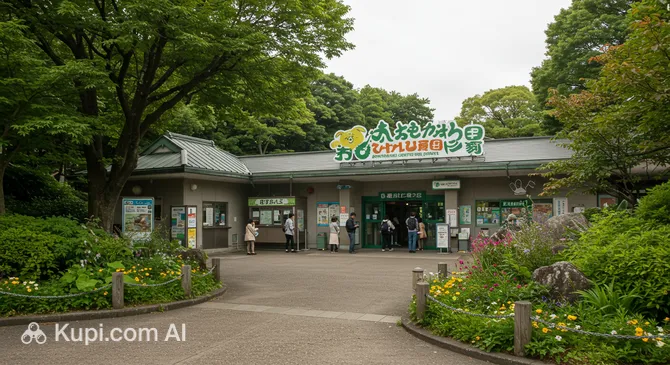
Higashi Park Zoo, Okazaki, has a fascinating history that is inextricably linked with the development of Okazaki Park itself, where it is located. According to historical records, the zoo in this famous park first opened its doors to the public in 1903. This event was part of a larger project: Okazaki Park was established on the site where an industrial exhibition had previously been held. The decision to create it was made by government circles with the noble goal of combining cultural and educational institutions with popular recreation spots for residents and guests of Okazaki.
Okazaki Park, which became the home for the zoo, is itself a place with a rich historical past, particularly closely linked to samurai culture. One of its key attractions is the majestic Okazaki Castle. It was within the walls of this castle that Tokugawa Ieyasu was born—one of the most iconic figures in the history of Japan, the renowned shogun who succeeded in unifying the country. Thus, visitors to Higashi Park Zoo, Okazaki, are effectively walking on land that holds traces of this outstanding samurai leader, which undoubtedly lends the visit a special, unique atmosphere.
The development of Okazaki Park did not stop with the creation of the zoological area. By 1909, its territory was enriched with significant facilities such as a prefectural library and a trade exhibition pavilion, which was elegantly complemented by a traditional Japanese garden. An interesting fact is that Ogawa Jihei (1860-1933), a famous Japanese master of landscape architecture, had a hand in creating some elements of the park ensemble. He designed the trade exhibition pavilion in Okazaki Park and is believed to have participated in planning the industrial exhibition on whose site the park was subsequently laid out. His talent is also known for creating the gardens of the Heian-jingu Shrine, which further emphasizes the high level of craftsmanship invested in the layout of this popular recreation area.