Support

Saint Cathedral of the Apostles Peter and Paul

About

The Cathedral of Saints Peter and Paul is not only the main Catholic church in the city of Šiauliai, but also one of the most significant Renaissance architectural monuments that Lithuania takes pride in. The snow-white building with its 70-meter octagonal tower dominates the cityscape, serving as its recognizable symbol and the spiritual center of the region.
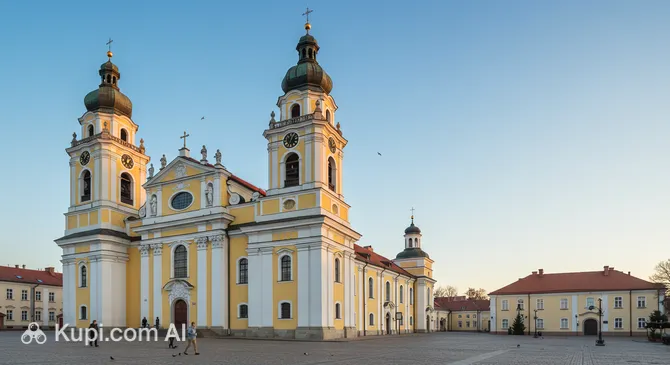
Cathedral of Saints Peter and Paul
Cathedral of Saints Peter and Paul. Иллюстрация. Источник: Kupi.com AI

One of the cathedral's unique features is its architectural appearance, which combines defensive construction traits with elegant Mannerism. When examining the facade, look for the bay towers, typical of late medieval fortified churches, and the double windows that give the building its distinct rhythm. On the south wall of the church, you'll find an ancient sundial — one of the few surviving objects of its kind in the country.

Inside, the cathedral impresses with its austere yet grand space featuring high barrel vaults. Despite numerous reconstructions, the church has maintained its integrity and exceptional acoustics. Today, it is an active cathedral of the diocese, where history is closely intertwined with the present, attracting pilgrims and tourists from all over the world with its tranquility and monumental beauty.

Contacts

For those planning a visit to this majestic structure, we have prepared up-to-date contact information. You can check the Mass schedule or inquire about guided tours by calling the numbers provided or visiting the official website.

Below are the main contact details for the church administration and its exact location in the city.

How to contactContact
AddressAušros tak. 3, 76294 Šiauliai, Lithuania
Phone+370 615 26555
Websitewww.siauliukatedra.lt

What to Do

First and foremost, step inside to appreciate the scale and harmony of the interior. The centerpiece of the interior is the 18th-century organ, which was carefully moved here from the Kaunas Church of the Holy Trinity and delights visitors with its deep sound. The main and side altars are also worth noting; they were created during a large-scale restoration in the 1970s and perfectly complement the overall architectural concept.

Be sure to walk around the building to observe the facade details: powerful pilasters, an elegant main portal with columns, and those very bay towers that hint at the defensive function such churches once served. Don't forget to find the sundial on the south side of the cathedral — it's a perfect spot for memorable photos. Photographers will also appreciate the view of the cathedral from the city boulevard, where its white tower looks particularly striking.

If you're lucky, you might catch one of the regular organ music concerts or a solemn service, when the cathedral is filled with special light and sound. During the warmer months, the area surrounding the church is an excellent starting point for a walking tour of central Šiauliai, where historical heritage meets the cozy atmosphere of modern cafes and pedestrian zones.

Getting There

Finding the cathedral is easy: it is located in the very heart of the city at Aušros tak. 3. Thanks to its monumental 70-meter tower, the church serves as an excellent landmark and is visible from almost anywhere in the city center. If you are already walking through the main market square or the famous pedestrian boulevard, the walk to the church will take only a few minutes.

For those arriving in Šiauliai by train or intercity bus, the walk from the station takes about 10–15 minutes (a distance of approximately 1.5 km). You can also use local buses that stop on central routes near the square. If you prefer a taxi, the ride from the station will be very short and inexpensive.

Travelers by car can use parking on adjacent streets or dedicated lots near the central square. For easy navigation, you can use the Google Maps coordinates. If you are coming from other cities in Lithuania, such as Vilnius or Kaunas, it is most convenient to take the A1 or A12 highways, following the signs for the city center.

Ближайший город: Siauliai

History & Facts

The history of this majestic building began in the first half of the 17th century. Construction took place between 1617 and 1637 at the initiative of Mikalojus Pacas, the Bishop of Samogitia. The church was consecrated on October 8, 1634, by Bishop Jerzy Tyszkiewicz. At that time, the construction of such a massive stone church was a landmark event, highlighting the city's growing status and importance in the region.

Over the centuries, the building has weathered many trials. In 1880, the cathedral's wooden tower was severely damaged by a lightning strike and the subsequent fire. After the restoration, the tower's appearance changed slightly, taking on its modern form. However, the most significant destruction occurred in 1944: during the events of that year, the church lost most of its interior decoration.

Restoration work began almost immediately after 1945 and continued in several stages until the mid-1950s under the guidance of talented engineers and architects. The church was granted cathedral status relatively recently — in 1997, when the Diocese of Šiauliai was established, opening a new chapter in its spiritual and cultural life.

Time Needed

To leisurely explore the cathedral's interior, admire its external architectural details, and find the famous sundial, 1 to 1.5 hours is usually enough. This time allows you to feel the grandeur of the space and study the main decorative elements.

If you plan to attend an organ concert or book a detailed guided tour about the history of the church's restoration, you should set aside about 2 hours. We also recommend leaving some time for a walk around the square surrounding the cathedral, which is the main architectural landmark of the city center.

Working Hours

The cathedral is open to parishioners and tourists daily. The church's schedule remains consistent throughout the week, making it easy to fit into your travel itinerary.

The doors are open from Monday to Sunday, 07:30 to 18:00. Please note that during Holy Mass, sightseeing might be limited, so it's best to choose a time between services for a detailed study of the interior.

7:30 – 18:00

Nearby

The cathedral's location in the historical center makes it easy to combine your visit with other interesting sites. A walk around the area will help you better feel the city's atmosphere and see both historical monuments and modern art objects.

Here is a list of notable sites within walking distance of the cathedral:

NameDistance
Resurrection Square0.2 km
Motyvas0.3 km
Kisenė0.3 km
Museum of Photography0.3 km
BOHO0.3 km
Leja0.3 km
Vilniaus Street Pedestrian Boulevard0.3 km

Reached the end of the page?

That means the route is fully explored