Support

Port Klang

About

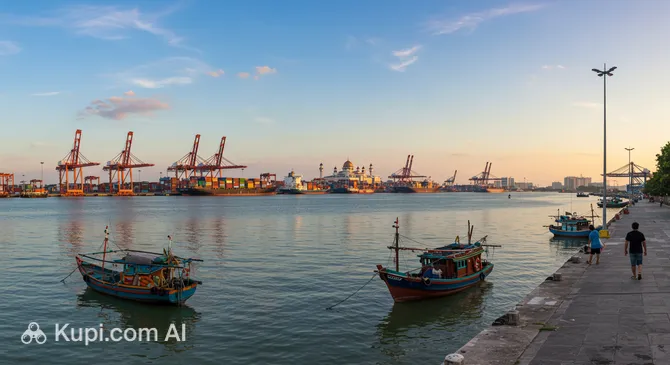
Port Klang is the country's main maritime gateway, located on the west coast at the mouth of the Klang River, where its waters meet the Strait of Malacca. This city is not just the largest port, but also a strategic hub connecting Malaysia with the outside world. Thanks to its proximity to the capital, Kuala Lumpur, which is only 37 kilometers away, and a developed transport network, the city has become an important attraction for travelers.

Port Klang. Illustration.
Source: Kupi.com AI

The atmosphere here is unique: the business rhythm of an international logistics hub is intertwined with the relaxed charm of coastal life. The city has a population of about half a million people, and this diversity of cultures creates a special character. The history of Port Klang as a trading post has shaped its modern appearance, where industrial landscapes exist alongside places for relaxation and immersion in local traditions.

Tourists often choose Port Klang as a starting point for cruises and boat trips. Here you can go on a fishing tour, watch majestic liners, or immerse yourself in the atmosphere of Malaysian hospitality right in the harbor, where guests are often greeted with music and dancing. Visit this city to see how modern industry harmoniously coexists with the natural beauty of the coast.

Weather Overview

Port Klang's climate is a classic example of the tropics, where summer lasts all year round and temperature fluctuations are virtually unnoticeable. Average thermometer readings remain stable in the range of +26°C to +28°C. During the day, the air usually warms up to +29°C...+30°C, and nights remain warm and comfortable, rarely cooling below +25°C.

A feature of the local weather is high humidity and frequency of precipitation. Rain here is a regular occurrence: even in February, which is considered a relatively dry month, about 20 rainy days are recorded. Peak precipitation occurs at the end of the year — in November and December, the number of rainy days can reach 28–29 per month. The current weather in Port Klang can often be changeable, so a light raincoat or umbrella should be kept handy in any season.

Expect consistently warm weather with occasional refreshing rains that occur almost all year round. Travelers are advised to choose light clothing made of natural fabrics to feel comfortable in the tropical humidity.

Average monthly temperature

Average monthly precipitation

Interesting Facts

Beyond its status as the country's main maritime gateway, Port Klang holds many fascinating features that often go unnoticed by transit passengers. Here are a few facts that reveal this city from an unexpected side:

  • Absolute Record-Breaker. The city is the undisputed leader in Malaysia in terms of cargo turnover and one of the most powerful logistics centers in Asia. The port infrastructure is so massive that it occupies several islands, each with its own specialized zone.

  • Terminal of the Future. The local cruise center looks more like a modern airport than a classic sea harbor. It is equipped with aerobridges and escalators, providing cruise passengers with maximum comfort and a sense of a grand arrival into a world of adventure.

  • A Colorful Welcome. Hospitality traditions are highly valued in Port Klang: arriving tourists are often greeted with national music and dances. As a special sign of attention, guests are given flower garlands and woven reed headbands.

  • Cultural Mix. The city's history, which began at the end of the 19th century, contributed to the formation of a unique demographic. Today, the customs of Malays, Chinese, and Indians are harmoniously intertwined here, making a walk through the city a real immersion in Asian diversity.

How to Get There

Due to its strategic location on the coast and proximity to the capital, Port Klang has excellent transport accessibility. Most often, tourists arrive here in transit through the country's main air gateways and then continue their journey by land. You can find out more about how to get to Port Klang by studying all available routes and types of transport.

There is no airport in the city of Port Klang itself, so travelers usually fly into nearby Kuala Lumpur. The main flow of tourists is handled by Kuala Lumpur International Airport (KUL). It is located about 45 km from Port Klang. The journey by taxi or bus from there will take about 1 hour 30 minutes. This is the country's largest aviation hub, accepting flights from all over the world.

An alternative is Sultan Abdul Aziz Shah Airport (SZB), which is also located in Kuala Lumpur (Subang area). it is closer — just 22.6 km from Port Klang, so the travel time will be about 55 minutes. This airport serves mainly domestic and regional flights but can be convenient for those already in Southeast Asia.

For clarity, here is a summary of the main airports:

AirportPassenger trafficDistance
Sultan Abdul Aziz Shah Airport1.4 mln23 km
Kuala Lumpur International Airport57.1 mln45 km
Ipoh Airport517 160177 km
Sultan Haji Ahmad Shah Airport176 100219 km
Sisingamangaraja XII Airport448 157279 km

Rail connections also play an important role in the region's logistics. The key transit hub is KL Sentral station (XKL), located in Kuala Lumpur. It is about 36 km from Port Klang. From this central station, you can reach your destination by taxi or bus in about 1 hour 15 minutes, or take a direct KTM Komuter train connecting the capital to the coast.

Below is information about the nearest major railway hub:

StationPassenger trafficDistance
KL Sentral Station36.5 mln36 km

Main Attractions

Although Port Klang is primarily known as an industrial giant, there are places here that allow travelers to touch local history and culture, especially the gastronomic side. The city is famous for its old establishments that preserve the atmosphere of the past century, as well as picturesque spots by the water.

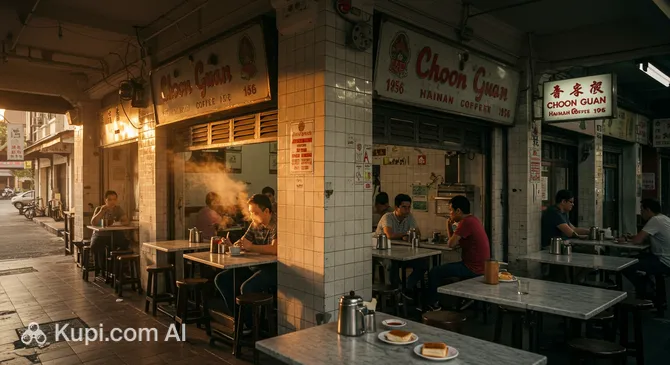
One of the real gems for traditionalists is Chun Guan Hainan Coffee 1956. This historic cafe, operating for over half a century, transports visitors to the era of British colonial Malaysia. Tourists come here not only for the aromatic traditional coffee but also to try the classic butter and kaya (coconut jam) toast in the authentic setting of an old shophouse.

Choon Guan Hainan Coffee 1956. Illustration.
Source: Kupi.com AI

Traveler photos:

Another gastronomic landmark worth noting is Restoran I.V.. This establishment is extremely popular among locals and visitors alike thanks to its famous roti canai — Indian flatbreads. The place is interesting for its lively, bustling atmosphere, which allows you to feel the real rhythm of Malaysian life and try simple but incredibly delicious folk cuisine.

I.V. Restaurant. Illustration.
Source: Kupi.com AI

Traveler photos:

Beyond culinary discoveries, Pulau Ketam (Crab Island) is considered the hallmark of the region. It can be reached by ferry directly from the Port Klang terminal. This is a unique fishing village built on stilts over the water, where cars are completely absent and the main transport is bicycles. Travelers come here for the freshest seafood and the unusual landscapes of the "floating" settlement.

For a quiet evening, it is worth visiting the Tanjung Harapan (Cape of Hope) waterfront. This is the perfect spot for watching sunsets over the Strait of Malacca. Here you can walk along the shore, enjoying the sea breeze, and see huge ships entering the harbor, creating an impressive contrast between the power of nature and the might of human technology.

Local Cuisine

Port Klang is famous for its gastronomic diversity and is rightfully considered a paradise for seafood lovers. Proximity to the sea guarantees exceptional freshness of ingredients: in coastal restaurants, be sure to order crabs, oysters, or giant prawns, grilled or simmered in spicy sauces. One of the city's hallmarks is assam laksa — a rich fish soup with tamarind, combining spicy and sour notes characteristic of coastal Malaysia.

Street food here is elevated to a cult. At every turn, you can find stalls cooking char kway teow — flat rice noodles stir-fried with shrimp, cockles, and bean sprouts in a wok over high heat. No less popular is satay — aromatic skewers of chicken or mutton, perfectly complemented by a thick peanut sauce. For dessert, local markets offer an abundance of tropical fruits, from sweet mangoes to the famous durian, as well as hot fried bananas.

The food culture in Port Klang is a vivid reflection of the country's multicultural soul. Locals often start the day in old coffee shops like the legendary Chun Guan Hainan Coffee 1956, enjoying a traditional breakfast in a retro atmosphere. Lovers of Indian cuisine and spicy aromas certainly drop by Restoran I.V. to taste fresh roti flatbreads. Food unites people here: tourists and townspeople often sit side by side in noisy food courts, sharing the joy of simple but incredibly delicious dishes.

To refresh themselves in the tropical heat, travelers usually choose sweet coconut water, which is often served directly in the nut. However, the main drink remains teh tarik — hot pulled tea with milk, which is masterfully poured from cup to cup to create a frothy foam. Gastronomic festivals, which are often held in the city, allow you to try all these delicacies in one place, immersing yourself in the atmosphere of a true celebration of taste.

Travel Tips

Port Klang is a colorful port city where industrial power coexists with a traditional way of life. To ensure your trip goes smoothly and your introduction to the local culture leaves only pleasant impressions, we have prepared a list of important recommendations.

  1. Clothing and Climate. Given the high humidity and heat, choose loose clothing made of natural fabrics such as cotton or linen. Be sure to carry a light raincoat or umbrella — tropical showers here are sudden and heavy. If you plan to visit religious sites or traditional Malay areas, follow the dress code: shoulders and knees must be covered.

  2. Transport. The most convenient way to get around the city is the Grab app (a local taxi analog), which works efficiently and at a fixed price. Public transport is represented by buses (less reliable in terms of schedule) and KTM Komuter trains connecting the port with Kuala Lumpur. For a trip to Pulau Ketam, use the ferries departing from the passenger terminal.

  3. Finances. The official currency is the Malaysian ringgit. While shopping malls accept cards, only cash is used in famous local coffee shops and street food stalls. ATMs are available in the port area and near stations. Tipping in Malaysia is not mandatory, but rounding up the bill in a taxi or cafe will be appreciated.

  4. Health and Hygiene. Never drink tap water — buy only bottled water. Due to the climate, insects are active here, so have repellent with you, especially in the evening by the water. Pharmacies (e.g., Watsons or Guardian) are widespread; you can find basic medicines there, and pharmacists usually speak English.

  5. Communication. English is widely spoken, and you will be understood almost everywhere. However, locals will appreciate it if you learn a few words in Malay, for example, "Terima kasih" (Thank you). For internet, it is better to buy a local SIM card (Maxis, Celcom, Digi) at any 24-hour 7-Eleven store or specialized kiosk.

  6. Local Etiquette. Greetings here are restrained; handshakes are common, but with Muslim women, it is better to greet with a nod and a smile unless they offer their hand first. Always remove your shoes before entering a private home or temple. Pass money or items only with your right hand, as the left is considered "unclean".

  7. What to Avoid. Do not point at people or objects with your index finger — this is considered rude; instead, use your right thumb with the other fingers curled. Also, avoid public displays of affection (kissing, long hugs), as local society is quite conservative.

  8. Tip for Foodies. Many of Port Klang's old establishments close quite early, often by 3:00 PM – 4:00 PM, as they are geared towards port workers' breakfasts and lunches. If you want to try the famous local coffee or bak kut teh (pork rib soup), plan your visit for the first half of the day.

Following these simple rules will help you feel confident and safe. Port Klang is a welcoming place where respect for local customs opens doors to sincere communication and the region's best gastronomic secrets.

Entertainment & Nightlife

Port Klang's nightlife is significantly different from the noisy parties of Kuala Lumpur. Here you won't find neon signs of trendy nightclubs or streets packed with bars until dawn. An evening in this city is primarily a gastronomic adventure, relaxed relaxation by the water, and immersion in the authentic atmosphere of the local community. The main activity shifts towards the waterfronts and 24-hour eateries, where life hums even after sunset.

The center of attraction in the evening is the Tanjung Harapan area. This is a picturesque esplanade running along the coast where local families, couples, and tourists gather. The atmosphere here is calm and romantic: the sea breeze brings coolness, and the lights of passing ships create a mesmerizing backdrop. There are many seafood restaurants along the promenade, many of which are built on stilts directly over the water. The dress code here is casual and will be appropriate everywhere.

If you are looking for a place where you can feel the real rhythm of local life, head to "mamak" establishments (Indian-Muslim cafes). They replace the pubs and lounges familiar to Europeans. A striking example of such a place is Restoran I.V.. Although it is known for its breakfasts, such establishments in Malaysia often become night gathering spots. Here, over a cup of "teh tarik" (pulled tea with milk) and fresh roti, locals discuss news and watch football matches. It is safe, cheap, and very authentic.

For lovers of more classic entertainment, it is worth paying attention to karaoke bars (KTV), which are popular among the city's Chinese population. They are often located at large restaurants or hotels in the Bandar Bukit Tinggi area nearby. However, if your goal is dancing until morning and world-class cocktail menus, the best solution would be to take a taxi to central Kuala Lumpur or the Bangsar district, which will take about 40–50 minutes in the absence of traffic jams.

Practical Tips and Safety:

  • Transport: Public transport runs rarely at night, so the only reliable way to get around remains a taxi through the Grab app. You can call a car 24/7.
  • Safety: Port Klang is an industrial city. Avoid walking through dark, deserted alleys and port warehouse zones. Stick to well-lit streets and busy areas like Tanjung Harapan.
  • Opening hours: Most restaurants close by 10:00 PM – 11:00 PM, but street stalls and mamak cafes can stay open well past midnight.

During the day, the city offers completely different experiences. Before evening arrives, it is worth taking a ferry to visit the fishing village on Pulau Ketam or exploring the majestic Chinese temples decorated with dragons. Daytime walks allow you to better understand the contrast between the hustle and bustle of a working port and the peace of its evening life.

Parks & Museums

Although Port Klang is primarily known as an industrial and logistics center, in the city itself and its immediate surroundings, you can find picturesque green zones and cultural institutions that tell the story of the rich heritage of the state of Selangor. For tourists, this is an opportunity to take a break from the hustle and bustle of the port and immerse themselves in the region's history.

Among the natural areas, Tanjung Harapan (Cape of Hope) holds a special place. This is a well-maintained waterfront park stretching along the shoreline. Shady trees are planted here, and there are walking paths and picnic spots. It is an ideal location to enjoy the sea breeze and watch the ships at sunset. Another important natural site is Taman Rakyat (People's Park), located in neighboring Klang. It is a true tropical oasis amidst urban development with a hilly landscape, manicured gardens, and hiking trails where you can see the local flora in all its glory.

The cultural heart of the region beats a few kilometers from the port, in the historic center of Klang. The main attraction here is the Sultan Abdul Aziz Royal Gallery. The museum is housed in a majestic colonial building built by the British in 1909. The exhibition is dedicated to the life of the late Sultan of Selangor and includes a magnificent collection of royal regalia, silverware, and the monarch's personal belongings, allowing you to touch the aristocratic past of Malaysia.

History buffs should also pay attention to Gedung Raja Abdullah. This building, erected in the mid-19th century, originally served as a warehouse for tin, the mining of which played a key role in the region's development. Although interior access may be limited depending on current restoration work, the architecture itself, combining local and Western elements, is an important monument to the city's formative era.

For those looking for unconventional experiences, we recommend taking the "Royal Klang Town Heritage Walk". This is a free guided tour program covering old fire stations, railway stations, and temples, which helps to see the hidden charm of the old town, often missed by transit passengers.

Getting Around

The public transport system in Port Klang has its own characteristics due to the specifics of a port city. There is no extensive underground metro network like in megacities, and the main links are the suburban railway and bus routes. For a tourist used to European standards, navigation may seem unusual, but with knowledge of the basic principles, moving around the area is quite convenient.

The main transport artery is the KTM Komuter suburban train line (Port Klang Line). The terminal station, Pelabuhan Klang, is located in the immediate vicinity of the ferry terminal. Trains are the most reliable way to get from the port zone to the historic center of Klang city or to go towards the capital. The carriages are modern and air-conditioned, but the intervals between trains can be from 30 to 60 minutes, so it is better to check the schedule in advance.

Bus service in the city is represented by several operators, among which the Smart Selangor program stands out. These are free city buses running along the key routes of the district. They are easy to recognize by their bright design. Despite the free travel, a QR code scan through a special app (CEPat) or tapping a transport card is often required for entry to account for passenger flow. There are also regular paid routes connecting residential neighborhoods with the station and the port.

A unique form of local public transport is the high-speed ferries and boats departing from the passenger terminal to Pulau Ketam. For locals, this is a daily means of transport, and for tourists, it is an attraction. Tickets are purchased at the counters at the pier before departure. Boats run regularly during daylight hours, but service stops at dusk.

The fare payment system is unified. The most convenient tool for a tourist is the Touch 'n Go card. This is a reloadable contactless card that can be used to pay for travel on KTM trains, some buses, and even for shopping in stores. You can buy it at major stations, gas stations, or chain minimarkets. If you don't have a card, you can buy a one-way token at a machine for cash at the train station, but it will take more time.

Given that Port Klang is an industrial zone with large distances between objects, walking is not always comfortable due to the heat and lack of sidewalks in some places. Therefore, the most popular alternative to public transport is a taxi through the Grab app. Cars arrive quickly, the price is fixed in advance, and this eliminates the need to explain yourself to the driver if you don't know the language.

Tourists should keep a few important nuances in mind. On KTM Komuter trains, there are special women-only coaches (usually marked with pink stickers) where men are strictly prohibited from entering — this is monitored. Also, transport has very powerful air conditioning, so it's worth bringing a light sweater for the trip. Validating tickets or cards on the railway is mandatory both at the entrance and exit through the turnstiles.
Accommodation

The specifics of accommodation in Port Klang are dictated by its status: it is a major maritime hub, not a tourist resort, so the housing market here has its own characteristics. In this part of Malaysia, you won't find luxury beach resorts or five-star world-chain hotels with ocean views. The main room stock is represented by practical business hotels, budget inns, and small guest houses aimed primarily at transit passengers, seafarers, and those waiting for a transfer to a ferry or cruise ship.

When choosing a hotel, it is critical to consider the purpose of your visit and the geography of the area. If you are planning an early departure to Pulau Ketam, it makes sense to stay in simple hotels within walking distance of the KTM Pelabuhan Klang terminal. However, keep in mind that the entertainment infrastructure there is minimal. For a more comfortable stay, experienced tourists advise considering the neighboring Bandar Bukit Tinggi area or the historic center of Klang city. A taxi ride there will take only 10–15 minutes, but the choice of modern accommodation is much wider, and there are shopping centers and colorful restaurants nearby.

Logistics is key when booking. The port area is huge, and it is impossible to walk from the passenger pier (South Port) to the cruise center (Boustead Cruise Centre) — the distance between them is several kilometers. It is recommended to check the hotel's location relative to your departure terminal in advance. On weekdays, there are usually no problems with availability, but on weekends and public holidays, demand from locals increases, so it is better to book accommodation in advance.

Pricing in the region remains very affordable for most travelers. The cost of a night's stay here is generally lower than in the capital, Kuala Lumpur. Tourists can expect a clean room with air conditioning and all necessary amenities for reasonable money. Luxury segments and serviced apartments are virtually non-existent here. To find the best options and guarantee your stay, it is most convenient to use major international aggregators, which often offer lower prices than paying directly at the reception desk.

Nearby Cities

For those who want to explore the surrounding area, Port Klang serves as an excellent starting point for day trips to several interesting nearby places:

The undisputed favorite for tourists is Kuala Lumpur, located less than an hour's drive away. The capital offers a rich program: from photos against the backdrop of the famous Petronas Twin Towers and climbing the colorful steps to the Batu Caves to shopping in the huge malls of the Bukit Bintang area. It is the perfect choice for those who want to feel the rhythm of a metropolis.

Right next door is the historic city of Klang. Unlike the port zone, its center is a treasure trove of colonial architecture and royal traditions. It is worth coming here to walk along the cultural heritage route, see ancient mosques and temples, and try authentic dishes in the Little India quarter.

Also worth noting is Shah Alam — the administrative capital of the state of Selangor. The city is famous for its stunning "Blue Mosque" (Sultan Salahuddin Abdul Aziz Mosque) with one of the largest domes in the world, as well as the i-City park, which turns into a fairy-tale forest of LED lights in the evening.

CityPopulationDistance
Klang878 0008 km
Shah Alam584 34016 km
Petaling Jaya638 51627 km
Putrajaya67 96435 km
Kuala Lumpur8 911 00036 km

These nearby destinations provide an insight into the region's diverse culture and landscapes.

Shopping & Souvenirs

Shopping in Port Klang has its own unique features that distinguish it from the capital's glamour. It's hard to find luxury boutiques here, but the city offers excellent opportunities for buying authentic local goods and products at wholesale prices. Travelers visiting Malaysia often use this port not only as a transit point but also as a place for profitable purchases before returning home.

For those aiming for large-scale purchases, the main point of attraction is GM Klang Wholesale City. This huge wholesale complex is located in close proximity to the port area and is considered one of the largest in the region. People come here for textiles, clothing, toys, and home goods. Prices here are significantly lower than retail, and the larger the batch, the better the price. If you need a more familiar comfortable shopping experience with international brands and air conditioning, it's worth driving 10–15 minutes to the AEON Mall Bukit Tinggi shopping and entertainment center.

A true hallmark of trade in Port Klang is dried seafood. Thanks to the developed fishing industry, local shops, especially in the Jalan Tepi Sungai area and near the ferry terminal, offer a huge selection of delicacies:

  • Ikan bilis (dried anchovies) — a high-quality product of various grades, which is the basis of many local dishes.
  • Dried shrimp and squid — a popular snack and an important ingredient for sauces.
  • Fish crackers (Keropok) — a crunchy treat sold both ready-to-eat and raw for self-frying.

As a gastronomic souvenir, tourists often buy local coffee. In historic establishments such as Chun Guan Hainan Coffee 1956, you can purchase packs of freshly roasted beans or ground coffee of their own brand. It is prepared according to a traditional recipe with the addition of sugar and margarine during roasting, which gives the drink a thick, caramel taste and unique aroma.

To experience the local flavor, it's worth checking out the Pasar Malam (night markets), which operate in the evenings in different neighborhoods. You can find inexpensive clothes, shoes, watches, and various small items there. Remember that most small shops and market traders in Port Klang only accept cash, so it's worth taking care of money exchange in advance.

Reached the end of the page?

That means the route is fully explored