Support

Myrdal

About

Myrdal is not your typical city with busy streets, but a secluded high-mountain station tucked away amidst majestic landscapes. It is cozily situated at an altitude of 867 meters above sea level, at the crossroads of rugged mountains and deep valleys. This is a place where an atmosphere of silence and grandeur reigns, and civilization gives way to the wild wilderness.

Geographically, the station is located in Vestland county and serves as an important transport hub where the main Oslo–Bergen line and the legendary Flåm Railway intersect. It is impossible to reach by car — the path is open only to trains and hikers. It is here, where the amazing Norway showcases its pristine beauty, that there is virtually no permanent population: Myrdal exists for the sake of adventure-seeking tourists.
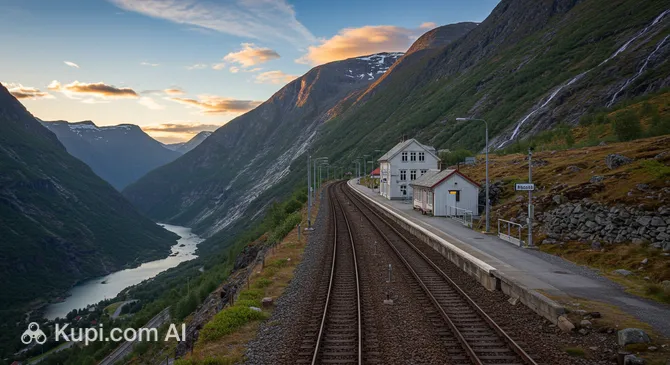
Myrdal. Illustration.
Source: Kupi.com AI

Despite its modest size and lack of urban infrastructure, the history of Myrdal is closely intertwined with the development of engineering thought and the conquest of the mountain elements. The station serves as a gateway to the region's most picturesque corners, making accessible places that were previously hidden from human eyes.

The main attraction that draws thousands of people here is the Flåm Railway — one of the steepest and most spectacular railway routes in the world. Furthermore, Myrdal is the starting point for journeys along the famous "Navvies' Road" (Rallarvegen), which is ideal for cycling and hiking among waterfalls. If you want to enjoy the purest mountain air and see the real Norwegian mountains, this place will be the perfect choice for your trip.
Weather Overview

Since the station is located in the highlands, the climate here is significantly harsher than on the fjord coast. Winter in these parts is long and real: in January and February, the average temperature stays around -7°C, and at night it often drops below -9°C. This is a period when the mountains are covered with a thick blanket of snow, creating rugged but picturesque landscapes.

Summer arrives late and does not bring intense heat. Even in the warmest months — July and August — the average temperature is about +10°C, and maximum values rarely exceed +13.6°C. Expect a cool summer with periodic rain and cold winters, so warm clothing will be necessary in any season.

A feature of the local climate is high humidity: the number of days with precipitation here is high year-round, reaching 20–22 days per month. Before setting out, be sure to check the current weather in Myrdal to be prepared for fog or sudden rain, and don't forget to pack a reliable raincoat in your backpack.

Average monthly temperature

Average monthly precipitation

Interesting Facts

Beyond its role as an important transport hub, Myrdal holds many fascinating features that make it a unique place on the map of Norway. Here are a few facts that reveal the character of this high-altitude station:
  • Complete isolation from road transport. Myrdal is one of the few railway stations in Europe that cannot be reached by car. No public roads lead to the settlement, so it can be reached exclusively by train or on foot via mountain trails, which gives the place a special atmosphere of seclusion.

  • The engineering marvel of the Flåm Railway. The famous railway that begins here passes through 20 tunnels over a distance of just 20 kilometers. The train overcomes an elevation difference of more than 860 meters, stopping at the powerful Kjosfossen waterfall, where in summer a small musical performance featuring the dancing nymph Huldra is staged for tourists.

  • A center for cyclists and skiers. The station serves as an informal club for outdoor enthusiasts. Nearby is the historic Vatnahalsen Mountain Hotel, which is a popular base for those setting off on a journey along the "Navvies' Road" (Rallarvegen) by bicycle or skis.

  • "Mini Trollstigen." A spectacular descent into the Flåmsdalen valley begins from Myrdal. Part of this path goes along a narrow serpentine with 21 sharp turns, which travelers often call the "mini Trollstigen" (Troll's Path) because of its resemblance to the famous tourist road, but in a more intimate, pedestrian-and-cycle-friendly format.

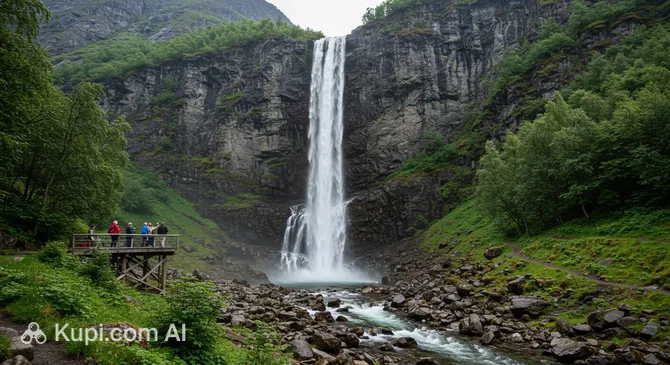
Kjosfossen. Illustration.
Source: Kupi.com AI

Traveler photos:

How to Get There

When planning a trip to this picturesque corner of Norway, it is important to consider its unique location. Myrdal is a high-altitude railway station that cannot be reached by a standard car, so logistics play a key role here. We recommend studying all ways to get to the city and the station in advance to choose the optimal route.

In the settlement of Myrdal itself, there is no airport due to the complex mountain terrain. Travelers usually fly to the region's major transport hubs and then transfer to a train. One of the most popular options is Bergen Airport (BGO), located in the city of Bergen, approximately 115 km from Myrdal. This is a major international hub receiving many flights. The journey from here to Myrdal (including the train transfer) will take about 3–3.5 hours.

Another option is to use regional airports if you are flying on domestic flights. For example, Sogndal Airport (SOG) is located in the town of Sogndal, just 46 km from the destination. Despite the proximity as the crow flies, travel time can be about 1.5–2 hours due to the nature of mountain roads and fjords. You can also consider Bringeland Airport in the town of Førde (about 104 km away), which serves local traffic.

For clarity, here is summary information on the main airports through which you can build your route:

AirportPassenger trafficDistance
Sogndal Airport91 14546 km
Bringeland Airport83 000104 km
Bergen Airport6.5 mln116 km
Sandane Airport41 000134 km
Flora Airport157 621147 km

The railway is the main and most scenic way to get to Myrdal, as the station is a key hub on the famous Bergen Line. There is a station in Myrdal itself, but trains to it depart from major cities. The main flow of tourists arrives via Oslo Central Station (XZO), located in the capital of Norway, Oslo. The distance is about 225 km, and the train ride will be a real excursion through Norwegian nature.

From the other side of the country, the gateway is the Bergen Railway Station (QFV) in the city of Bergen (approximately 115 km from Myrdal). This is where many tourists begin their journey to the fjords. Trains run regularly, providing reliable communication with the high-mountain station all year round.

Below is information about the key railway hubs from which it is convenient to start the journey to Myrdal:

StationPassenger trafficDistance
Bergen Railway Station2.2 mln115 km
Nationaltheatret Station14.6 mln221 km
Oslo Central Station54.8 mln226 km
Kristiansand Railway Station293 km

Main Attractions

Myrdal, being a small high-altitude station, serves as the starting point for exploring some of the most breathtaking landscapes in Western Norway. Although the settlement itself is small, the surroundings offer tourists unique natural and engineering monuments that travelers from all over the world come to see.

The undisputed gem of the region is the famous Flåm Railway (Flåmsbana). A journey on it is often called one of the most beautiful train routes on the planet. The train begins its journey from Myrdal and descends to the fjord, passing through steep slopes, deep gorges, and numerous tunnels. It is not just transport, but a true attraction that allows you to see the wild Norwegian nature from the window of a cozy carriage.

During the train ride (or a walk along the tracks), you will surely see the powerful Kjosfossen waterfall. This is a grand cascade 225 meters high, the roar of which drowns out everything around. The train makes a special stop here so that passengers can step out onto the observation deck, feel the spray of icy water, and, if they are lucky, see a theatrical performance featuring the mythical Huldra, singing her songs by the rushing torrent.

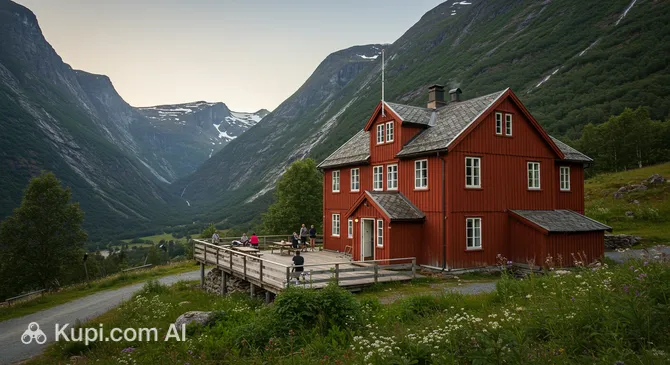
Vatnahalsen Mountain Hotel. Illustration.
Source: Kupi.com AI

Traveler photos:

For those who want to linger in the mountains longer and enjoy the silence, the Vatnahalsen Mountain Hotel is the ideal place. Located just a kilometer from the station, this historic hotel, built at the end of the 19th century, is known for its cozy atmosphere and delicious waffles. In winter, it is a popular spot for skiers, while in summer, cyclists and hikers stop here to rest before descending into the valley.

Another important attraction is Rallarvegen, or the "Navvies' Road." This historic path, laid by railway builders more than a hundred years ago, has today turned into Norway's most popular cycling route. The gravel road winds among mountain lakes and snowfields, offering tourists the opportunity for an unforgettable bike ride from the Myrdal highlands down to the fjord coast.

Local Cuisine

The gastronomic map of Myrdal is quite laconic, as it is primarily a high-mountain transport interchange rather than a city with a developed restaurant culture. Here you will not find noisy gastronomic streets or fine-dining restaurants. Dining here is subject to the rhythm of travel: usually, it is a quick snack while waiting for a train or a hearty packed lunch that tourists take with them to conquer mountain routes.

However, even in such a secluded place, you can touch upon Norwegian traditions. On local trains and at kiosks, travelers are offered classic Scandinavian snacks. Special attention should be paid to sandwiches with fresh smoked fish or the famous brunost — a brown goat cheese with a unique sweet-salty caramel flavor. Fresh pastries are also popular, especially fragrant buns that help you stay warm in the cool climate.

If your schedule allows for a pause, it is highly recommended to visit the Vatnahalsen Mountain Hotel, located near the station. This place is famous for its traditional Norwegian waffles. Crispy on the outside and soft on the inside, they are served with a generous portion of berry jam and sour cream. This dish has become a kind of hallmark of the region for weary travelers and cyclists.

As for drinks, the main companion for tourists here is hot coffee, which is consumed in large quantities in Norway to maintain vigor and warmth. In the summer season, the best drink is regular water: in this region, it is distinguished by its incredible purity and taste, reminding one of the glaciers and mountain streams surrounding the station.

Travel Tips

Myrdal is more than just a station; it is a high-mountain gateway to the fjords, where weather and train schedules dictate the rhythm of life. Since there is no standard urban infrastructure here, and the climate can be harsh even in summer, preparing for your trip requires special attention. Here is a list of practical recommendations to help you avoid unpleasant surprises.

  1. Gear for the weather. At an altitude of 867 meters, conditions change rapidly. Even in July, the temperature may not rise above +10°C, and wind is a frequent guest here. Dress in layers: thermal underwear, fleece, and a high-quality membrane jacket with wind and rain protection. A regular umbrella is useless here; it's better to choose a raincoat. For walks, comfortable trekking shoes with non-slip soles are essential.
  2. Transport logistics. Myrdal is completely isolated from roads. You cannot get here by taxi or bus — only by train or on foot. Closely monitor the schedule through the Vy or Entur apps, as missing a train can mean a long wait in a waiting room that is unheated at night.
  3. Payment and money. Modern Norway has almost completely switched to cashless payments, and even in such a remote place, cards are accepted everywhere: at the ticket office, the café, and the souvenir shop. There are no ATMs at the station, so there is nowhere to withdraw cash, but you are unlikely to need it. Bear in mind that prices for food and drinks in the highlands are above average; plan your budget accordingly.
  4. Medical and safety. The nearest pharmacy or doctor is in Flåm or Voss, which is about an hour away. Be sure to bring a personal first-aid kit with plasters (blisters are a common problem for tourists), painkillers, and motion sickness remedies if you get motion sickness in transport.
  5. Communication and language. Station staff and most tourists speak English fluently. The 4G mobile network works stably around the platform, but the signal often disappears on mountain routes and in tunnels. Download offline maps in advance to navigate the terrain confidently without internet.
  6. Mountain behavior. Respect the fragile nature: all trash must be carried away with you to the nearest town, as there are no bins on the trails. Do not feed wild animals or the sheep grazing on the slopes. Also, walking on railway tracks and entering tunnels is strictly prohibited — it is deadly dangerous due to the silent approach of trains.
  7. Luggage. There are automatic luggage lockers at the station, but in peak season (July-August), the large lockers may be occupied. If you are planning a bike trip along Rallarvegen, consider sending your large luggage via a delivery service (Porterservice) directly to your final destination so you can travel light.

Proper preparation will allow you not to be distracted by everyday troubles and fully immerse yourself in contemplating waterfalls and mountain peaks. Myrdal rewards those who respect its rugged character with unforgettable impressions.

Entertainment & Nightlife

In Myrdal, the concept of "entertainment" takes on a completely different meaning, far from the city hustle. There are no cinemas or karaoke bars here, and the main source of impressions is the mountains and active recreation. Norway in this region offers tourists an immersion into the world of wild nature, where all leisure life is centered around unique natural attractions and sporting activities.

For those seeking thrills, the Flåm Zipline — the longest zipline in Scandinavia — will be a real discovery. Its starting platform is located just a few minutes' walk from the station, near a historic site — the Vatnahalsen Mountain Hotel. The 1381-meter descent allows you to fly over the valley at speeds of up to 100 km/h, enjoying breathtaking views that cannot be seen from the ground. This activity is available during the warmer months and guarantees a powerful adrenaline rush.

A calmer but no less exciting way to spend time is a bike ride along the legendary "Navvies' Road" (Rallarvegen). Myrdal is the perfect starting point for the descent down to the fjord. You can rent a mountain bike and set off on a journey along the picturesque serpentine, stopping by mountain streams and taking photos against the backdrop of majestic cliffs. In winter, this same route transforms into a cross-country skiing trail, attracting enthusiasts of the sport.

The cultural program here is closely intertwined with mythology. The region's main show takes place right under the open sky at the Kjosfossen waterfall. During the train stop, a small theatrical performance is staged for tourists: to the sounds of folk music, Huldra — a forest nymph from Scandinavian legends — appears by the rushing water. This short but atmospheric performance adds a touch of magic to the railway journey.

Parks & Museums

Myrdal is a unique location where the usual concept of a "city park" dissolves into the vast expanses of wild nature. Here you will not find fenced-off squares with benches or classic museum halls with ticket offices. The terrain itself acts as a grand natural reserve and an open-air monument to engineering history, where heritage is not hidden behind walls but surrounds the traveler on all sides.

Natural Areas and Landscapes

Instead of well-kept flowerbeds, Myrdal offers tourists the rugged aesthetic of the highlands. The main "green artery" of the region is the surroundings of the legendary "Navvies' Road" (Rallarvegen). This is a picturesque corridor among rocks, mosses, and mountain lakes, where you can enjoy silence and the purest air far from civilization. Descending lower, you enter the Flåmsdalen valley, which strikes with the contrast of lush vegetation and thick forests. The natural dominant feature here is the powerful Kjosfossen waterfall, creating a unique microclimate around it with a perpetual rainbow on sunny days.

Museums and Cultural Heritage

In Myrdal itself, there are no traditional museums, but the railway station and surrounding territories serve as a living illustration of engineering art. Ancient stone bridges, avalanche protection structures, and tracks laid in the most difficult conditions more than a century ago tell the story of human persistence better than any exhibits. For a deeper immersion into the context, it is worth visiting museums in neighboring Flåm or Finse, which are easily reached by train. They reveal in detail the daily life of the "rallar" builders and the technical wonders that made the appearance of this station possible.

Architecture and Historic Buildings

The architectural landmark of the area is the historic Vatnahalsen Mountain Hotel. Built at the end of the 19th century, the building has preserved the charm of a bygone era. Painted in traditional red, the hotel stands out brightly against the gray rocks and serves as a reminder of the times when tourism in Norway was a privilege of the aristocracy. This is not just a place to sleep, but a true cultural center of the location, preserving centuries-old traditions of hospitality.

Insider Tip

If you have time between trains, don't limit yourself to the waiting room. Walk a few hundred meters along the gravel road away from the tracks. There you will find natural rocky outcrops that serve as excellent observation decks. They offer a panorama of the winding railway — a perspective that rarely makes it into the lenses of tourists hurrying to their transfer.

Getting Around

Myrdal's transport system is unique and fundamentally different from the usual urban environment. Since it is a high-altitude station isolated from the general road network, there are no buses, trams, subways, or even regular taxis here. All passenger traffic is concentrated exclusively around the railway connection, and local movements are carried out on foot or by alternative eco-friendly means of transport.

Railway communication is the only "circulatory system" of the location. The station serves as a key transit hub between two important lines. The first is the Bergen Railway mainline (Bergensbanen), served by comfortable long-distance trains operated by Vy. The second is the legendary tourist Flåm Railway (Flåmsbana), connecting the highlands with the fjord. Trains here run strictly according to a schedule, which depends on the season: there are significantly more departures in summer than in winter.

The fare payment system in this region is unified with the national one. The most convenient way to buy tickets is by using the Vy or Entur mobile apps. In them, you can plan a complex route with transfers and pay for the trip immediately by card. There are ticket machines at the station itself, but they may not work or may only accept cards. It is important to remember: purchasing a ticket from a conductor on the train is possible but often involves an additional fee, so an electronic ticket is the most economical and reliable option.

Given the specifics of the terrain, bicycles play the role of "inner-city transport" here. In the summer season (usually from July to September), a rental point operates right at the station. This is due to the popularity of the Rallarvegen route: tourists rent mountain bikes in Myrdal, ride them down to Flåm, and return the equipment there. This is not just entertainment, but a real way to reach the lowlands faster than on foot and more interestingly than by train.

For descending into the valley, there is also a very exotic type of transport — a zipline. Although it is more of an attraction, many use it as a quick way to cover part of the journey down. The zipline station is located near the railway platform, and after a couple of minutes of flight, you find yourself at the next station in the valley, where you can transfer back to a train or continue on a bicycle.

Practical advice for tourists: the station is equipped with a waiting room, which is critically important in the changeable mountain weather. If you have a long transfer, be sure to use the heated room. There are no turnstiles as such on the platform, but control on trains is strict — validation takes place by the conductor scanning your ticket's QR code immediately after boarding. And remember: Norway values punctuality, trains depart second to second, so it is better to arrive on the platform 10–15 minutes before departure.

Accommodation

Myrdal is not the kind of place where a tourist will be offered a wide selection of accommodation, from budget hostels to luxury apartments. Since it is a secluded high-mountain station, infrastructure here is minimal and fully oriented toward nature lovers and outdoor enthusiasts. Accommodation options are extremely limited, so the issue of staying overnight should be approached with special attention.

There is no standard division into districts in this location. All life is concentrated around the railway tracks and the start of hiking trails. To stay here means choosing a life in harmony with the rugged mountains, far from the city bustle. This is an ideal option for those who want to be the first to head out on the Rallarvegen route in the morning or catch an early train on the Flåm Railway, avoiding the crowds of tourists who arrive later.

The main and, essentially, only comfortable place for accommodation in the immediate vicinity of the station is the historic Vatnahalsen Mountain Hotel. It is located on an elevation, just a kilometer from the platform. This is an atmospheric mountain resort that welcomes skiers in winter and cyclists and hikers in summer. The hotel is known for its hospitality and the views that open directly from the room windows.

Booking Tip: Due to the lack of alternatives and the high popularity of the location during the summer season, vacancies fill up very quickly. It is strongly recommended to book a room 3–6 months before your planned trip. Finding spontaneous accommodation in Myrdal at the height of the season is almost impossible.

The price range here stays at the "medium-plus" and "high" levels, which is explained by the exclusivity of the location and complex logistics. Booking is available both through major international online aggregators and directly on the hotel's website. If there are no vacancies in Myrdal itself, travelers usually have to look for options in neighboring Flåm or Voss, traveling to the mountain station by train daily.

Nearby Cities

For those who want to explore the surrounding area, Myrdal serves as an excellent starting point for day trips to several interesting nearby locations:

The absolute leader for a rich trip is Bergen — Norway's second-largest city, which can be reached by train along a picturesque railway. This city is famous for its renowned Bryggen wharf, a UNESCO World Heritage site, its lively fish market, and the seven mountains surrounding the center. Here you can take the Fløibanen funicular to see the panorama of the fjords or visit numerous museums and galleries, immersing yourself in the atmosphere of the Hanseatic League.

If you are interested in a calmer holiday by the water, you should pay attention to Askøy. This island municipality, located near Bergen, offers excellent opportunities for hiking and enjoying maritime landscapes. Another interesting option is Os, known for its Oseana cultural center and beautiful views of the Bjørnafjord. Both places allow you to experience the steady pace of life in coastal Norway, contrasting with the rugged highlands of Myrdal.

CityPopulationDistance
Flam45014 km
Finse1026 km
Voss15 87531 km
Vossevangen5 57140 km
Haugastol48 km

These nearby destinations provide an insight into the diverse culture and landscapes of the region.

Shopping & Souvenirs

General Overview

Shopping in Myrdal has its own unique characteristics, dictated by the location's setting. Since this is a high-mountain railway station isolated from roads and large settlements, you won't find the usual shopping quarters or fashion boutiques here. Trade here is exclusively utilitarian and souvenir-oriented, focusing on the needs of transit passengers and tourists setting off on hiking or cycling trips.

Main Shopping Areas and Stores

All commercial life is concentrated in the railway station building and its immediate vicinity. A small shop-café operates within the station premises, where you can purchase essential items. It is also worth checking out the Vatnahalsen Mountain Hotel, located nearby. Its lobby often features a small assortment of goods for guests, including useful small items for hiking that might have been forgotten at home.

Shopping Centers and Markets

In Myrdal, there are no shopping centers, malls, or markets in the classic sense. There are no squares for fairs or supermarkets here. The nearest full-fledged shops and grocery stores are located in the village of Flåm, which can be reached by train, or in the town of Voss. Tourists are recommended to take care of purchasing all necessary equipment and food before arriving at the station.

Souvenirs

Despite the modest selection, you can bring back mementos from Myrdal that remind you of the rugged beauty of the Norwegian mountains. The station shop and the hotel usually sell:

  • Postcards with views of the Flåm Railway and the Kjosfossen waterfall.
  • Traditional Norwegian knitwear (hats, mittens, socks) made of wool, which are particularly relevant in the local climate.
  • Troll figurines — popular characters from Scandinavian folklore.
  • Magnets and keychains with railway symbols.

Opening Hours and Payment

The operating hours of outlets in Myrdal are closely tied to the train schedule. The station shop usually opens with the arrival of the first morning trains (around 08:00–09:00) and closes after the last tourist groups depart in the evening (around 18:00–19:00). During the winter season, hours may be reduced.

Norway is a country where cashless payment has triumphed. In Myrdal, as elsewhere in the country, the preferred method of payment is by bank card (Visa, Mastercard). Terminals are available even in the smallest kiosks. Cash krones are accepted, but change may not always be available, so a card will be the most reliable option.

Tax Free

The tax refund system (Tax Free) theoretically operates in Norway when purchasing goods over a certain threshold (usually around 315 NOK). However, in Myrdal itself, it is unlikely to process a refund or find a store participating in the Global Blue program due to the small scale of the outlets. If you plan on making major purchases for the purpose of a tax refund, it is better to do so in the larger stores in Bergen or Oslo.

Reached the end of the page?

That means the route is fully explored