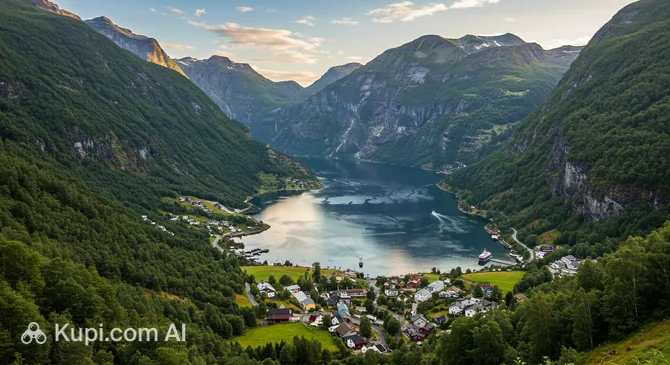
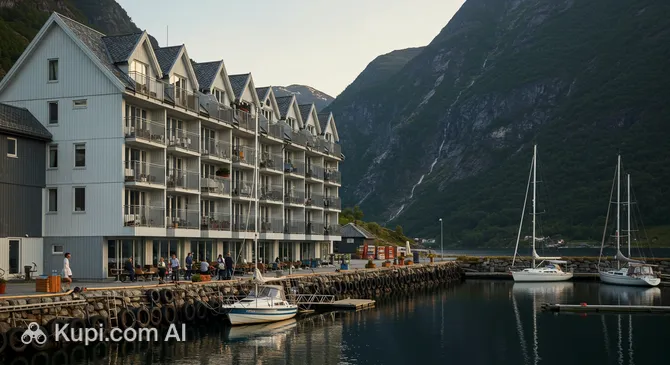
Flåm is a true Norwegian gem, snugly tucked away in a picturesque branch of the Sognefjord, the longest and deepest fjord in Europe. This tiny village, surrounded by dizzying mountains and emerald meadows, epitomizes the pristine beauty that Norway is so proud of.
Flam. Illustration.
Source: Kupi.com AI
Despite its modest size and population of only about 450 people, Flåm is a major tourist magnet for the Vestland region. Cruise ships arrive daily, and the station is always bustling: travelers are eager to board the famous Flåm Railway, recognized as one of the most beautiful routes on the planet. The fascinating history of Flåm and its transformation from a secluded village into a popular resort are inextricably linked to the development of transport in this challenging mountain landscape.
The atmosphere here is unique: Northern restraint intertwines with sincere hospitality. Morning mist over the water, the sound of waterfalls, and the purest air allow you to instantly forget the bustle of megacities. Flåm is the perfect starting point for those who dream of seeing the grandeur of the fjords with their own eyes and feeling complete harmony with nature.
Weather Overview
The climate in this part of Vestland is dictated by its proximity to the mountains and the fjord, so the weather here is changeable and requires preparation. Summer in Flåm is mild but not at all hot: even in July and August, the average temperature stays around 10–11°C, and maximum values rarely exceed 14°C. This is an ideal time for hiking if you don't like exhausting heat.
Winters here are truly Northern and frosty. From December to February, the thermometer drops to an average of -6.5°C, sometimes reaching -9°C. Expect a cool summer with frequent rain and a frosty winter with stable sub-zero temperatures. Precipitation falls regularly throughout the year: even in the driest spring months, there are between 13 and 18 rainy days.
Autumn arrives quickly; as early as October, the temperature drops to 1–2°C, and the number of rainy days reaches its peak (around 22 days). To ensure you have the right wardrobe and choose a good time for a cruise or a railway trip, we recommend checking the current weather in Flåm by month in advance. A waterproof jacket and warm shoes will be useful here in almost any season.
Average monthly temperature
Average monthly precipitation
Interesting Facts
Beyond postcard views and natural beauty, Flåm hides many surprising facts discovered only by the most curious travelers. Here are a few interesting details to help you better understand this unique corner of Norway:
The name of the town itself is very symbolic: the word "Flåm" translates from Norwegian as "a small meadow surrounded by steep slopes." This name perfectly describes the local landscape, where the lush greenery of the plains contrasts with the overhanging mountain masses.
The legendary Flåm Railway is a true engineering feat that took nearly twenty years to complete. The route, only 20 kilometers long, rises from fjord level to an altitude of 867 meters, passing through twenty tunnels, many of which were excavated by hand.
You can immerse yourself in the history of this unique line by visiting the Flåm Railway Museum. It houses many artifacts, and visitors can even imagine themselves as a train driver or purchase original souvenirs.
Flåm carefully preserves the traditions of its ancestors, regularly becoming a venue for Viking Age festivals. During these celebrations, the town is filled with the sounds of ancient music, theatrical performances, and workshops on ancient crafts.
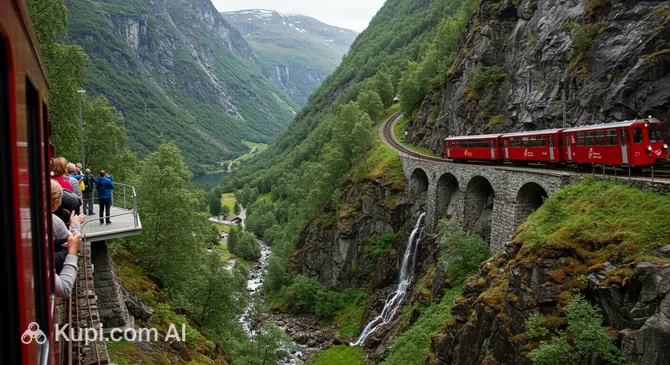
Flåm Railway. Illustration.
Source: Kupi.com AI
Traveler photos:
How to Get There
Traveling to Flåm is an exciting adventure in itself, as the road passes through some of Scandinavia's most scenic landscapes. Since the village is located deep in a fjord, there is no direct air connection, but you can reach Flåm in various ways by combining transport. You can find out more about how to get to Flåm on our dedicated page, and below we look at the main options via the nearest transport hubs.
There is no airport in Flåm itself, but you can fly to Sogndal Airport (SOG) in Sogndal, which is about 32 km from Flåm. This is the nearest air harbor receiving regional flights. The journey from here by car will take a little over an hour, considering the nature of local roads and possible ferry crossings.
For international flights, it is more convenient to use Bergen Airport (BGO), located in Bergen. This is a major international hub receiving many flights from abroad. It is significantly further away, about 121 km from Flåm. A taxi or rental car trip will take about 3.5 hours, but the road from Bergen is famous for its stunning views.
You can also consider flying into Førde Airport, Bringeland (FDE) in Førde, located 93 km from the destination. This is a small regional airport, from which the road to Flåm will take about 2.5–3 hours.
Below is a summary of the main airports in the region:
The railway is one of the most popular ways to reach the region, especially considering the famous Flåm Railway. However, it's worth remembering that major mainline stations are in larger cities, from where the journey to the fjords begins.
Flåm does not have a large junction station (the terminus of a tourist branch is located here), but you can come from the capital, starting your journey at Oslo Central Station in Oslo. It is located about 230 km from Flåm (in a straight line, but the rail distance is longer). This is the country's main railway hub with a huge passenger flow, from where trains depart towards the fjords.
Another convenient starting point is Bergen Station in Bergen, located about 121 km from Flåm. Tourists arriving on the west coast often start their journey here. The train journey from Bergen or Oslo usually involves a transfer at the high-mountain station of Myrdal, from where the train descends directly into the valley to Flåm.
Below is information on the key railway stations from which it is convenient to start your route:
Despite its modest size, this picturesque corner of Norway offers world-class experiences. The crown jewel of the region is undoubtedly the famous Flåm Railway (Flåmsbana). It's more than just a means of transport; it's a full-scale attraction: during the hour-long journey, a vintage train takes you past sheer cliffs, thundering waterfalls, and mountain farms. The route is considered one of the steepest in the world for standard-gauge trains, and a stop at the Kjosfossen waterfall for a photo session accompanied by the music of a huldra will be the highlight of the trip.
Right after the ride, it's worth visiting the Flåm Railway Museum, located in the old station building just a few steps from the platform. Entry is usually free, making it a pleasant addition to your walk. The exhibition immerses you in the atmosphere of the titanic work of engineers and builders who created this railway by hand. Here you can see vintage locomotives, sit in retro carriages, and buy unique souvenirs reminiscent of the golden age of rail travel.
Flåm Railway. Illustration.
Source: Kupi.com AI
Traveler photos:
For those seeking a more active connection with nature, the Fjord Safari is an ideal choice. This is an exciting trip on high-speed RIB boats through the waters of the Aurlandsfjord and the Nærøyfjord, a UNESCO World Heritage site. Unlike large cruise ships, these maneuverable boats allow you to get up close to waterfalls and cliffs, and guides often point out seals and porpoises while sharing local legends.
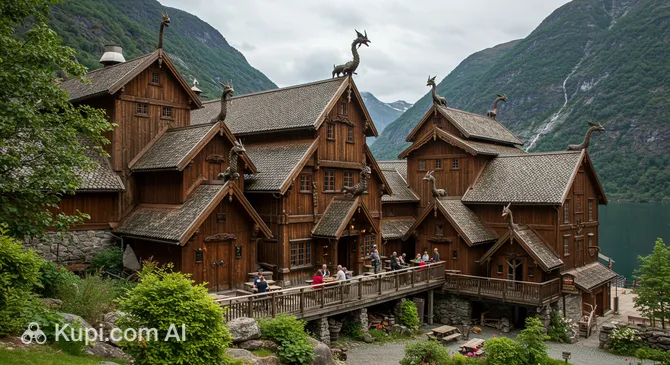
To cap off an eventful day, head to an atmospheric spot like the Ægir Brewery. This building, designed in the style of stave churches with a massive fireplace inside, transports guests back to the Viking Age. They serve dishes inspired by ancient traditions, and the famous "Viking Plank" (a tasting set of five dishes and drinks) allows you to fully experience the gastronomic character of Vestland.
Local Cuisine
Flåm's cuisine is a gastronomic reflection of Norway's harsh yet generous nature. The "fjord-to-table" principle is honored here: the menu is based on dishes made from the freshest fish caught in local waters. Foodies should definitely try the tender trout, salmon, or cod, usually served with seasonal vegetables and fragrant homemade bread. Local chefs carefully preserve family recipes, passing on cooking secrets from generation to generation.
A special place on the region's gastronomic map is held by the famous Norwegian cheeses. The signature product is the brown cheese "brunost," which has a unique sweet-and-salty caramel flavor. Meat lovers will enjoy the smoked lamb, prepared according to old traditions. For dessert, they often offer treats with wild berries—cloudberries and blueberries gathered on the slopes of the surrounding mountains.
Ægir Brewery. Illustration.
Source: Kupi.com AI
Traveler photos:
Dining culture in Flåm combines the coziness of small cafes with the character of themed venues. For a quick snack, a traditional "skillingsbolle" cinnamon bun or a warming seafood soup is perfect. If you want to immerse yourself in the Viking era, visit a place like the Ægir Brewery. Here you can not only taste historical cuisine but also sample local beers and ales brewed with pure mountain water.
In the summer season, gastronomic life comes alive thanks to the farmers' market, where local honey, goat cheese, and homemade pastries are sold. For those who prefer a meal with a picturesque harbor view, the Flåm Marina & Apartments is an excellent choice. Enjoying food on the terrace, you can watch the majestic fjords, making the meal truly unforgettable.
Travel Tips
Flåm is a place of amazing natural beauty, but like any remote corner among mountains and fjords, it requires some preparation for the trip. We have gathered practical recommendations for you to help avoid common mistakes and make your journey truly comfortable and carefree.
Clothing and Gear. Weather in the fjords changes instantly, so the main principle here is layering. Even in summer, be sure to bring a waterproof windbreaker, a fleece jacket, and thermal underwear. An umbrella is often useless here due to gusty winds; a quality raincoat is a better choice. Footwear should be comfortable and have a non-slip sole, as even easy walking trails can be damp.
Transport and Getting Around. Flåm is so compact that public transport inside the village itself is not needed—everything is within walking distance. There are no metros or trams here. To explore the surroundings, use tourist shuttles, ferries, or bicycles, which can be rented in the center. If you plan to travel outside the valley independently, renting a car is a plus, but note that the roads are narrow and winding.
Money and Payment. The national currency is the Norwegian Krone (NOK). Norway is one of the most "cashless" countries in the world: cards are accepted absolutely everywhere, from souvenir stalls to ticket offices, so it makes little sense to exchange much cash. You should plan your budget with a buffer: prices for food and services are high even by European standards. Tipping is usually included in the bill, but rounding up the amount in cafes is considered good form.
Health and Safety. Flåm is an extremely safe place with practically zero crime. The main risks are nature-related: be careful on slippery rocks near the water and do not stray from marked trails in the mountains. Note that there are no 24-hour pharmacies in the village, and the nearest hospital is in neighboring towns, so be sure to bring a basic first aid kit with necessary medications.
Communication and Language. Locals speak Norwegian, but practically everyone, including shop staff and drivers, is fluent in English. Wi-Fi is available in hotels, cafes, and the tourist center, and 4G/5G coverage is excellent even in the mountains. If you need a local SIM card, it's better to buy it in advance at the arrival airport or a large city (Bergen, Oslo), as choices in Flåm may be limited.
Local Etiquette. Norwegians are reserved and value silence and personal space. When meeting on hiking trails, it's customary to greet with a short nod or the word "Hei." Loud talking in public places is not typical. The attitude towards tourists is very friendly, but overfamiliarity is inappropriate.
What Not to Do. Strictly avoid walking on private property and fenced pastures—this is seen as a lack of respect for private property. Also, never leave trash in nature and do not try to feed wild animals or livestock that may graze freely.
Insider Tip. Flåm is radically transformed after 5:00 PM – 6:00 PM when the large cruise ships depart and the main flow of day tourists leaves. If possible, plan an overnight stay in the village. In the evening, you can enjoy the silence, see the mirror-like surface of the fjord without the extra bustle, and feel the real magic of this place.
We hope these tips help you plan the perfect trip to Flåm. May this cozy corner be remembered not only for its majestic landscapes but also for the feeling of complete comfort and harmony with the surrounding world.
Entertainment & Nightlife
Nightlife in Flåm is fundamentally different from what tourists are used to seeing in major European capitals. You won't find neon signs, loud nightclubs with DJs, or red-light districts here. Evening leisure in this tiny village is an extension of quiet contemplation of nature, cozy gatherings by the fireplace, and tasting local drinks in a "hygge" atmosphere. All evening activity is concentrated around the harbor and the railway station, where the main hotels and restaurants are located.
The focal point for all resort guests after dusk is the famous Ægir Brewery. This venue is not just a pub, but a real landmark styled after the Viking era. Inside, a unique atmosphere reigns: massive wooden tables, pelts on the benches, and a huge fireplace reaching the ceiling create a feeling of warmth and comfort. People come here to try craft beer brewed on-site and discuss their impressions of the day. The dress code is completely relaxed—tourist and sports clothing is perfectly appropriate; the main thing is that you are warm and comfortable.
Ægir Brewery. Illustration.
Source: Kupi.com AI
Traveler photos:
If you prefer a quieter setting with a water view, check out the Flåm Marina & Apartments restaurant complex. In the evening, you can grab a table by the window or on the terrace (weather permitting) and enjoy a glass of wine while watching the twilight descend over Aurlandsfjord. This place is great for a romantic dinner or a quiet end to the evening with family. The crowd here is international, but always calm and friendly.
When planning your evening, keep local closing times in mind. Restaurant kitchens often close quite early, around 9:00 PM – 10:00 PM, while bars may stay open until midnight or 1:00 AM, but not until morning. Alcohol and dinner prices correspond to Norwegian standards, which are quite high, so be prepared to spend. Regarding safety, Flåm is one of the safest places on Earth. Walking here at night is perfectly safe; the only recommendation is to carry a flashlight (or a charged phone), as lighting on paths may be absent further away from the center and hotels.
During the day, Flåm's entertainment program is much more active and oriented towards exploring the region. In addition to natural beauty, be sure to visit the Flåm Railway Museum, which showcases the engineering wonders of the area. For thrill-seekers, a Fjord Safari on high-speed boats is a great daytime activity, after which an evening spent in a warm pub will seem even more inviting.
Parks & Museums
Flåm is that rare case where the town and its surroundings can be called one huge open-air natural reserve. Here, the boundaries between manicured gardens and wild nature are practically blurred, and the cultural heritage is inextricably linked to the history of mastering these harsh but beautiful lands. Green zones here were created not so much by architects as by nature itself, and museums tell of the strength of the human spirit.
The main oasis of calm in the center of the village is Fretheim Cultural Park (Fretheim Kulturpark). Located on a small hill directly behind the historic Fretheim Hotel, this park features a network of well-maintained gravel paths winding through trees and meadows. A walk here takes 20 minutes to an hour and offers magnificent views of Flåm and the surface of the Aurlandsfjord from above. The park is decorated with sculptures by local artists and information boards telling of the flora and history of the region, making it an ideal place for quiet contemplation away from the crowds on the quay.
Another important natural recreation area is Flåm Beach and the adjacent green lawns along the shore. This picturesque spot is just a few minutes' walk from the harbor. In summer, you can have a picnic on the grass with views of the majestic mountains or even take a dip in the invigorating waters of the fjord. This space serves as a natural park where travelers and locals enjoy the pristine beauty of the Norwegian landscape, listening to the sound of the water and the cries of seagulls.
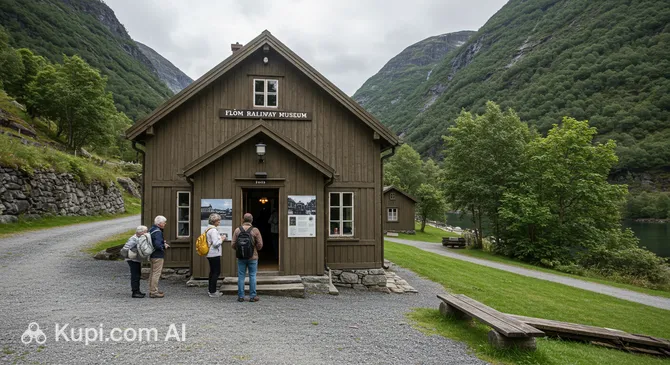
The cultural heart of the village is undoubtedly the Flåm Railway Museum. It is located in the old station building, just a few steps from the active station. The museum's exhibition is dedicated to one of the steepest railways in the world—Flåmsbana. Here you will learn about the titanic efforts of engineers and workers who gnawed into the rocks, creating tunnels by hand. The collection includes authentic locomotives, vintage railcars, and tools, while multimedia exhibits immerse you in the atmosphere of the early 20th century. This place is a must-visit to understand how technology changed life in this isolated corner.
Flåm Railway Museum. Illustration.
Source: Kupi.com AI
Traveler photos:
While there are no large art galleries in Flåm, the role of a living ethnographic museum is fulfilled by Otternes Bygdetun. This cluster of historical farmhouses, located about 4 km from the center, has been preserved since the 18th century. Walking among the ancient wooden buildings allows you to literally touch the daily life of Norwegian peasants from past centuries. There are no glass display cases—only wood darkened by time, grass on the roofs, and a breathtaking view of the fjord from the farm territory.
Among the architectural monuments, Flåm Church (Flåm Kyrkje), located 3 km up the valley, deserves special attention. This wooden building, constructed in 1670, is a fine example of traditional Norwegian architecture. The simple but elegant interior of the church, decorated with wall paintings, preserves a spirit of antiquity and peace. The road to it runs along the river and is a pleasant walk through the countryside in itself.
Insider Tip: If you want to see art created by nature itself and avoid the crowds, take a walk to the Brekkefossen waterfall. The trail starts near the center, and the climb to the viewing platform takes some time, but the opening panorama of the valley and the power of the falling water will be the best reward and an alternative to any urban park.
Getting Around
Flåm's transport system is unique and entirely dictated by its geography and size. Since it is a small village with a population of less than 500 people, you won't find the usual urban public transport like a metro, trams, or an extensive city bus network. The entire village center can be leisurely explored on foot in 15–20 minutes, so you likely won't need transport to move within Flåm itself.
However, Flåm is an important transport hub for the region, connecting the fjords with mountain areas. The main transport artery is the Flåm Railway (Flåmsbana). While many see it purely as a tourist attraction, it is a full part of the country's railway network. Trains run year-round, connecting Flåm with the high-mountain station of Myrdal, where you can transfer to mainline trains to Oslo or Bergen. Train tickets act as regular travel documents but cost significantly more than standard fares due to the route's popularity.
Water transport plays a key role in the life of the village. Express passenger boats (hurtigbåt) and ferries regularly depart from the pier. The most popular routes lead to Gudvangen (via the Nærøyfjord) and to Bergen. Modern electric ferries ("Future of The Fjords") operate silently and ecologically. It is better to purchase tickets for water transport in advance online from operators (e.g., Norled or Fjord1) or via the "Norway's best" tourism portal, as seats sell out quickly in the high season.
Bus service is represented by regional routes and tourist shuttles. Scheduled buses connect Flåm with neighboring towns like Voss, Sogndal, and Gudvangen. The stop is located next to the railway station and the port. To pay for the fare, you can use a bank card directly with the driver or buy a ticket through the mobile apps of local transport companies (e.g., Skyss or Kringom). Special excursion buses also run, for example, to the Stegastein viewpoint, with tickets sold at the tourist center.
Practical Tips:
The hub of all transport logistics is the station building and the adjacent Tourist Center. Here you will find ticket offices where you can buy train, ferry, or bus tickets if you haven't done so online. Ticket validation takes place upon boarding: conductors scan QR codes from printouts or smartphone screens. Keep in mind that Norway is a country with high prices, and transport is no exception, so plan your budget in advance.
As an alternative to public transport, bicycle rental is popular in Flåm. This is an ideal way to explore the Flåmsdalen valley or ride along the famous Navvies' Road (Rallarvegen). Rental points are located in the center, near the station. Taxi services exist here, but there are few cars, and trips must be booked in advance. There is no car-sharing in the usual urban sense, but you can rent small two-seater electric cars (e-Tours) for short independent trips around the area.
Accommodation
Accommodation options in Flåm, despite the village's modest size, are quite diverse and can satisfy the needs of different categories of travelers. Here you can find historic hotels with a late 19th-century atmosphere, modern Scandinavian-style apartments, cozy B&Bs, and well-equipped campsites for budget tourists. However, keep in mind that the total room capacity of the village is small, which creates high demand during the season.
In terms of location, the most popular and convenient place to stay is the village center, located directly by the harbor and the railway station. By staying here, you will be within walking distance of all main attractions, restaurants, and transport. For those seeking seclusion and quiet, accommodation options deep in the Flåmsdalen valley or a short distance along the fjord shore are excellent choices, allowing you to enjoy nature away from the daytime bustle of the cruise port.
Flåm Marina & Apartments. Illustration.
Source: Kupi.com AI
Traveler photos:
A critical piece of advice for planning a trip to Flåm is to book your accommodation as far in advance as possible. During the peak tourist season (May to September), demand significantly exceeds supply. Rooms in popular hotels and waterfront apartments are often sold out 6–12 months before the check-in date. Trying to find a place to stay upon arrival in summer can result in failure or the need to travel to neighboring towns like Aurland or Gudvangen.
The price range in Flåm varies from mid-range to high. "Budget" accommodation by Norwegian standards can be found in hostels or campsites (tents and cabins), while hotels and view apartments fall into the higher price category. Booking is most convenient through large international online platforms or directly on the accommodation websites, which can sometimes result in better terms.
Nearby Cities
For those who want to explore the surrounding area, Flåm serves as an excellent starting point for day trips to several interesting nearby locations. The Vestland region is rich in contrasts, and just a few hours away, you can find both bustling cities and centers for outdoor activities.
The closest is Voss, the true adrenaline capital of Norway. A trip here by train or car takes very little time. The town is known for its extreme sports, from rafting and indoor skydiving to paragliding. In winter, it is a popular ski resort, while in summer, tourists take the gondola to enjoy panoramic views and dine in a restaurant at the top of the mountain.
If you are up for a longer trip, it is worth visiting Bergen, the country's second-largest city, often called the "gateway to the fjords." Here you can walk along the famous Hanseatic wharf, Bryggen, a UNESCO World Heritage site, visit the colorful fish market, and take the funicular up Mount Fløyen. Bergen offers a rich cultural program and the atmosphere of an ancient trading port.
These nearby destinations provide insight into the region's diverse culture and landscapes, complementing the experience of the fjords' silence and majesty.
Shopping & Souvenirs
General Overview: Shopping in Flåm is not about chasing high fashion or visiting giant outlets, but rather an opportunity to take home a piece of Norwegian comfort and quality. Since the town is very small, there are few shops, and almost all of them cater to travelers. The assortment focuses on goods associated with Norway: warm woolen items, handmade crafts, troll souvenirs, and local delicacies. Prices correspond to the general level of the country (meaning they are quite high), but the quality of goods is usually excellent.
Main Shopping Districts/Streets: It's impossible to get lost searching for shops here. All commercial life is concentrated in the heart of the village, literally a few steps from the railway station and the cruise ship pier. This is a compact zone where souvenir stalls, branded clothing stores, and grocery outlets are located. You won't need transport—you can explore all the interesting spots on foot in half an hour.
Flåm Marina & Apartments. Illustration.
Source: Kupi.com AI
Traveler photos:
Shopping Centers: There are no classic multi-story malls in Flåm, but there is a large specialized store that fulfills this function for tourists—"Mall of Norway." It is located in the station building and offers a huge selection of clothing from famous Norwegian brands (such as Dale of Norway and Helly Hansen), as well as backpacks, shoes, and accessories. This is the best place to buy a genuine Norwegian sweater with a traditional pattern that will last you for many years.
Markets: During the summer season, when the tourist flow peaks, a small but colorful open-air market—Flåm Market—takes place in the harbor square. Here, local artisans and farmers sell their goods. It's a great place to find unique silver or stone jewelry, sheepskin products, and to try local foods that aren't always found in the supermarket.
Souvenirs: Besides classic magnets and troll figurines, it's worth bringing something authentic back from Flåm. Look out for the brown goat cheese "brunost" and game sausages (moose or reindeer). History and technology buffs should definitely check out the gift shop offered by the Flåm Railway Museum. There you can find unique model trains, books, and memorabilia with the symbol of the famous railway. And if you want to surprise friends with a Viking-style gift, visit the shop at the Ægir Brewery, which sells branded glasses, T-shirts, and gift sets inspired by Scandinavian legends.
Opening Hours and Payment: Shops in Flåm usually adjust their schedules to match the train and cruise ship timetables. During the high season (May to September), most outlets are open from 8:00 AM – 9:00 AM until 7:00 PM – 8:00 PM, and some souvenir stalls stay open even longer. In winter, operating hours are significantly reduced. As for payment, Norway is a champion of cashless transactions. Bank cards (Visa, Mastercard) are accepted absolutely everywhere, even at small market stalls, so you'll likely have no need for cash.
Tax-Free: If you live outside Scandinavia, you can take advantage of the Tax-Free refund system for your purchases. Most large shops in Flåm, including "Mall of Norway," work with the Global Blue system. When purchasing goods over a certain limit (usually around 315 NOK), ask the clerk for a special receipt. You can get a partial refund at refund points when leaving the country (for example, at the airport).