Support

European Solidarity Centre

About

The European Solidarity Centre, located in the city of Gdańsk, Poland, is a modern museum and educational complex and an important cultural institution. It is dedicated to the history of the legendary Solidarity trade union movement, as well as other opposition movements that played a key role in the democratic transformations not only in Poland but throughout Central and Eastern Europe.
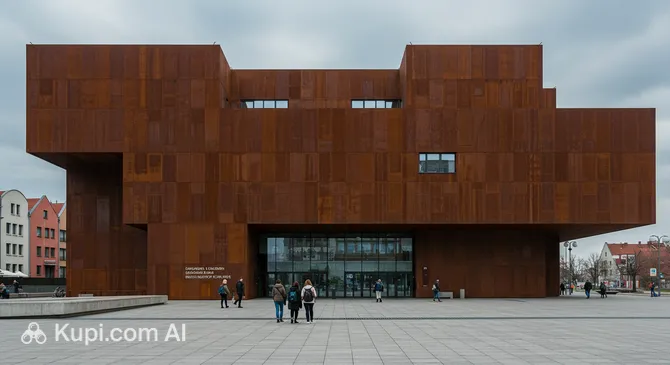
European Solidarity Centre. Illustration.
Source: Kupi.com AI

Traveler photos:

This impressive complex includes not only a museum with interactive exhibits but also an extensive library, valuable archives, modern educational spaces, and areas for various public events. The center is located in a symbolic spot—next to the historic Gdańsk Shipyard, where the Solidarity movement was born in 1980, changing the course of history.

Visiting the European Solidarity Centre is a unique opportunity to gain a deeper understanding of the struggle for freedom and civil rights. The exhibitions tell the story of the road to democracy, the strength of the human spirit, and the importance of unity. This place does more than just preserve the memory of the past; it serves as a source of inspiration, highlighting the enduring value of solidarity in the modern world.

Contacts

To get up-to-date information about exhibitions, opening hours, or to plan your visit to the European Solidarity Centre, you can contact the museum administration. Below are the available contact methods.

How to contactContact
AddresspI. Solidarności 1, 80-863 Gdańsk, Poland
Phone number+48 58 772 41 11
Websitewww.ecs.gda.pl

What to Do

A visit to the European Solidarity Centre in Gdańsk is an immersion into the history of the struggle for freedom and democracy. The main draw is the extensive interactive exhibition, which details the emergence and development of the Solidarity movement. Here, you can see unique documents, historical photographs, personal belongings of activists, and impressive multimedia installations that bring key moments of this significant period to life.

The exhibition allows you not just to observe but also to interact with the materials, providing a deeper understanding of the lives of the movement's participants and the process of democratic change in Poland and Europe. You will learn about the challenges activists faced and the impact their work had on the modern world. It is not just a museum, but a place for reflection and understanding the importance of civic engagement.

In addition to the permanent exhibition, the European Solidarity Centre offers visitors a diverse program. It regularly hosts temporary thematic exhibitions, educational lectures, film screenings, and workshops for both adults and children. After touring the exhibits, you can relax in the cafe, visit the library or souvenir shop, or head up to the terrace for a panoramic view of the city and the historic shipyard.

Getting There

The European Solidarity Centre is conveniently located in Gdańsk at pl. Solidarności 1, making it easily accessible for visitors. It is situated near iconic landmarks such as the historic Gdańsk Shipyard and the impressive Monument to the Fallen Shipyard Workers. If you are arriving in the city by train, the center is within walking distance of the main railway station, Gdańsk Główny. The walk takes approximately 10-15 minutes and allows you to get a feel for the surrounding area.

For those who prefer public transport, reaching the European Solidarity Centre is also straightforward. City tram and bus stops are located in the immediate vicinity of the museum, providing easy access from various parts of Gdańsk. Before your trip, it is recommended to check the current route numbers heading toward Solidarity Square (Plac Solidarności), where the museum is located.

If you are planning to drive, you will be pleased to know that there is parking available near the European Solidarity Centre. This is particularly convenient for those traveling by private or rental car. However, keep in mind that parking spaces can be limited in popular tourist areas, especially during peak season or major events. Alternatively, you can always use a taxi service to reach the attraction from any part of the city.

Nearest city: Gdansk

History & Facts

The European Solidarity Centre in Gdańsk is more than just a museum; it is a symbol of significant historical events that changed the course of history not only for Poland but for all of Europe. The decision to create it was made symbolically on August 31, 2005, at Solidarity Square. It was here, between the historic Gate No. 2 of the Gdańsk Shipyard and the Monument to the Fallen Shipyard Workers, that the act establishing this important center dedicated to the Solidarity movement and its legacy was signed.

The design for the European Solidarity Centre building was the result of an international architectural competition won by a team of architects from Gdańsk itself. Their concept embodied the ideas of freedom and unity. Construction began in late 2010 and was a large-scale project with a total cost of approximately 232 million PLN. A significant portion of these funds was provided by the European Union, highlighting the center's international importance.

A major milestone in the construction was the laying of the foundation stone on May 14, 2011. The grand opening of the European Solidarity Centre complex took place on August 31, 2014. This date was chosen intentionally to coincide with the 25th anniversary of the signing of the famous August Agreements and the creation of the independent trade union Solidarity. Today, the center serves not only as a museum and archive but also as a venue for dialogue, education, and cultural events, continuing to promote the ideas of freedom and civil society.

Time Needed

When planning a visit to the European Solidarity Centre in Gdańsk, you should expect to spend from 2 to 4 hours there. This amount of time is generally sufficient for most visitors to get a comprehensive overview of this important historical and cultural site.

During this time, you can leisurely explore the main exhibition, which tells the story of the Solidarity movement and its significance for Poland and all of Europe in detail. Additionally, you will have the opportunity to visit temporary exhibitions, which often supplement the permanent collection with new materials and perspectives, as well as take advantage of the additional services offered within the complex.

Of course, if you wish to delve deeper into the subject, study archival materials, or explore all the interactive installations in detail, your stay may take longer. However, for a general yet meaningful introduction to the European Solidarity Centre, the recommended range of 2-4 hours is ideal.

Working Hours

The European Solidarity Centre in Gdańsk is generally open to visitors daily. Standard opening hours are usually from 10:00 to 18:00. This allows most tourists to include a visit to the center in their plans.

However, please note that the schedule may change on public holidays or during special events. Therefore, it is strongly recommended to check the current opening hours on the official website of the European Solidarity Centre before your visit. You can also find out there if advance ticket booking is required, which can be particularly relevant during the peak tourist season or for group visits.

DayOpening hours
Monday10:00 – 19:00
Tuesday10:00 – 19:00
Wednesday10:00 – 19:00
Thursday10:00 – 19:00
Friday10:00 – 19:00
Saturday10:00 – 20:00
Sunday10:00 – 20:00

Nearby

A visit to the European Solidarity Centre in Gdańsk is undoubtedly a significant event, but you shouldn't stop there. The surroundings of this important site are also rich with interesting landmarks that can complement your experience and make your trip even more fulfilling. Exploring nearby attractions will allow you to dive deeper into the city's atmosphere and see it from different perspectives.

Near the European Solidarity Centre, you will find many other notable sites, from historical monuments to modern cultural spaces and cozy establishments. A short walk around the neighborhood will reveal new facets of Gdańsk and help you form a more complete impression of this wonderful city.

NameDistance
100cznia0.4 km
Gradowa Hill0.7 km
Amber Museum (Branch of the Gdańsk Museum)0.8 km
Hevelianum0.9 km
Museum of the Second World War0.9 km
Mandu Pierogi House Gdansk City Center0.9 km
Statue of John III Sobieski1 km

Have you reached the end of the page?

So the route has been studied inside and out