Support

High Gate

About

The High Gate (Brama Wyżynna) is one of the most recognizable symbols and important historical monuments of Gdańsk. Located in the western part of the Old Town, this monumental Renaissance gate was once the main ceremonial entrance to the city. It was a key element of the powerful defensive fortifications that surrounded medieval Gdańsk, and the famous Royal Route began right here.
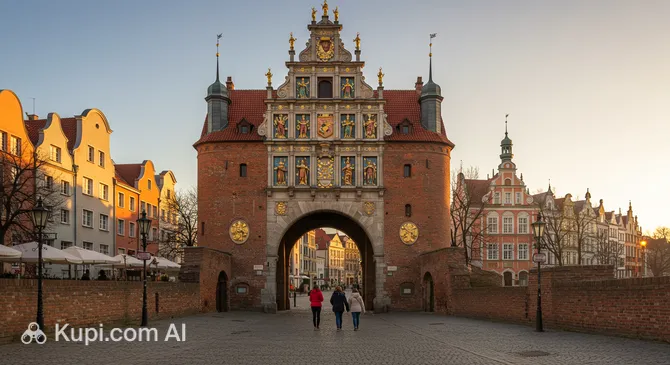
High Gate. Illustration.
Source: Kupi.com AI

Traveler photos:

Built in the 16th century, the High Gate served not only for defense but also for grand ceremonies. It was through this gate that Polish kings and other noble guests entered the city, where they were greeted with honors and presented with symbolic keys to the city. The gate's architectural appearance is impressive in its grandeur: the facade is decorated with stone carvings and the coats of arms of Poland, Royal Prussia, and Gdańsk itself, emphasizing their high status.

Today, the High Gate has lost its defensive function but not its significance. It still serves as the starting point for many tours through the historic centre. Passing through its arched openings, travelers begin their acquaintance with the city's rich history and culture. The gate building now houses the Pomorskie Tourist Information Centre, where you can find useful information for further exploration of Gdańsk and its surroundings.

Contacts

The High Gate building houses the Pomorskie Tourist Information Centre, where you can always find up-to-date information, maps, and brochures. You can contact the centre or check its opening hours using the following contact details.

How to contactContact
AddressWały Jagiellońskie 2A, 80-887 Gdańsk, Poland
Phone number+48 58 732 70 41
Websitewww.prot.gda.pl

What to Do

By visiting the High Gate, you can not only admire the unique Renaissance architecture but also take memorable photos against the backdrop of one of Gdańsk's most recognizable symbols. The gate serves as an excellent starting point for further exploration of the city: the famous Royal Route begins here — the ceremonial entrance to the city leading to other iconic landmarks like the Golden Gate and Długi Targ (Long Market) square.

Don't miss the chance to take a close look at the many details on the facade. History and architecture enthusiasts will appreciate the masterfully crafted decorative elements, the ancient coats of arms of Poland, Prussia, and Gdańsk, as well as the allegorical sculptures adorning the gate. Each of these symbols holds a piece of the city's rich history, and the Latin inscriptions serve as a reminder of fundamental values. It's a wonderful place to immerse yourself in the atmosphere of the past and imagine the grand royal processions that once passed through here.

The area around the High Gate often becomes a hub of cultural life: tours often start here, and themed city events take place. This is a great opportunity to join an organized group or simply watch the proceedings while enjoying the moment. Additionally, as mentioned, the gate building houses the Pomorskie Tourist Information Centre, where you can get a city map and useful recommendations for your further route, making this spot a practical start for any traveler.

Getting There

The High Gate is located in the heart of Gdańsk's historic centre, making it easily accessible for tourists and a convenient starting point for exploring the city. If you arrive in the city by train, the walk from the main railway station (Gdańsk Główny) to the gate takes only 10–15 minutes at a leisurely pace. This pleasant stroll allows you to immediately immerse yourself in the unique atmosphere of the old streets.

For those who prefer public transport, reaching the High Gate is also quite simple. Key bus and tram routes pass nearby, connecting the centre with other districts of Gdańsk. Your landmark will be the beginning of the famous Royal Route and Długa Street — the most popular tourist paths, which start right at the gate. This way, you certainly won't miss this iconic landmark.

Nearest city: Gdansk

History & Facts

The history of the High Gate is inextricably linked to the golden age of Gdańsk as one of Poland's key cities. It was built between 1574 and 1576, based on a design by architect Jan Kramer. Initially, the gate was intended as a vital element of a new urban fortification system designed to protect the city from the west, its most vulnerable side. The architectural style, combining Renaissance and Mannerist features, gave it a striking appearance and emphasized the status of a wealthy and influential city.

However, the High Gate was not just a defensive structure. It played a central role in the city's social and ceremonial life. It was here, at the main entrance, that citizens welcomed Polish kings and other high-ranking guests. During monarchal visits, they were ceremoniously presented with symbolic keys to the city — a gesture demonstrating the highest degree of trust and hospitality. This tradition turned the gate into the starting point of the famous Royal Route leading into the heart of Gdańsk.

Over time, as the city walls lost their original defensive significance, the role of the High Gate as an architectural and historical symbol only grew. It ceased to be merely part of a fortification system and became one of the most important monuments embodying the rich history and cultural heritage of Gdańsk. Today, walking through its arches, one can easily imagine the lavish royal processions that passed here centuries ago, etching this place forever into the annals of history.

Time Needed

It will take very little time to see the High Gate itself. Generally, 15–30 minutes is enough for a typical visitor to carefully examine its Renaissance architecture, study the facade details with coats of arms, and take a few souvenir photos. This is an ideal option if you are short on time but want to see one of the main symbols of Gdańsk.

However, the true value of the High Gate lies in its role as the starting point for a walk along the Royal Route. If you plan to follow this historical path leading through the entire Old Town to the waterfront, you should allow at least 1–2 hours for the stroll. This time will allow you to walk without rushing to the Golden Gate, the Long Market, and the Green Bridge, while enjoying the atmosphere of the old streets.

Thus, the visit time depends directly on your plans. Half an hour is enough for a quick look at the gate, but for a deeper immersion into the history and architecture of central Gdańsk, starting from this iconic spot, it's better to set aside a couple of hours. This will allow you to fully experience the grandeur of this historic city in Poland.

Working Hours

You can visit the High Gate and admire its historical appearance at any time convenient for you. Since it is an open-air architectural monument, access for external viewing is open 24/7, year-round. Entry to the area around the gate is free, so there is no need to purchase tickets or book a visit in advance.

However, it's worth remembering that the Pomorskie Tourist Information Centre is located inside the gate building itself. It has its own operating schedule, which is usually limited to daytime hours. If you plan to go inside for maps, brochures, or advice, it's recommended to check the centre's current opening hours on its official website in advance, especially during public holidays or different seasons.

9:00 – 17:00

Nearby

Viewing the High Gate is just the beginning of a fascinating journey through the historic centre of Gdańsk. The surroundings of this iconic landmark are filled with other interesting spots that will help you dive deeper into the city's atmosphere and gain a more complete understanding of its rich history and culture.

A walk through the nearby streets will allow you to discover both world-famous monuments and cozy corners hidden from most tourists. To make it easier for you to plan your itinerary, we have prepared a list of attractions located within walking distance of the gate.

NameDistance
Golden Gate0.1 km
Pueblo0.2 km
Statue of John III Sobieski0.3 km
St. Mary's Basilica (Bazylika Mariacka) in Gdańsk0.4 km
Mandu Pierogi House Gdansk City Center0.4 km
Neptune's Fountain0.5 km
Long Market0.5 km

Have you reached the end of the page?

So the route has been studied inside and out