Support

Polish Baltic Philharmonic

About

The Fryderyk Chopin Polish Baltic Philharmonic is more than just a concert hall; it is a cultural beacon located in the heart of Gdańsk, on the picturesque Ołowianka Island. As one of the most important cultural centers in Poland, the philharmonic is designed to host a wide variety of musical events and attracts art connoisseurs with its unique blend of history and modernity.
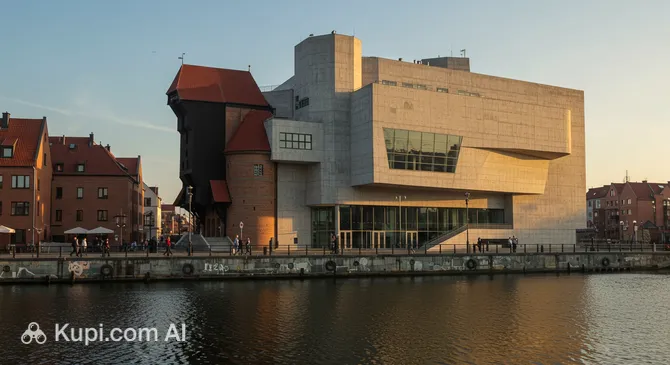
Polish Baltic Philharmonic. Illustration.
Source: Kupi.com AI

Traveler photos:

The uniqueness of this place begins with its history. The philharmonic building is a former municipal power plant, built in 1897-1898 and designed in a striking Neo-Gothic style. A large-scale reconstruction, fully completed in 2006, breathed new life into these historic walls, carefully preserving their industrial charm while transforming a former industrial facility into a magnificent temple of music.

Today, the Polish Baltic Philharmonic offers its guests several magnificent concert spaces. The main Great Concert Hall can accommodate up to 1,100 listeners, impressing with its acoustics and atmosphere. In addition, there is a Chamber Hall with 180 seats, ideal for more intimate performances, a Jazz Hall designed for 200 aficionados of the genre, and a cozy "Oak Hall" with 100 seats. The spacious foyer, covering 1,700 m², is also frequently used for various cultural events and exhibitions, making the philharmonic a true center of attraction for art lovers in Gdańsk.

Contacts

For up-to-date contact information for the Polish Baltic Philharmonic, such as phone numbers or email addresses, we recommend visiting the institution's official website. Additionally, details regarding contact methods and opening hours can be obtained at tourist information centers in Gdańsk.

How to contactContact
AddressOłowianka 1, 80-751 Gdańsk, Poland
Phone number+48 58 320 62 62
Websitewww.filharmonia.gda.pl

What to Do

Visiting the Polish Baltic Philharmonic in Gdańsk is, first and foremost, an opportunity to enjoy magnificent music. Diverse concerts take place here regularly, ranging from classical symphonic works performed by the philharmonic orchestra to jazz performances and other musical events. The main concert hall is famous for its excellent acoustics, allowing the audience to fully appreciate the mastery of both local and guest musicians and ensembles.

Beyond the musical program, the philharmonic offers other cultural experiences. It houses an art gallery where visitors can discover works by various artists and broaden their horizons in the field of visual arts. This is a wonderful addition to a musical evening or a worthwhile destination in its own right.

The spacious foyer of the philharmonic, spanning approximately 1,700 square meters, is also an important part of the cultural space. It is frequently used for exhibitions, receptions, and other cultural events, making a visit to the philharmonic even more enriching and interesting. While the recording studio located here is primarily geared towards professionals, its presence underscores the philharmonic's status as a vital center for the creation and promotion of music.

Getting There

The Fryderyk Chopin Polish Baltic Philharmonic is located in the heart of Gdańsk, on the picturesque Ołowianka Island. Thanks to its central location, reaching it from any part of the city is easy, and the journey itself can be a pleasant stroll.

One of the most convenient ways to reach the philharmonic is by public transport. Numerous bus and tram routes pass in the immediate vicinity of Ołowianka Island. You will need to get off at one of the stops located near the bridges leading to the island and then walk a short distance. You can also always use a taxi, which will quickly take you directly to the entrance.

If you are in the Old Town of Gdańsk, the walk to the philharmonic can be a pleasure in itself. Ołowianka Island is connected to the main part of the city by several bridges, offering beautiful views of the Motława River and historical buildings. The walking route takes very little time and allows you to enjoy the city's unique atmosphere.

Nearest city: Gdansk

History & Facts

The history of the Polish Baltic Philharmonic in Gdańsk dates back to the challenging post-war years when the city sought to revive its cultural life. A key milestone was the founding of the city symphony orchestra in 1945 under the direction of Roman Kuklewicz, which laid a solid foundation for the future musical center.

The building that houses the philharmonic today deserves special attention. Its uniqueness lies in an amazing transformation: originally built in 1897-1898 as a municipal power plant, it features a striking Neo-Gothic facade. For nearly a century, this industrial structure reliably supplied Gdańsk with energy until it ceased operations in 1996. It was then that a visionary decision was made to give this historic site a new life by converting it for the philharmonic's needs. The first concert in the renovated walls took place in 2002, and the complete reconstruction, which turned the former power plant into a modern world-class concert complex, was finished in 2006.

This impressive transformation is a brilliant example of the careful preservation of industrial heritage and its successful adaptation for cultural purposes. As a result, Gdańsk not only gained a magnificent concert hall with excellent acoustics but also preserved a significant part of its history embodied in the building's architecture. The Polish Baltic Philharmonic proudly continues the city's glorious musical traditions, which are rooted deep in the past. Notably, the first opera performance in Gdańsk was staged as early as February 15, 1646, to mark the arrival of the Polish Queen Marie Louise Gonzaga, testifying to the long-standing and deep love of the citizens for music.

Time Needed

When planning a visit to the Polish Baltic Philharmonic in Gdańsk, you should consider the duration of the event you intend to attend. If your goal is to enjoy a concert, it typically takes about 2-3 hours. This time includes not only the performance itself but also the opportunity to arrive comfortably, look around the foyer, and soak in the atmosphere of this iconic cultural landmark.

However, the Polish Baltic Philharmonic is more than just a concert hall. If you wish to explore the space more fully—for example, by visiting the art gallery or other areas open to the public—you should add another 1-2 hours to your visit. Thus, a more in-depth acquaintance with the philharmonic can take up to half a day.

Overall, a few hours are sufficient for a standard concert visit. But if you have the time and desire, the Polish Baltic Philharmonic can offer more than just a musical performance, allowing you to dive deeper into the cultural life of Gdańsk.

Working Hours

The Fryderyk Chopin Polish Baltic Philharmonic in Gdańsk is a concert venue, so its "working hours" in the traditional sense apply to the box offices and event schedules. Concerts and other events take place according to a schedule that may change depending on the season and the program. Typically, the philharmonic's box offices are open during specific hours on weekdays, as well as before the start of concerts for ticket sales.

To attend concerts or other events at the Polish Baltic Philharmonic, it is highly recommended to check the schedule in advance and purchase tickets. This can be done online through the philharmonic's official website or directly at the box offices. Since information regarding the exact box office hours and concert schedules can vary, it is always best to check the latest details on the official website or inquire by phone before planning your visit.

DayOpening hours
MondayClosed
Tuesday12:00 – 18:00
Wednesday12:00 – 18:00
Thursday12:00 – 18:00
Friday12:00 – 18:00
SaturdayClosed
SundayClosed

Nearby

Visiting the Polish Baltic Philharmonic in Gdańsk is undoubtedly a highlight of any cultural itinerary. However, to make your journey even more fulfilling and memorable, it is worth spending time exploring the surroundings. The area around the philharmonic is rich with interesting sites that allow for a deeper immersion into the history and atmosphere of this incredible city.

A walk through the nearby streets and squares will reveal new facets of Gdańsk, complementing the impressions of your musical evening. Just steps away from the philharmonic, you will find both historical monuments and modern attractions capable of satisfying a wide range of tastes.

NameDistance
AmberSky Ferris Wheel0.1 km
The Crane0.3 km
St. Mary's Gate0.4 km
Museum of the Second World War0.4 km
St. Mary's Basilica (Bazylika Mariacka) in Gdańsk0.5 km
Neptune's Fountain0.6 km
Long Market0.6 km

Have you reached the end of the page?

So the route has been studied inside and out