Support

Ksiezy Mlyn

About

Księży Młyn is an impressive factory-residential complex located in the city of Lodz, Poland. It is rightfully considered one of the city's most important attractions and represents a unique architectural ensemble preserved from the times of the 19th-century industrial boom. This place literally allows you to touch history and feel the atmosphere of the industrial era.
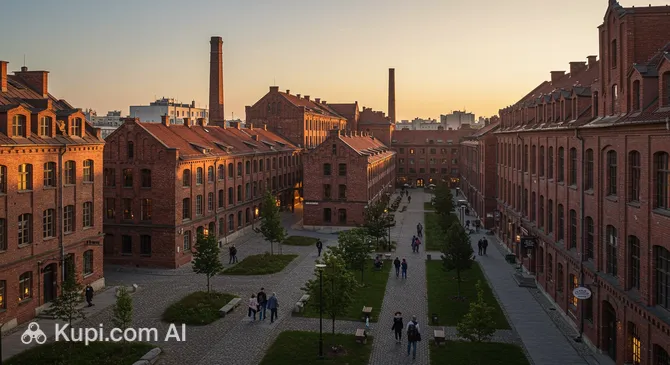
Ksiezy Mlyn. Illustration.
Source: Kupi.com AI

Traveler photos:

The complex received its name from an ancient mill settlement that was previously located on this site by the Jasień River. In translation from Polish, "Księży Młyn" means "Prince's Mill." The emergence and development of Księży Młyn are inextricably linked with the textile industry boom that turned Lodz into one of the largest industrial centers in Europe.

In essence, Księży Młyn was a true "city within a city." This self-sufficient complex included not only massive production workshops and warehouses but also residential houses for workers and managers, a school, a hospital, shops, and even a fire station. Today, this historical district attracts tourists with its authenticity, monumental architecture, and the opportunity to learn more about the industrial heritage of Lodz.

Contacts

Since Księży Młyn is an extensive historical complex, to get the most up-to-date information about visiting individual sites on its territory, museum opening hours, or guided tour options, it is recommended to contact the official tourist portals of the city of Lodz or local information centers.

This iconic district of Lodz is well-known, and it can usually be reached by public transport or taxi. Detailed routes and maps are often available in hotels or online.

How to contactContact
AddressKsięży Młyn, 90-345 Łódź, Poland

What to Do

Visiting Księży Młyn is a real immersion into the industrial past of Lodz. Here you can see firsthand the unique architectural ensemble preserved since the 19th century. The main activity for visitors is a leisurely walk through the extensive territory of the complex, during which you can examine in detail the monumental factory buildings, residential houses for workers, and other structures that once formed a single "city within a city."

Special attention should be paid to the microdistrict on Księży Młyn Street, where the so-called "famuly" were located – characteristic brick houses built for factory workers. No less interesting are the production buildings themselves, such as the impressive Karol Scheibler spinning mill on Tymienieckiego Street. Be sure to find the famous Grohman Gate, also known as "Grohman's Barrels" – one of the symbols of this historical district.

Strolling through Księży Młyn, you can not only appreciate the scale of the industrial heritage of Lodz but also try to imagine what the life of workers was like in those times. This place offers a unique opportunity to touch the history of industrial development and will especially appeal to those who are fond of industrial architecture and the history of technology. Every corner here breathes history, telling silent stories of the former greatness of the textile empire.

Getting There

Księży Młyn is located in the city of Lodz, and reaching this unique historical complex is quite easy, as it is one of the city's iconic landmarks. Although the complex is not in the very epicenter of tourist activity, the area's transport accessibility is quite good.

The most common and convenient way to reach Księży Młyn is by public transport. Lodz has a well-developed network of tram and bus routes, many of which pass in the immediate vicinity of the complex or have stops within walking distance. We recommend checking the current route numbers and their schedules in advance on the official Lodz public transport website, in mobile apps, or at the stops. This will allow you to plan your trip most efficiently.

If you prefer a more comfortable and faster way to travel, you can always use a taxi. The trip from the center of Lodz to Księży Młyn will take a short time, depending on the traffic situation. Also, if you are staying nearby or enjoy long walks, you can consider a walking route, which will allow you to get better acquainted with the surrounding areas of the city. For those traveling by car, it is worth researching parking options near the complex in advance, as the number of spaces may be limited.

Nearest city: Lodz

History & Facts

The history of Księży Młyn is inextricably linked with the name of Karol Scheibler (in some sources – Shajbler), who in the 19th century was rightfully considered the wealthiest industrialist in Lodz. It was he who initiated the creation of this grand factory-residential complex. Notably, the complex was built on the site of a former mill settlement spread along the banks of the Jasień River. This historical heritage gave the name to the entire district – Księży Młyn, which has been preserved to this day.

Subsequently, the complex belonged to two famous families of factory owners – the Scheiblers and the Grohmans. Their business partnership led to the fact that from 1921 they jointly owned what was at that time the largest cotton factory in Europe. This fact speaks volumes about the scale of production and the influence these industrialists had on turning Lodz into a powerful textile center.

One of the most remarkable features of Księży Młyn was its unique concept of a self-sufficient "city within a city." The project was carefully planned and included not only production facilities but also all the necessary infrastructure for workers and their families. Residential houses, a school, shops, a fire station for safety, and even a hospital were built on the territory of the complex.

Today, Księży Młyn is recognized as a striking example of 19th-century industrial architecture and is an important witness to the rapid development of the textile industry in Lodz. This city, largely thanks to such complexes, became one of the largest industrial centers in Europe in its time. Visiting Księży Młyn allows you to touch this impressive history.

Time Needed

To get a good idea of Księży Młyn and explore its main attractions, an average visitor should plan for approximately 2-3 hours. During this time, you can take a leisurely stroll through the historical streets, examine the monumental factory buildings, the characteristic brick houses of the workers ("famuly"), and feel the unique atmosphere of this 19th-century industrial complex.

This time is usually sufficient to appreciate the scale of Księży Młyn, take memorable photos, and soak in the spirit of industrial Lodz. If you want to study individual details more deeply, visit any accessible indoor spaces, or simply spend more time enjoying the atmosphere, the visit can take up to half a day, especially if you are interested in history and architecture.

Working Hours

Księży Młyn is an extensive historical district rather than a single site with a centralized operating schedule. You can walk along its streets and view the buildings from the outside at any time, as it is essentially part of the city. However, if you are interested in specific museums, galleries, or other institutions located within Księży Młyn, their operating hours will be individual.

We recommend checking the current information on opening hours and the need for advance ticket booking for specific sites on their official websites or on the Lodz city tourist portal before your visit. In general, the Księży Młyn district itself is accessible for visiting year-round, but access inside individual buildings and exhibitions will depend on their schedules.

Open 24 hours

Nearby

The surroundings of Księży Młyn are also rich in interesting places that can complement your impressions of visiting this unique industrial complex. Exploring nearby attractions will allow you to dive deeper into the atmosphere of Lodz and see other facets of this multifaceted city.

Don't limit yourself to just one site – often the most interesting things are hidden in the details and unexpected discoveries nearby. Below is a list of some attractions located near Księży Młyn that might interest you.

NameDistance
Herbst Palace Museum0.1 km
Palm House0.8 km
Karl Wilhelm Scheibler Palace0.9 km
Cinema Museum in Łódź0.9 km
Galeria Łódzka1.4 km
Łódź City Culture Park1.6 km
Natural History Museum of the University of Łódź1.7 km

Have you reached the end of the page?

So the route has been studied inside and out