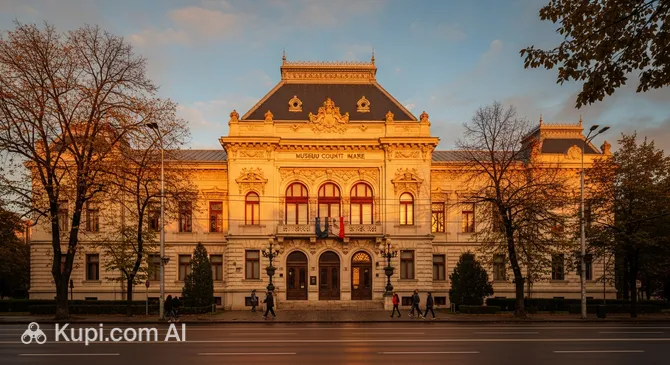
Diving into the rich tapestry of cultural heritage in northwestern Romania is best started where history literally comes to life. The Satu Mare County Museum (Muzeul Județean) is a key municipal institution that serves as the primary guardian of traditions and artifacts from this unique border region.
Located in a distinguished building on Bulevardul Vasile Lucaciu in the city of Satu Mare, the museum offers a harmonious blend of history, ethnography, and art. It is more than just a spot on a tourist map; it is a living center where the evidence of many generations of local lives is carefully preserved.
Satu Mare County Museum. Illustration.
Source: Kupi.com AI
Traveler photos:
Visitors can expect fascinating exhibitions detailing the county's past—from ancient archaeological finds to everyday items reflecting the region's ethnic diversity. It is the perfect place for those wanting to understand the true spirit of these lands and see rare collections gathered in one of the country's most interesting corners.
Contacts
To check details before visiting or to arrange group tours, you can use the following contact information for the museum:
An exciting journey through the centuries awaits visitors in the museum's halls. You can see the rich ethnographic collections firsthand: traditional costumes with unique embroidery, household items, and tools from craftsmen who shaped the distinctive style of the Satu Mare region for centuries. These items allow you to literally feel the lifestyle and atmosphere of the past.
Fans of archaeology and history will appreciate the sections dedicated to significant finds and historical documents. Artifacts spanning various eras—from prehistoric times to major events of the modern age—are presented here. Informative displays and rare photographs help reconstruct the development of the city and its surroundings.
In addition to permanent displays, the museum regularly hosts temporary exhibitions and cultural events. These may include art openings by local artists, thematic lectures, or educational programs for children. Individual tourists and groups can use the services of guides who share little-known facts and legends hidden behind the museum's display cases.
Getting There
The County Museum is located at Bulevardul Vasile Lucaciu 21, in the very heart of the city. Thanks to its central location, it is within walking distance of many popular hotels and other cultural sites, making it a very convenient stop while exploring the historical center.
For those who prefer public transport, city buses and minibuses stop near the museum. An extensive network of routes connects this area with all parts of the city, so getting here from any district is easy. If you choose to take a taxi, the ride from the central square or the train station will take only a few minutes.
Travelers with their own or a rented car can use the parking spaces located in the immediate vicinity of the museum entrance. For accurate route planning in your navigation system, use the following coordinates: latitude 47.7929221, longitude 22.8824599.
Nearest city: Satu Mare
History & Facts
The Satu Mare County Museum is one of the most significant cultural institutions in the northwest of the country. Its creation was driven by the need to preserve and categorize the vast number of artifacts testifying to the complex and multifaceted history of the Transylvania region.
The museum's exhibits cover a colossal time span, allowing visitors to trace the evolution of life in this region from ancient times to the present. Special attention is given to periods of active crafts and trade development, which were historically the driving force behind the region's prosperity.
The institution's holdings include not only archaeological finds but also rich collections of folk art. These items tell the story of how various cultures and ethnic groups interacted over the centuries, creating the unique socio-cultural identity of modern-day Satu Mare.
Over the years, the museum has evolved from a simple repository into an active research center. Work is constantly underway to study new finds and digitize historical documents to ensure that cultural heritage remains accessible to future generations and international guests.
Time Needed
To explore the main collections of the County Museum at a leisurely pace, we recommend planning for about 1.5–2 hours. This time is usually sufficient to see the ethnographic halls and the historical exhibition without missing important details.
If you are a history enthusiast who likes to study every archival document in detail or if you are interested in the temporary themed exhibitions, your visit may take longer. It is also worth setting aside an extra half hour if you plan to book a professional tour, which provides a deeper dive into the context of the exhibits.
Working Hours
When planning your visit, keep in mind the museum's standard working hours: from Tuesday to Saturday, the doors are open from 09:00 to 17:00. On Sunday, the museum welcomes visitors on a reduced schedule — from 10:00 to 14:00. Please remember that Monday is a day off.
Since schedules may change during holidays, we strongly recommend checking for up-to-date information on the institution's official website before your trip. This will help you avoid any inconveniences and make the most of your time.
Day
Working hours
Monday
Закрыто
Tuesday
09:00–17:00
Wednesday
09:00–17:00
Thursday
09:00–17:00
Friday
09:00–17:00
Saturday
09:00–17:00
Sunday
10:00–14:00
Nearby
Exploring the surroundings of the County Museum will allow you to gain a more complete impression of the city's historical character. The area around Bulevardul Vasile Lucaciu is rich in monuments and memorial sites, each carrying a piece of local history.
A walk through the nearby streets turns into a journey through time, where the modern rhythms of the city meet the memory of prominent figures and events of the past. Here are several sites located within walking distance: