The Kunstkamera in St. Petersburg is not just a museum, but a true symbol of an era of great transformation. Founded by Peter the Great in 1714, it became the first public museum in Russia, opening the world of science and amazing discoveries to everyone. Located in the city's historical center, the Kunstkamera remains one of the world's largest and oldest ethnographic museums, with collections exceeding one million items. Its official name is the Peter the Great Museum of Anthropology and Ethnography of the Russian Academy of Sciences (MAE RAS).
The name "Kunstkamera" translates from German as "cabinet of curiosities," which perfectly reflects the essence of the Emperor's original idea. Inspired by European curiosity cabinets, Peter I decided to create a similar collection in the new capital. The museum became famous for its unique anatomical collection, which includes specimens with developmental anomalies that served as important scientific material in the 18th century. However, one shouldn't think that the Kunstkamera is only a "chamber of horrors." The bulk of its massive collection is dedicated to the history and daily life of peoples from all corners of the planet, from the Americas to Japan, representing a priceless ethnographic heritage.
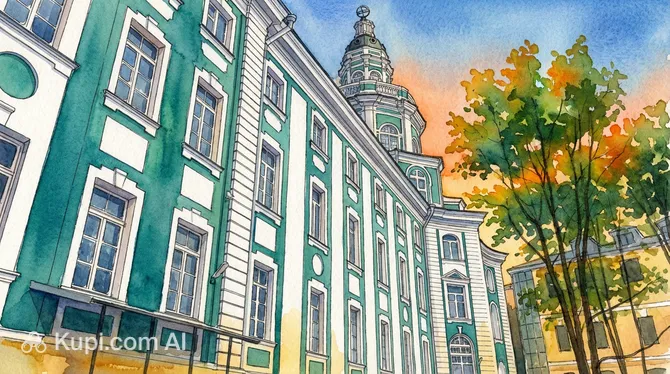
The museum building itself is an outstanding architectural monument. Built in the Petrine Baroque style, it was one of the first structures in the world specifically designed for museum purposes. The central tower, topped with an armillary sphere—a symbol of the solar system model—has become an integral part of the Neva panorama and a recognizable symbol of the Russian Academy of Sciences. A visit to the Kunstkamera is an opportunity to touch the history of science, see the full diversity of world cultures, and appreciate its founder's grand vision.
Traveler photos: