Support

Citadel of Pamplona

About

The Pamplona Citadel (Ciudadela de Pamplona) is an outstanding monument of Renaissance military architecture located in Pamplona, the capital of the Navarre region in Spain. This powerful defensive structure was built in the 16th century by order of King Philip II to protect the city from invasions. The fortress is shaped like a five-pointed star, making it a cutting-edge fortification for its time. Today, the citadel is considered one of the best examples of Spanish Renaissance military architecture and a significant defensive complex in Europe.
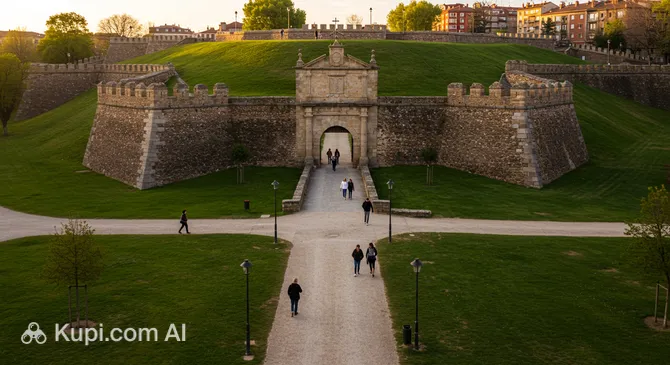
Citadel of Pamplona. Illustration.
Source: Kupi.com AI

Traveler photos:

Nowadays, the historic bastions and fortress walls are harmoniously integrated into modern city life. The citadel grounds and the surrounding Vuelta del Castillo park form a massive green space of about 280,000 square meters, known as the "green lungs" of Pamplona. It is a popular spot for walking, relaxing, and sports for both residents and tourists.

The citadel is not only a historical monument but also an important cultural center. Its pavilions, former armories and gunpowder stores, now house exhibition halls where art displays and other cultural events are regularly held. A visit to the citadel allows you not only to touch history but also to enjoy the peaceful atmosphere of the parks and get to know the modern cultural life of Pamplona.

Contacts

Since the Pamplona Citadel is primarily a public space and a large park, the best way to experience it is to visit in person. To find out more about current exhibitions held in the pavilions on-site and their opening hours, you can reach out via the official contact channels.

How to contactContact
AddressAv. del Ejército, s/n, 31001 Pamplona, Navarra, Spain
Phone number+34 948 42 09 75
Websitewww.turismo.navarra.es

What to Do

Visitors to the Pamplona Citadel can enjoy a leisurely stroll through the grounds of the ancient fortifications. Here, you can examine the massive bastions and gates, as well as admire panoramic views of Pamplona and its surroundings. This location has become a favorite spot for photo shoots thanks to its picturesque landscapes and historical atmosphere.

The citadel is not just a historical monument but a living cultural space. Inside the fortress and in the adjacent green areas, art exhibitions, concerts, cultural festivals, and other open-air events are regularly held. The spacious lawns of the Vuelta del Castillo park surrounding the citadel are perfect for slow walks and picnics in good weather.

History and architecture enthusiasts will appreciate the opportunity to learn about unique elements of 16th–19th-century military engineering and the fortress's role in the history of Pamplona and Navarre. Additionally, the vast territory of the citadel and its surrounding parks is a wonderful place for family holidays, sports, jogging, and cycling, making it popular with both tourists and locals alike.

Getting There

Getting to the Pamplona Citadel is easy, as it is located in the heart of the city. Thanks to its central position, the fortress is within walking distance of the historic center (Casco Antiguo) and major tourist routes. For example, a pleasant stroll from the famous Plaza del Castillo to the citadel entrance takes very little time.

If you prefer public transport, several city bus stops are located around the citadel, making it easy to reach from any part of Pamplona. For those traveling by car, there are public parking lots near the Vuelta del Castillo park surrounding the fortress where you can leave your vehicle.

For tourists arriving from other regions of Spain, visiting the citadel is also very convenient. Pamplona has excellent transport links with other towns in Navarre and the north of the country thanks to a developed network of roads and railways. This makes the fortress an easily accessible attraction for anyone traveling through this picturesque region.

Nearest city: Pamplona

History & Facts

The history of the Pamplona Citadel is a clear example of the development of military architecture and strategy. Its construction began at the end of the 16th century at the initiative of the Spanish authorities, who sought to strengthen the northern borders due to fears of invasion from France. The project was entrusted to Italian engineers, which explains its Renaissance five-pointed star shape. This design allowed for effective defense against artillery fire and controlled the approaches to the walls from all directions.

Interestingly, the fortification of this strategic hub began even before the main citadel was built. In 1513, a new fort had already been constructed here by order of King Ferdinand V. However, it was the large-scale project launched later that turned Pamplona into one of the key defensive posts in the Pyrenees. Over the centuries, the fortress was rebuilt and modernized many times to meet new challenges. The last major stage of its fortification was completed in 1888, when the final row of walls and bastions was added.

For centuries, the citadel played a vital role in defending the city and the entire region, serving as the main strategic site in northern Spain. Notably, two of the five bastions were pointed toward the city itself, indicating the fortress's dual function: protection not only against external threats but also against potential internal unrest. Despite its strength, the citadel was rarely involved in major battles, serving more as a deterrent. Today, its formidable walls and bastions serve peaceful purposes, standing as a reminder of the rich and complex history of this unique structure.

Time Needed

When planning a visit to the Pamplona Citadel, you should allow for 1.5 to 3 hours. This is usually enough for a leisurely walk through its extensive grounds, an inspection of the massive bastions, and an introduction to the main historical structures. In an hour and a half to two hours, you can visit the key points of the fortress, enjoy the panoramic views, and soak up the atmosphere of this unique place.

The time you spend at the citadel largely depends on your interests. If you want to dive deeper into the history and architecture or visit one of the art exhibitions regularly held in the pavilions, feel free to set aside about 3 hours or even more. For those who wish not only to see the fortress itself but also to relax in the adjacent Vuelta del Castillo park with a small picnic, the visit could take half a day, turning into a full outdoor retreat in the historical heart of Pamplona.

Working Hours

The grounds of the Pamplona Citadel serve as a large public park, so access to its main areas and green spaces is usually open year-round. Some sources indicate that the park is accessible 24/7, allowing you to enjoy a walk at any convenient time. However, the opening hours of the exhibition halls and pavilions located inside the fortress may vary and often depend on the season and the events being held.

Entry to the citadel grounds and the surrounding park is free, and no prior booking is required. Nevertheless, as the schedule of exhibitions and cultural events can change, it is highly recommended to check the latest information on the opening hours of specific pavilions before your visit. This can be done on the official Pamplona city website or at local tourist information centers. It is also worth noting that during major city festivals, such as San Fermín, access to the territory may be restricted.

DayOpening hours
Monday7:30 – 21:30
Tuesday7:30 – 21:30
Wednesday7:30 – 21:30
Thursday7:30 – 21:30
Friday7:30 – 21:30
Saturday8:00 – 21:30
Sunday9:00 – 21:30

Nearby

A visit to the Pamplona Citadel is just the starting point for exploring this amazing city. Thanks to its central location, the fortress is surrounded by many other interesting sites within walking distance. A stroll through the neighborhood will allow you to dive deeper into the history and culture of Pamplona and get a more complete picture of the capital of Navarre.

Just a few minutes' walk from the citadel's mighty bastions, you will find charming parks, ancient churches, and lively squares. Exploring these nearby attractions will enrich your trip, showing how harmoniously military history, religious architecture, and modern urban life blend together in Spain.

NameDistance
Plaza de los Fueros0.5 km
Taconera Gardens0.6 km
Church of San Lorenzo0.6 km
Saint Nicholas Church0.6 km
Antoniutti Park0.6 km
Vermutería RÍO0.7 km
Running of the Bulls Monument0.7 km

Have you reached the end of the page?

So the route has been studied inside and out