Support

Anuradhapura

About

Anuradhapura is not just a city, but a true gem of the North Central Province of Sri Lanka, located approximately 200 kilometers north of Colombo. This ancient city, which served as the capital of the Sinhalese kingdom for many centuries (from the 4th to the 11th century), still maintains a unique atmosphere as a sacred place and is one of the most significant historical centers in the country.
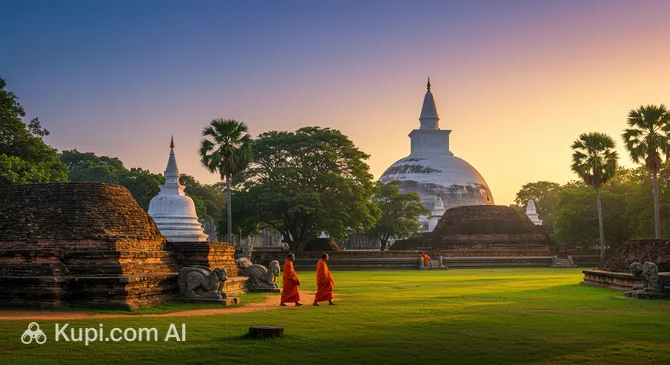
Anuradhapura. Illustration.
Source: Kupi.com AI

The city is comfortably nestled on both sides of the Malwatu Oya River: the old city with its majestic ruins and ancient temples lies on the west bank, while the modern part of Anuradhapura is on the east bank. Despite its status as a major administrative center and a population of about 63,000 people, the city retains a surprising sense of tranquility and provincial charm. Thanks to a well-developed transport network, it is easy to reach by both train and bus.

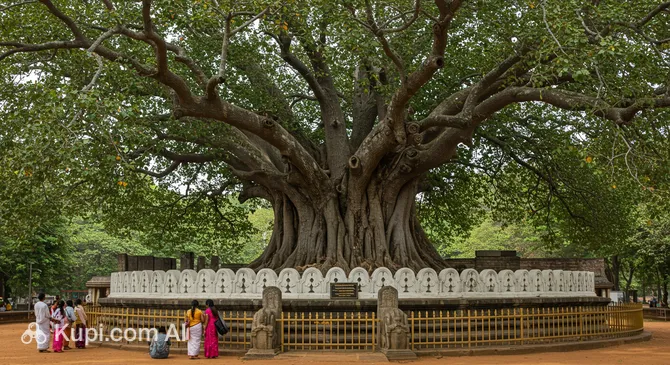
The main reason travelers from all over the world are drawn here is its status as a living center of Buddhist pilgrimage and, essentially, an open-air museum. Here, you can see the legendary Jaya Sri Maha Bodhi tree, which, according to tradition, grew from a sapling of the tree under which Buddha attained enlightenment. The city is also famous for its numerous ancient dagobas (stupas) and monastic complexes. It is no surprise that the archaeological sites of Anuradhapura are included in the UNESCO World Heritage list.

A stroll through Anuradhapura is a true journey back in time, where every stone holds echoes of ancient civilizations. This city is perfect for those who appreciate slow-paced exploration, seek to uncover the mysteries of the past, and wish to experience the magic of the ancient East.

You can find more interesting facts on the Anuradhapura city history page.
Weather Overview

The weather in Anuradhapura is characterized by a tropical climate with high temperatures throughout the year. The average annual temperature ranges from 25.3°C in January to 29.4°C in April. The hottest months are March, April, and May, when maximum temperatures can reach 33-34°C. December and January are considered the coolest, with average temperatures around 25-26°C.

Expect hot weather year-round, with temperatures typically ranging from 21-26°C at night to 29-34°C during the day. The highest amount of rainfall and rainy days occur in October and November, peaking in November (10 mm of precipitation, 25 rainy days). Other months, such as April, May, and December, can also be rainy but with less intensity. You can learn more about the Anuradhapura climate on the dedicated page.

Average monthly temperature

Average monthly precipitation

Interesting Facts

In addition to its majestic ruins and ancient stupas, Anuradhapura holds many amazing stories and little-known details that make it even more attractive to curious travelers. Here are just a few of them:

Jaya Sri Maha Bodhi. Illustration.
Source: Kupi.com AI

Traveler photos:

  • Anuradhapura is considered one of the oldest continuously inhabited cities in the world. According to tradition, the first settlements here appeared as early as the 6th century BC, and the city was founded by an Indian prince. Subsequently, Anuradhapura became the heart of the island's political and religious life.

  • One of the city's main wonders is the sacred Jaya Sri Maha Bodhi tree. It is believed to be the oldest human-planted tree in the world with a continuous historical record. It is a direct descendant of the original Bodhi tree under which the Buddha attained enlightenment and was brought to Sri Lanka over 2,200 years ago.

  • Anuradhapura is home to some of the tallest brick structures of the ancient world—dagobas (stupas). For instance, the Jetavanarama Dagoba was the third tallest structure in the world at its peak, surpassed only by the Great Pyramids of Giza. These giant stupas still amaze today with their scale and engineering skill.

  • The city is shrouded in many legends and myths, including mentions in the famous Hindu epic "Ramayana." In ancient times, Anuradhapura was also famous for hosting grand religious festivals that gathered pilgrims and monks from the farthest corners of Asia.

How to Get There

When planning a journey to ancient shrines, it is important to think through the logistics in advance. You can find a full list of options and details on the how to get to Anuradhapura page, and below we will look at the main transport hubs through which tourists enter the region.

Most international travelers arrive in the country via Bandaranaike International Airport (CMB). It is worth noting that this main aviation hub is not in Anuradhapura itself but near the city of Colombo (Katunayake), at a distance of approximately 137.5 km. This is the largest airport in the country with a huge passenger flow. The journey from here to Anuradhapura by taxi or transfer will take about 3.5–4 hours, depending on traffic.

If you are considering domestic flights to save time, the nearest option is Sigiriya SLAF Base (GIU). It is located in the town of Sigiriya, just 53 km from Anuradhapura. This is a small airport that primarily handles domestic flights and air taxis. The drive from Sigiriya to the center of Anuradhapura takes a little over an hour, making this route quite convenient for those who want to avoid long overland journeys.

For clarity, here is a summary of the main airports located at various distances from the city:

AirportPassenger trafficDistance
Sigiriya Slaf Base15 00053 km
China Bay25 00089 km
Polgolla Reservoir Airport3 000112 km
Bandaranaike International Airport8.8 mln138 km
Batticaloa120 000156 km

Railway travel is another popular and atmospheric way to reach the ancient capital, especially from Colombo. Although Anuradhapura has its own railway station, which is an important hub on the Northern Line, trains can be crowded, so it is recommended to book tickets in advance. Traveling by train allows you to enjoy the picturesque views of the Sri Lankan countryside and immerse yourself in the local flavor.

In addition to trains and planes, Anuradhapura is connected to the rest of the island by a developed network of roads. Regular intercity buses (both budget state-run and private air-conditioned expresses) run from Colombo, Kandy, Trincomalee, and other major cities, making this form of transport the most affordable option for tourists.

Main Attractions

Anuradhapura, the ancient capital of Sri Lanka, is famous for its magnificent ruins and sacred sites that attract pilgrims and tourists from all over the world. This city is a true treasure trove of history and culture, where every stone breathes with the legacy of centuries.

One of the most important shrines not only in Anuradhapura but in the entire Buddhist world is Jaya Sri Maha Bodhi. This is a sacred Bo tree grown from a sapling of the very tree under which the Buddha attained enlightenment. Planted in 288 BC, it is considered the oldest historically documented tree in the world planted by a human. For believers, this site holds immense spiritual significance, while for tourists, it offers a chance to touch living history.

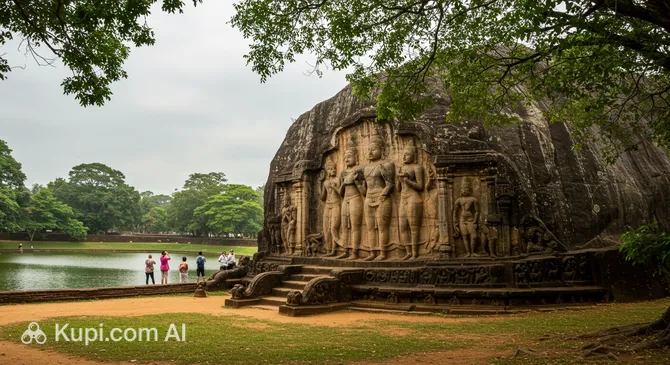
Equally interesting is the Isurumuniya Temple, carved into rock and known for its exquisite bas-reliefs. Especially famous are the carvings of the "Isurumuniya Lovers," the "Royal Family," and the "Man with a Horse's Head." The temple is situated by the picturesque Tissa Wewa pond, which adds to its charm. This site attracts visitors with its unique architecture and atmosphere of serenity.

Isurumuniya Temple. Illustration.
Source: Kupi.com AI

Traveler photos:

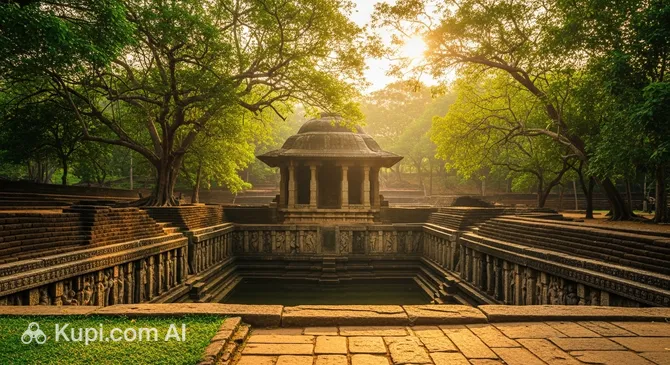
For lovers of ancient parks and historical mysteries, Ranmasu Uyana (Royal Park) is a must-visit. This extensive park, covering about 40 acres, was once the royal gardens. Here, you can see ancient bathing pools, remains of complex hydraulic structures, and mysterious rock carvings, including the so-called "Star Map" (Sakwala Chakraya), the purpose of which is still debated by scholars. A walk through the park allows you to imagine the grandeur of this ancient civilization.

Ranmasu Uyana (Royal Park). Illustration.
Source: Kupi.com AI

Traveler photos:

These attractions are just a small part of what Anuradhapura has to offer. Every corner of this ancient city holds its own secrets and legends, inviting travelers to immerse themselves in the fascinating history of Sri Lanka.

Local Cuisine

The gastronomy of Anuradhapura is a true kaleidoscope of flavors, where ancient culinary traditions of Sri Lanka are skillfully interwoven with modern trends. The foundation of the local cuisine, as in the rest of the country, is rice and curry. Rice here is served with many variations of spicy vegetable, fish, or meat sauces, and each family often has its own secret recipe for spices and aromatic pastes.

Among the dishes that are a must-try in Anuradhapura is "kiribath"—rice cooked in coconut milk, traditionally served with a spicy onion sambol called "lunu miris." Equally popular are "hoppers" (appu)—thin, bowl-shaped crispy pancakes, often with an egg in the center, eaten with various additions from honey to savory sauces. Also look out for lentil dishes (dhal), the ubiquitous use of coconut milk, and an abundance of fresh vegetables. The famous "kottu roti"—chopped roti bread stir-fried with vegetables, egg, meat, or fish on a special griddle—is a hearty and aromatic dish often prepared right before your eyes.

For drinks on a hot day, freshly squeezed juices from tropical fruits like mango, papaya, or pineapple are wonderfully refreshing. A traditional cooling drink made from sarsaparilla root is also popular. As for alcoholic beverages, local beer and other options common in Sri Lanka can be found in restaurants and hotels.

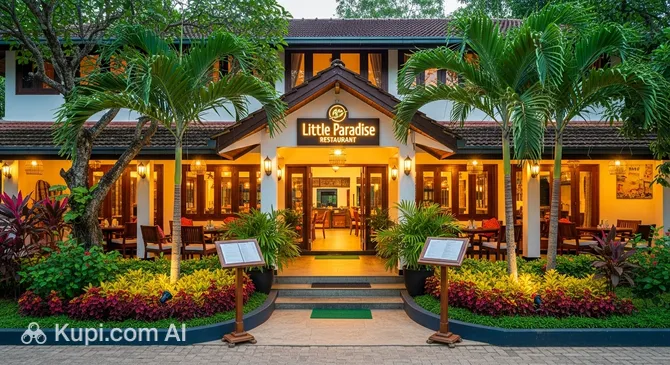
The dining culture in Anuradhapura is diverse. Locals often eat at small family-run cafes and eateries where you can taste authentic dishes at affordable prices. Street food also plays an important role: in markets and right on the streets, you will find stalls with fresh samosas, roti, fruits, and other snacks. Tourists can choose between these authentic establishments and hotel or standalone restaurants offering both local and international cuisine. For example, you can stop by Little Paradise Restaurant to enjoy local delicacies in a pleasant setting.

Little Paradise Restaurant. Illustration.
Source: Kupi.com AI

Traveler photos:

Anuradhapura's gastronomic scene attracts tourists with its authenticity and variety. In addition to everyday cafes, the city and its surroundings sometimes host food festivals and fairs, where you can get to know the region's best dishes and even participate in masterclasses on preparing traditional Sri Lankan treats. This is a wonderful opportunity not only to taste but also to take home a piece of Sri Lanka's unique flavor.

Travel Tips

Welcome to Anuradhapura, the ancient capital of Sri Lanka and the heart of its Buddhist culture! To make your journey through this amazing city as comfortable and rewarding as possible, we have prepared some practical tips.

  1. Clothing and Essentials:

    The climate in Anuradhapura is tropical, so choose light, breathable clothing made of natural fabrics (cotton, linen). Be sure to bring a hat, sunglasses, and high-SPF sunscreen. To visit the numerous temples and sacred sites (dagobas, monasteries), modest clothing covering the shoulders and knees is required for both men and women; traditionally, Sri Lankans choose white clothing for such visits. It is customary to remove shoes and hats before entering sacred grounds. Comfortable walking shoes are extremely important, as the ancient city is vast. Don't forget an electronics adapter and insect repellent, especially for evening walks.

  2. Getting Around Town:

    The ancient city of Anuradhapura covers a large area. The most convenient way to travel for sightseeing is to rent a tuk-tuk for the entire day (be sure to agree on the price in advance) or a bicycle. This will allow you to move freely between various sites. Public buses run but can be crowded and are not always convenient for tourists on a tight schedule. Taxis are less common than tuk-tuks.

  3. Finances:

    The local currency is the Sri Lankan Rupee (LKR). You can exchange money at city banks or some hotels, but bank rates are usually better. Credit cards (Visa, Mastercard) are accepted in large hotels, restaurants, and some shops. However, it is better to have cash for paying for tuk-tuks, small purchases at markets, and entrance tickets to some attractions. ATMs are available in the urban part of Anuradhapura. Tipping is welcome but not always mandatory; in restaurants, it is customary to leave about 10% if a service charge is not included in the bill. A small gratuity for tuk-tuk drivers and hotel staff is also appropriate.

  4. Health and Safety:

    There are pharmacies in the city, but not all are open 24/7. It is recommended to carry a basic first-aid kit. For medical assistance, public and private clinics are available to tourists; for serious cases, it is better to contact facilities in Colombo. Be sure to take out travel insurance. Anuradhapura is generally a safe city for tourists. The main precautions are to watch your belongings to avoid petty theft and to avoid walking in poorly lit areas at night. When visiting archaeological zones, be careful with monkeys—do not feed them and keep your belongings close. Drink only bottled water.

  5. Communication:

    The official languages are Sinhala and Tamil. In tourist areas, hotels, and restaurants, many people speak English. Learning a few phrases in Sinhala, such as "Ayubowan" (greeting/welcome) and "Istuti" (thank you), will be appreciated by the locals. A SIM card with internet access can be bought at the airport or in the city (popular operators are Dialog and Mobitel). Wi-Fi is available in most hotels and some cafes.

  6. Local Etiquette:

    Sri Lankans are very friendly. The traditional greeting is "Ayubowan," accompanied by a slight bow with palms folded at chest level. When visiting temples and sacred sites, show deep respect: remove shoes and hats, do not turn your back to Buddha statues (especially when taking photos), and do not sit with your feet pointed toward sacred images. Dress modestly. Do not photograph monks without their permission.

  7. What to Avoid:

    Strictly avoid disrespectful behavior on the grounds of religious sites. You must not take photos hugging Buddha statues or sitting on them. Also, do not point your feet at people or sacred images, as feet are considered an "unclean" part of the body. Loud conversations and public displays of affection are inappropriate in temples.

  8. Additional Tip:

    The ancient city of Anuradhapura is huge, and to see the main attractions without rushing, it is best to set aside at least two days. Visiting at sunrise or sunset will not only save you from the midday heat but also allow you to see the ancient stupas and ruins in magical light. Check the current information about the ticketing system—often a single ticket is required to visit the ancient city complex.

We hope these tips help you plan an unforgettable trip to Anuradhapura and enjoy every moment in this historic place! We wish you wonderful experiences!

Entertainment & Nightlife

Anuradhapura, the ancient capital of Sri Lanka, is known primarily for its majestic stupas and monasteries rather than a vibrant nightlife in the traditional sense. Evening entertainment here is more relaxed and measured, offering guests the chance to unwind after a busy day of sightseeing. Instead of loud nightclubs and bar-filled quarters, you are more likely to find cozy restaurants and quiet corners for evening relaxation.

The main venues for evening leisure in Anuradhapura are restaurants offering both local and international cuisine. This is a great opportunity to enjoy dinner in a pleasant atmosphere. For example, you can visit Little Paradise Restaurant, known for its kitchen, or stop by Bro Restaurant. Many establishments stay open until late in the evening, but it is worth checking closing times in advance, especially during the off-peak season. The atmosphere in restaurants is usually relaxed, and the dress code is casual.

Little Paradise Restaurant. Illustration.
Source: Kupi.com AI

Traveler photos:

Some hotels in Anuradhapura, such as Delmond Lake or Hotel T & T, may offer bars or lounge areas where you can spend the evening with a drink. This is a convenient option if you don't want to travel far from your accommodation. However, do not expect a wide selection of specialized bars, concert venues, or loud discos in the city. Nightlife here is not the main tourist draw, and it is concentrated in individual establishments rather than specific districts.

Regarding practical tips, it is most convenient to use taxis or tuk-tuks to get around the city in the evening and at night. It is recommended to agree on the fare in advance. Anuradhapura is generally considered a safe city, but standard precautions, especially after dark, are always wise. Avoid poorly lit and deserted areas if walking alone. Most places close relatively early, so plan your evening accordingly.

During the day, Anuradhapura offers a rich program for curious travelers. You can dedicate your time to exploring ancient ruins and visiting iconic sites like the Isurumuniya Temple or the sacred Jaya Sri Maha Bodhi tree. For outdoor walks, Ranmasu Uyana (Royal Park) is an excellent choice. These daytime experiences perfectly complement the quiet evenings in the city.

Parks & Museums

Anuradhapura is a city where ancient history comes alive amidst majestic ruins and sacred sites, many of which are spread across vast, park-like territories. While there are few modern urban parks in the conventional sense, the entire archaeological zone serves as a massive green space for exploration and walks. The city's cultural heritage is carefully preserved and showcased in its museums.

Among the green zones, Ranmasu Uyana (Royal Park) particularly stands out. These ancient royal gardens, also known as the "Goldfish Gardens," are fascinating for their sophisticated pond system, rock-carved baths, and mysterious bas-reliefs, such as the famous "Stargate Map" (Sakwala Chakraya). It is a beautiful place for a quiet stroll and to learn about ancient landscape design.

Ranmasu Uyana (Royal Park). Illustration.
Source: Kupi.com AI

Traveler photos:

The Sacred City of Anuradhapura itself, listed as a UNESCO World Heritage site, is essentially a huge archaeological park. Here, among centuries-old trees and peaceful landscapes, lie famous stupas, monastery ruins, and ancient reservoirs (wewas). A particularly revered area is the territory around the sacred Jaya Sri Maha Bodhi tree, where an atmosphere of deep tranquility and spirituality prevails.

Jaya Sri Maha Bodhi. Illustration.
Source: Kupi.com AI

Traveler photos:

For a deeper dive into the city's history, it is worth visiting several key museums. The Anuradhapura Archaeological Museum is the region's main repository of antiquities. Its exhibits feature numerous artifacts found during excavations throughout the sacred city: sculptures, inscriptions, ceramics, coins, and everyday items of ancient residents. These finds help to better understand the grandeur and complexity of the ancient civilization that flourished here. Special attention should also be paid to the Jetavanarama Museum, located within the monastic complex of the same name. This museum specializes in artifacts discovered specifically during the excavation of the Jetavanarama stupa and adjacent buildings, offering visitors a more focused look at the history of this particular site.

Another iconic site combining spiritual significance and artistic value is the Isurumuniya Temple. It is famous for its unique rock bas-reliefs, including the "Isurumuniya Lovers" and the "Royal Family," as well as a small on-site museum displaying interesting discoveries.

Isurumuniya Temple. Illustration.
Source: Kupi.com AI

Traveler photos:

Many ruins, such as those seen near the Dahaiyagama Roundabout, serve as open-air exhibits themselves, bearing witness to the city's former glory. Walking or cycling through the ancient city, you will constantly encounter fragments of history that tell of Anuradhapura's glorious past.

Traveler's Tip: For the most authentic experience, rent a bicycle and explore the vast archaeological zone at your own pace. This will allow you to discover not only the main attractions but also lesser-known, secluded ruins, and to enjoy the peace and quiet by one of the ancient reservoirs, especially in the morning or evening hours.

Getting Around

When planning your travel around Anuradhapura, keep in mind that this is an ancient city with a vast territory where attractions can be significantly distant from one another. Public transport here has its own characteristics but generally allows you to reach the main points of interest.

The main form of public transport in Anuradhapura is buses. There are both state-run (SLTB) and private bus routes. They connect various parts of the city as well as suburban areas. Buses can be quite crowded, especially during rush hours. Fares are usually paid in cash to the conductor directly on the bus. There is often no strict schedule; buses depart when full or at certain intervals.

For traveling short distances, and especially for exploring the numerous ruins and temples within the ancient city, tuk-tuks (three-wheeled motor rickshaws) are extremely popular. This is the most flexible and convenient way to reach specific locations that buses might not service. The price for a tuk-tuk ride should be negotiated with the driver in advance, before the trip starts, as meters are rare. Bargaining is appropriate, but always keep it friendly.

A very common and recommended alternative for exploring the Anuradhapura archaeological complex is bicycle rental. Many hotels and guesthouses, as well as specialized rental shops, offer bikes at an affordable daily rate. This allows you to see the sights at your own pace and enjoy the surrounding nature. The roads are mostly good, but you should be mindful of traffic.

Taxis in the classical sense (passenger cars with meters) are less common than tuk-tuks, but they can be found, especially for longer trips or for greater comfort. You can also arrange with local drivers to rent a car with a driver for a full day of sightseeing. There is a railway station in Anuradhapura, but trains are used primarily for intercity travel rather than for moving within the city itself.

Practical Tips for Tourists: Always carry small change in cash for bus fares and tuk-tuks. If you plan to use tuk-tuks actively, don't hesitate to ask your hotel staff for approximate ride costs so you can better navigate prices. It's best to dedicate a full day to exploring the ancient city, and a bicycle or a tuk-tuk for several hours will be your best assistants.

Accommodation

In Anuradhapura, tourists will find diverse accommodation options to suit various budgets and preferences. The city offers a wide selection, from inexpensive guesthouses and budget hotels perfect for independent travelers, to more comfortable mid-range hotels and small resort complexes offering better service and amenities.

Many tourists prefer to stay in areas close to the Ancient City of Anuradhapura for easy access to the main historical sites. Accommodation options in the new part of town are also popular, where restaurants, shops, and other infrastructure are concentrated. The choice of area depends on your priorities: proximity to the shrines or to modern conveniences.

Delmond Lake. Illustration.
Source: Kupi.com AI

Traveler photos:

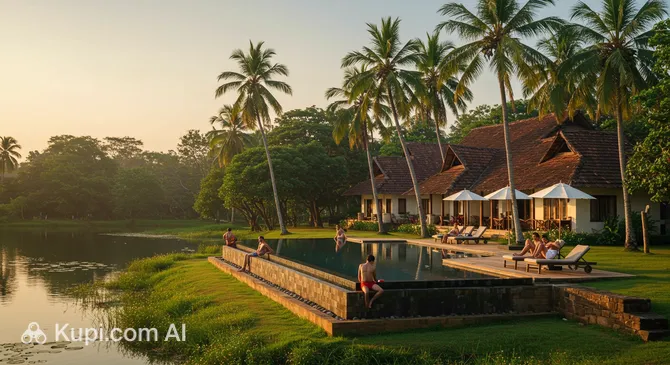
Among the available options, you can find both small family-run hotels and larger hotel complexes. For example, consider options such as Delmond Lake or Hotel T & T, which offer comfortable stays. The price range varies from budget to mid-range, allowing any traveler to find an optimal choice.

It is recommended to book your accommodation in advance, especially if your trip coincides with the peak tourist season or during major local festivals, when the demand for lodging increases significantly. Most hotels and guesthouses in Anuradhapura can be booked through popular online platforms or by contacting them directly.

Nearby Cities

For those wishing to explore the surrounding areas, Anuradhapura serves as an excellent starting point for day trips to several interesting nearby locations:

CityPopulationDistance
Galgamuwa63 27338 km
Vavuniya38 10150 km
Sigiriya1 00155 km
Dambulla72 30656 km
Kandy8 464 00063 km

Among these destinations, several stand out: Dambulla with its famous Golden Cave Temple, a UNESCO World Heritage site; Kandy, the cultural capital of the island, home to the sacred Temple of the Tooth and the Royal Botanical Gardens; the coastal Trincomalee, known for its beaches and Koneswaram Temple; and Kalpitiya, a popular spot for kitesurfing and dolphin watching.

These nearby destinations provide insight into the diverse culture and landscapes of the region.

Shopping & Souvenirs

Anuradhapura, being an ancient capital and an important religious center of Sri Lanka, offers tourists opportunities for buying souvenirs and basic necessities rather than a wide range of choices for shopaholics. The city is not famous for large shopping centers or exclusive boutiques; however, you can find interesting local products and authentic goods here.

Main commercial activity in Anuradhapura is concentrated in the New Town area. Small shops and stalls can be found along the main streets, as well as near popular tourist sites and temple complexes, where souvenirs and religious items are sold. There are no specialized shopping streets similar to those in major metropolises.

In Anuradhapura, there are no large modern shopping malls in the usual sense. Shopping here is more traditional, centered on small shops and markets.

Local markets play a special role in the city's commercial life. The most bustling is the central market in New Town, where you can buy fresh fruits, vegetables, spices, as well as clothing and household items. This is a great place to immerse yourself in the local atmosphere and observe the daily life of the residents. There are few specialized flea or purely souvenir markets, but general markets always have sections with goods for tourists.

From Anuradhapura, it is worth bringing back traditional Sri Lankan souvenirs. Popular items include various types of Ceylon tea, aromatic spices (cinnamon, cardamom, cloves), wooden crafts (masks, elephant and Buddha figurines), batik, as well as saris and other national clothing. In shops near temples, you can find religious attributes.

Most shops in Anuradhapura operate from about 9:00–10:00 AM to 6:00–8:00 PM. Small private stalls may have more flexible hours. Markets usually start working early in the morning. The main method of payment, especially in markets and small shops, is cash (Sri Lankan Rupees). In some larger souvenir shops and hotels, credit cards may be accepted, but it is better to always have enough cash with you.

The Tax-Free refund system is not as widespread in Anuradhapura as it is in major capital cities or international airports. The possibility of getting a Tax-Free form for purchased goods is unlikely in most local shops. If you make a large purchase in a reputable store, you can clarify this issue with the seller, but do not rely on it heavily.

Reached the end of the page?

That means the route is fully explored