Support

Kandy

About

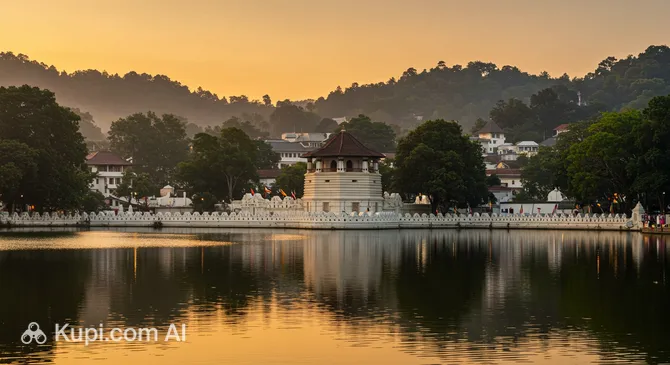
Kandy is not just a city, but the true soul of Sri Lanka, its cultural and spiritual capital. Located in the very heart of the island, this ancient city, once the last capital of the Sinhalese kings, still preserves an atmosphere of grandeur and serenity today. Kandy is listed as a UNESCO World Heritage site, which highlights its unique historical and cultural significance.

Kandy. Illustration.
Source: Kupi.com AI

The city is nestled among the picturesque green hills of the Central Province, at an altitude of about 500 meters above sea level. Thanks to this location, the climate in Kandy is milder and cooler compared to the hot coastal areas of the island, making it a comfortable destination at any time of year.

Kandy

Kandy is famous for its iconic landmarks. The main sanctuary of the city and the entire Buddhist world is the Temple of the Sacred Tooth Relic (Sri Dalada Maligawa), which houses one of the most important relics. Equally attractive is the scenic Kandy Lake, created by the last king, Sri Wickrama Rajasinghe, which is perfect for a pleasant stroll. It is also worth visiting the Royal Botanic Gardens in Peradeniya, one of the best in Asia, located just a short distance from the city.

A trip to Kandy is an opportunity to touch ancient history, enjoy natural beauty, and experience the unique atmosphere of one of the island's most revered cities. Discover the charm of Kandy, and it will stay in your heart forever!

You can find more interesting facts on the history of Kandy page.

Weather Overview

The weather in Kandy is characterized by a warm and humid climate throughout the year. Average monthly air temperatures range from 23.5°C in January (with minimum values around 19.9°C and maximums up to 27.0°C) to 28.7°C in July (when the minimum temperature is approximately 25.2°C and the maximum reaches 32.1°C). The hottest period usually falls between April and August, when daytime highs can rise to 31-32.4°C.

In general, when planning your trip, expect a warm climate in Kandy with temperatures typically in the range of 20-32°C and regular rainfall throughout the year. The highest amount of rain falls in October (about 7 mm, approximately 20 rainy days) and November (about 11 mm, approximately 22 rainy days). However, it's worth noting that even in drier months, such as February or June, when rainfall is around 2 mm, there are still about 12-13 rainy days. For more detailed information, you can study the Kandy climate and current weather forecast on a dedicated page.

Average monthly temperature

Average monthly precipitation

Interesting Facts

Beyond its world-famous landmarks, Kandy holds many fascinating secrets and lesser-known facts that can surprise even the most seasoned traveler. Here are a few of them:

  • A Secret Name: The name "Kandy" familiar to us is actually an anglicized version of the phrase "Kanda Uda Rata," which in Sinhalese translates to "the land on the mountain." This name speaks volumes about its historical status as the capital of an impregnable mountain kingdom.

  • The Island in the Lake and its Legends: The artificial Kandy Lake, one of the city's hallmarks, has a small island in its center. According to legend, it was used by the king for his harem and was connected to the palace by a secret tunnel. Today, the island houses a small monastery and can be visited by boat.

  • The Secret of Esala Perahera: During the famous Esala Perahera festival, one of the most colorful Buddhist processions in the world, the richly decorated casket atop the main elephant contains only a replica of the Sacred Tooth of Buddha. The actual relic never leaves the temple during the procession for reasons of security and deep veneration.

  • A Gateway to Ancient Civilizations: While Kandy itself was the last capital of the Sinhalese kings, it also serves as an excellent starting point for exploring even more ancient wonders of Sri Lanka. From here, it is relatively easy to reach world-famous sites such as the impressive Sigiriya rock fortress or the unique Dambulla Cave Temple, which houses amazing frescoes.

Sigiriya. Illustration.
Source: Kupi.com AI

Traveler photos:

How to Get There

You can reach this picturesque city in the center of the island in various ways, combining air and ground transport. Since Kandy is located in the mountainous region of Sri Lanka, the journey here often becomes an adventure in itself with beautiful views. You can find all the details and plan your route by following the link: more details on how to get to Kandy.

The city of Kandy does not have its own international airport, so most travelers arrive in the country via the island's main air gateway — Bandaranaike International Airport (CMB). It is located in Colombo, approximately 124.3 km from Kandy. This is the country's largest aviation hub with high passenger traffic. A trip from here to Kandy by taxi or transfer takes about 3.5–4 hours, depending on traffic.

There are also domestic flight options. For example, you can use the Sigiriya SLAF Base (GIU) airport, located in the city of Sigiriya. According to data, it is situated just 10.4 km from the city, making it a convenient arrival point for those traveling within the country, although it is a small airport with a limited number of flights.

For clarity, here is a summary of the main airports used to reach the region:

AirportPassenger trafficDistance
Sigiriya Slaf Base15 00010 km
Polgolla Reservoir Airport3 00062 km
China Bay25 00086 km
Batticaloa120 000102 km
Castlereigh Reservoir Waterdrome4 000115 km

While data on specific railway stations in this region is currently being updated, traveling to Kandy by train is one of the most popular tourist attractions in Sri Lanka. The main station, Kandy Railway Station, is located right in the city center. The famous route from Colombo to Kandy, and then further into the hill country (towards Ella), is renowned for its breathtaking views of tea plantations, waterfalls, and green hills. It is recommended to purchase train tickets, especially for observation cars, in advance.

Main Attractions

Kandy, in addition to its own priceless treasures mentioned earlier, such as the Temple of the Tooth and the Royal Botanic Gardens, serves as an excellent starting point for exploring other iconic sites in Sri Lanka. Here are some of the key attractions in the surrounding areas that are easy to visit while based in Kandy and will provide unforgettable experiences:

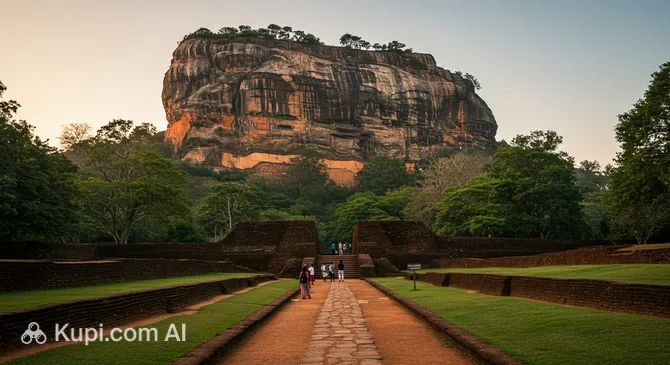
One of the most famous landmarks accessible from Kandy is the majestic Sigiriya, also known as "Lion Rock." This ancient 5th-century rock fortress, with palace ruins at its summit, is truly awe-inspiring. Climbing to the plateau offers not only breathtaking panoramic views but also a chance to see the famous frescoes of "heavenly maidens," while the history of the place itself is shrouded in mystery and legend. Sigiriya is a UNESCO World Heritage site and a must-visit for anyone interested in history and archaeology.

Sigiriya. Illustration.
Source: Kupi.com AI

Traveler photos:

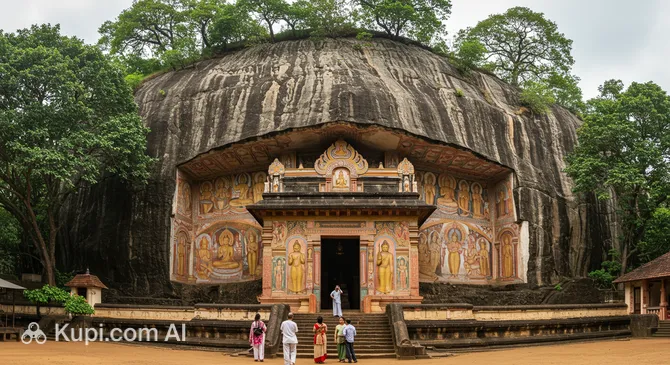
Located near Sigiriya is another iconic site — the Dambulla Cave Temple. This is the largest and best-preserved cave temple complex in Sri Lanka, also included in the UNESCO World Heritage list. Five main caves are decorated with over 150 Buddha statues and unique murals covering an area of about 2,100 square meters. Visiting Dambulla is an immersion into a spiritual atmosphere and an encounter with centuries-old art.

Dambulla Cave Temple. Illustration.
Source: Kupi.com AI

Traveler photos:

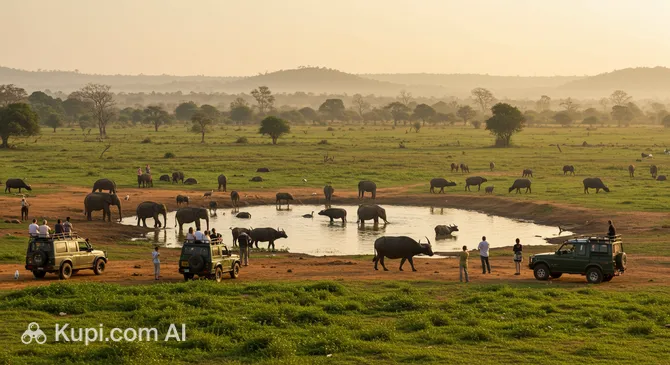
For wildlife enthusiasts, a trip to Minneriya National Park will be a true adventure. The park is most famous for "The Gathering" — an annual phenomenon where hundreds of Asian elephants congregate near the ancient Minneriya tank. This is particularly impressive during the dry season (usually from July to October). A safari through the park offers a chance to see not only elephants but also other animals and birds in their natural habitat.

Minneriya National Park. Illustration.
Source: Kupi.com AI

Traveler photos:

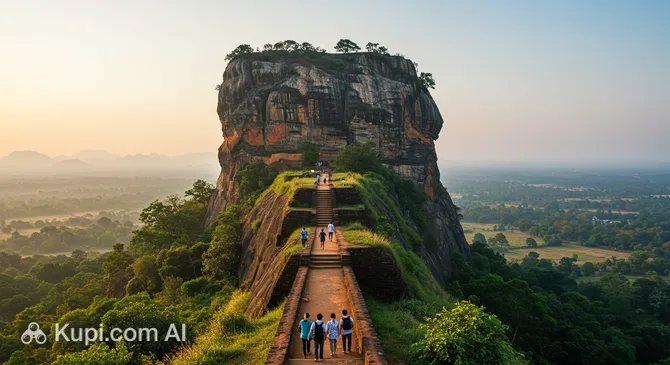
If you are already planning to visit Sigiriya, consider Pidurangala Rock, located directly opposite. This site, home to an ancient Buddhist monastery, offers a different perspective and experience. The climb to Pidurangala is "wilder" and less developed than Sigiriya, but the reward is stunning views of the Lion Rock itself, especially at sunrise or sunset. It is an excellent option for those looking for more secluded and active routes.

Pidurangala Rock. Illustration.
Source: Kupi.com AI

Traveler photos:

It is also worth mentioning the Sigiriya Museum, which provides rich context and additional information about the history and archaeological finds of the famous rock fortress. Visiting the museum before or after the climb to Sigiriya will help you gain a deeper understanding of the significance of this unique place.

Sigiriya Museum. Illustration.
Source: Kupi.com AI

Traveler photos:

Local Cuisine

A gastronomic journey through Kandy is an integral part of experiencing the culture of Sri Lanka. The local cuisine, vibrant and aromatic, will delight you with a variety of flavors, where fresh ingredients and, of course, the famous Ceylon spices play the leading role. Kandy's cuisine largely reflects the traditions of the entire island, but also has its own local characteristics that make it unique.

The foundation of most meals in Kandy, as in all of Sri Lanka, is rice and curry. This is not just one dish, but a whole set consisting of steamed rice and several types of curry — vegetable, fish, meat (most often chicken), as well as lentil curry (dhal). Various sambols are served with this, such as spicy pol sambol (coconut) or katta sambol (onion with chili). Another iconic dish is hoppers (appa), crispy pancakes made from rice flour and coconut milk, which can be plain or served with an egg (egg hoppers). Equally popular are string hoppers (idiyappam) — thin rice noodles served with curry or coconut sauce.

Be sure to try kottu roti — a hearty and incredibly popular street food prepared right before your eyes. The cook skillfully chops roti flatbread, vegetables, eggs, meat or chicken, and spices on a hot griddle, creating a rhythmic sound that has become the signature of this dish. You can also find various snacks on the streets and in local cafes, such as vade (lentil or shrimp patties) and fresh tropical fruits.

For drinks in Kandy, you should definitely try the fresh juice of the King Coconut (Thambili) — it quenches thirst perfectly. Of course, the famous Ceylon tea, which is served everywhere here, cannot be overlooked. Among alcoholic beverages, arrack — a local strong spirit made from the sap of coconut palms — is popular, as is locally produced light beer, such as Lion Lager. In some places, you can also find toddy — a low-alcohol palm drink.

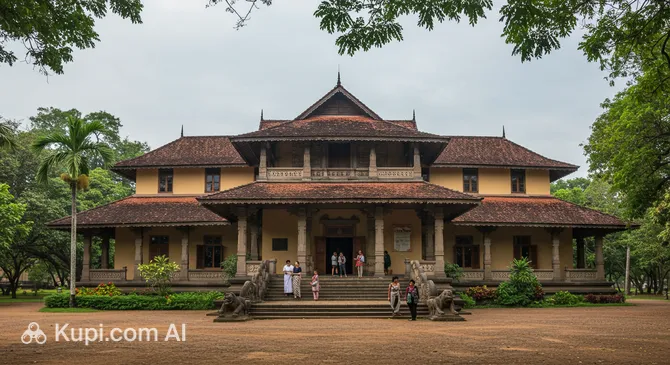
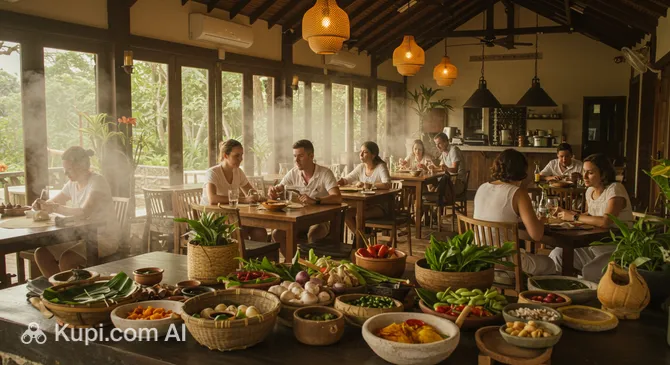
The dining culture in Kandy is diverse: from small family cafes (often called "hotels," though they are just eateries) and bustling street stalls offering authentic food at affordable prices, to restaurants with more refined cuisine and international menus. Locals often eat in small establishments where you can try real home cooking. Tourists can also enjoy a wide selection of dishes in hotel restaurants or in establishments specializing in Sri Lankan cuisine. If you want not only to taste but also to learn how to cook local dishes, check out the Sigiriya Cooking Class, where you can immerse yourself in the secrets of Sri Lankan gastronomy.

Organic Cooking Class Sigiriya. Illustration.
Source: Kupi.com AI

Traveler photos:

Kandy's gastronomic scene is a vivid kaleidoscope of tastes, aromas, and textures. From hot and spicy curries to sweet tropical fruits and refreshing coconut juice, everyone will find something to their liking. Getting to know the local cuisine will be one of the most memorable experiences of your trip to this amazing city.

Travel Tips

Planning a trip to charming Kandy? Wonderful! This city is a true gem of Sri Lanka, and to ensure your journey goes smoothly and leaves only pleasant memories, we have prepared some practical tips.

  1. Clothing and Useful Items: In Kandy, you can expect a warm and humid climate, but it can be cooler in the evenings and in the mountains than on the coast. Bring light, breathable clothing made of natural fabrics (cotton, linen). Don't forget a raincoat or umbrella, as rain is not uncommon here. Be sure to bring comfortable shoes for walking around the city and visiting attractions. For visits to temples, including the famous Temple of the Tooth, modest clothing covering shoulders and knees is required (for both men and women); you must remove shoes and headwear before entering sanctuaries. Bring sunscreen, a hat, sunglasses, and insect repellent. A universal plug adapter will also come in handy (Sri Lanka uses Type D, M, and G sockets).

  2. Getting Around: The center of Kandy is quite compact and pleasant to explore on foot, especially around the lake. For longer trips, the most popular and colorful mode of transport is tuk-tuks. Always agree on the price of the trip in advance or make sure the driver has turned on the meter. Taxi apps (like PickMe or Uber) also operate in Kandy, which is often more convenient and cost-effective. Public buses are the cheapest way to get around, but they are often crowded. Car rental is possible, but keep in mind that traffic in Sri Lanka is quite chaotic; many tourists prefer to hire a car with a driver.

  3. Financial Matters: The local currency is the Sri Lankan Rupee (LKR). You can exchange currency at banks, official exchange offices, or some hotels. Credit and debit cards (Visa, Mastercard) are accepted in major hotels, restaurants, and shops. However, for markets, small stalls, and tuk-tuks, it's better to have cash on hand. ATMs are quite common in Kandy. An approximate daily budget (excluding accommodation) can range from 30-50 USD per person, but this depends heavily on your preferences. Tipping is not always mandatory but is welcomed for good service (around 10% in restaurants if a service charge is not included; small amounts for porters and drivers).

  4. Health and Safety: Kandy is generally a safe city for tourists. Pharmacies are available in the city, some may operate 24/7. If necessary, there are private clinics in Kandy with a good level of service for tourists. Be sure to get travel insurance with medical coverage. Drink only bottled water, and be careful with street food (choose busy and clean-looking places). Use repellents to protect against mosquitoes, especially in the morning and evening hours. As everywhere, watch your belongings, especially in crowded places, and avoid walking alone in poorly lit areas late at night.

  5. Communication: The official languages of Sri Lanka are Sinhalese and Tamil. However, in the tourist areas of Kandy, in hotels and restaurants, many people speak English. Learning a few simple phrases in the local language will be a nice gesture: "Ayubowan" (traditional greeting/farewell), "Istuti" (thank you in Sinhalese). You can buy a local SIM card with internet access at the airport or at mobile shops in the city (e.g., Dialog, Mobitel) — it's inexpensive and convenient. Wi-Fi is available in most hotels and many cafes.

  6. Local Etiquette and Traditions: The people of Sri Lanka are very friendly and hospitable. When greeting someone, you can use the traditional "Ayubowan," placing your palms together and bowing slightly. In public places, try to behave discreetly and avoid overly revealing clothing (especially for women) outside beach areas. When visiting temples, show respect: remove shoes and headwear, do not turn your back to Buddha statues for photos, and do not point your feet at them. Always ask permission before photographing people. Receive and pass items with your right hand.

  7. What to Avoid: It is strictly discouraged to show disrespect toward Buddhism and its symbols. This includes posing for photos hugging Buddha statues, sitting with your back to them, or wearing clothing with Buddha's image. Also, avoid excessive alcohol consumption in public places and loud, provocative behavior. Remember that you are a guest in a country with rich culture and traditions.

  8. Kandy's Special Feature – Esala Perahera Festival: If your trip falls in July or August, you might witness the grand Esala Perahera festival — one of the most colorful and impressive Buddhist processions in the world. This is a unique experience, but keep in mind that the city is overcrowded with tourists and pilgrims during this time, and accommodation prices rise significantly. Everything must be booked very far in advance.

We hope these tips help you better prepare for your trip and enjoy every moment of your stay in amazing Kandy. Have a safe journey and vibrant experiences!

Entertainment & Nightlife

Kandy, being the cultural capital of Sri Lanka, offers its own special rhythm of evening and night life. Here you won't find bustling districts with neon signs and 24-hour clubs like in some metropolises, but that doesn't mean the city goes to sleep at sunset. Evening Kandy is an atmosphere of coziness, pleasant socializing, and the opportunity to enjoy local flavor in a more relaxed setting.

Main evening activity is centered around restaurants and bars, many of which offer both local and international cuisine. Popular spots can be found in the city center, for example, along Dalada Veediya or in the Kandy City Centre mall area, as well as venues overlooking the picturesque Kandy Lake. The atmosphere in most places is quite relaxed, perfect for a slow dinner or a conversation over a drink. The dress code is usually casual or smart-casual; most establishments stay open until late evening, but not all night.

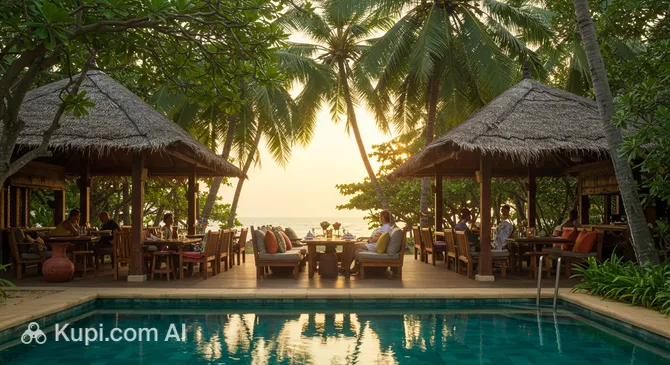
Among the places where you can enjoy an evening, it’s worth noting, for example, the Gastropub in the city center, which offers a good selection of drinks and snacks in a modern setting. Another interesting spot is the Sundaras Restaurant and Pool Bar, where you can enjoy dinner in a more refined atmosphere. Many hotels also have their own lounge bars that are open to visitors and often feature live music.

The Downtown Gastropub. Illustration.
Source: Kupi.com AI

Traveler photos:

In addition to bars and restaurants, a popular evening entertainment in Kandy is traditional cultural shows. The famous Kandyan dances, with their vibrant costumes, energetic movements, and drumming, are a captivating spectacle that allows for a deeper dive into the island's culture. These performances are usually held at several locations in the city and start in the early evening. As for nightclubs in the conventional sense, there are few in Kandy, and they are typically located in large hotels. Night markets are not a characteristic feature of Kandy, although some souvenir shops and street food vendors may operate after sunset, especially in tourist areas.

Sundaras Restaurant & Pool Bar. Illustration.
Source: Kupi.com AI

Traveler photos:

Practical Tips: The best time for evening walks and visiting venues is after 19:00, when the daytime heat subsides. Average prices in bars and restaurants vary but generally remain affordable. For getting around the city in the evening and at night, it is most convenient to use tuk-tuks (be sure to agree on the price in advance) or taxis ordered through mobile apps (such as PickMe), which ensures more transparent rates. Public transport runs less frequently at night.

Safety: The central areas of Kandy, especially around the lake and main tourist streets, are considered safe enough for evening walks. However, it is always wise to take standard precautions: avoid poorly lit and deserted places, especially if you are alone, and keep an eye on your belongings. Calling a taxi via an app or ordering a car through your hotel are the safest ways to travel at night.

During the day, Kandy offers many other activities: from visiting historical sites and museums, such as the Sigiriya Museum (though it is a bit of a distance away, it is frequently visited from Kandy), to strolling through the Royal Botanic Gardens or exploring the surrounding natural beauties. A quiet evening after a busy day will be the perfect end to your introduction to this amazing city.

Parks & Museums

Kandy is not only the spiritual center of Sri Lanka, but also a city where you can find peace in the embrace of nature and immerse yourself in rich history through its fascinating museums. Strolling through picturesque parks and discovering artifacts of the past will reveal new, amazing facets of this ancient city.

Among the green gems of Kandy, the Royal Botanic Gardens in Peradeniya particularly stands out. Spread over a vast territory near the city, these gardens, among the best in Asia, capture the imagination with a collection of over 4,000 plant species, including magnificent orchids, avenues of giant palms, spice trees, and impressive bamboo groves. It is an ideal place for leisurely walks and encountering exotic flora. Right in the city, above the Temple of the Tooth, is the Udawattakele Forest Reserve. This former royal forest offers shaded hiking trails, the chance to spot monkeys, various birds, and butterflies, and enjoy panoramic views of the city. Ancient hermitages are also preserved here, adding an air of mystery to the place. And, of course, Kandy Lake itself, with its picturesque shores, is a beautiful area for relaxation and evening walks.

To gain a deeper understanding of the culture and history of Kandy, it is worth visiting its museums. The National Museum of Kandy, located in the former palace of the Kandyan kings' consorts (Palle Vahala), houses over 5,000 exhibits from the Kandyan Kingdom era. Here you can see royal regalia, traditional weapons, jewelry, household items, and religious art. Inside the Temple of the Sacred Tooth complex is the Sri Dalada Maligawa Museum, which displays numerous gifts presented to the temple over centuries, along with historical objects telling the story of the sacred relic. For connoisseurs of the famous Ceylon drink, the Ceylon Tea Museum is a must-visit, located a few kilometers from the city center in the Hantana district. The museum is housed in a former tea factory and provides detailed information on the history and technology of tea production, from plantation to cup, also offering tastings.

If your curiosity extends beyond Kandy itself and you are interested in the island's ancient civilizations, the city is a convenient base for trips to other iconic sites. For instance, the Sigiriya Museum is an excellent complement to visiting the Lion Rock itself, providing rich historical context and showcasing archaeological finds related to this amazing site.

Tip for the curious: When visiting the National Museum of Kandy, take note of the copy of the Kandyan Convention of 1815 — the document that marked the end of the independence of the last Sinhalese kingdom. It is not just a piece of paper, but an important witness to a turning point in the history of Sri Lanka.

Getting Around

Getting around Kandy and its surroundings can be done in several ways, each with its own characteristics. Public transport here is represented mainly by buses and, of course, the ubiquitous tuk-tuks. Railway communication plays an important role for trips to other cities on the island.

Buses are the most common and budget-friendly mode of transport in Kandy. There is an extensive network of routes connecting various parts of the city and suburbs. Buses can be either state-run (red) or private (usually more colorful and varied in design). Fare is paid in cash to the conductor inside the bus; the cost of the trip is very low. Be prepared for buses to often be overcrowded, especially during peak hours. Route numbers and destinations are not always duplicated in English, so don't hesitate to ask the conductor or locals. The main bus station in Kandy (Goods Shed Bus Stand) is located near the railway station and the central market.

Tuk-tuks (three-wheeled motor rickshaws) are perhaps the most colorful and convenient way to travel short distances in Kandy. They are nimble, can pass where a car cannot, and are always ready to take you anywhere in the city. It is crucial to agree on the price of the trip before it starts, as meters are not always used, especially with tourists. Bargaining is appropriate and even expected. Recently, mobile apps for calling taxis and tuk-tuks (such as PickMe or Uber) have become popular in Kandy, offering more transparent pricing.

Railway transport plays a key role for traveling from Kandy to other regions of Sri Lanka, especially to the hill country and the coast. Kandy Railway Station is located in the city center. Trains are not just a means of transport, but also an opportunity to enjoy incredibly scenic views, especially on the Kandy-Ella or Kandy-Nuwara Eliya routes. Tickets can be purchased at the station's ticket offices. There are different classes of carriages, from basic to more comfortable ones with air conditioning and panoramic windows. For popular destinations, especially in the tourist season, it is recommended to buy tickets (especially for reserved seating) in advance, sometimes several days or even weeks ahead.

Alternative ways to move around: In addition to public transport, you can use taxi services in Kandy, which are convenient for longer trips or for traveling with luggage. As mentioned, apps like PickMe and Uber allow you to book both a tuk-tuk and a car. Renting a car with a driver is a popular option for those who want to explore the outskirts of Kandy or take a multi-day trip around the island in comfort. Self-driving car rentals are less common among tourists due to the specific nature of local traffic. Bicycle rental and car-sharing are poorly developed in Kandy.

Practical tips for tourists: Always carry small bills for paying fares in buses and tuk-tuks. If using a tuk-tuk without a meter, clearly agree on the price before boarding. Public transport usually operates from early morning until late evening, but frequency may decrease in the evening hours. For train journeys along scenic routes, try to get a window seat. Locals or your hotel staff can help you navigate bus routes.

Accommodation

In Kandy, travelers will find a wide range of accommodation options to suit every taste and budget. The city offers everything from affordable guesthouses and hostels, ideal for backpackers, to comfortable mid-range hotels and luxury resorts with magnificent views. Apartments and houses for rent are also available, which can be a convenient option for families or long-term stays.

Many tourists prefer to stay in areas located near the main attractions, such as Kandy Lake and the Temple of the Sacred Tooth Relic. Staying in the city center provides easy access to shops, restaurants, and transport hubs. For those seeking more privacy and scenic landscapes, there are accommodation options on the hills surrounding Kandy, which offer breathtaking panoramic views.

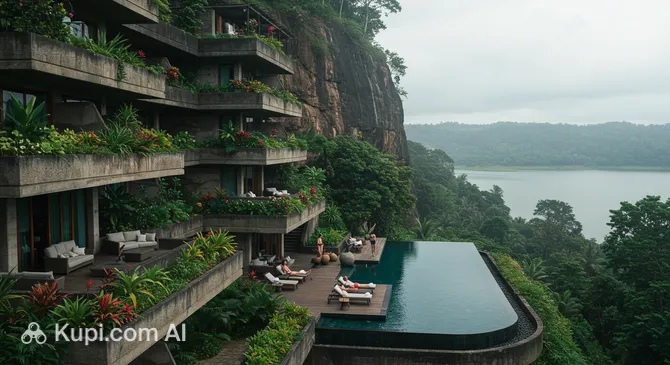
Among the well-known accommodation options, one can highlight, for example, the Heritance Kandalama, which belongs to the resort category and offers a high level of comfort and service, although it is located some distance from Kandy itself, closer to Sigiriya and Dambulla, making it a convenient base for exploring those attractions.

Kandalama Hotel. Illustration.
Source: Kupi.com AI

Traveler photos:

When planning a trip to Kandy, especially during the peak tourist season or the famous Esala Perahera festival (usually in July-August), it is strongly recommended to book accommodation in advance. During this time, demand for hotels and guesthouses increases significantly, and the best options can be quickly booked up.

The price range for accommodation in Kandy varies from budget to luxury. You can find a suitable option through popular online booking platforms such as Booking.com and Agoda, or by contacting the hotel directly. Some small guesthouses may not have an online presence and can be found upon arrival, but this involves a certain risk, especially during high season.

Nearby Cities

For those who want to explore the surrounding area, Kandy serves as an excellent starting point for day trips to several interesting nearby locations. Among them, the following stand out particularly:

  • Dambulla (about 13 km from Kandy): This city is world-famous for its magnificent Cave Temple (Golden Temple), a UNESCO World Heritage site that features ancient Buddha statues and colorful murals. A trip to Dambulla will be a short but very rich journey into the history and spirituality of Sri Lanka.

  • Mawanella (about 78 km from Kandy): This town attracts travelers, especially animal lovers, due to its proximity to the famous Pinnawala Elephant Orphanage. Here you can watch elephants bathing and feeding, which will leave an unforgettable impression.

  • Trincomalee (about 93 km from Kandy): Located on the east coast, this ancient port city offers a completely different atmosphere. Trincomalee is famous for its beautiful beaches, such as Nilaveli and Uppuveli, the historical Fort Frederick, and the majestic Koneswaram Temple, as well as the opportunity for whale watching (in season).

Below is a table with more detailed information about the distance to these cities and their population:

CityPopulationDistance
Sigiriya1 0019 km
Bakamuna43 91511 km
Dambulla72 30613 km
Hingurakgoda20 00027 km
Matale36 45148 km

These nearby destinations provide a more complete picture of Sri Lanka's diverse culture, history, and landscapes. Each such trip from Kandy promises new discoveries and bright impressions, whether it's ancient temples, interaction with nature, or getting to know the lively life of other cities on the island.

Shopping & Souvenirs

Shopping in Kandy is a fascinating immersion into the world of traditional crafts, aromatic spices, and famous Ceylon tea. The city is not so much famous for huge modern malls as it is for unique local goods and souvenirs reflecting the rich culture of Sri Lanka. Here you can find handmade products, colorful fabrics, jewelry with precious stones, and, of course, many varieties of tea.

Main commercial life in Kandy is concentrated in the city center. The streets adjacent to Kandy Lake and the Temple of the Tooth, such as Dalada Veediya and Peradeniya Road, abound with shops and stalls offering a wide range of goods — from souvenirs to clothing and jewelry. A walk along these busy streets is an interesting experience in itself.

For those who prefer a more modern shopping format, there are several shopping centers in Kandy. The most well-known is Kandy City Centre (KCC). It is a multi-story complex with air-conditioned shops featuring both local and some international brands of clothing and electronics, as well as a food court and a supermarket. It is a good place to find quality goods in a comfortable environment.

An integral part of shopping in Kandy is visiting local markets. The Kandy Central Market is a colorful and lively place where you can dive into the daily life of the city. Here you will find rows of fresh fruits and vegetables, aromatic spices, tea, as well as textiles, clothing, souvenirs, and products from local artisans. The market consists of several floors, and bargaining is common here, especially when buying souvenirs.

You can bring back many authentic souvenirs from Kandy. First and foremost is, of course, Ceylon tea — from classic black varieties to flavored and green teas. Spices are also popular: cinnamon, cardamom, cloves, nutmeg, curry. Pay attention to wooden items (boxes, elephant figurines), traditional Kandyan masks, bright batik fabrics, and silver and brass products. Sri Lanka is famous for precious stones (sapphires, rubies), but one should be very careful when buying them and only go to certified stores to avoid counterfeits.

Most shops in Kandy open around 9:00-10:00 AM and work until 7:00-8:00 PM. Large shopping centers like Kandy City Centre may have longer operating hours, including weekends. Markets usually start early in the morning. As for payment, credit cards (Visa, Mastercard) are accepted in large stores, shopping centers, and hotels. However, in markets and small shops, cash Sri Lankan Rupees (LKR) are preferred. ATMs are quite common in the city center.

Tourists making purchases in Sri Lanka may be eligible for a VAT refund through the Tax Free system. To do this, you must shop at stores participating in this program (look for the corresponding logo) and obtain a special receipt. The tax refund is processed at the airport upon departure from the country. It is recommended to check the details and conditions of the program in stores or at information points at the airport, as rules may change.
Reached the end of the page?

That means the route is fully explored