Support

Ko Phi Phi

About

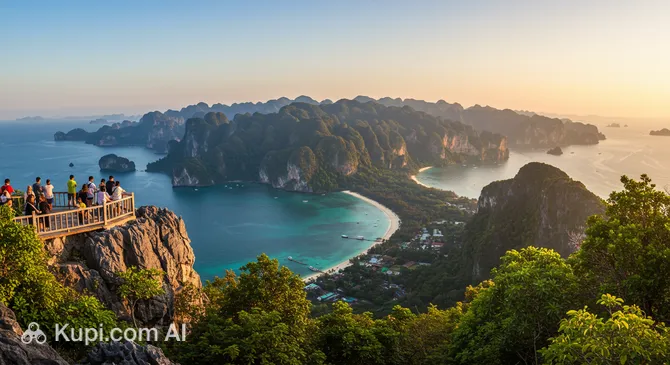
Koh Phi Phi is not just a city in the traditional sense, but an entire archipelago of stunning beauty, nestled in the azure waters of the Andaman Sea between the mainland of Krabi Province and the popular island of Phuket. The heart of the archipelago and the center of life is the island of Phi Phi Don, the largest of the group, where the main settlements, hotels, restaurants, and beaches are concentrated. A unique feature of Koh Phi Phi is the complete absence of motorized transport: you can only get around here on foot or by traditional longtail boats, which gives this place the unmistakable atmosphere of a secluded tropical paradise.

Despite the fact that the permanent population of Koh Phi Phi is only about 2,500 people, its importance for the tourism appeal of Thailand is hard to overstate. An atmosphere of eternal celebration and serenity reigns here. During the day, travelers are drawn to the white-sand beaches, crystal-clear water, and breathtaking views, and as evening falls, numerous cafes and bars come to life, and impressive fire shows are staged on the beaches.
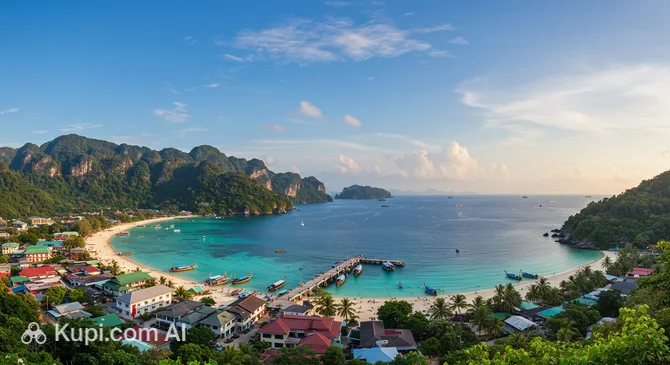
Ko Phi Phi. Illustration.
Source: Kupi.com AI

The primary reasons to visit Koh Phi Phi are its incredible natural landscapes. Rocky cliffs covered in lush jungle greenery, secluded bays with emerald water, and, of course, the famous viewpoints offering iconic panoramic views, attract photographers and romantics from all over the world. The archipelago is also a mecca for diving and snorkeling enthusiasts thanks to its rich underwater world.

A trip to Koh Phi Phi is a unique opportunity to immerse yourself in the atmosphere of carefree island life, enjoy the hospitality of the locals, and feel the spirit of adventure. If you are looking for an unforgettable holiday away from the city bustle, this exotic corner will undoubtedly enchant you with its beauty and authenticity.

You can find more interesting facts on the history of Koh Phi Phi page.
Weather Overview

In Koh Phi Phi, you can expect a typical tropical climate with warm weather throughout the year. Average temperatures range from 26.7°C in December to 28.7°C in March and April, providing comfortable conditions for relaxation. Expect warm weather year-round, with a drier period from January to March when precipitation is minimal (1-2 mm), and a wetter season from May to November, with peak rainfall (up to 11 mm) and the highest number of rainy days in September and October. Even in the rainy season, showers are often short and refreshing.

For a more detailed forecast and weather information by month, you can visit the Koh Phi Phi climate page.

Average monthly temperature

Average monthly precipitation

Interesting Facts

Beyond its world-famous beaches and crystal-clear water, the Koh Phi Phi islands hide many amazing stories and unique features. Here are just a few that will help you see this paradise from a new perspective:

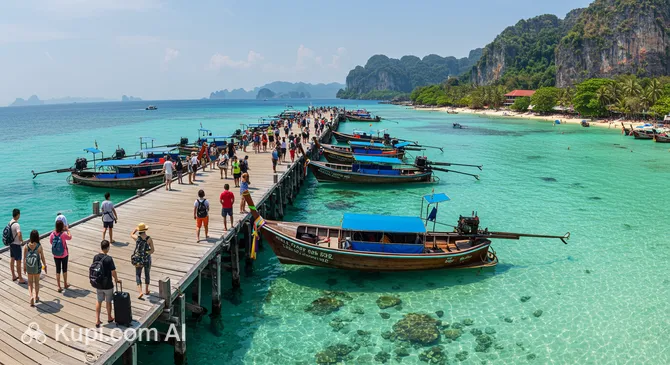
Tonsai Pier. Illustration.
Source: Kupi.com AI

Traveler photos:

  • The Phi Phi Islands became world-famous after the release of the movie "The Beach" starring Leonardo DiCaprio. Although the iconic scenes were filmed at Maya Bay on the neighboring island of Phi Phi Leh, it was Koh Phi Phi Don that became the main tourist base for those wishing to see the legendary "beach."

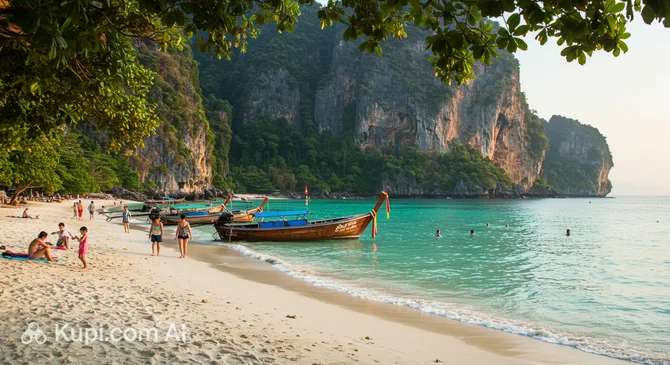
  • There is absolutely no motorized transport on Koh Phi Phi. You can only get around on foot or by traditional longtail boats, which preserves the unique atmosphere and protects the islands' nature. The main transport hub where ferries and boats arrive is Ton Sai Pier.

  • The Phi Phi archipelago was heavily affected by the devastating tsunami in December 2004. However, thanks to the efforts of local residents and international aid, the islands were restored remarkably quickly, becoming a symbol of resilience and rebirth.

  • There are several versions of the origin of the name "Phi Phi." According to one, it comes from a Malay word meaning "ficus tree" (pokok api-api). Another theory links the name to the caves where bird's nests – a valuable delicacy and an important element of the local economy – have been collected for centuries.

How to Get There

Koh Phi Phi is a picturesque archipelago in the Andaman Sea, and it can be reached exclusively by water. There is no direct air or rail connection to the Phi Phi islands themselves. Travelers usually need to first arrive at one of the nearest major transport hubs in mainland Thailand or on the island of Phuket, and from there continue the journey by ferry or speedboat to the Koh Phi Phi islands.

The main flow of tourists arrives at Koh Phi Phi via two international airports. The most popular is Phuket International Airport (HKT). This is a major international airport located in Phuket, approximately 65.5 km from the Phi Phi islands. From Phuket Airport, you will need to travel to one of the piers (such as Rassada), from where ferries and speedboats regularly depart for Koh Phi Phi. A taxi or shuttle bus ride to the pier usually takes 1 to 1.5 hours, and the sea journey to Koh Phi Phi itself lasts another roughly 1.5-2 hours, depending on the type of vessel.

Another convenient option is Krabi Airport (KBV), located in Krabi town. The distance from this airport to Koh Phi Phi is about 45.8 km. Similarly to Phuket, from Krabi Airport, you must first get to a pier (such as Klong Jilad in Krabi Town or the piers in Ao Nang) and then transfer to a ferry or speedboat. The trip from the airport to the pier takes about 30-45 minutes, and the sea crossing to Koh Phi Phi takes about 1.5-2 hours.

For clarity, here is a summary of the main airports through which you can reach Koh Phi Phi:

AirportPassenger trafficDistance
Krabi Airport2.3 mln46 km
Phuket International Airport17.2 mln65 km
Trang Airport559 84496 km
Nakhon Si Thammarat Airport1.0 mln156 km
Surat Thani Airport1.3 mln159 km

There is no rail service to the Koh Phi Phi islands. Therefore, travelers who prefer trains will need to travel to the nearest railway stations on the mainland (for example, in Surat Thani or Trang) and from there take a bus or taxi to the piers for a subsequent crossing to Koh Phi Phi by boat or ferry.

It is recommended to check the ferry and boat schedules in advance, especially during the low season, and book tickets online whenever possible to ensure a comfortable journey to these paradise islands.

Main Attractions

Koh Phi Phi, the pearl of the Andaman Sea, is famous for its stunning scenery and crystal-clear waters. Here, everyone will find something to their liking, whether it's exploring the underwater world, relaxing on white-sand beaches, or admiring sunsets from a bird's-eye view. Here are several key attractions that are definitely worth a visit.

Phi Phi Viewpoint 1. Illustration.
Source: Kupi.com AI

Traveler photos:

One of the most popular points of attraction is Phi Phi Viewpoint 1. Upon climbing up here, you will be rewarded with a breathtaking panoramic view of the island's two famous bays – Ton Sai and Loh Dalum – as well as the surrounding karst cliffs. It is an ideal place for photos, especially at sunrise or sunset when the sky is painted in incredible colors.

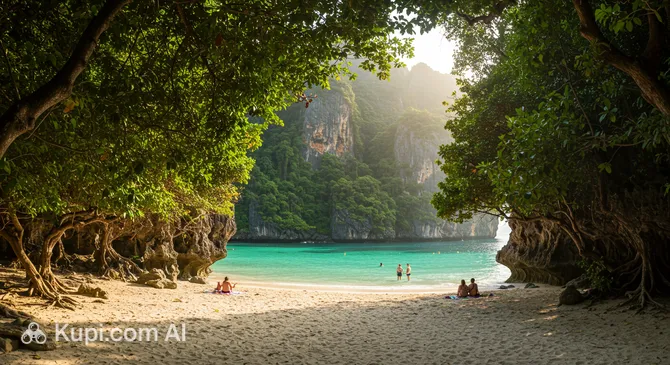
No less famous is Monkey Bay. This picturesque spot, surrounded by high cliffs and covered in dense vegetation, is home to a colony of friendly but sometimes cheeky macaques. Tourists come here to observe the monkeys in their natural habitat, feed them (with caution!), and enjoy the beauty of the secluded beach. The bay also offers excellent snorkeling opportunities.

Monkey Bay. Illustration.
Source: Kupi.com AI

Traveler photos:

The center of life on the island is Ton Sai Beach. This is where most ferries arrive, and the main infrastructure is concentrated: hotels, restaurants, shops, and diving centers. During the day, the beach is bustling with tourists, and in the evening, it turns into a venue for beach parties with fire shows. Despite its liveliness, Ton Sai retains the charm of a tropical paradise.

For those seeking a more tranquil getaway, Long Beach is ideal. This long stretch of soft white sand and calm water is considered one of the most beautiful on Phi Phi Don. It is located slightly away from the main tourist flow, making it a wonderful place for relaxation, swimming, and snorkeling at coral reefs just offshore. It also offers a magnificent view of the neighboring island, Phi Phi Leh.

Local Cuisine

The gastronomic scene of Koh Phi Phi is a true feast for connoisseurs of exotic flavors, harmoniously combining the traditions of Thai cuisine with an abundance of the freshest seafood. Travelers can expect a kaleidoscope of aromas and tastes here, from classic dishes to unique local delicacies. The general character of local gastronomy can be described as vibrant, fresh, and incredibly diverse, with an emphasis on gifts from the sea and authentic recipes.

It is definitely worth trying such iconic Thai dishes as the fragrant and moderately spicy tom yum soup with shrimp, hearty pineapple fried rice served right in the fruit half, rich green curry, and the piquant papaya salad som tam. However, the main gastronomic pride of Koh Phi Phi is undoubtedly the freshest seafood. Just-caught fish, squid, giant prawns, mussels, and lobsters are masterfully cooked over an open fire right on the beach, especially in the evening, turning dinner into a real culinary show.

The dining culture on the island is very casual. You can enjoy local dishes in numerous restaurants with sea views, as well as at bustling night markets and street food courts. This is where you can taste various exotic snacks: from crispy fried bananas and delicate coconut pancakes to the famous dessert – mango with sticky rice, which is a sweet hit in Thailand. Among the popular establishments where you can get acquainted with local cuisine, Mango Garden is worth mentioning.

The Mango Garden. Illustration.
Source: Kupi.com AI

Traveler photos:

As for drinks, refreshing fruit shakes and smoothies made from mango, passion fruit, pineapple, and other tropical fruits are offered everywhere – the perfect way to quench your thirst on a hot day. In the evening, local bars invite you to relax with a glass of a signature cocktail based on fresh fruit and local rum or other spirits. Many beach establishments host a "seafood BBQ," allowing you to choose sea creatures straight from an ice display and watch them being prepared.

Despite its compact size, Koh Phi Phi sometimes becomes a venue for gastronomic events, such as mango days or Thai cuisine weeks, providing an excellent opportunity to dive deeper into the island's culinary world. The atmosphere here is always conducive to discovery: whether it's dinner in a restaurant, a snack from a street vendor, or a tasting at a beach party, the gastronomic impressions of Koh Phi Phi will stay with you for a long time.

Travel Tips

Welcome to the paradise islands of Koh Phi Phi! To ensure your trip to this amazing place goes smoothly and leaves only the best impressions, we have prepared some practical tips to help you find your way around and enjoy your vacation to the fullest.

  1. Clothing and Essentials: Koh Phi Phi has a tropical climate, so choose lightweight, breathable clothing made from natural fabrics. Be sure to bring swimwear, a hat, sunglasses, and high-SPF sunscreen. For getting around the island and beaches, sandals or flip-flops are ideal. If you plan on hiking to viewpoints, bring lightweight sneakers. In the rainy season (roughly May to October), a light raincoat will come in handy. Don't forget a universal power adapter for your electronics, as plug types may vary.

  2. Transport on the Islands: The main island, Phi Phi Don, is quite compact and most convenient to navigate on foot. There are no cars or motorbikes for rent by tourists. For travel between beaches, to neighboring islands (like Phi Phi Leh with Maya Bay), or for sea excursions, traditional longtail boats are used, which can be hired individually or as part of a group tour. They also serve as water taxis.

  3. Finances: The local currency is the Thai Baht (THB), the official currency of Thailand. You can exchange currency at exchange offices on the island, but the rate may be less favorable than on the mainland or in major cities. Credit cards are accepted at most hotels, some restaurants, and diving centers; however, for paying for boats, market purchases, and in small establishments, cash is absolutely essential. There are ATMs on the island, but they are few and may charge a withdrawal fee. Tipping is not mandatory but always appreciated for good service (usually 10-50 baht or rounding up the bill).

  4. Health and Safety: There are several pharmacies on Koh Phi Phi with basic medications and a small clinic for first aid. For serious cases, transportation to Phuket or Krabi may be required, so having good travel insurance that covers medical expenses and evacuation is extremely important. Generally, the island is safe for tourists, but basic precautions should be taken: don't leave valuables unattended on the beach, drink only bottled water, use mosquito repellent (especially in the evening), and protect yourself from the sun.

  5. Communication: The official language is Thai. However, in tourist areas, staff at hotels, restaurants, and tour companies generally speak English. Learning a few simple phrases in Thai, such as "Sawatdee kap/ka" (Hello/Goodbye) and "Khop khun kap/ka" (Thank you), will be a nice gesture. A local SIM card with internet access can be purchased at the airport upon arrival in Thailand or on the island itself. Wi-Fi is available at most hotels, cafes, and restaurants, but speeds can vary.

  6. Local Etiquette: Thais are very polite and friendly people. A smile is a universal language. Show respect for local traditions: do not raise your voice, especially in public places. The head is considered a sacred part of the body, and the feet the lowest; avoid touching the heads of locals and do not point your feet at people or images of Buddha. It is customary to remove your shoes when entering some shops or homes.

  7. What to Avoid: Categorically avoid any disrespectful remarks or actions regarding the King of Thailand and members of the Royal Family – this is a serious offense. It is also important to treat nature with care: do not feed fish in marine reserves (it harms the ecosystem and is often prohibited), and do not collect or take away corals or shells.

  8. Additional Advice: Koh Phi Phi is a very popular destination, so it's best to book accommodation and ferry tickets in advance (especially in the high season from November to April). Also, remember that fresh water supplies on the islands are limited; try to use it sparingly.

We hope these tips help you better prepare for your trip and enjoy every moment of your stay on the fairy-tale islands of Koh Phi Phi. We wish you an unforgettable vacation, bright impressions, and exciting adventures!

Entertainment & Nightlife

Koh Phi Phi, despite its modest size, is famous for its vibrant and electrifying nightlife, which attracts young people and party lovers from all over the world. The main focus here is on beach entertainment, bars with sea views, and a relaxed atmosphere of fun.

The heart of Koh Phi Phi's nightlife beats in the area of Tonsai village, becoming especially lively after dark near the main Ton Sai Pier and the surrounding streets, as well as on the famous Loh Dalum Bay. This is where most of the bars, makeshift dance floors right on the sand, and places hosting the famous fire shows are concentrated. The atmosphere is very casual: there is no formal dress code, and most tourists are dressed in beachwear. Music ranges from electronic and popular hits to reggae.

Parties usually start after sunset and continue late into the night, sometimes even until dawn. The so-called "buckets" – small plastic pails filled with cocktails – are popular. Many establishments offer happy hours, usually in the early evening. For dinner before diving into the nightly festivities, you might consider the Mango Garden restaurant, which offers a variety of dishes in a pleasant setting. Although there are no large nightclubs or concert venues on the island in the metropolitan sense, there is certainly no shortage of fun – the very atmosphere of a beach party is the main attraction.

The Mango Garden. Illustration.
Source: Kupi.com AI

Traveler photos:

Practical tips: The best time to start "bar-hopping" is after 9:00 PM - 10:00 PM, when the main crowd gathers. Prices in bars are relatively moderate, especially for local beer and "buckets." Getting around the main party zones of Tonsai and Loh Dalum is easy on foot, as the distances are small. If you are staying on a remote beach, you will need to take a longtail boat to return at night; agree on the price in advance.

Safety: In general, Koh Phi Phi is considered a safe place for tourists. However, as with anywhere, basic precautions should be observed: keep an eye on your belongings, especially in crowded places, and do not leave drinks unattended. At night, try to stick to lit paths. There is no car traffic on the island and, accordingly, no taxis in the usual sense; for emergencies, you can contact the tourist police or your hotel staff.

While nightlife is a hallmark of Koh Phi Phi, there is also plenty to do during the day. Travelers can go snorkeling or diving, take a boat trip to scenic spots like Monkey Bay, relax on beautiful beaches such as Ton Sai Beach or Long Beach, or climb to one of the viewpoints, like Phi Phi Viewpoint 1, which offers breathtaking views. There are no traditional museums or large amusement parks on the island; its main charm lies in its natural beauty and atmosphere of eternal celebration.

Parks & Museums

Koh Phi Phi is a paradise where nature itself acts as the main work of art. Instead of traditional urban parks with alleys, emerald jungles framing white-sand beaches await you here, and the role of museums is performed by breathtaking viewpoints and unique natural sites that tell the island's story better than any exhibits.

The island is famous for its magnificent natural zones, which are its main "parks." Be sure to visit Ton Sai Beach – the heart of the island, a lively place with easy access to other parts of Phi Phi. For a more secluded getaway, head to Nui Beach, known for its crystal-clear water and picturesque cliffs – an ideal spot for snorkeling and relaxation. Another iconic place is Monkey Bay, where you can observe funny macaques in their natural habitat. This is a short but memorable stop during boat tours.

Ton Sai Beach. Illustration.
Source: Kupi.com AI

Traveler photos:

In Koh Phi Phi, you won't find traditional museums with extensive collections of artifacts, but its culture and history are closely intertwined with its stunning nature and marine life. To touch the soul of the island and enjoy its panoramic views, climb up to the viewpoints. Phi Phi Viewpoint 1 will give you that iconic view of the two bays that graces most postcards. No less impressive views open up from Phi Phi Viewpoint 3, where you can see the island from a different angle, especially at sunset.

Historical and architectural monuments in the classical sense are absent here, as the main value of Koh Phi Phi is its pristine nature. However, by observing the lives of the local population in Tonsai village, you can get an idea of the culture and everyday life of the islanders. A unique experience is a visit to the Blacktip Reef Shark Point, where you can safely see these graceful predators in their natural environment – it's a kind of living museum of the underwater world.

For authentic impressions, rent a longtail boat and set off to explore lesser-known beaches and lagoons, such as Loh Samah or Phi Leh. This will allow you to see the island from a different side, away from the main tourist routes, and feel its true, wild beauty.

Getting Around

The island of Koh Phi Phi offers a unique transportation experience, significantly different from typical urban transit systems. Here you won't find a metro, buses, or trams. Most of the island, especially Tonsai Village, is a pedestrian zone, and the best way to explore it is on foot.

The main means of transport between the island's various beaches, as well as for trips to neighboring islands of the Phi Phi archipelago (such as Phi Phi Leh, where the famous Maya Bay is located), are longtail boats. They serve as water taxis and excursion vessels. You can hire a boat for a private trip or join a group tour. The cost of a longtail ride depends on the distance, duration of the rental, and your bargaining skills. Usually, payment is made in cash directly to the boatman before departure. It is recommended to agree on the price in advance, especially if you plan to rent a boat for several hours or for the whole day.

For connections to the mainland (for example, to Krabi or Phuket) and other major islands, ferries and speedboats are used. Tickets for these can be purchased at travel agencies, hotels, or directly at the pier. Ferries have a regular schedule, and ticket prices are fixed. This is a reliable and relatively inexpensive way to reach Koh Phi Phi or leave it.

Within the main settlements, such as Tonsai, all distances are easily covered on foot. The narrow streets are not designed for motorized transport. This creates a special atmosphere and makes walking pleasant. To explore nearby bays and beaches, you can also rent a kayak – a great way to enjoy nature at your own pace.

Thus, the "public transport" system on Koh Phi Phi primarily consists of water transport and your own two feet. When planning your movements, rely on boatman services and ferry schedules. There are no special travel cards or apps for local transport – all transactions are conducted mainly in cash.

Accommodation

On the Koh Phi Phi islands, travelers will find a wide range of accommodation options capable of satisfying any budget and preference. There are budget-friendly guesthouses and hostels, ideal for backpackers, as well as comfortable mid-range hotels, cozy beachfront bungalows, luxury full-service resorts, and villas for a secluded getaway.

Most of the accommodation is concentrated in the Ton Sai Bay area, near the main Ton Sai Pier. This is the liveliest part of the island, with easy access to shops, restaurants, and bars. Accommodation options along other beaches are also popular, such as Long Beach, which offers a more tranquil atmosphere. For those seeking privacy and exclusivity, resorts located on more remote beaches are suitable, which can often only be reached by boat.

Zeavola Resort & Spa. Illustration.
Source: Kupi.com AI

Traveler photos:

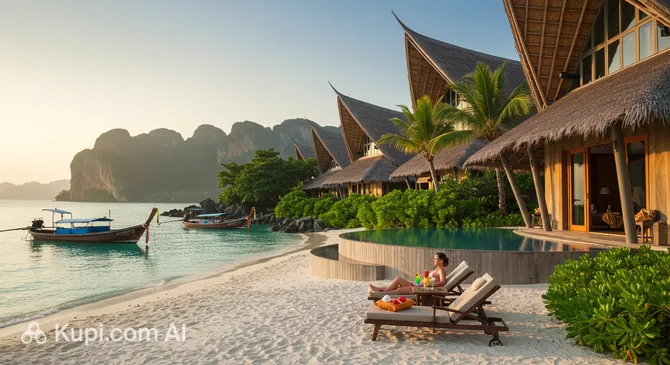
Among the well-known hotels on Koh Phi Phi are, for example, the Phi Phi Island Village Beach Resort, offering villa accommodation in a tropical garden, and Zeavola Resort & Spa, known for its luxury teak villas and spa center. These resorts offer a high level of service and are ideal for romantic or family holidays.

When planning a trip to Koh Phi Phi, especially during the peak tourist season (usually from November to April), it is highly recommended to book accommodation in advance. This will allow you to choose the most suitable option at the best price. Accommodation prices vary from budget to high, depending on the level of comfort, location, and season. Bookings can be made through popular international online platforms or directly on the hotels' websites.

Nearby Cities

For those who want to explore the surroundings, Koh Phi Phi serves as an excellent starting point for day trips to several interesting nearby locations:

CityPopulationDistance
Phuket77 61045 km
Rawai16 98849 km
Kathu26 07853 km
Patong19 34655 km
Ban Charoen Mueang8 53455 km

Among them, Phuket and Trang particularly stand out. Phuket, located just 45 km away, attracts tourists with its famous beaches, developed infrastructure, and a wide choice of entertainment, from water sports to vibrant nightlife and cultural attractions. A trip to Trang (95 km) offers a more tranquil and authentic experience: here you can explore picturesque islands, enjoy untouched nature, visit caves, and get acquainted with local culture away from mass tourism.

These nearby destinations allow you to get a sense of the diverse culture and landscapes of the region.

Shopping & Souvenirs

Shopping on Koh Phi Phi is more of a pleasant addition to a beach holiday than an end in itself. The island is not famous for large shopping centers or exclusive boutiques, but here you can find everything you need for your vacation, as well as interesting souvenirs to remember Thailand by. The main focus is on beach goods, lightweight clothing, accessories, and local handicrafts.

The main and essentially only shopping area of the island is Tonsai Village, located around Ton Sai Pier. This is where most shops, stalls, pharmacies, and small market rows are concentrated. The narrow streets of the village are filled with various retail outlets where you can find practically everything: from sunscreen and flip-flops to handmade jewelry and paintings by local artists.

Tonsai Pier. Illustration.
Source: Kupi.com AI

Traveler photos:

On Koh Phi Phi, you won't find large shopping malls in the usual sense. Shopping here has a more intimate and relaxed character. Instead of malls, there are numerous small shops and open stalls that blend naturally into the island atmosphere.

There are no formal markets, such as large food or flea markets, on the island. However, the entire commercial zone in Tonsai Village resembles one big lively open-air market, where you can wander around, choosing goods and bargaining with sellers. They sell fresh fruit, drinks, beachwear, souvenirs, and much more.

As souvenirs from Koh Phi Phi, tourists most often bring back:

  • Lightweight beach clothing: sarongs, pareos, tunics, T-shirts with island symbols.
  • Shell and coconut products: jewelry, boxes, decorative items.
  • Thai cosmetics based on natural oils and extracts (coconut oil, aloe vera).
  • Elephant figurines, Buddhist paraphernalia.
  • Local spices and dried fruits.
  • Paintings of seascapes by local artists.
Various swimming and snorkeling accessories are also popular and can be purchased right on the spot.

Most shops on Koh Phi Phi open closer to noon, around 10:00-11:00 AM, and operate until late evening, often until 9:00-10:00 PM, with some souvenir stalls staying open longer, especially in the high season. Regarding payment, cash (Thai Baht) is the preferred method, especially in small shops and with street vendors. Some larger stores, dive centers, or hotels may accept credit cards, but it's always best to have an adequate supply of cash. ATMs are available in Tonsai Village.

In Thailand, there is a VAT Refund for Tourists system for purchases made in participating stores (look for the special "VAT Refund for Tourists" sign). However, on Koh Phi Phi, where small purchases and souvenirs predominate, this service is less common. If you make a large purchase in a store that provides this service, don't forget to ask for the special P.P.10 form and keep your receipts.

Reached the end of the page?

That means the route is fully explored