Support

Patong

About

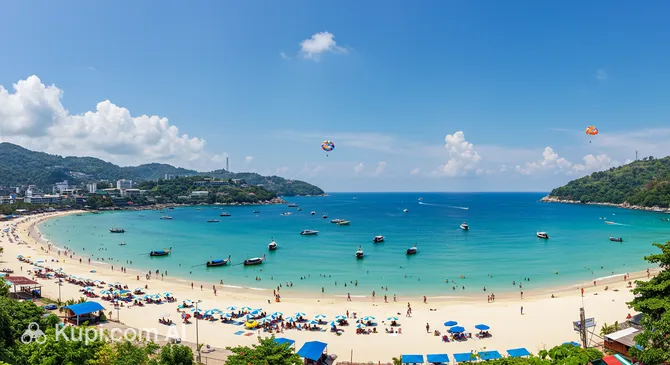
Patong is perhaps the most famous and dynamic resort center on the island of Phuket, belonging to Thailand. This town is renowned for its buzzing energy, magnificent beach, and an incredible variety of entertainment, making it a magnet for travelers from all over the world looking for a vibrant and action-packed holiday.

Patong. Illustration.
Source: Kupi.com AI

Located on the west coast of Phuket, Patong is washed by the warm waters of the Andaman Sea. The town boasts a tropical monsoon climate, ensuring comfortable temperatures for relaxation throughout most of the year. The population of Patong is approximately 19,346 people, though this figure increases significantly during the tourist season.

The main attraction of Patong is undoubtedly its namesake, Patong Beach—a wide sandy strip stretching for several kilometers, perfect for sunbathing, swimming, and water sports. As evening falls, the epicenter of life shifts to the famous Bangla Road, which transforms into a pedestrian zone glittering with the neon lights of bars, clubs, restaurants, and street performances. Also worth noting is the large Jungceylon shopping and entertainment complex, offering excellent opportunities for shopping and leisure.

Patong is a place where everyone can find something to their liking, from serene relaxation on the beach to high-energy parties and exciting excursions. If you dream of an unforgettable vacation filled with sun, sea, and vivid impressions, Patong is an excellent choice.

You can find more interesting facts on the Patong city history page.

Weather Overview

In Patong, a typical tropical monsoon climate awaits you, providing warm weather year-round. Average air temperatures range from 26.9°C to 28.3°C depending on the month. Expect minimum night temperatures to be between 25.7–27.1°C, while daytime maximums can reach 28.0–29.6°C. A clear division between the dry and rainy seasons is characteristic: from January to March, rainfall is minimal (1–2 mm per month, 6–9 rainy days), whereas from April-May to October-November, the rainy season arrives, bringing more precipitation (up to 8–11 mm in peak months, especially September and October) and a significantly higher number of rainy days (up to 28 in October).

To get more detailed information about weather conditions in Patong by month and better plan your trip, we recommend checking out the detailed information on the Patong Climate page.

Average monthly temperature

Average monthly precipitation

Interesting Facts

Beyond its famous beaches and vibrant nightlife, Patong hides many curious details and stories that not everyone knows. Here are a few interesting facts about this popular Thailand resort:

  • Origin of the name: Few know that the name "Patong" in the local dialect means "forest full of banana leaves" (ป่าตอง). This picturesque name serves as a reminder of the time when dense tropical thickets stretched across the site of today's bustling city.

  • A name with history: The popular shopping and entertainment complex Jungceylon bears a name that Europeans once used to refer to the entire island of Phuket. Thus, the mall's name is a tribute to the island's rich history.

  • Not the capital: Despite being Phuket's most famous and crowded tourist center, Patong is not the province's administrative capital. That role is held by Phuket Town, where, by the way, you can immerse yourself in the atmosphere of the past by visiting Old Phuket Town.

  • Tourism pioneer: Patong was one of the first beaches on Phuket where tourism began to develop actively. Its transformation into an international resort started back in the 1980s, largely thanks to its long and picturesque sandy coastline.

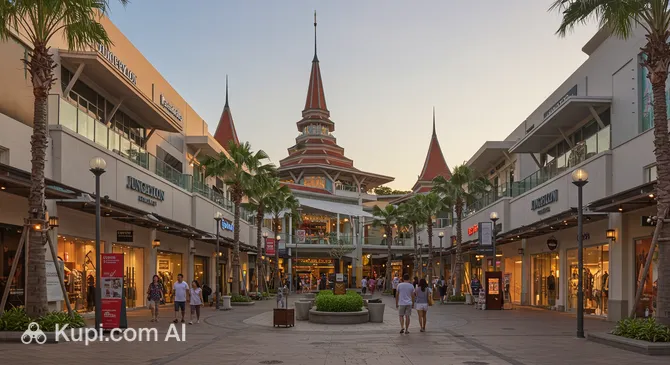
Jungceylon. Illustration.
Source: Kupi.com AI

Traveler photos:

How to Get There

The most convenient way to reach Patong is by air. The main transport hub for those arriving at the resort is Phuket International Airport (IATA: HKT). It is located directly on Phuket island, approximately 24 km north of Patong. This is a large and modern airport hosting numerous international and domestic flights. A trip from here to Patong by taxi or pre-booked transfer usually takes about 50-60 minutes, depending on traffic conditions.

An alternative option is Krabi Airport (IATA: KBV), located in the neighboring Krabi province, about 79 km from Patong (straight-line distance; the road may be longer). This airport also serves international and domestic destinations and can be convenient if you plan to visit Krabi as well. The journey from Krabi Airport to Patong will take more time, about 2-3 hours, and may involve a car trip and possibly a ferry crossing, or a longer detour by land.

Less frequently, tourists use Surat Thani Airport (IATA: URT), which is located on the mainland, about 165 km from Patong. It mainly serves as a gateway to the Gulf of Thailand islands (Samui, Phangan, Tao), but transfers to Patong can also be arranged from there. This trip will be the longest, taking about 4-5 hours by bus or taxi, often combined with a ferry crossing or a long overland route.

For clarity, here is a summary of the main airports used to reach Patong:

AirportPassenger trafficDistance
Phuket International Airport17.2 mln24 km
Krabi Airport2.3 mln79 km
Trang Airport559 844151 km
Surat Thani Airport1.3 mln165 km
Nakhon Si Thammarat Airport1.0 mln194 km

There is no direct rail connection to Phuket island, and consequently, to Patong. The nearest major railway stations are on mainland Thailand, such as in the city of Surat Thani. However, this method is usually not considered a primary way to reach Patong due to the significant time required for subsequent transfers (bus, taxi, ferry). Most tourists prefer faster and more direct flights to Phuket or Krabi.

In addition to flying, Patong can be reached by bus from other regions of Thailand (for example, from Bangkok, which takes many hours) or by rented car if you prefer to travel independently and explore the country along the way. Within Phuket and Patong, taxis, tuk-tuks, motorbike taxis, and scooter or car rentals are available for getting around.

Main Attractions

Patong is not just about endless beaches and lively parties. The town and its surroundings are rich with interesting places that can add variety to your holiday. Embark on an exploration of the most striking sights to get a complete impression of this corner of Thailand.

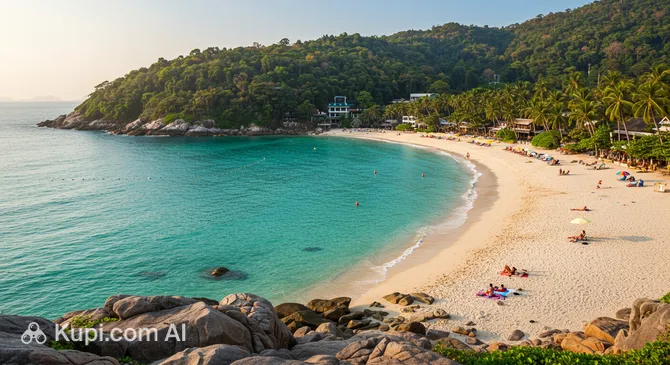
One such place is Laem Singh Beach. This small but incredibly picturesque beach, snugly nestled between two green headlands, is often called "secret" due to its relative seclusion. It is ideal for those who want to escape the hustle and bustle of Patong’s main beach and enjoy crystal-clear water, soft sand, and the chance to go snorkeling near the coastal rocks.

Laem Sing Beach. Illustration.
Source: Kupi.com AI

Traveler photos:

If you are in the mood for shopping and entertainment, then your path leads to Jungceylon. This is a huge shopping and entertainment complex in the very heart of Patong, offering visitors hundreds of shops, a variety of restaurants and cafes for every taste, a cinema, bowling, and even a fountain show. Jungceylon is a great place to spend a few hours escaping the midday heat or enjoying the evening cool.

Jungceylon. Illustration.
Source: Kupi.com AI

Traveler photos:

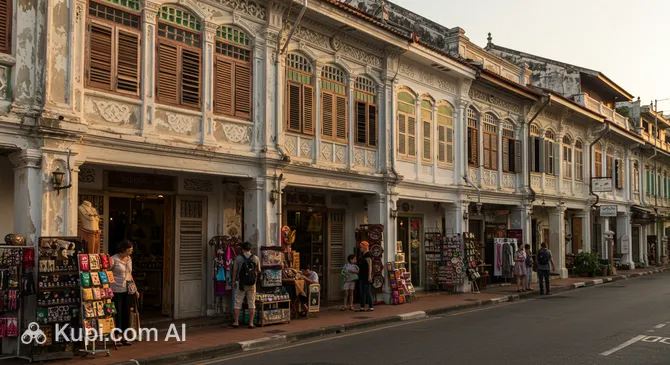
To immerse yourself in the history and culture of the island, it is worth heading to Old Phuket Town. Although it is not located in Patong itself but in Phuket Town, the trip there is definitely worth the time. Here you will see charming streets with well-preserved Sino-Portuguese architecture, colorful mansions, cozy cafes, small museums, and temples. A walk through Old Phuket Town will give you a completely different experience that contrasts with the resort atmosphere of Patong.

Phuket Old Town. Illustration.
Source: Kupi.com AI

Traveler photos:

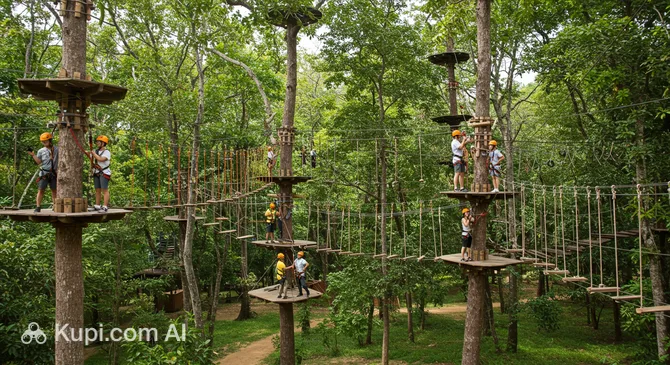
Active holidaymakers and adventure lovers will certainly enjoy Hanuman World. This eco-park, located in the tropical jungle, offers thrilling attractions such as ziplining between treetops, walking on suspension bridges, and riding the "sky rail." A visit to Hanuman World is a great opportunity not only to get an adrenaline rush but also to enjoy the beauty of tropical nature from an unusual perspective.

Hanuman World. Illustration.
Source: Kupi.com AI

Traveler photos:

Local Cuisine

Patong's culinary scene is a true kaleidoscope of flavors capable of satisfying any gourmet. Here you will find everything from authentic Thai street food to exquisite dishes in world-class restaurants. Patong is a foodie paradise where every meal turns into a small adventure.

Be sure to try the classics of Thai cuisine. Start with the fragrant and spicy-sour Tom Yum Goong soup with shrimp—a hallmark of Thailand. Don't miss Pad Thai—stir-fried rice noodles with shrimp or chicken, tofu, bean sprouts, and peanuts. For those who like it spicy, Som Tam is perfect—a piquant green papaya salad. And, of course, being on the coast, enjoy the freshest seafood, grilled or prepared Thai-style—there is a huge variety here.

To refresh yourself, try the local drinks. Popular non-alcoholic options include fresh juices and shakes made from exotic fruits—mango, pineapple, passion fruit—as well as the famous Thai iced tea, Cha Yen, with condensed milk. Among alcoholic beverages, local beers like Singha and Chang are worth noting, as well as Thai rum or Mekhong whiskey.

Dining culture in Patong is very relaxed. Locals and tourists alike enjoy eating in the numerous restaurants offering Thai and international cuisine, as well as right on the street. Street food is an integral part of the gastronomic experience in Patong: "makashnicas" (mobile food carts) offer an incredible variety of dishes at affordable prices. Evening food markets are a real feast where you can try everything at once. Many cafes and restaurants are also concentrated in large shopping centers, such as Jungceylon, where you can find food courts with a wide selection of dishes for every taste.

Travel Tips

Welcome to Patong! To make your journey to this lively corner of Thailand as comfortable and pleasant as possible, we have prepared some practical tips. They will help you better navigate the area and avoid potential inconveniences.

  1. Clothing and Essentials: Given Patong's tropical climate, the foundation of your wardrobe should be light, breathable clothing made of natural fabrics. Don't forget swimwear, a hat for sun protection, sunglasses, and a high-SPF sunscreen. In the evening, a light cardigan or wrap might be useful. A key point is comfortable shoes for walking around town and the beach. If your plans include visiting temples (even if they are outside Patong, as there are many in Phuket), make sure you have clothing that covers your shoulders and knees. You may also need a universal adapter for electronics, as plug types in Thailand can vary.
  2. Local Transport: The most authentic and popular form of transport in Patong is, of course, tuk-tuks. Be sure to agree on the fare in advance. For more predictable prices and comfort, you can use taxis via apps like Grab. Renting a scooter is another common option, but it requires confident driving skills in busy Asian traffic and an international driver's license; don't forget your helmet. For budget trips to neighboring beaches, consider songthaews—local pickup truck-style buses.
  3. Finances: The official currency is the Thai Baht (THB). It is more profitable to exchange currency at banks or licensed exchange booths in town than at the airport or hotel. Credit cards (Visa, Mastercard) are accepted in many hotels, large shops, and restaurants. ATMs are widespread, but note that a commission is usually charged for withdrawing cash from foreign cards. An approximate daily budget for food and small expenses (excluding accommodation) can start from 800–1,500 Baht per person. Tipping in Thailand is not strictly mandatory but is always welcomed for good service (usually 10–20 Baht for small services or 5–10% of the bill in a restaurant if a service charge is not already included).
  4. Health and Safety: There are many pharmacies in Patong (look for the "Pharmacy" sign), many of which stay open late. There are several hospitals in Phuket with a high level of service catering to tourists. Important: drink only bottled water. Patong is considered a relatively safe resort; however, as in any tourist destination, you should beware of pickpockets, especially in crowded areas (like Bangla Road or the beach). Do not leave valuables unattended and be cautious after dark.
  5. Communication: The official language is Thai. However, in Patong's tourist zones, the staff at hotels, restaurants, and shops generally speak English. Knowing a few basic Thai phrases like "Sawatdee khrap/ka" (Hello/Goodbye) and "Khop khun khrap/ka" (Thank you) will be warmly received by locals. You can purchase a local SIM card with internet access immediately upon arrival at the airport or in numerous 7-Eleven stores. Wi-Fi is available in most hotels, cafes, and restaurants. Apps like Grab (taxi and food delivery), Google Maps, and Google Translate can be very useful.
  6. Local Etiquette: The traditional Thai greeting is the "wai" (a slight bow with palms pressed together at chest or face level). When visiting temples (even small shrines), it is customary to remove shoes before entering and be dressed modestly (shoulders and knees covered). The head is considered the most sacred part of the body, so try not to touch a Thai person's head, even in a friendly manner. Conversely, feet are considered the "lowest" part of the body—do not point them at people or sacred images. Show respect for the Royal Family and Buddhism—these are very important aspects of Thai culture.
  7. What to Avoid: Categorically avoid any display of disrespect toward the King of Thailand, members of his family, and Buddhist relics—this is not only deeply offensive to locals but is also punishable by law. Try not to raise your voice or engage in public conflicts; Thais value calmness and strive to "save face." Be cautious with offers to buy precious stones from street vendors or participation in dubious lotteries—these can be scams.
  8. Insider Tip: Don't hesitate to bargain at markets and when discussing prices with tuk-tuk drivers (if the price isn't fixed). Do it politely, with a smile, and you're likely to reach a better price. Patong is known for its vibrant nightlife, especially on Bangla Road. If you're looking for a quieter holiday, consider accommodation slightly away from the center or spend time exploring other, more secluded beaches in Phuket.

We hope these tips help you feel more confident and enjoy every minute of your unforgettable holiday in sunny Patong!

Entertainment & Nightlife

When the sun sets over the Andaman Sea, Patong transforms, becoming the epicenter of Phuket's nightlife. This town is famous for its unrestrained energy and an incredible variety of entertainment capable of satisfying any taste—from relaxed gatherings at a beach bar to dancing until dawn in modern nightclubs.

The heart of Patong's nightlife is, without a doubt, the famous Bangla Road. After dark, it becomes a pedestrian zone and explodes into a kaleidoscope of neon lights, loud music, and crowds of people. Here you will find countless bars for every taste: from open-air beer bars and loud go-go bars to live music venues and large nightclubs. The atmosphere on Bangla Road is pure adrenaline and fun, attracting both young people and a more mature crowd looking for vivid impressions.

Patong's nightlife is not limited to Bangla Road alone. Along the beachfront and on adjacent side streets, you can find quieter beach clubs and bars where it’s pleasant to sip a cocktail while enjoying the sea breeze. Rooftop bars are also popular, offering magnificent views of the city and coastline. Don't forget the night markets, where you can not only snack on authentic Thai food but also soak up the local atmosphere under the open sky, often accompanied by street musicians.

Patong features a wide range of nightlife formats. Nightclubs, such as Illuzion or Seduction (though specific names may change, there are always major players on the club scene), offer sets by famous DJs, themed parties, and dancing until dawn. They usually start operating closer to midnight. Bars range from simple venues with billiards and sports broadcasts to stylish cocktail lounges. Many of them offer live music—from rock covers to Thai pop performers. Equally popular are the colorful cabaret shows, such as Simon Cabaret, known for their bright costumes and professional performers.

To fully enjoy Patong's nightlife, a few points are worth considering. Bangla Road comes alive around 9:00 PM–10:00 PM, and the fun continues until 2:00 AM–3:00 AM, with some clubs staying open even longer. Average drink prices vary: beer in a bar can cost from 80–150 baht, while cocktails range from 200–350 baht. The dress code in most places is quite casual (shorts and t-shirts are acceptable), but some more prestigious clubs may have stricter rules (e.g., closed shoes, no beachwear). To get around at night, it is convenient to use tuk-tuks (be sure to agree on the price in advance) or taxis via apps like Grab.

Patong is generally safe for tourists, especially in busy areas like Bangla Road. However, as in any popular tourist destination, basic precautions should be taken: keep an eye on your belongings, do not leave drinks unattended, and avoid walking down dark, deserted streets alone late at night. For taxis, use official services or trusted apps to avoid inflated prices.

While the list of attractions provided does not include specific nightclubs or bars with direct links, it is worth noting that the epicenter of nightlife, Bangla Road and its connecting alleys (soi), is literally dotted with hundreds of such establishments for every taste and budget. For a quieter evening or dinner before diving into the nightly extravaganza, you can consider the restaurants and entertainment venues in the large Jungceylon complex. During the day, Patong offers other diversions: you can relax on picturesque beaches like Laem Singh Beach or Surin Beach, go shopping, or head out for adventures in parks like Hanuman World.

Jungceylon. Illustration.
Source: Kupi.com AI

Traveler photos:

Parks & Museums

Patong is not just an epicenter for beach holidays and vibrant nightlife. The town and its surroundings offer curious travelers charming green spots for connecting with nature and interesting places where you can touch Phuket's rich culture and history.

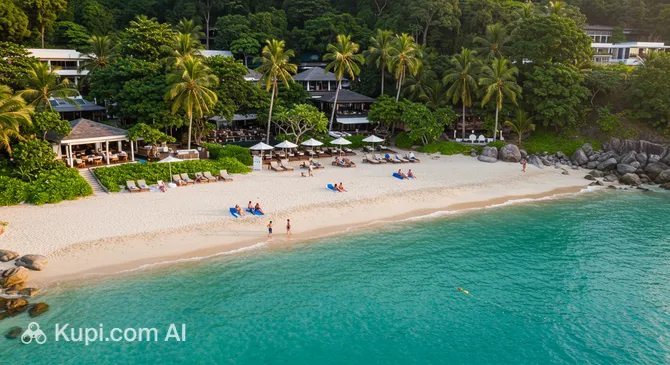
Among the natural oases where you can enjoy the island's beauty, Laem Singh Beach stands out. This cozy bay, framed by greenery, attracts visitors with its intimate atmosphere and crystal-clear water, ideal for calm swimming and snorkeling. For lovers of active recreation and jungle adventures, the Hanuman World eco-park is an excellent choice, offering thrilling zipline flights amidst tropical vegetation. And if you are looking for another beautiful beach to relax on, consider Surin Beach, known for its soft sand and more tranquil atmosphere compared to Patong, making it a popular spot for families and those who appreciate refined relaxation.

Surin Beach. Illustration.
Source: Kupi.com AI

Traveler photos:

While Patong itself does not abound with traditional museums, the region's cultural heritage is vividly represented in Old Phuket Town. A trip to Phuket Town, easily accessible from Patong, will allow you to dive into the island's past. Walk through its charming streets with unique Sino-Portuguese architecture, admire ancient mansions, and peek into local shops—it's a real open-air museum. Directly in Patong, you can visit the local Buddhist temple Wat Patong (Wat Suwan Khiri Wong). This active temple is an oasis of calm and provides insight into the spiritual life of the Thai people. Art lovers can also find small private galleries in and around Patong where the works of local artists are exhibited.

For more authentic experiences, check out the local markets—they are not just places to shop, but a living picture of everyday life. And if you seek seclusion, explore the lesser-known walking trails in the vicinity or simply wander through quiet side streets away from the main tourist arteries—this will allow you to feel the multifaceted atmosphere of Patong more deeply.

Getting Around

Getting around Patong and its surroundings is quite simple, thanks to the variety of available transport modes. While there are no subways or trams like in large metropolises, the existing system is well-adapted to the needs of tourists.

The main and most colorful form of transport in Patong is the tuk-tuk. These small, usually red or yellow, open-air vehicles or roofed scooters are found at every turn. They are ideal for short trips around town or to neighboring beaches. Important to remember: the price of a tuk-tuk ride is always negotiable and should be agreed upon with the driver before starting the journey. The cost depends on the distance, time of day, and your bargaining skills. A short trip within Patong can cost from 100–200 Thai Baht.

For more budget-friendly trips, especially between beaches or to Phuket Town, you can use a songthaew. These are pickup trucks converted for passenger transport with two benches in the back. They have more or less fixed routes, and the fare is significantly lower than a tuk-tuk (usually from 30–50 Baht depending on the distance). Payment is made to the driver upon exiting. Songthaews operate mainly during the daytime.

Taxis are also available in Patong. You can hail a car on the street (though they are less common than tuk-tuks for short trips within Patong) or order through apps like Grab. Using apps is preferable because you see the cost of the trip immediately, and it is fixed. Payment in Grab is possible by card or cash. Regular metered taxis (meter-taxi) are less common within Patong itself but can be found for trips to the airport or long distances.

For fast movement over short distances alone, you can use the services of motorbike taxis. Drivers in bright vests are easy to spot. As with tuk-tuks, agree on the price in advance. This is a convenient way to bypass traffic jams, but don't forget about safety and always ask for a helmet.

The payment system in most cases is cash. Tickets as such are not sold for tuk-tuks, songthaews, or motorbike taxis—you pay the driver directly. An exception is ordering a taxi through apps, where card payment is possible. There are no special transit cards for public transport in Patong.

Practical tips for tourists: Always have small bills ready for fares. For tuk-tuks and motorbike taxis—don't be afraid to bargain, but do it politely. Confirm the route with the songthaew driver if you're not sure it's going in your desired direction. Most types of transport operate from early morning until late evening, and tuk-tuks and taxis in tourist areas are available virtually around the clock.

As an alternative to public transport, renting scooters (motorbikes) is very popular in Patong. This gives you greater freedom to move around the island. However, remember the need for an international driver's license of the appropriate category, the mandatory use of a helmet, and adherence to traffic rules, which can be quite chaotic. You can also rent a car, but parking in the center of Patong can be difficult. For short walks in the city center or along the beach, walking is perfectly sufficient.

Accommodation

Patong offers a wide range of accommodation options to suit the needs and budget of any traveler. Here you will find everything from budget guesthouses and backpacker hostels to comfortable mid-range hotels, luxury full-service resort complexes, and convenient apartments for long stays or family holidays.

The most popular areas for tourists are those located in close proximity to Patong Beach and the famous Bangla Road. Staying here provides easy access to major entertainment, restaurants, shops, and, of course, the sea. Quieter options can be found on the northern or southern outskirts of Patong, as well as on hills with panoramic views, which will suit those seeking seclusion while remaining close to the action. Many hotels offer their own pools and transfers to the beach or key points in town.

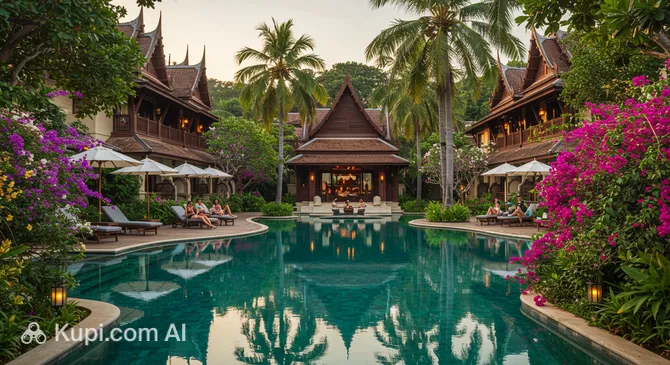
Duangjitt Resort & Spa. Illustration.
Source: Kupi.com AI

Traveler photos:

Among the well-known hotels offering comfortable accommodation is, for example, Duangjitt Resort & Spa, famous for its large green grounds and proximity to the beach. The choice of a specific hotel depends on your preferences for comfort level, range of services, and location.

Regarding booking and price ranges, Patong has accommodation for every wallet: from budget options (a few hundred baht per night in a hostel) to mid-range hotels (from 1,500–3,000 baht) and luxury resorts where room rates can reach several hundred dollars. It is most convenient to book accommodation through popular online platforms (Booking.com, Agoda, Expedia, etc.) or directly on hotel websites. General tip: during the peak tourist season (usually from November to March), it is recommended to book accommodation in advance, as the best value-for-money options are snapped up quickly.

Nearby Cities

For those looking to explore the surroundings, Patong serves as an excellent starting point for day trips to several interesting nearby locations:

CityPopulationDistance
Ban Charoen Mueang8 5341 km
Kathu26 0784 km
Phuket77 61010 km
Rawai16 98811 km
Ko Phi Phi2 50055 km

These nearby destinations allow you to get a sense of the region's diverse culture and landscapes. For example, a trip to Phuket Town (the island's administrative center) will allow you to soak in the charm of the Sino-Portuguese architecture in its Old Town, visit local markets, and temples. Further trips, such as to Surat Thani or Nakhon Si Thammarat, may require more travel time but will reveal mainland Thailand with its national parks and cultural landmarks.

Shopping & Souvenirs

Patong is a true paradise for shopping enthusiasts, offering an incredible variety of goods for every taste and budget. From bustling street markets and small souvenir shops to modern shopping centers with global brands—everyone will find something interesting here. The town is particularly famous for its affordable clothing, beach accessories, local handicrafts, and, of course, numerous souvenirs.

The main arteries for shopping in Patong are Thaweewong Road (Beach Road), which runs parallel to the beach, and Rat-U-Thit 200 Pee Road—the second main road located a bit further from the sea. Both streets are literally lined with shops, market stalls, massage parlors, and restaurants. Here you can find clothes, shoes, bags, accessories, cosmetics, and much more. In the evening, the famous Bangla Road also comes alive, where, in addition to bars, many stalls with souvenirs and fun trinkets appear.

For those who prefer comfortable shopping indoors, Patong has several large shopping centers. The most famous is Jungceylon. This massive complex includes hundreds of shops, a Robinson department store, a Big C supermarket, many restaurants, a cinema, bowling, and even a fountain show. Another popular mall is Central Patong, offering a good selection of brand-name shops, cosmetics, and home goods.

An integral part of Patong's shopping scene is its colorful markets. Be sure to visit Banzaan Market, located behind the Jungceylon shopping center. On the first floor, they sell fresh fruits, vegetables, seafood, and meat, while the second floor features a popular food court where you can eat cheaply and tastily. Another interesting place is OTOP Market (One Tambon One Product), where you can find handmade items and souvenirs from all over Thailand. Patong also has several night markets offering clothing, souvenirs, and street food.

Worth bringing back from Patong are typical Thai souvenirs: silk products (scarves, shawls, clothing), carved wooden figurines (elephants are especially popular), coconut products, natural Thai cosmetics and oils, aromatic spices, dried fruits, and local tea. Many tourists also buy inexpensive summer clothes, swimwear, and replicas of famous brands, although you should keep an eye on the quality of such items.

Most shopping centers in Patong operate from approximately 10:00–11:00 AM until 10:00–11:00 PM. Small shops and street stalls are often open until late at night, especially in busy tourist areas. Markets may have their own schedules: fresh produce markets open early in the morning, while night markets open towards evening. Major stores and shopping centers readily accept credit cards (Visa, Mastercard). At markets and in small shops, cash Thai Baht (THB) is preferred. ATMs are widely available throughout the city.

Tourists shopping in Thailand can take advantage of the VAT Refund for Tourists system. Look for shops with the "VAT Refund" sign. To process a refund, you must make a purchase of at least 2,000 Baht in one shop on one day, fill out the special P.P.10 form, and present it along with the goods and receipts at customs at the airport when departing the country. Goods must be taken out of Thailand within 60 days of purchase.
Reached the end of the page?

That means the route is fully explored