Support

Namazgah Bastion

About

The Namazgah Bastion, also known as Namazga, is an impressive historical military site located in Çanakkale, Turkey. It holds a special place in military history as the first and largest bastion built at the strategically vital narrowest point of the Dardanelles. A visit to this site allows you to touch the significant events of the past and appreciate the scale of the defensive works.
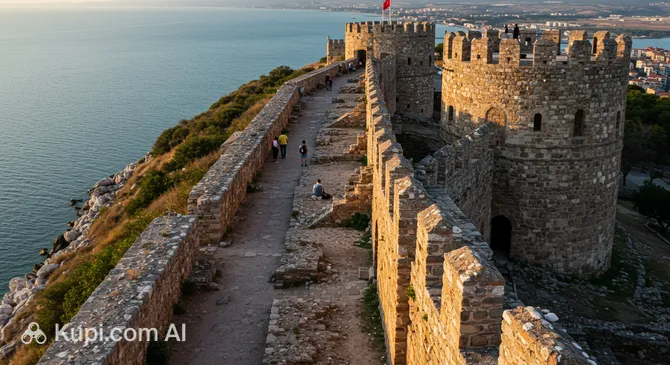
Namazgah Bastion. Illustration.
Source: Kupi.com AI

Traveler photos:

The name "Namazgah" has deep roots and is connected to the spiritual life of the soldiers. It comes from the Friday prayers (namaz) that were held here during the Gallipoli Campaign. This fact gives the bastion not only military but also cultural and historical significance, serving as a reminder of the resilience and faith of its defenders.

The Namazgah Bastion played a key role in the region's defensive system. It was equipped with powerful artillery—16 coastal guns with calibers ranging from 21 to 26 cm. These weapons were designed to protect Çanakkale and control the Dardanelles, making the bastion a vital strategic point. Today, this site attracts tourists interested in military history and fortification structures.

Contacts

To get up-to-date information on the opening hours of the Namazgah Bastion, the availability of guided tours, or other details, we recommend contacting the official tourist information centers in Çanakkale or checking local travel portals. These historical sites are typically reachable by public transport, taxi, or as part of an organized tour from the city.

How to contactContact
Address17900 Kilidülbahir/Eceabat/Çanakkale, Türkiye

What to Do

Visiting the Namazgah Bastion in Çanakkale is an opportunity to connect with important chapters of Turkey's military history. The main focus for visitors is the historical military structure itself, which once played a key role in defending the strategically vital Dardanelles. Here, visitors can see the preserved elements of the fortifications, walk through its grounds, and imagine how this powerful defensive system looked and functioned in the past.

Within the bastion, you can experience a unique historical atmosphere. It is a place where many visitors note that the spirit of the Turkish soldier’s struggle for freedom and independence is clearly felt. For visitors, it is more than just seeing old walls; it’s an opportunity to better understand the region's historical context and immerse themselves in its heroic past.

The Namazgah Bastion attracts thousands of people every year, especially those interested in military history and the architecture of defensive structures. A tour of the bastion can be perfectly combined with visits to other iconic historical landmarks in Çanakkale, such as the Çanakkale Martyrs' Memorial and the city's military museum, providing a more comprehensive view of the rich heritage of this part of Turkey.

Getting There

The Namazgah Bastion is located in the town of Eceabat within Çanakkale, Turkey. This iconic site is situated at a strategically important point—the narrowest part of the Dardanelles. To visit this historical landmark, the first step is traveling to the city of Çanakkale itself, which is a popular tourist destination in the country.

There are several ways to reach the Namazgah Bastion from the center of Çanakkale. One of the most common options is using public transport. Buses or shared taxis (dolmuş) can take you closer to the Eceabat district. A taxi ride is also always available, providing a faster and more comfortable journey, especially if you value your time or are traveling with family. We recommend checking current routes and bus numbers directly in Çanakkale, as information can change.

Nearest city: Canakkale

History & Facts

The Namazgah Bastion, located in Çanakkale, Turkey, is one of the region's oldest and most significant defensive structures. Its history dates back to its foundation in 1770. Later, in 1892, the bastion was significantly rebuilt and reinforced by order of Sultan Abdulaziz, greatly enhancing its defensive capabilities.

The bastion received its unusual name from the Friday prayers (namaz) performed here by soldiers during the intense days of the Gallipoli Campaign. This site was not just a religious corner but a key defensive hub for Çanakkale. The bastion's sixteen powerful coastal guns controlled the narrowest point of the strategically important Dardanelles, playing a crucial role in protecting the approaches to Istanbul.

During the fierce battles of 1915, the Namazgah Bastion sustained damage but survived to this day, becoming a silent witness to those dramatic events. It was not an isolated fortification but an important part of a larger defensive system that also included the Rumeli Mecidiye Fort and the Hamidiye II Battery. Together, they created a powerful barrier protecting the strait from enemy fleets.

Today, the Namazgah Bastion is not just ruins, but an important historical monument and an open-air museum that attracts tourists interested in military history and the events of World War I. A visit to the bastion allows for a deeper understanding of the heroic defense of the Dardanelles and serves as a tribute to the defenders of these borders.

Time Needed

When planning a visit to the Namazgah Bastion in Çanakkale, you should expect to spend about 1-2 hours exploring. This time is usually sufficient to leisurely walk through the grounds, see the main exhibits, and soak in the historical atmosphere of this significant defensive structure.

During this time, you can examine the preserved fortifications in detail, including the massive walls and ramparts, and walk through the courtyards and casemates. Special attention should be paid to the artillery positions where the guns that protected the strait were once located. There is often a small museum or information boards on-site that tell the history of the structure and its key role in the defense of the Dardanelles in detail, and may display artifacts or historical photographs related to the site.

If you have a deep interest in military history or want to study all aspects of the bastion, including the surrounding areas and memorials, you might need a bit more time. However, for a general overview and an understanding of the scale and importance of this place, the specified time should be quite adequate.

Working Hours

Exact information about the opening hours of the Namazgah Bastion in Çanakkale may vary depending on the season. Generally, many historical sites in Turkey are open to visitors daily, but hours may be shortened during the winter period or on public holidays. We recommend checking the current schedule on the attraction's official website or at local tourist information centers just before your planned visit.

Regarding the need for advance ticket booking, it is not required for most sites like this; however, special conditions may apply for group tours or during the peak tourist season. Checking this information in advance will help you plan your visit to the Namazgah Bastion and avoid any possible inconveniences.

DayOpening hours
MondayClosed
Tuesday8:00 – 18:15
Wednesday8:00 – 18:15
Thursday8:00 – 18:15
Friday8:00 – 18:15
Saturday8:00 – 18:15
Sunday9:00 – 18:15

Nearby

A visit to the Namazgah Bastion will undoubtedly leave a lasting impression. However, to truly feel the atmosphere of Çanakkale, it's worth taking the time to explore its surroundings. Often, it is the nearby sites—sometimes less famous—that offer the most unexpected and memorable discoveries.

By expanding your itinerary, you can dive deeper into the history and culture of this amazing region of Turkey. Short walks or quick trips to neighboring attractions will provide a more complete picture and allow you to take home even more vivid memories of your journey.

NameDistance
Kilitbahir Castle0.4 km
Cimenlik Castle1.7 km
Naval Museum1.7 km
Uludagoğulları Halva Restaurant1.8 km
Mor Salkım Meyhane1.9 km
Tekin Cheese Halva Shop1.9 km
Çanakkale Clock Tower2 km

Have you reached the end of the page?

So the route has been studied inside and out