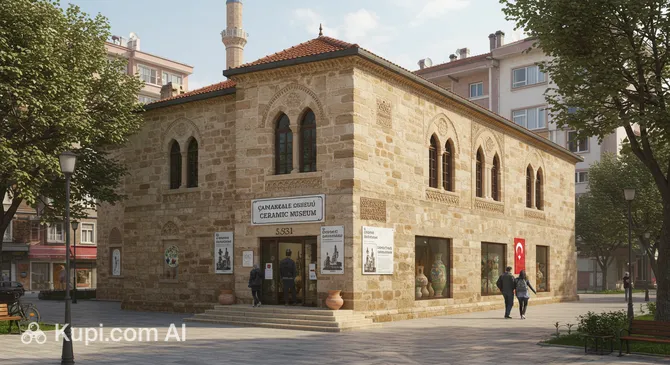
Imagine a place where ancient craft meets the architectural heritage of the past—this is the Çanakkale Ceramics Museum. Located in the heart of this port city in Turkey, the museum is housed in a unique restored Ottoman hammam (bathhouse) built in 1904. This unusual space gives the exhibition a special, almost mystical atmosphere, where modern exhibits harmoniously coexist with historic niches and vaults.
Çanakkale Ceramic Museum. Illustration.
Source: Kupi.com AI
Traveler photos:
The museum is dedicated to the rich history of ceramic production for which the region has been famous for millennia. Its halls display a wide variety of items: from ancient artifacts to works by prominent contemporary artists. Visitors can see the famous Çanakkale jugs with whimsical snake-shaped handles, vases with horse heads, and elegant tableware decorated with traditional floral motifs.
This is not just an exhibition space, but a true cultural center designed to preserve and pass on the secrets of pottery to future generations. Notably, admission to the museum is free, making it an accessible and essential stop for every tourist wishing to experience the authentic spirit of Turkish traditions.
Contacts
For more details before your visit or to organize a group tour, you can use the following contact information:
Visiting the museum is an opportunity not only to see rare exhibits but also to feel like a part of an ancient process. The main activity here is a detailed examination of the 17th–18th century ceramic collection. You can study the evolution of styles: from simple everyday forms to incredibly complex decorative ship-shaped lamps and animal figurines. The placement of items in the traditional stone niches of the hammam allows you to view every detail in an intimate and cozy setting.
Special attention should be paid to the interactive opportunities. The museum frequently hosts masterclasses where, under the guidance of professional potters, you can try your hand at working with clay. Creating your own piece is one of the most memorable parts of the visit. Additionally, the museum regularly holds temporary art exhibitions and seminars that introduce guests to modern trends in global ceramic art.
After immersing yourself in history inside the museum, be sure to stroll through the surrounding neighborhoods. Çanakkale is famous for its shops where you can purchase high-quality souvenirs: from terracotta copies of Trojan horses to designer tableware created by local artisans using the same techniques you just saw in the exhibition.
Getting There
The Ceramics Museum is located in the heart of Çanakkale, at the address: Cevatpaşa Mahallesi, Kaya Sk. 31-33. Thanks to its convenient location, it is easily reached on foot from the Dardanelles promenade or the famous Trojan Horse statue, gifted to the city by the creators of the movie of the same name. A stroll through the picturesque streets filled with numerous pottery shops will be a perfect addition to your itinerary.
If you are arriving from other regions of Turkey, such as Istanbul or Izmir, your journey will likely lead you to the bus station (Otogar). From there, the city center is reachable in 10–15 minutes by taxi or a local minibus known as a dolmuş. The city is also a major port, making ferry services another popular and scenic way to arrive.
For those traveling by personal or rental car, city parking is available around the museum and the central districts. A good landmark for navigation is the historic center, where most of the city's cultural sites are concentrated.
Nearest city: Canakkale
History & Facts
The Çanakkale region has been famous for its outstanding pottery traditions for centuries. As early as the 17th and 18th centuries, local craftsmen were creating unique items decorated with delicate floral and strict geometric patterns. Over time, the range expanded: they produced not only household dishes but also decorative oil lamps in the shape of ships and vessels resembling whimsical animals.
The museum building itself is of no less historical value than its collection. It is an old Ottoman hammam built in 1904. The building is a classic example of civil architecture from the early 20th century in the Marmara region. Following a thorough restoration by the municipality in 2013, the former bathhouse found a second life, transforming into a modern cultural space while preserving its authentic layout and the spirit of the era.
The museum's collection carefully preserves rare artifacts, including jugs with unusual handles entwined with ceramic snakes and vessels topped with horse heads. These items highlight the thousand-year continuity of the craft, linking ancient techniques with the art of modern masters. Today, the museum serves not only as a storehouse of the past but also as a living platform for the development and promotion of ceramics in the modern world.
Time Needed
To leisurely explore the main exhibition, learn about the history of the building, and study the information boards, most visitors will need between 1 and 2 hours. This is enough time to appreciate the fine craftsmanship and take memorable photos in the interiors of the ancient hammam.
If you plan to visit one of the temporary exhibitions or participate in a hands-on pottery masterclass, you should set aside a bit more time—about half a day. The museum features cozy rest areas where you can linger to reflect on what you've seen and enjoy the creative atmosphere.
Working Hours
The Çanakkale Ceramics Museum is typically open to visitors from Tuesday to Sunday. Working hours: 09:00 to 17:00. Please note that Monday is a day off, and the museum is closed to the public.
Since admission to the museum is free, no advance registration is required. However, before visiting on public holidays, it is recommended to check for current information on the city's official resources or at tourist information centers, as the schedule may vary slightly.
Day
Working hours
Monday
Закрыто
Tuesday
09:00–17:00
Wednesday
09:00–17:00
Thursday
09:00–17:00
Friday
09:00–17:00
Saturday
09:00–17:00
Sunday
09:00–17:00
Nearby
Exploring the museum's surroundings will allow you to dive deeper into the atmosphere of this port city and discover its multifaceted history. Within walking distance, you will find both modern cultural centers and ancient fortresses guarding the shores of the strait.