Support

The Blue Mosque

About

The Blue Mosque, officially known as the Sultan Ahmed Mosque (Sultanahmet Camii), is not just a religious building but one of the main and most recognizable symbols of Istanbul and all of Turkey. Located in the heart of the historic city center on Sultanahmet Square, it impresses with its grandeur and is a mandatory stop on every traveler's itinerary. The mosque is considered an outstanding example of Islamic and world architecture.

The mosque received its unofficial name due to the tens of thousands of exquisite handmade ceramic tiles decorating its interior. The dominance of blue shades in the finish creates an amazing atmosphere of light and tranquility inside. The architectural style of the mosque harmoniously combines Ottoman and Byzantine traditions, making its appearance truly unique. The six minarets deserve special mention, as they were a unique feature at the time of construction.
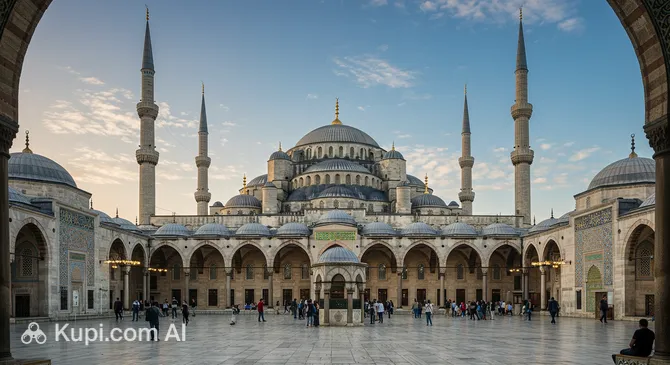
The Blue Mosque. Illustration.
Source: Kupi.com AI

Traveler photos:

It is important to remember that the Blue Mosque is an active Muslim temple, so there are certain visiting rules for tourists, including a dress code. It is open to everyone between prayers. Its convenient location opposite the famous Hagia Sophia allows you to easily include both great structures in a one-day tour, immersing yourself in the rich history of this amazing city.

Contacts

Since the Blue Mosque is primarily an active religious site, it does not have a dedicated tourist contact service, such as a direct phone line or email. To get the most up-to-date information on visiting rules and hours, which depend on prayer times, it is recommended to check official Istanbul tourist portals or check the information boards located directly on Sultanahmet Square.

How to contactContact
AddressCankurtaran, At Meydanı Cd No:7, 34122 Fatih/İstanbul, Türkiye

What to Do

Visiting the Blue Mosque is an opportunity to immerse yourself in an atmosphere of grandeur and tranquility. Your journey begins in the spacious courtyard, which is as large as the building itself. This spot offers one of the best views for photos: a majestic cascade of domes and semi-domes against the sky. Don't rush inside; walk along the perimeter to appreciate the harmony of architectural forms and the scale of the architect's vision.

Once in the main hall, pay attention to the details that create the unique look of the interior. Instead of focusing only on the famous tiles, look at the exquisite calligraphy—Arabic script with verses from the Quran decorating the domes and walls. Examine the mihrab—the prayer niche carved from a single piece of marble that points the direction to Mecca. Also, appreciate the soft carpets covering the entire floor; their patterns, often featuring tulips, are works of art in themselves. For an impressive shot, try to capture the massive, low-hanging chandeliers against the backdrop of the main dome.

Remember that you are in an active religious building. To fully feel its spiritual atmosphere, find a moment for quiet contemplation. Entry for tourists is free, but access to the prayer area is restricted during prayer times, so plan your visit between prayers. Instead of a standard tour, you can simply sit in the guest section of the hall, watching the play of light filtering through the many stained glass windows and feeling the serenity of this iconic site.

Getting There

The Blue Mosque is located in the heart of Istanbul's historic Sultanahmet district, making it easily accessible for tourists. The most convenient and popular way to get here by public transport is via the T1 tram line (Bağcılar–Kabataş). You need to get off at the Sultanahmet stop, which is just a few minutes' leisurely walk from the mosque.

If you are coming from more distant parts of the city or from the airport, the most convenient option is to take the metro and transfer to the T1 tram line at one of the main hub stations, such as Zeytinburnu or Aksaray. Of course, you can always choose a more comfortable option by taking a taxi or using one of the many city buses heading toward the center.

Due to its location surrounded by other iconic landmarks, the mosque is very pleasant to reach on foot. It is literally just steps away from Hagia Sophia and the Topkapi Palace, making it easy to combine all three attractions in one day. The entrance to the grounds is well-marked, with separate entrances organized for tourists to avoid disturbing worshippers. Don't worry about the dress code: special wraps are offered at the entrance if needed.

Nearest city: Istanbul

History & Facts

The history of the Blue Mosque is inextricably linked to the ambitions of the young Sultan Ahmed I. Construction began in 1609 and was completed in 1616–1617, after the ruler's death. Sedefkar Mehmed Agha, a talented student of the great architect Sinan who sought to surpass his teacher, was appointed as the chief architect. A symbolic site was chosen for the mosque—the former palace of the Byzantine emperors, directly opposite Hagia Sophia, which was intended to emphasize the greatness and power of the Ottoman Empire.

One of the most remarkable facts is that this grandiose construction was funded not from war spoils, as was customary, but from the Sultan's personal treasury. Ahmed I wanted to earn Allah's favor after a series of not-too-successful military campaigns. A unique and even provocative feature for those times was the mosque's six minarets. According to a popular legend, the Sultan ordered "golden" minarets (altın in Turkish), but the architect, either by mistake or due to the phonetic similarity, heard "six" (altı). This caused dissatisfaction among the clergy, as only Islam's main shrine—the Al-Haram Mosque in Mecca—had six minarets at the time. The conflict was resolved when the Sultan funded the construction of a seventh minaret in Mecca.

The main architectural task was to create a structure that would rival, and perhaps surpass, the famous Hagia Sophia in beauty and scale. Sedefkar Mehmed Agha succeeded brilliantly, harmoniously combining elements of classical Ottoman and Byzantine styles in his design. For instance, the mosque's courtyard is the same size as the prayer hall itself, and the interior is decorated with more than 20,000 handmade tiles, which gave the mosque its unofficial name. The entire construction process was meticulously documented and is now preserved in six volumes in the Topkapi Palace library.

Time Needed

When planning a visit to the Blue Mosque, you should allow for 1 to 2 hours. This time is usually sufficient for a complete and leisurely introduction to this architectural masterpiece. During this period, you will have enough time not only to walk through the courtyard and appreciate the grandeur of the exterior with its cascade of domes and six minarets but also to spend enough time inside. Examining the famous Iznik tiles, stained glass windows, and the vast prayer hall requires attention to fully experience the atmosphere of this place.

If you want a deeper immersion into the history and details, for example, with a guided tour, or plan to combine the visit with a walk through Sultanahmet Square and the park, it's better to set aside about 2–3 hours. This extra time will allow you to take photos from the best angles without rushing, study the information boards, and simply sit and enjoy the peaceful atmosphere. Additionally, consider potential waiting times at the entrance, especially during peak tourist season, and prayer times when access for tourists is limited.

Working Hours

You can visit the Blue Mosque on any day of the year, as it is open to tourists year-round. However, it is important to remember that this is an active Muslim temple, and visitor access is regulated by the schedule of prayers (salat), which take place five times a day. During prayer, which lasts about 90 minutes, the entrance for tourists is temporarily closed. Since prayer times change daily depending on the season, the mosque does not have strictly fixed working hours for guests.

Entry to the Blue Mosque is free, and no advance booking is required. To plan your visit, it is highly recommended to check the current prayer schedule for the specific day in advance, especially on Fridays when the mosque opens to tourists only after lunch, around 2:30 PM. This information can often be found on information boards at the mosque entrance or on official Istanbul tourist portals. This will help you avoid long waits and fully enjoy your visit to this great structure.

Nearby

Visiting the Blue Mosque is just the beginning of your journey through the historical heart of Istanbul. The Sultanahmet district, where it is located, is a true open-air museum where the greatest monuments of the Byzantine and Ottoman eras are concentrated in a small area. Exploring the surroundings will allow you to dive deeper into the city's centuries-old history and feel its unique atmosphere.

The uniqueness of this area lies in the fact that most iconic attractions are within walking distance of each other. A walk around the Blue Mosque is an opportunity to travel through time, moving from one architectural masterpiece to another. Below is a list of interesting places located very close by.

NameDistance
Basilica Cistern0.3 km
GRACE Rooftop Restaurant0.3 km
Hidden Garden0.4 km
Hagia Sophia Grand Mosque0.5 km
Topkapi Palace Museum0.9 km
Lotiz Lounge & Hookah1.7 km
Salt Galata2.1 km

Have you reached the end of the page?

So the route has been studied inside and out