Support

Mardin

About

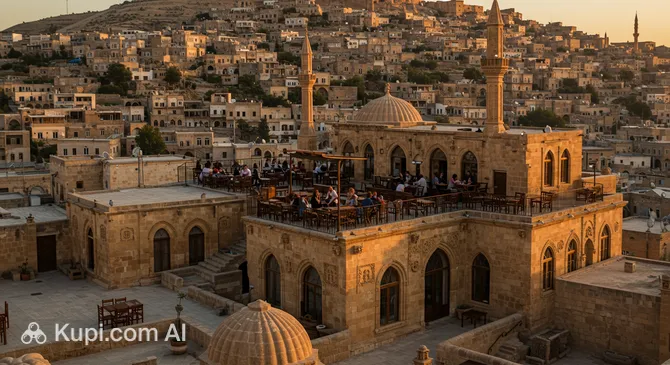
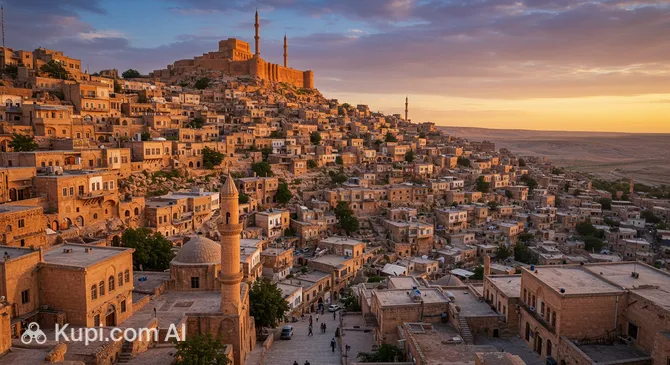
Perched atop a rocky ridge overlooking the vast plains of Mesopotamia, Mardin offers a travel experience unlike any other. This enchanting city in southeastern Turkey is renowned for its golden limestone architecture, which glows warmly under the sun, earning it the nickname "The City of the Sun." Its unique atmosphere blends diverse cultures, languages, and traditions, creating a captivating destination for explorers seeking something truly special.

Geographically, the city is situated in the Mardin Province, serving as a strategic crossroads near the southern border. With a population of approximately 87,000, the city center maintains a bustling yet intimate feel, distinct from the more modern expansion in the valley below. The climate here is characterized by hot, dry summers and cold, wet winters. Walking through its steep, narrow streets, visitors feel transported back in time, surrounded by ornate stone carvings and historic mansions that cascade down the hillside.

Mardin. Source: Kupi.Binoculars

The rich history of Mardin is evident in every corner, with influences ranging from the Assyrians and Romans to the Artuqids and Ottomans. Key landmarks include the stunning Zinciriye Medrese, which offers panoramic views of the plains, and the Great Mosque of Mardin (Ulu Cami) with its distinctive ribbed minaret. The city is also famous for its abbaras—arched passageways that connect streets beneath houses, providing shade and adding to the architectural intrigue of the old town.

Whether you are admiring the intricate stonework, tasting the local blue almond candies, or simply gazing out at the endless Mesopotamian horizon, Mardin promises an unforgettable journey. It is a place where history breathes, inviting travelers to discover the timeless beauty and hospitality of Anatolia.

Weather Overview

The climate in this region is characterized by distinct seasonal contrasts, featuring sweltering, arid summers and cool, damp winters. To help you pack appropriately for your trip, it is helpful to review the detailed weather in Mardin before your departure.

Summer months are intense, with July and August seeing average temperatures of 30.6°C and daily highs frequently reaching 38°C. This period is extremely dry, with virtually no rainfall recorded from July through September, guaranteeing clear skies for those who can tolerate the heat.

Conversely, the winter season brings a significant shift. January is the coldest month, with average temperatures dropping to 4.7°C and minimums hovering around 0.7°C. Precipitation is most common during this time, with January seeing about 13 wet days, so visitors should come prepared with warm clothing and rain gear.

The transitional seasons of spring and autumn offer more moderate conditions. May and October are particularly pleasant, with average temperatures ranging between 19.5°C and 19.8°C, providing an ideal climate for exploring the city's outdoor historical sites.

Interesting Facts

Beyond the main attractions, Mardin holds many fascinating secrets and traditions that have survived for centuries. Here are some intriguing details that make this ancient city truly unique.
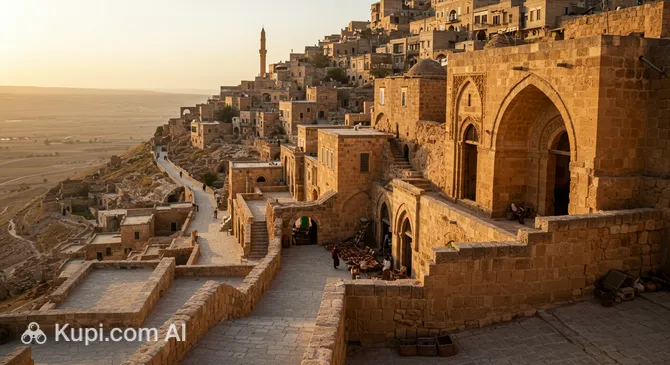
Mardin Houses. Source: Kupi.Binoculars
  • Donkeys as Civil Servants: Due to the steep, narrow stairways of Old Mardin, modern vehicles cannot access many areas. The municipality officially employs a team of donkeys to collect garbage and transport goods; these hardworking animals are treated with great respect and even have their own veterinarians and retirement plans.

  • A City of Light and Stone: There is a famous local saying that describes the city's dual nature: "Seyran (viewing) by day, gerdanlık (necklace) by night." This refers to the golden stone architecture shining under the sun and the shimmering lights of the city against the dark Mesopotamian plain resembling a sparkling diamond necklace after sunset.

  • Respectful Architecture: The traditional Mardin Houses are built in a terraced formation on the southern slope of the hill. A unique architectural feature is that the buildings are positioned so that no house casts a shadow on another, ensuring that every home enjoys the sun and an unobstructed view of the plains.

  • The Fountain of Life: Inside the Kasımiye Madrasah, there is a remarkable Sufi fountain designed to represent the cycle of human life. The water flows from a source representing birth into pools of increasing size symbolizing infancy, youth, and old age, before finally gathering in a large pool that signifies the afterlife.

How to Get There

Reaching this historic city in southeastern Turkey is relatively straightforward, thanks to its own airport and good road connections with neighboring provinces. For a complete overview of travel options, routes, and tips, you can read more about how to get to Mardin in our dedicated guide. Most visitors choose to fly, as it is the most time-efficient method, though road trips through Mesopotamia offer their own scenic rewards.

The most convenient entry point is the local Mardin Airport (IATA: MQM), situated roughly 13 km from the city center. It is a regional hub that handles a significant number of domestic flights. The journey from the airport to the Old City typically takes around 40 minutes by taxi or shuttle bus. For those seeking more flight options or international connections, Diyarbakir Airport (IATA: DIY) is a major alternative. Located in the city of Diyarbakir, approximately 80 km away, it serves a much larger volume of passengers. A transfer from Diyarbakir to Mardin by road usually takes about 2 hours and 20 minutes.

For clarity, here is a summary of the main airports serving the region:

Airport Name City Passenger Traffic Km from City
Diyarbakir Airport Diyarbakir High 79.8
Mardin Airport Mardin Medium 13.4
Batman Airport Batman Medium 76.3
Şırnak Airport Cizre Medium 117.6
Siirt Airport Siirt Low 122.3

While flight is the primary choice for long-distance travelers, the region is also well-served by intercity buses, which are a popular and affordable mode of transport in Turkey. The main bus terminal (Otogar) connects Mardin with major cities like Istanbul, Ankara, and Izmir, as well as nearby hubs. Train travel is less common for reaching the city directly due to the limited rail network in the immediate vicinity, making road transport the standard for the final leg of the journey.

Main Attractions

Exploring this ancient city is akin to walking through an open-air museum, where every corner reveals a new layer of history carved in stone. The main sights are concentrated in the historic district, easily accessible on foot, though be prepared for plenty of stairs and steep inclines. Here are the top attractions you should not miss during your visit.

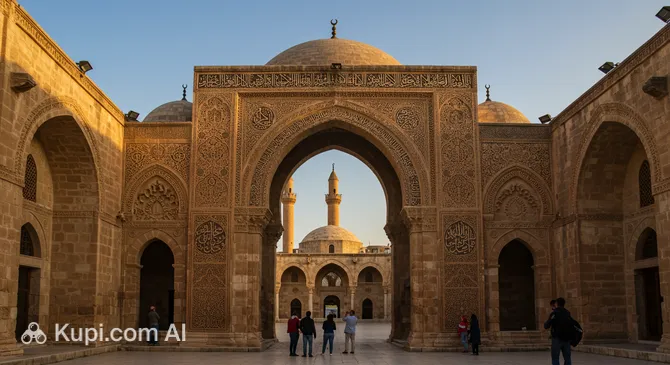
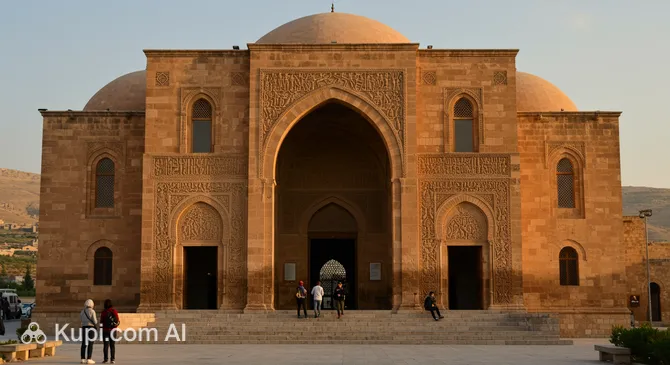
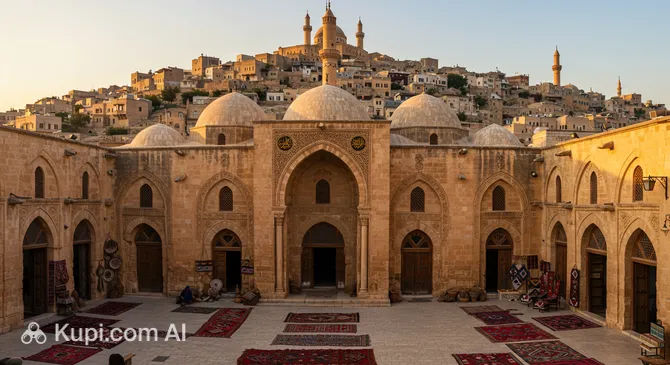
Dominating the view from the foot of the citadel is the majestic Zinciriye Madrasa. Built in 1385, this theological school is one of the most striking examples of Artuqid architecture. Visitors are immediately drawn to its magnificent monumental portal and the two ribbed domes that have become symbols of the city’s skyline. Beyond its architectural beauty, the rooftop offers one of the most spectacular panoramic views over the Mesopotamian plains, making it a favorite spot for photographers, especially at sunset.

Zinciriye Madrasa. Source: Kupi.Binoculars

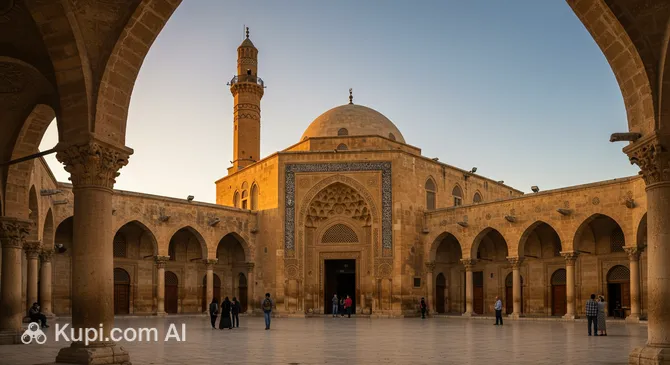
Located on the southwestern outskirts of the city, the Kasımiye Madrasah is another architectural masterpiece that has stood the test of time. Completed in the late 15th century, this complex is exceptionally well-preserved, featuring a spacious courtyard surrounded by arched porticoes and student cells. It is renowned for its serene atmosphere and intricate stonework. Inside, you can admire the famous Sufi fountain, where water flows into a large pool, designed to symbolize the flow of life from birth to the afterlife.

Kasımiye Madrasah. Source: Kupi.Binoculars

For a deeper dive into the region's rich cultural heritage, a visit to the Mardin Museum is essential. Housed in a beautifully restored 19th-century mansion that was once the Syrian Catholic Patriarchate, the building itself is a work of art. The museum’s collection spans from the Bronze Age to the Ottoman period, showcasing Assyrian tablets, Roman coins, and traditional local jewelry. It provides excellent context for understanding the diverse civilizations that have called this region home.

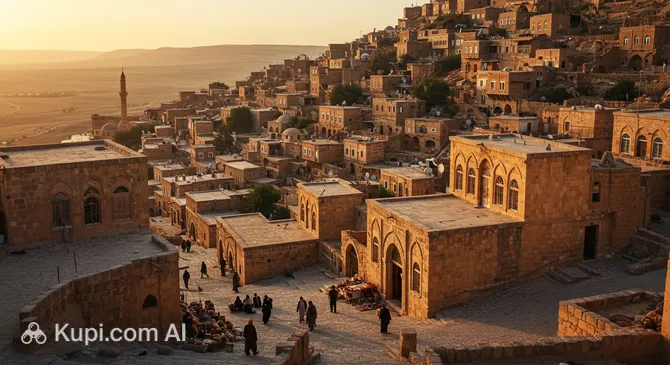
Finally, no trip is complete without simply getting lost in the streets of Old Mardin. The entire historic center is a protected site, characterized by its honey-colored limestone houses decorated with elaborate carvings. As you wander through the labyrinthine alleyways, you will pass under abbaras (arched public passageways) and discover hidden courtyards, artisan workshops, and historic churches that reflect the city's multicultural fabric.

Local Cuisine

The culinary landscape of Mardin is as layered and diverse as its history, offering a rich fusion of Turkish, Arab, Kurdish, and Syriac influences. The local cuisine is renowned for its heavy use of aromatic spices, high-quality meats, and locally grown wheat (bulgur). Dining here is not just about sustenance; it is a ceremonial experience often hosted in centuries-old stone mansions that have been converted into atmospheric restaurants.

At the heart of the city's gastronomy is the legendary Kaburga Dolması (stuffed ribs). This labor-intensive dish consists of lamb ribs stuffed with a savory mixture of rice, almonds, and spices, slow-cooked for hours until the meat is incredibly tender. Another staple is Sembusek, often referred to as "Mardin pizza," which is a closed pastry filled with minced meat, onions, and herbs. For those who enjoy meatballs, Irok—the local version of boiled or fried kibbeh prepared with aromatic herbs—is a must-try delicacy found in many eateries.

Beverages in Mardin are equally distinctive. The region is famous for Syriac wine (Süryani şarabı), an ancient winemaking tradition kept alive by the local Assyrian community using indigenous grapes like Öküzgözü and Boğazkere. On the non-alcoholic side, Mırra is a potent, bitter coffee brewed several times and served in tiny cups without sugar; it is a significant symbol of hospitality. During the hot summer months, a glass of purple Reyhan Sherbet (basil drink) provides a refreshing and sweet respite.

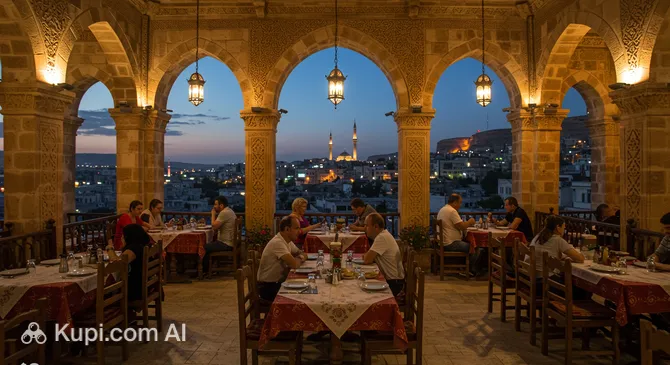
Hamdani Restaurant – Sıra Night Every Evening. Source: Kupi.Binoculars

For a truly immersive dining experience that combines gastronomy with entertainment, visitors often head to Hamdani Restaurant – Sıra Night Every Evening. Here, you can sample a wide array of local appetizers while enjoying traditional folk music and "Sıra" nights, a cultural gathering featuring songs and storytelling. If you are looking for a more relaxed atmosphere to enjoy a cup of coffee or tea with a view, Carpenters' Café offers a charming setting to unwind after exploring the steep streets.

Before leaving, be sure to taste the city's famous blue almond candies (Mardin badem şekeri). These sugar-coated almonds, dyed blue with natural herbal pigments, are sold by street vendors throughout the Old City and make for a perfect sweet snack or souvenir.

Travel Tips

Visiting Mardin is a journey into the heart of Mesopotamia, but its unique geography and deep-rooted traditions require a bit of preparation to fully enjoy. To help you navigate the stone streets and local customs with ease, here are some practical tips for your trip.

  1. Clothing and Gear: Sturdy, comfortable walking shoes are non-negotiable; the Old City is a vertical maze of steep stairs and slippery cobblestones, making heels or flimsy sandals impractical. Since Mardin is a culturally conservative city with many active mosques and churches, dress modestly by covering shoulders and knees to show respect. In summer, a hat and high-SPF sunscreen are essential against the fierce sun, while winters can be surprisingly cold, requiring warm layers and a waterproof coat.

  2. Transportation: The historic center (Old Mardin) is largely pedestrianized due to its narrow, stepped architecture, so be prepared to walk everywhere. To travel between the modern city (Yenişehir) and the Old City, use the frequent blue minibuses (dolmuş) or yellow taxis, which are affordable and reliable. Avoid renting a car for the Old City itself, as the streets are often impassable for vehicles and parking is virtually non-existent.

  3. Finances: The local currency is the Turkish Lira (TRY). While boutique hotels and larger restaurants generally accept credit cards, cash is king in the historic bazaars, tea houses, and small artisan shops. ATMs are plentiful in the main squares and in the new part of the city, but it is wise to carry small denominations for tips and street food purchases.

  4. Health and Safety: Mardin is generally a very safe destination for tourists, but standard travel precautions apply regarding personal belongings in crowded areas. Pharmacies, marked as Eczane, are widely available, and there is always one on duty (Nöbetçi Eczane) during the night and on Sundays. During the summer months, dehydration is a real risk, so carry water with you at all times.

  5. Communication: Turkish is the primary language, though you will frequently hear Arabic and Kurdish spoken by the diverse local population. English is not widely spoken outside of high-end tourism establishments, so downloading a offline translation app is highly recommended. Learning a few basic words like Merhaba (Hello) and Teşekkürler (Thank you) will be warmly received by locals.

  6. Local Etiquette: Hospitality is the cornerstone of social life here; if a shopkeeper or local invites you for tea or coffee, try to accept it as it is a genuine gesture of friendship rather than a sales tactic. When greeting people, a handshake is common, often accompanied by placing the right hand over the heart. Be mindful of religious norms and remove your shoes before entering any mosque or private home.

  7. What to Avoid: Avoid taking photographs of local people, especially women and the elderly, without explicitly asking for permission first, as this can be considered intrusive. Additionally, refrain from public displays of affection, which are frowned upon in this traditional region.

  8. Shopping Insight: The bazaars in the Old City are famous for silver filigree (telkari) and natural soaps. Don't be afraid to bargain politely in these traditional shops; it is an expected part of the transaction and often leads to a friendly conversation. Shops typically stay open late, especially in the summer evenings when the city cools down.

By keeping these simple tips in mind, you will find it easy to connect with the warm-hearted people of Mardin and immerse yourself in the local rhythm. Enjoy the slow pace of life, the incredible views, and the timeless charm of this ancient stone city.

Entertainment & Nightlife

Entertainment and Nightlife:

Nightlife in Mardin is a far cry from the thumping bass of modern nightclubs; instead, it is a mesmerizing blend of culture, history, and conviviality. As the sun sets, the city transforms into a glittering spectacle often compared to a "necklace of lights" draped over the hillside. The evening entertainment here revolves around socializing, traditional music, and enjoying the cool night air in atmospheric settings.

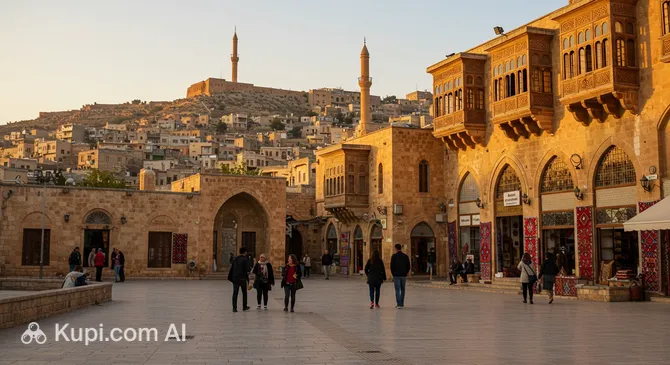
The heart of the evening activity beats along the main thoroughfare of Old Mardin, particularly around the bustling Republic Square. This area comes alive after dark, with shops staying open late and locals gathering to chat. It is the perfect place for a safe and scenic night walk, where you can browse for silver jewelry or simply soak in the lively ambiance without the need for a strict dress code—though smart-casual is respectful and common.

Republic Square. Source: Kupi.Binoculars

The quintessential Mardin nightlife experience is the traditional "Sıra Night" (Sıra Gecesi). These gatherings are a feast for the senses, combining local cuisine with folk songs and storytelling. A prime venue to experience this is Hamdani Restaurant – Sıra Night Every Evening. Here, guests sit at long tables to enjoy regional dishes like çiğ köfte (spicy raw meatballs) while musicians play instruments like the oud and darbuka. It is a communal and joyous affair, often ending with everyone joining in the traditional halay dance.

For those seeking a quieter evening, the city's cafes offer a serene escape. Carpenters' Café is a popular spot where you can sip on wild pistachio coffee (menengiç) or tea while gazing out at the endless Mesopotamian plains below. While Mardin is conservative, you can also find venues serving the region's famous Syriac wine. These are typically located within boutique hotels or specific historic mansions in the Old City, offering a sophisticated environment to taste ancient grape varieties.

Carpenters' Café. Source: Kupi.Binoculars

Practical navigation at night is straightforward. The Old City is best explored on foot, but be mindful of the uneven stone steps. If you are staying in the modern part of the city (Yenişehir) or need to return there late, yellow taxis are readily available at main squares and are the safest, most convenient option. Prices are metered and reasonable. The streets in the main tourist areas remain safe and well-lit late into the night, filled with families and visitors.

While the nights are for music and relaxation, daytime entertainment in Mardin is deeply rooted in history. Cultural enthusiasts can spend hours exploring the Mardin Museum to see artifacts spanning millennia, or visiting the Mardin City Museum for a look at local life and customs. Unlike cities with large amusement parks, the entertainment here is the city itself—wandering the bazaars, visiting ancient madrasas, and discovering hidden courtyards.

Parks & Museums

Walking through the stone streets of this city is, in itself, a visit to a vast open-air gallery. The entire district of Old Mardin is a protected historical site where every house, archway, and mosque tells a story of the civilizations that have thrived here for millennia. Unlike modern cities filled with designated green parks, Mardin’s "parks" are its serene madrasa courtyards and its "museums" are often the buildings themselves, preserved in their golden limestone glory.

Old Mardin. Source: Kupi.Binoculars

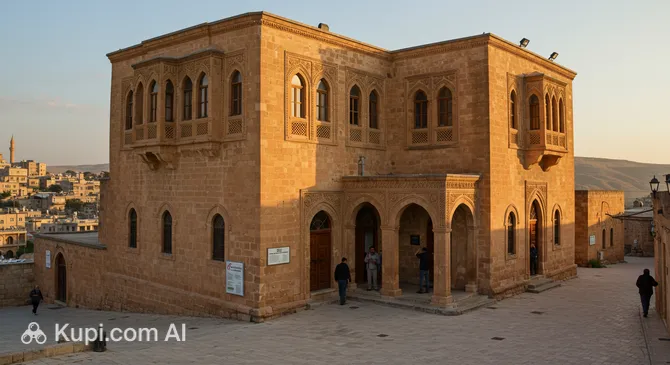
For a comprehensive look at the region’s layered history, the Mardin Museum is the premier institution. It is housed in the former Assyrian Catholic Patriarchate, a magnificent 19th-century building that is an architectural masterpiece in its own right. The museum’s collection is divided into archaeological and ethnographic sections. Visitors can marvel at cylinder seals, coins, and jewelry dating back to the Bronze Age, Assyrian, and Roman periods. The building’s terraced architecture also offers splendid views, allowing you to appreciate the artifacts within the context of the landscape they came from.

Mardin Museum. Source: Kupi.Binoculars

To understand the soul of the city beyond its ancient ruins, a visit to the Mardin City Museum (Sakıp Sabancı Mardin City Museum) is essential. Located in a restored cavalry barracks designed by the famous architect Sarkis Elyas Lole, this museum focuses on the living culture of Mardin. The exhibits vividly recreate traditional trades such as coppersmithing, woodworking, and soap making, which are slowly disappearing. Through photographs and dioramas, it captures the daily life and diverse urban identity of the city’s Kurdish, Arab, Turkish, and Syriac residents.

Mardin City Museum. Source: Kupi.Binoculars

Among the many historical gems that function as living museums, the Sitti Radviyye Hatuniyya Madrasa stands out for its spiritual significance. Built in the 12th century by the Artuqids, this madrasa is revered not only for its elegant stonework but also for housing a footprint attributed to the Prophet Muhammad. The peaceful courtyard and the intricate mihrab inside make it a place of quiet reflection, distinct from the busier tourist hubs.

Sitti Radviyye Hatuniyya Madrasa. Source: Kupi.Binoculars

Regarding parks and green spaces, the topography of Old Mardin—perched on a steep rocky crag—leaves little room for traditional gardens. Instead, the city offers "stone gardens" in the form of inner courtyards found in madrasas like Zinciriye Madrasa and Kasımiye Madrasah. These spaces, often featuring central pools (iwans) and shaded porticoes, were designed to provide a cool, tranquil escape from the arid Mesopotamian heat. For those seeking a natural vista, the southern edge of the city serves as a boundless observation deck, where the view of the endless plains below is as calming and majestic as any forest.

Getting Around

Navigating Mardin requires understanding its unique dual layout: the historic Old City (Eski Mardin) perched on the hillside and the modern New City (Yenişehir) spreading across the valley below. Because the historic district consists of steep, narrow, and stepped streets, standard public transport vehicles cannot enter the heart of the Old City. Therefore, the public transport network primarily serves to connect the modern districts with the main road that runs along the base of the historic hill, acting as a bridge between the two eras of the city.

The most popular and convenient mode of transport for locals and tourists alike is the dolmuş (minibus). These frequent shuttles, often blue or cream-colored, run constantly between Yenişehir and the main drop-off points of Old Mardin, such as Republic Square (Cumhuriyet Meydanı). They are an affordable and efficient way to tackle the incline between the valley and the old town. In addition to the minibuses, larger municipal buses operate on longer routes, connecting various neighborhoods and the intercity bus terminal (Otogar) to the center.

For payment on municipal buses, the city uses an electronic smart card system known as the Mardin Kart. You can purchase these cards and top them up with credit at authorized kiosks, markets, or filling points (labeled "Dolum Noktası") located near major stops. While municipal buses strictly require the card, many of the privately run dolmuş lines may still accept cash payments directly to the driver. It is highly recommended to carry small denominations of the local currency if you plan to rely on minibuses.

Yellow taxis are a widely used alternative, particularly for visitors who want to avoid the steep walk up to their accommodation with luggage. Taxis are metered and can be found at designated stands in major squares or hailed from the roadside. Since ride-sharing apps are not commonly used in the city, relying on official taxi stands or asking your hotel reception to call a cab is the most reliable method. Taxis are also the best option for late-night travel when bus frequencies decrease.

While there is no metro or tram system, Mardin possesses a unique "logistical feature" necessitated by its architecture: the use of donkeys. Although they are not public transport for passengers, you will frequently see them carrying goods, construction materials, and even collecting garbage through the stepped alleyways where no car can pass. For the tourist, the only way to navigate the interior of the Old City is on foot. Be prepared for plenty of walking on uneven stone surfaces.

Public transport typically operates from early morning, around 6:00 AM, until late evening. However, services become less frequent after 9:00 PM. Stops are generally marked with "D" signs (Durak), but on the main avenue, it is common to see locals flagging down a dolmuş. If you are exploring the Old City in the evening and staying in the New City, keep an eye on the time or budget for a taxi ride back, as the night view of the Mesopotamian plain from the road is spectacular.

Accommodation

Accommodation in this captivating city is divided into two distinct experiences, mirroring its physical layout: the historic charm of the Old City and the modern convenience of the New City. Choosing where to stay depends largely on whether you prioritize atmosphere and architectural heritage or accessibility and modern amenities.

For most travelers, the highlight of a visit is staying in one of the restored stone mansions in Old Mardin. These traditional structures, which are iconic examples of Mardin Houses, have been converted into boutique hotels that offer a truly immersive experience. Known locally as konaks, these establishments feature high vaulted ceilings, intricate stone carvings, and expansive terraces overlooking the Mesopotamian plains. Waking up here allows you to watch the sunrise over the vast landscape, a signature experience of the region. However, guests should be aware that the historic district is largely pedestrian-only with many steep stairs; access by car is limited to the main road, and you may need to walk a short distance with your luggage.

In contrast, the New City (Yenişehir), located in the valley below, offers contemporary accommodation options ranging from budget-friendly guesthouses to luxury chain hotels. This area is often preferred by business travelers, families with young children, or those with mobility concerns who wish to avoid the steep inclines of the old town. The hotels here provide standard modern comforts such as elevators, on-site parking, and swimming pools. While it lacks the ancient atmosphere, the New City is well-connected to the sights by frequent minibuses and taxis, making it a practical base for exploration.

Regardless of where you choose to stay, you will likely encounter the city's famous hospitality at the breakfast table. Morning meals are typically lavish spreads featuring local cheeses, olives, honey, and fresh bread, often served on rooftops with a view. Due to the city's popularity, especially during the mild spring and autumn seasons, it is highly recommended to book your accommodation well in advance, as the most sought-after boutique hotels in the historic zone fill up quickly.

Nearby Cities

For those looking to explore the surroundings, Mardin serves as an excellent base for day trips to several interesting nearby locations. The region of Southeastern Anatolia is dense with history, and a short drive can transport you to cities with entirely different architectural styles and cultural atmospheres.

One of the most significant destinations nearby is Diyarbakir. Located approximately 80 kilometers away, this major cultural hub offers a striking contrast to Mardin. While Mardin is famous for its golden limestone, Diyarbakir is known for its formidable black basalt walls, which are among the longest and best-preserved ancient fortifications in the world. Visitors can explore the UNESCO-listed Hevsel Gardens, the historic Grand Mosque, and the bustling narrow streets of the Sur district, experiencing a deep sense of history that rivals even that of Mardin.

Much closer to home lies Kiziltepe, situated just 19 kilometers south on the Mesopotamian plain. Historically known as Dunaysir, it was an important trade center during the Artuqid period. The town is home to the magnificent Great Mosque of Dunaysir (Ulu Cami), a 13th-century masterpiece of Artuqid architecture featuring an impressive dome and intricate stonework. It offers a quick and rewarding excursion for those interested in medieval Islamic architecture without venturing too far.

Another option for exploration is Batman, a rapidly growing modern city that serves as a gateway to other historical treasures in the region. While the city itself is more industrial, it provides access to the surrounding countryside and historical sites, offering a glimpse into the modern development of the region alongside its ancient roots.

City Population Distance (km)
Diyarbakir 1,732,396 82
Batman 447,106 73
Kayapınar 362,407 93
Kiziltepe 252,656 19
Viransehir 195,910 87

These nearby destinations offer a glimpse into the diverse culture and landscapes of the region, allowing travelers to broaden their understanding of Mesopotamia beyond the hill of Mardin.

Shopping & Souvenirs

Shopping in this ancient city is an immersive cultural experience that engages all the senses. Unlike the polished avenues of modern metropolises, the retail heart of Old Mardin beats in its historic bazaars, where the scent of cardamom coffee mixes with the sound of coppersmiths hammering metal. Visitors here will not find high-end fashion boutiques on the stone streets; instead, they will discover a treasure trove of traditional handicrafts, authentic local foods, and artisanal products that reflect the region's rich multicultural heritage.

The primary shopping destination is the historic district itself, particularly along the main thoroughfare, 1. Cadde, and the labyrinthine alleyways that branch off from it. The area around Republic Square serves as a lively central hub where many shops are clustered. As you wander deeper into the market quarter, you will encounter specialized sections dedicated to different crafts, from silver workshops to spice merchants, all housed in centuries-old stone structures that add a unique atmospheric charm to the browsing experience.

For those seeking a more contemporary shopping environment, the modern district of Yenişehir (New City) is the place to go. Here, you can find large shopping centers such as Mardin AVM and Movapark. These malls offer a wide range of international and Turkish clothing brands, electronics, supermarkets, and entertainment facilities, providing a stark contrast to the traditional vibe of the old town. They are ideal for travelers who need to purchase standard travel essentials or prefer a climate-controlled environment.

The soul of the city's commerce lies in its traditional markets, known as çarşı. The Kayseriye Bazaar (Bedesten) is a must-visit, featuring a maze of narrow passages filled with vibrant textiles and goods. Another highlight is the Revaklı Çarşı (Porticoed Bazaar), named for its distinctive architectural arches. In these markets, you can find the famous Bakırcılar Çarşısı (Coppersmiths' Bazaar), where artisans still hand-forge copper plates and trays, often engraving them with the image of the Shahmaran, a mythical creature associated with the region.

When it comes to souvenirs, Mardin offers exceptional local crafts. The most celebrated item is Telkari, an intricate art of silver filigree jewelry that has been practiced here for centuries, traditionally by Assyrian masters. Another popular purchase is the natural Bıttım soap, made from wild pistachio oil and renowned for its benefits for hair and skin. Foodies should not leave without buying a bag of blue almond candies (mardin badem şekeri), which are roasted almonds coated in sugar and dyed blue with natural herbal pigments, or a pack of the strong, aromatic local coffee.

Stores in the main tourist areas typically open around 9:00 AM and stay open late into the evening, especially during the summer months when the streets come alive after sunset. While modern malls and larger shops in the New City accept credit cards, cash is king in the historic bazaars and smaller artisan workshops. Bargaining is a common and expected practice in the old markets; approaching it with a smile and polite conversation can often secure you a better price and a friendly interaction with the shopkeeper.

For international visitors, a tax-free refund system is available in Turkey for purchases made at registered "Tax Free" stores. This is more commonly found in the branded stores within the shopping malls of the New City rather than the small traditional shops in the Old City. Look for the "Tax Free" signage in the window and ask for the necessary paperwork at the checkout if you plan to claim the VAT refund upon your departure.
Reached the end of the page?

That means the route is fully explored