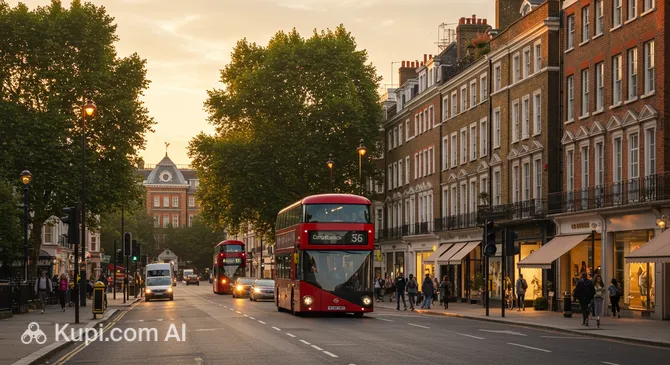
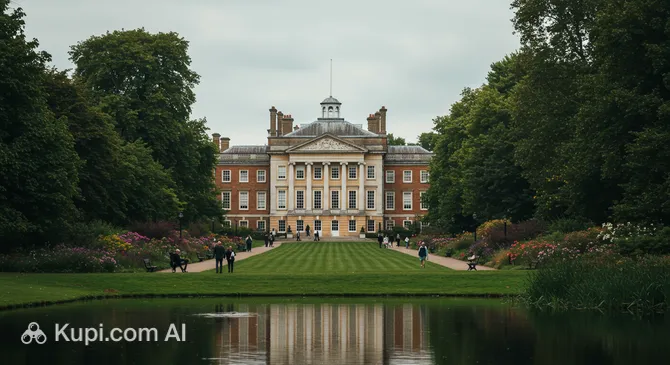
Kensington is one of London's most prestigious and elegant neighborhoods, located in the western part of the city center within the Royal Borough of Kensington and Chelsea. This area of the United Kingdom is famous for its exquisite architecture, well-maintained gardens, and rich cultural life. With a population of about 64,700, Kensington maintains the atmosphere of a respectable residential quarter rather than a bustling metropolis, despite its central location in Greater London.
Kensington. Illustration.
Source: Kupi.com AI
Kensington attracts tourists from all over the world thanks to its iconic landmarks. It is home to the famous Kensington Palace, the former residence of Princess Diana and the birthplace of Queen Victoria, surrounded by the magnificent Kensington Gardens, which blend seamlessly into Hyde Park. The neighborhood is also known as the "museum quarter" due to its proximity to world-renowned cultural institutions like the Victoria and Albert Museum, the Science Museum, and the Natural History Museum (though technically in South Kensington, they are often visited together with Kensington). One cannot fail to mention the Royal Albert Hall – the legendary concert hall that hosts a wide variety of events.
The climate in Kensington, as in all of London, is temperate maritime, with mild, damp winters and warm, but not hot, summers. This makes visiting the area comfortable at any time of year. Kensington is a place where history blends harmoniously with modernity, offering guests a unique experience of immersing themselves in the atmosphere of aristocratic London. If you are looking for a combination of culture, history, and peaceful walks through beautiful parks, Kensington is undoubtedly worth your attention.
The weather in Kensington, as in most of London, features a temperate maritime climate. Summers here are usually warm and pleasant, with average temperatures in July and August hovering around 18°C, and maximums reaching 20-22°C. Summer months see about 2 mm of precipitation, with rainy days numbering between 10 and 12. Winters in Kensington are cool and damp, with an average January temperature of about 4.8°C and approximately 11-13 rainy days. Thus, expect a warm summer with occasional rain and cool, wet winters. You can learn more about the climatic conditions on the Kensington Climate page.
Average monthly temperature
Average monthly precipitation
Interesting Facts
In addition to its world-famous landmarks, Kensington hides many less obvious but equally fascinating stories and facts. Here are just a few that might surprise even the most seasoned traveler:
Kensington Gardens were not always a separate park. Few know that the famous Kensington Gardens were originally the western part of Hyde Park. They were separated in 1728 by order of Queen Caroline, wife of King George II, to create a more secluded and formal space around Kensington Palace.
Flamingos on a rooftop in central London. One of Kensington's most amazing secrets for many years was the Kensington Roof Gardens, located on top of the former Derry & Toms department store. Established in the 1930s, these 1.5-acre gardens were once home to real flamingos, making them a truly unique urban oasis.
Billionaires' Row. Kensington Palace Gardens, adjacent to the palace of the same name, is informally known as "Billionaires' Row." It is one of the most expensive and exclusive residential streets in the world, home to embassies and the residences of some of the wealthiest people on the planet.
A hidden gem of Victorian art. Kensington is home to the Leighton House Museum – the former home and studio of the prominent Victorian artist Frederic, Lord Leighton. This house-museum, often overlooked by tourists, hides the incredibly beautiful Arab Hall, created from the artist's own designs and decorated with antique tiles from the Middle East – a true immersion into the world of art.
How to Get There
Kensington, being a prestigious district of London, is perfectly connected to the capital's main transport hubs. You can get here in several ways, the most popular being a flight to one of London's airports.
The main international hub serving London and, consequently, Kensington, is Heathrow Airport(IATA: LHR). It is one of the busiest airports in the world, located approximately 18.6 km west of Kensington. A taxi ride from Heathrow to Kensington will take about 45-60 minutes, depending on traffic. Also, from Heathrow, you can reach central London via the Heathrow Express (to Paddington Station) and the Piccadilly line of the London Underground, both of which offer easy access to Kensington.
Another convenient option is London City Airport(IATA: LCY). It is located closer to the city center, about 17.3 km east of Kensington. This airport is smaller than Heathrow but very convenient for business trips and certain European destinations. A taxi to Kensington will take approximately 45-55 minutes. You can also reach the area from the airport via the DLR (Docklands Light Railway) with a subsequent transfer to the Tube.
London Gatwick Airport(IATA: LGW), located about 38.4 km south of Kensington, is London's second-largest airport. From here, you can reach Kensington by taxi in about 75-90 minutes. A faster option is often the Gatwick Express train to Victoria Station, which is just a stone's throw from Kensington. Other airports, such as Stansted(IATA: STN) and London Luton(IATA: LTN), also serve London but are located further away from Kensington.
For convenience, here is a summary of the main airports serving Kensington:
Kensington is also easily accessible by rail, thanks to its proximity to several major London train stations.
The nearest major station is Paddington(IATA: QQP), located just 2.1 km north of Kensington. This is where the Heathrow Express arrives, making it a convenient transfer point. From Paddington, Kensington can be easily reached by taxi, bus, or Tube (District, Circle, and Bakerloo lines) in a matter of minutes.
Another important transport hub is Victoria Station(IATA: ZEP), situated about 3.4 km southeast of Kensington. It is one of London's busiest stations, serving the Gatwick Express as well as numerous suburban and intercity trains. From Victoria Station, you can quickly reach Kensington via the Tube (Victoria, District, and Circle lines) or surface transport.
Here is information about some railway stations convenient for traveling to Kensington:
Additionally, Kensington is excellently served by an extensive network of London public transport, including the famous red buses and the Underground (Tube), allowing for easy movement around the neighborhood and the entire city.
Main Attractions
Kensington offers its guests not only the charm of its own streets and parks but also convenient access to many of London's famous landmarks. Here are a few interesting places from our list that will make your trip to the capital of the UK even more fulfilling:
Start your exploration of the surroundings at Duke of York Square. Located in the prestigious Chelsea district, right next to Kensington, this elegant square offers much more than just shopping. Here you will find the Saatchi Gallery, numerous boutiques, restaurants, and cafes with terraces, as well as regular farmers' markets. It is the perfect place for a leisurely stroll, shopping, and enjoying the atmosphere of one of London's most fashionable corners.
Duke of York Square. Illustration.
Source: Kupi.com AI
Traveler photos:
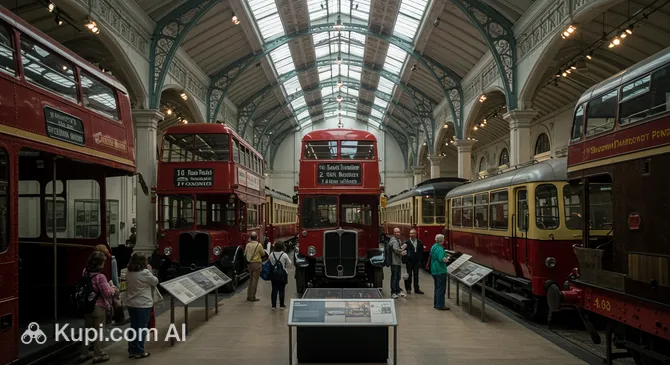
For those interested in the history and development of the British capital, the London Transport Museum is a must-visit. Located in Covent Garden, it tells the fascinating story of the city's transport system, from omnibuses to the famous London Underground. Interactive exhibits and a rich collection of vintage vehicles make it interesting for visitors of all ages.
London Transport Museum. Illustration.
Source: Kupi.com AI
Traveler photos:
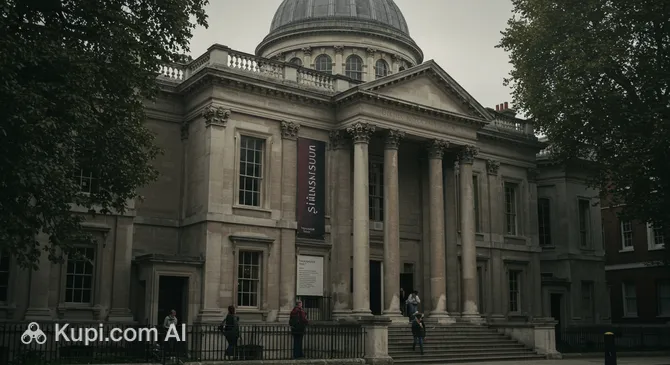
Immerse yourself in the unique atmosphere of Sir John Soane's Museum, located in Holborn. This house-museum of the famous 19th-century architect is a true time capsule, filled with his eclectic collection of art, antiques, and architectural models. Exploring this unusual place, where every corner holds its own story, will leave unforgettable impressions.
Sir John Soane's Museum. Illustration.
Source: Kupi.com AI
Traveler photos:
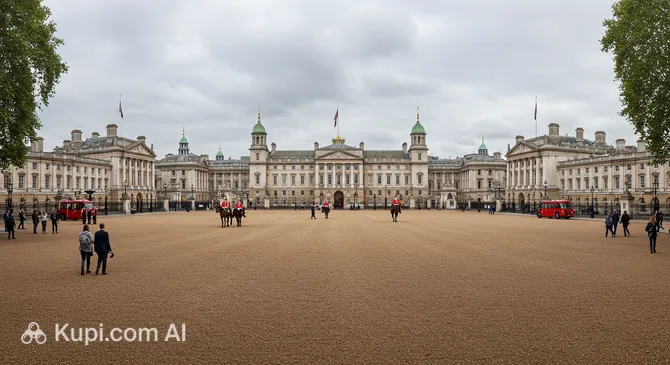
Near Whitehall is Horse Guards Parade – a historic parade ground where the spectacular Changing of the Queen's Life Guard ceremony takes place daily. It is one of the most photographed places in London, allowing you to touch British traditions and see the Royal Guards in their famous uniforms. The square is also used for major annual events, such as Trooping the Colour.
Horse Guards Parade. Illustration.
Source: Kupi.com AI
Traveler photos:
Local Cuisine
The gastronomic scene in Kensington is as refined and diverse as the neighborhood itself. Here you will find everything from traditional English pubs with centuries of history to Michelin-starred fine-dining restaurants and cozy cafes offering dishes from around the world. It is a true paradise for foodies, where everyone will find something to their taste and budget, although the emphasis here is often on quality and sophistication.
Be sure to try the classics of British cuisine. Start your day with a full English breakfast – a hearty set of eggs, bacon, sausages, beans, mushrooms, and toast. On Sundays, many pubs and restaurants offer a Sunday Roast – traditional roasted meat (beef, lamb, or chicken) with Yorkshire pudding, roast potatoes, vegetables, and thick gravy. And, of course, you cannot overlook fish and chips – battered fried fish with fries, which can be found in both simple takeaways and more elegant establishments.
A special place in the culinary culture of Kensington, and indeed the whole of Great Britain, is held by afternoon tea. This is not just a drink but a whole ritual, including the service of a multi-tiered stand with miniature sandwiches, freshly baked scones with jam and clotted cream, and various pastries. You can enjoy this tradition in many of the area's hotels and specialized tea rooms.
As for drinks, Kensington's pubs offer a wide selection of traditional ales, stouts, and lagers. In recent years, craft beer has also gained popularity, along with gin – an iconic British spirit represented by many varieties. Restaurants will offer an extensive wine list. Among non-alcoholic drinks, besides tea in all its variations, high-quality coffee, fresh juices, and lemonades are popular.
Locals and tourists in Kensington eat in a wide variety of places. Pubs are not just for a pint of beer but are also a popular choice for lunch or dinner in an informal setting. Restaurants offer a huge range of culinary directions: from modern British and European to Asian, Middle Eastern, and Mediterranean. Many cafes and bistros are perfect for a light snack or brunch. Check out, for example, the Duke of York Square area, where restaurants and cafes are concentrated and farmers' markets offering fresh local produce are even held.
Overall, the Kensington food scene is characterized by a high level of quality and diversity. It is a place where you can enjoy both time-tested British dishes and bold culinary experiments from world-renowned chefs. When planning your trip, be sure to set aside time for gastronomic discoveries – Kensington is capable of pleasantly surprising even the most discerning gourmet.
Travel Tips
Planning a trip to elegant Kensington? Wonderful! To ensure your journey through this prestigious district of the UK goes smoothly and leaves only pleasant impressions, we have prepared some practical tips. They will help you find your way and enjoy everything Kensington has to offer.
Clothing and Essentials:
The climate in London, including Kensington, is temperate and quite changeable. Layering is your best friend year-round. In summer, bring light clothing but always have a cardigan or light jacket for evenings, as well as an umbrella or raincoat. In winter, you will need a warm jacket, sweaters, a hat, and gloves. Comfortable shoes are critically important, as you will be walking a lot. Don't forget a universal adapter for British sockets (Type G). If you plan to visit churches, such as St Mary Abbots Church in Kensington, choose modest clothing that covers shoulders and knees out of respect for the venue.
Transport in Kensington and London:
Getting around Kensington and all of London is easiest via public transport. The London Underground (Tube), especially the District, Circle, and Piccadilly lines, serves the area well (stations: High Street Kensington, Gloucester Road, South Kensington). The famous red double-decker buses are not just transport but a way to see the city. Get an Oyster Card or use contactless payment with your bank card for travel. Taxis (black cabs and apps like Uber or Bolt) are available but can be expensive, especially during rush hour. Renting a car in central London is usually not recommended due to traffic, the Congestion Charge, and parking challenges.
Finances: Currency, Cards, and Tipping:
The local currency is the British Pound Sterling (£, GBP). You can exchange currency at banks, post offices, or exchange bureaus (compare rates). ATMs are widely available. Credit and debit cards (especially Visa and Mastercard) are accepted almost everywhere; contactless payment is very popular. Check your bank's terms for using cards abroad. An approximate daily budget in London (excluding accommodation) can range from £70-£100 and up, depending on your plans; Kensington is a fairly expensive area. Tipping: It is customary to leave 10-15% in restaurants if a service charge is not included. In pubs, you don't tip for drinks at the bar, but you can for table service. Taxi fares are usually rounded up or topped with a 10% tip.
Health and Safety:
Kensington is considered one of the safest areas in London. However, as in any large city, be mindful of your belongings, especially in crowded places and on public transport. Pharmacies (Boots, Superdrug, and independent ones) are easy to find; some stay open late. For medical assistance in emergencies, tourists should call 999 or 112. Having travel medical insurance is strongly recommended. Generally, walking around Kensington is safe, but avoid poorly lit parks alone late at night.
Communication: Language and Connectivity:
The official language is English. You will have no trouble communicating in English everywhere. A local SIM card for mobile data and calls can be bought at airports, phone shops, or supermarkets. Free Wi-Fi is available in many cafes, hotels, shopping centers, and even at some Tube stations. Apps like Citymapper or the official TfL Go can be very useful for planning public transport routes.
Local Etiquette and Socializing:
Britons, including Kensington residents, are generally polite and reserved. It is customary to say hello ("Hello", "Good morning/afternoon/evening"). Queuing is sacred; never try to jump the line. On Tube escalators, it is customary to stand on the right to let those in a hurry pass on the left. Try to keep noise levels down on public transport. Using "please" and "thank you" is very frequent and highly appreciated.
What to Avoid:
Try not to stop abruptly in the middle of the sidewalk, especially in busy areas, so as not to obstruct other pedestrians. Also, avoid loud phone conversations on public transport or in quiet public spaces like museums or galleries. And, of course, respect people's personal space.
Additional Tip for Kensington:
Be sure to explore the charming mews – quiet, cobbled streets that used to serve as stables for large houses. They are hidden away from the main streets and offer a unique old London atmosphere. Also, while in Kensington, you are within walking distance of the famous "museum quarter" (South Kensington) – many museums, such as the V&A or the Natural History Museum, often hold evening "Lates" events, which are worth attending for a special experience.
We hope these tips help you plan an unforgettable trip to Kensington. Enjoy its elegance, culture, and unique London atmosphere!
Entertainment & Nightlife
When the sun sets over the elegant streets of Kensington, the neighborhood does not fall into complete silence. Although Kensington is known more for its daytime glamour and cultural treasures than for a wild nightlife in the style of Soho or Shoreditch, it offers many sophisticated options for evening and night leisure. Here, the emphasis shifts to stylish bars, cozy historic pubs, and exclusive lounges, where you can enjoy quality drinks and pleasant conversation in a refined atmosphere.
The main centers of evening activity in Kensington are concentrated around High Street Kensington and the South Kensington area. Here you will find many cocktail bars offering signature drinks, wine bars with extensive lists, as well as traditional English pubs, many of which stay open late and offer not only drinks but also delicious dinners. The atmosphere in such establishments is usually relaxed yet elegant, attracting both locals and sophisticated tourists.
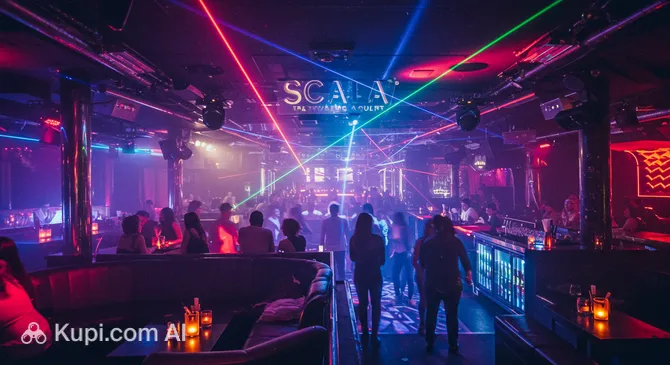
For those seeking more energetic entertainment and a club atmosphere, one of the available options is, for example, the Scala club. Although Kensington itself is more famous for bars and lounges, Scala offers a variety of musical programs, from live performances to DJ sets, attracting a young and active crowd. This place can be a good choice for those who want to dance. As for Kensington's many bars, it is best to explore their names and specialties on the spot, as the scene here is dynamic and constantly updated, offering everything from classic pubs to ultra-modern cocktail establishments.
Scala. Illustration.
Source: Kupi.com AI
Traveler photos:
The atmosphere of night venues in Kensington is generally refined and respectable. The crowd here is often older and more affluent than in some other parts of London. The dress code in many bars and restaurants is smart casual; more exclusive venues or clubs may require a dressier look. Most pubs close around 11:00 PM or midnight, while bars may stay open until 1:00 AM or 2:00 AM, especially on weekends. Clubs, naturally, remain open until the early morning.
When planning an evening out, keep in mind that the best bars start to fill up after 7:00-8:00 PM, and clubs usually get busy after 11:00 PM. Prices in Kensington reflect its prestigious status: a cocktail in a good bar can cost £12-£18 or more. You can get to and around Kensington at night via the Underground (running until about midnight, with Night Tube service on some lines on Fridays and Saturdays), night buses (an extensive network), or taxis (black cabs and services like Uber/Bolt).
Kensington is considered one of the safest areas in London, and night walks here are generally comfortable. Nevertheless, it is always wise to take standard precautions, especially if returning late. It is better to stick to well-lit main streets. To call a taxi, you can use apps or find a taxi rank. Staff in bars and restaurants are also always happy to help call a car.
By day, Kensington offers a rich cultural program: from world-famous museums (some, like the London Transport Museum or Sir John Soane's Museum, are easily accessible from the area) to walks in the magnificent Kensington Gardens or visits to London's famous theaters. Thus, your day in Kensington can be fulfilling from dawn until late at night, offering a harmonious blend of cultural discoveries and evening pleasures.
Parks & Museums
Kensington is not only synonymous with elegance and prestige but is also an area rich in green oases and cultural treasures. Visitors to this corner of Great Britain will find spacious royal parks for peaceful walks as well as world-famous museums housing priceless collections.
The heart of Kensington's green spaces is undoubtedly Kensington Gardens. This magnificent royal park, once part of Hyde Park, offers visitors graceful formal avenues, the Italian Gardens, the Albert Memorial, and, of course, Kensington Palace. The gardens blend seamlessly into the famous Hyde Park, providing a huge space for relaxation, sports, and enjoying nature right in the center of London. Here you can go boating on the Serpentine Lake or simply relax on the grass.
Slightly further from central Kensington, but well worth a look, is Gunnersbury Park. This historic park with its mansion offers visitors not only beautiful landscapes and ponds but also a museum telling the history of the area. It is a great place for family holidays and getting to know a lesser-known side of London.
Gunnersbury Park. Illustration.
Source: Kupi.com AI
Traveler photos:
Kensington is famous for its proximity to South Kensington's so-called "museum quarter," home to three titans of world culture: the Victoria and Albert Museum (V&A) with its incredible collection of decorative arts and design, the Natural History Museum with its famous dinosaur skeletons and interactive displays, and the Science Museum, which fascinates visitors of all ages with the world of scientific discovery and technology. Visiting these museums is a journey through history, art, and science.
A true gem is hidden within Kensington itself – the Leighton House Museum. This is the former home and studio of the prominent Victorian artist Frederic, Lord Leighton. Its main highlight is the stunning Arab Hall, decorated with tiles from the Middle East. The museum offers a unique opportunity to immerse yourself in the atmosphere of Victorian art and life.
Furthermore, Kensington provides easy access to interesting places like the London Transport Museum, which tells the story of the famous red buses and the Underground, or the unique Sir John Soane's Museum, a house-collection of an eccentric architect. These museums, though not located directly in Kensington, complement the rich cultural palette available to guests of the area.
When speaking of Kensington, one cannot fail to mention Kensington Palace – a working royal residence with a rich history. Part of the palace is open to the public, allowing a glimpse into the apartments of former monarchs and insights into the life of the Royal Family. The palace is surrounded by magnificent gardens, making it one of the area's main attractions.
For an authentic experience, take a stroll through the quiet mews – charming cobbled streets with former stables converted into picturesque houses. Also, look out for the small private galleries often found in Kensington, offering a chance to see the work of contemporary artists.
Getting Around
Getting around Kensington and the rest of London is incredibly convenient thanks to a well-developed public transport system. The backbone of the network consists of the famous London Underground (the "Tube") and an extensive network of bus routes. These two modes of transport will allow you to easily reach any point in the neighborhood and beyond.
The London Underground – one of the oldest and largest metro systems in the world – is the fastest way to travel long distances. Kensington is served by several important lines: District, Circle, and Piccadilly. Key stations in the area include High Street Kensington, Gloucester Road, and South Kensington. The latter is particularly convenient for visiting the museum quarter. The Tube runs from early morning until midnight, and on Fridays and Saturdays, the Night Tube operates on certain lines.
The iconic red double-decker buses are not only a symbol of London but also a very practical way to get around, especially for short trips and enjoying city views. The bus network is extremely dense, and many routes operate 24 hours a day. Stops are clearly marked, and many feature electronic boards with real-time schedules. Trams and trolleybuses are not common in central London, including Kensington.
London's fare payment system is very convenient. The most popular option is the Oyster Card, a rechargeable transport card that can be purchased at Tube stations, from machines, or at thousands of Oyster Ticket Stops. Even simpler is using contactless payment with a bank card or an NFC-enabled mobile phone – just tap your card or device on the yellow reader at the gate or when boarding a bus. Fares depend on the zones (Kensington is in zones 1 and 2) and the time of day. There are also daily and weekly passes (Travelcards) that can be beneficial for frequent travel. We recommend using apps like TfL Go (the official Transport for London app) or Citymapper for route planning and real-time transport tracking.
Practical tips for tourists: Single-trip tickets bought with cash are usually the most expensive. An Oyster Card or contactless payment is much more economical. When using the Tube and some rail lines, you must tap your card on the reader at both the start and end of your journey so the system can calculate the correct fare. On buses, you only need to tap in when boarding. Most Tube stations are equipped with machines for buying and topping up Oyster Cards. Public transport generally runs from 5:00-5:30 AM until midnight or 1:00 AM, with night buses and the Night Tube providing travel during later hours.
In addition to public transport, other options are available in Kensington and London. The famous black cabs can be hailed on the street or found at designated taxi ranks; they are reliable but quite expensive. A more budget-friendly option is booking a taxi through apps (e.g., Uber, Bolt, Free Now). For short rides and sightseeing, the Santander Cycles bike-sharing system (often called "Boris Bikes") is excellent – docking stations are located throughout the city, including Kensington. Renting a car for travel in central London is generally not recommended due to heavy traffic, the Congestion Charge, and parking difficulties.
Accommodation
Kensington, being one of London's most prestigious areas, offers a wide range of accommodation options to suit the needs of all types of travelers. Here you can find everything from world-class luxury hotels to more affordable but equally comfortable options.
The range of available housing in Kensington is quite broad. Tourists can choose from elegant five-star hotels, many of which are housed in historic buildings and offer impeccable service, boutique hotels with unique designs, comfortable mid-range hotels, as well as stylish apart-hotels and serviced apartments, which are perfect for long stays or family vacations. While budget hostels are less common in the heart of Kensington itself, they can be found in nearby areas with good transport links.
When choosing a place to stay in Kensington, it is worth looking at areas near major attractions and transport hubs. South Kensington is popular for its proximity to the famous "museum quarter" (V&A, Natural History Museum, Science Museum) and a Tube station serving several lines. The area around High Street Kensington is also very convenient, offering excellent shopping opportunities, restaurants, and easy access to Kensington Gardens and Kensington Palace. Quiet streets with elegant Georgian and Victorian houses, where small hotels and apartments are often located, also offer a charming and peaceful stay.
Regarding price range, Kensington is considered one of the more expensive areas of London, so mid-range, high-end, and luxury offers predominate here. However, with advance planning and searching, more affordable options can be found, especially if considering apartments or hotels slightly away from the busiest streets. It is recommended to book accommodation in Kensington well in advance, especially during peak tourist season (summer, Christmas holidays), to ensure the best choice and prices. The most common booking methods are popular online platforms and direct bookings via hotel websites.
Nearby Cities
For those who want to explore the surrounding areas, Kensington serves as an excellent starting point for day trips to several interesting nearby locations:
These nearby areas offer a variety of experiences. For example, a trip to Westminster, located just a few kilometers away, will allow you to plunge into the heart of British history and politics by visiting Westminster Abbey, the Houses of Parliament, and the famous Big Ben. Sports fans and those preferring a quieter atmosphere might enjoy Wimbledon, known not only for its world-famous tennis tournament but also for its charming "village" with cozy shops and cafes. And Hammersmith, with its lively Thames embankment and the famous Eventim Apollo concert hall, offers both scenic walks and cultural entertainment.
These nearby destinations provide a glimpse into the region's diverse culture and landscapes, complementing the experience of staying in Kensington itself.
Shopping & Souvenirs
Kensington offers a truly exquisite shopping experience capable of satisfying even the most demanding buyers. This district of the UK is famous not so much for specific local goods as for its concentration of luxury boutiques, famous designer stores, and premium department stores. Here you will find exclusive items, the latest collections from fashion houses, and goods of the highest quality, making Kensington one of London's premier destinations for luxury shopping.
The neighborhood's main shopping artery is High Street Kensington. It features both popular high-street brands and more expensive labels, as well as large department stores. The street is always lively and offers a wide selection of clothing, footwear, accessories, and home goods. For connoisseurs of absolute luxury, the nearby areas of Knightsbridge, with the world-famous Harrods department store, and Sloane Street, home to the boutiques of the world's leading fashion houses, are also worth mentioning.
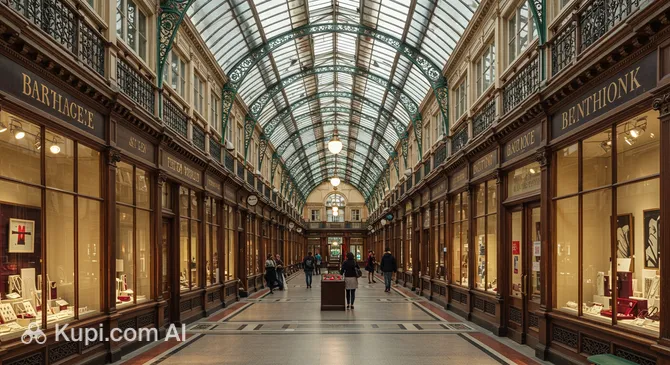
Although Kensington does not abound in giant modern shopping malls, it offers unique retail spaces. For example, the historic Burlington Arcade, located nearby, is a covered gallery with exclusive small shops offering jewelry, cashmere, and luxury items. It is a true gem for lovers of traditional shopping. Also popular is Duke of York Square on the border with Chelsea – an elegant open space with boutiques, restaurants, and the Saatchi Gallery, where farmers' markets are often held.
Burlington Arcade. Illustration.
Source: Kupi.com AI
Traveler photos:
Speaking of markets, one cannot fail to mention the famous Portobello Road Market in neighboring Notting Hill, which is easily accessible from Kensington. It is one of the world's most famous street markets, where you can find antiques, vintage clothing, unique souvenirs, as well as fresh produce and street food. It is especially busy and interesting on Saturdays. In Kensington itself and the surrounding areas, you can also find small farmers' markets offering fresh local products.
As souvenirs from Kensington, besides traditional London symbols, it is worth looking for high-quality British goods: classic English tea in beautiful packaging, biscuits and jams, cashmere products, and designer accessories. Books or art objects from the numerous museum shops, such as the Victoria and Albert Museum, would make excellent mementos. Lovers of unique items can find interesting antiques or vintage jewelry on Portobello Road.
Shops in Kensington are typically open from 10:00 AM to 6:00 PM or 7:00 PM, Monday to Saturday. Large department stores and some shops on High Street Kensington may stay open longer, until 8:00 PM or even 9:00 PM, especially during holiday periods. On Sundays, shopping hours are usually reduced, from about 12:00 PM to 6:00 PM. Credit and debit cards (Visa, Mastercard, American Express) are widely accepted everywhere, and contactless payment is particularly popular. Cash (Pounds Sterling) is also accepted, but cards are preferred for larger purchases.
Previously, tourists who were not residents of the UK could benefit from a VAT refund system on certain goods, known as Tax Free Shopping. However, it is important to note that the VAT refund system for tourists on goods purchased in the UK (including England, Scotland, and Wales) is currently not in operation. An exception may be Northern Ireland, where different rules may apply. As customs and tax regulations are subject to change, it is strongly recommended to check the most up-to-date information on official UK government websites before traveling and making purchases.