Support

Hyde Park

About

Hyde Park is one of the major Royal Parks located in the very center of London, the capital of Great Britain. It covers an impressive area of 140 hectares (1.4 km²) and is one of the most picturesque and popular spots in the city, attracting both locals and tourists.

This park is so significant that it is often considered the inspiration for the famous Champs-Élysées in Paris. To the west, it adjoins the equally charming Kensington Gardens, which house Kensington Palace. Hyde Park is a true green oasis where you can escape the hustle and bustle of the city and enjoy nature.
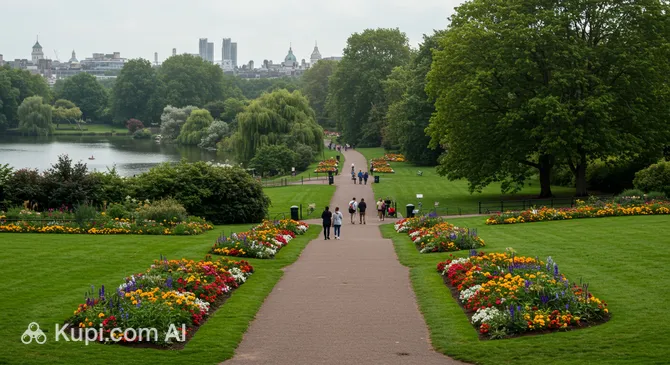
Hyde Park. Illustration.
Source: Kupi.com AI

Traveler photos:

Furthermore, Hyde Park traditionally serves as a venue for a wide variety of events, from political rallies and festivities to public celebrations and concerts. A visit here allows you not only to enjoy beautiful landscapes but also to feel the dynamic and free spirit of London.

Contacts

Since Hyde Park is a public space, there is no single contact phone number for general inquiries. The most accurate and up-to-date information regarding opening hours, available activities, and upcoming events can always be found on the official Royal Parks website. For navigation, it is convenient to use the park's postcode.

The park is easily accessible by public transport: the nearest Tube stations are Lancaster Gate, Marble Arch, Hyde Park Corner, and Knightsbridge.

How to contactContact
AddressLondon, UK
Phone number+44 300 061 2000
Websitewww.royalparks.org.uk

What to Do

In Hyde Park, you can find many interesting activities and places to visit. It is an ideal spot for both active recreation and quiet contemplation of nature in the heart of London. Here, every visitor, regardless of age or interest, will find something for themselves.

One of the park's main attractions is the picturesque Serpentine lake, where swimming is officially permitted during the summer season. Nearby is the renowned modern art gallery, the Serpentine Gallery, which hosts regular exhibitions. In summer, the park is particularly beautiful thanks to the many blooming plants that create a unique atmosphere.

No less famous is Speakers' Corner—a historical site that has become a true symbol of free speech. Here, anyone can speak publicly on any topic, provided they do not incite violence. Watching the passionate debates or even participating in them is a unique experience that offers a deeper understanding of the culture of public discussion.

Additionally, Hyde Park is a wonderful place for simple pleasures: leisurely walks along shaded paths, cycling, picnics with friends on well-kept lawns, or simply relaxing with a book on a bench. It is a genuine oasis of tranquility where you can take a break from the city's pace and enjoy nature.

Getting There

Getting to Hyde Park is easy, as it is located in the heart of London and is perfectly connected to the rest of the city by an extensive public transport network. Regardless of where you are staying, you will easily find a convenient route to this famous Royal Park.

The fastest and most convenient way is to use the London Underground (the Tube). If you are traveling on the Central Line, you can use Lancaster Gate or Marble Arch stations, located on the northern edge of the park. Alternatively, take the Piccadilly Line to Hyde Park Corner in the southeast or Knightsbridge in the south. All these stations are just a few minutes' walk from the park entrances.

For those who prefer surface transport and want to enjoy the city views along the way, there are numerous bus routes. The iconic red double-decker buses run to Hyde Park from almost every part of London. For example, routes 6, 7, 16, and 73 come from the north; 2, 36, and 137 from the south; 9, 10, 14, and 74 from the west; and 8, 15, 30, and 38 from the east. This variety allows you to reach the park without transfers from many areas of the capital.

Additionally, you can always reach the park by taxi or by using ridesharing apps. If you are in central London, a walk to Hyde Park can also be a pleasant part of your day, allowing you to better experience the city's architecture and atmosphere.

Nearest city: London

History & Facts

The history of Hyde Park dates back to the Middle Ages when these lands, known as the Manor of Hyde, belonged to Westminster Abbey. Everything changed in 1536 when King Henry VIII, during the Dissolution of the Monasteries, seized the territory for the Crown, turning it into his private hunting grounds. It was here that the monarch and his associates indulged in their favorite pastime—deer hunting. The park was opened to the general public nearly a century later, in 1637, under King Charles I, and quickly became a popular recreation spot for city dwellers.

Over time, Hyde Park evolved into more than just a place for walks; it became an important cultural and social hub for London. It served as a venue for national celebrations and significant events. For instance, in 1815, a grand parade was held here to celebrate the Duke of Wellington's victory over Napoleon. In 1851, the park hosted the first-ever World's Fair (the Great Exhibition), for which the famous, though no longer standing, Crystal Palace was built. These events have permanently etched Hyde Park into the history of not only Great Britain but the entire world.

One of the park's most unique traditions, which continues today, is its role as a center for free speech. Hyde Park became a popular venue for political speeches and public rallies. This tradition became so established that in 1872, the famous Speakers' Corner was officially established here, where anyone could freely express their ideas. Thus, today Hyde Park is not just a picturesque green space, but a place where rich history harmoniously blends with dynamic modern life, remaining the heart of public thought in London.

Time Needed

When planning a visit to Hyde Park, it is worth considering that its vast territory of 140 hectares offers many options for recreation, which determines the time needed. For a quick introductory walk along the main paths to get a general impression of the park, 1-2 hours may be enough. However, to truly feel the atmosphere of this place, it is better to set aside at least 2-3 hours or even half a day.

If your goal is not just to walk but to visit iconic landmarks, your stay will increase significantly. For example, a leisurely look at the Serpentine Lake, a visit to the Princess Diana Memorial Fountain, and the famous Speakers' Corner may require extra time. And if you decide to do something more active, such as renting a boat, visiting the Serpentine Gallery, or having a picnic, your visit can easily stretch to 4-5 hours or more.

For those who want the full experience, it is a great idea to combine a walk through Hyde Park with a visit to the adjacent Kensington Gardens. You should allow almost a full day for such a thorough exploration of the two Royal Parks. Ultimately, the time spent here depends entirely on your interests—from a short breather to an entire day dedicated to relaxing in nature in the heart of London.

Working Hours

Hyde Park is open to visitors year-round, making it accessible in any season. The park gates open early in the morning at 5:00 AM and close at midnight. This extended schedule allows guests to enjoy both the morning freshness and the evening atmosphere of one of London's most famous parks.

Entry to the main park area is free, and no prior booking is required for a regular walk. However, please note that some special events, concerts, or seasonal attractions, such as Winter Wonderland, may be ticketed and require advance purchase. If you plan to attend a specific event, it is recommended to check the official Royal Parks website for details to avoid any inconvenience.

5:00 – 12:00

Nearby

Visiting Hyde Park is a highlight in itself, but exploring its surroundings can make your trip to London even more rewarding. Located in the heart of the city, the park is surrounded by many cultural, historical, and entertainment sites that are easily accessible on foot or by public transport. World-famous museums, concert halls, and architectural masterpieces are in the immediate vicinity, perfectly complementing your walk.

Exploring nearby attractions will allow you to dive deeper into the atmosphere of the capital of Great Britain. Just steps away from the park's green paths, unique sites await you that will enrich your travel experience and leave unforgettable memories of your visit.

NameDistance
Royal Albert Hall1.2 km
Victoria and Albert Museum1.3 km
The Wallace Collection1.3 km
Natural History Museum1.5 km
Trafalgar Square2.5 km
The National Gallery2.5 km
Covent Garden2.9 km

Have you reached the end of the page?

So the route has been studied inside and out