Support

United States Botanic Garden

About

The United States Botanic Garden is a true living museum located in the heart of Washington, D.C.. It is not just a park, but one of the oldest institutions of its kind in the United States, introducing visitors to the amazing world of plants. Its primary mission is to demonstrate the incredible importance of flora to humans and the planet's ecosystems as a whole.
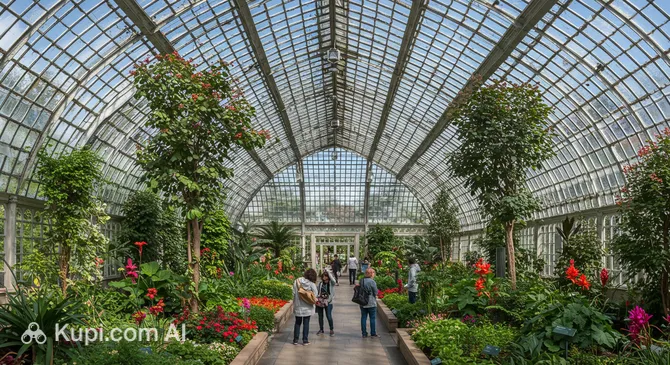
United States Botanic Garden. Illustration.
Source: Kupi.com AI

Traveler photos:

Established by Congress in 1820, the garden has a rich history and is the oldest continuously operating public botanic garden in the country. Located on the famous National Mall, in immediate proximity to the Capitol, it attracts over a million guests annually. Its unique collection and picturesque greenhouses make it a must-visit destination in the capital.

Inside the garden, a journey through different corners of the planet awaits you. The collection is divided into thematic zones representing plants from all over the world—from tropical jungles to arid deserts. A visit to the U.S. Botanic Garden is a wonderful opportunity not only to enjoy the beauty of nature but also to learn much about the plant world that surrounds us.

Contacts

To plan your visit to the United States Botanic Garden and get the most up-to-date information, such as opening hours, details of current exhibitions, and contact details, it is recommended to consult official sources. This will help you best organize your visit to this iconic landmark in Washington, D.C..

How to contactContact
Address100 Maryland Ave SW, Washington, DC 20001, USA
Phone number+1 202-225-8333
Websitewww.usbg.gov

What to Do

A visit to the United States Botanic Garden offers guests the opportunity to explore the plant world across several unique zones. The centerpiece is the Conservatory, a large glass structure where you can walk through tropical rainforests, see rare orchids, and study desert flora and medicinal plants. Nearby, outdoors, you'll find the National Garden, which showcases plants from various regions of the USA, and Bartholdi Park with its famous fountain, which is a perfect place to relax.

One of the main advantages of the garden is that admission is completely free, making it accessible to everyone. It is an excellent place for family leisure, where you can not only enjoy the beauty of nature but also expand your knowledge. Diverse educational programs, including workshops, tours, and lectures, are regularly held for visitors. The garden also hosts seasonal exhibitions, such as the popular Christmas show "Season's Greenings," featuring models of landmarks made from plant materials.

In addition to self-guided walks, guests can join free tours to dive deeper into the history of the collections and learn interesting facts about the species on display. In the garden, you can see both exotic plants from all over the world and flora native to the United States. Visiting the garden is a fascinating and educational adventure that allows you to travel through the different climate zones of the planet without leaving the center of Washington, D.C..

Getting There

The United States Botanic Garden is ideally located, making it very accessible for tourists. It is situated in the heart of Washington, D.C., on the famous National Mall, right next to the U.S. Capitol Building. This central location allows you to easily include the garden in your itinerary of the capital's main attractions.

The easiest and most recommended way to reach the Botanic Garden is by public transport. You can use the Metro: the nearest stations, Federal Center SW and Capitol South, are served by the Blue, Orange, and Silver lines. A walk from either of these stations to the garden entrance takes no more than 5–10 minutes. City buses also stop in the immediate vicinity of the garden.

If you prefer to travel by car, keep in mind that the Botanic Garden itself does not have its own parking lot. There are paid street parking spaces around the National Mall, but their number is limited and they are often occupied, especially during peak tourist seasons. Therefore, to avoid difficulties finding a spot, it is better to plan your trip in advance and consider using public transport.

Nearest city: Washington, D.C.

History & Facts

The history of the United States Botanic Garden is rooted in the very beginnings of American statehood, as the idea for its creation belonged to the Founding Fathers. The first practical steps were taken in 1816, when the Columbian Institute for the Promotion of Arts and Sciences proposed establishing a garden. The initiative was supported at the highest level, and in 1820, President James Monroe issued a decree allocating a plot of land in Washington, D.C. for a "national conservatory."

One of the main visionaries behind the project was Dr. Edward Cutbush, who saw the garden as something more than just a collection of plants. His goal was to create a national center where valuable species could be grown and distributed throughout the USA. Interestingly, the garden was originally allocated a swampy area near the Capitol, which had to be drained and adapted for botanical needs.

Although the garden first opened in 1820, it ceased operations after a period of time. Its revival occurred in 1842 thanks to the famous Charles Wilkes research expedition, which brought a massive collection of live plants from around the world to Washington. In 1850, the garden was officially re-established by an act of Congress and has operated continuously ever since, making it the oldest continuously operating public botanic garden in the country. It moved to its current location, southwest of the Capitol, in 1933, where it continues to delight visitors today.

Time Needed

When planning a visit to the United States Botanic Garden, you should expect to spend between 1.5 and 3 hours exploring it. This time is generally sufficient to leisurely get to know the main exhibits. During this period, you can fully tour the main Conservatory with its diverse climate zones, stroll through the outdoor National Garden, and relax by the fountain in Bartholdi Park.

If you are a botany enthusiast, love photographing plants, or are traveling with children, your visit time may easily increase. The garden offers various educational programs and workshops, participation in which will also require extra hours. For those who want to study the unique collections in more detail—including rare orchids and medicinal plants—or simply enjoy the peaceful atmosphere of this green oasis in the center of Washington, D.C., it makes sense to dedicate half a day to the visit.

Working Hours

The United States Botanic Garden is open to visitors year-round, making it convenient to visit at any time. The main parts of the garden, the Conservatory and the National Garden, are open daily from 10:00 AM to 5:00 PM. During the summer period, from April to mid-September, the National Garden extends its hours until 7:00 PM. The separately located Bartholdi Park is accessible for walks daily from dawn to dusk.

Admission to the Botanic Garden is free, and for regular visits, advanced reservations are generally not required. However, it is always useful to check the official website of the attraction before your visit. This will help you get the most up-to-date information on possible schedule changes, as well as learn about special exhibitions, tours, or temporary events that might require separate registration.

10:00 – 17:00

Nearby

The location of the United States Botanic Garden in the heart of Washington, D.C., makes it an ideal starting point for further exploration of the city. Situated on the famous National Mall, it is surrounded by many other iconic landmarks within easy walking distance. This allows you to combine a visit to the garden with a tour of the key cultural and historical sites of the U.S. capital.

Exploring the surrounding area after visiting the garden will significantly enrich your travel experience. Just steps away from this green oasis, world-famous museums, grand monuments, and government buildings await you. A walk through this district allows you to fully feel the atmosphere of the American capital and see its main treasures without spending much time in transit.

NameDistance
United States Capitol0.4 km
Smithsonian National Air and Space Museum0.6 km
National Gallery of Art0.7 km
National Museum of Natural History1.2 km
Ford's Theatre1.4 km
National Portrait Gallery1.4 km
Smithsonian National Museum of American History1.5 km

Have you reached the end of the page?

So the route has been studied inside and out