Support

Hanoi Old Quarter

About

Hanoi's Old Quarter, also known as the "36 Old Streets," is the heart and soul of Hanoi, the capital of Vietnam. Located north of the scenic Hoan Kiem Lake, which separates the French Quarter and the Old Town, this historical district is a labyrinth of narrow streets, each of which once specialized in a specific type of trade or craft. Immerse yourself in the unique atmosphere of the old city, where time seems to have slowed down, preserving the charm of the past and the authentic spirit of Vietnam.
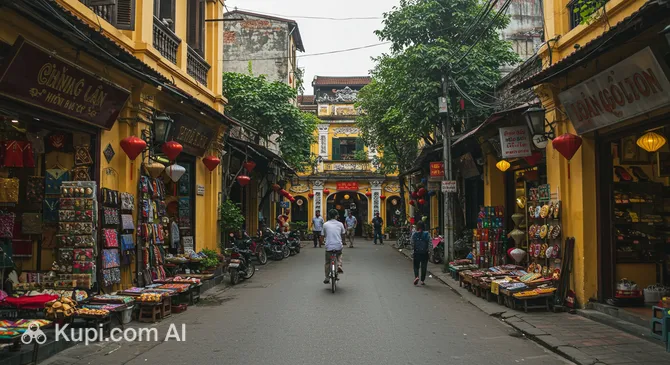
Hanoi Old Quarter. Illustration.
Source: Kupi.com AI

Traveler photos:

Walking through the Old Quarter, you will see colorful houses with traditional architecture, many of which have retained their original historical appearance. Today, these buildings are buzzing with life: they house numerous small shops, craft stalls, cozy cafes, and restaurants serving local cuisine, as well as boutique hotels. It is the perfect place to feel the authentic spirit of Hanoi, observe the daily lives of the locals, and find unique souvenirs.

One of the quarter's iconic landmarks is the Hanoi Old City Gate (Quan Chuong). It is the only one remaining of the sixteen gates that once surrounded the city wall in the 17th century. The gate is an impressive arch about three meters high with two smaller side arches for pedestrians, serving as a silent witness to the city's rich history and a significant historical monument.

Contacts

Since Hanoi's Old Quarter is an expansive historical district rather than a single establishment, it does not have a central contact point. For tourist information, maps, or itinerary assistance, it is recommended to visit Hanoi's official tourist information centers. Useful information can also be found at the reception desks of hotels located within the Old Quarter or from local travel agencies offering guided tours.

How to contactContact
AddressP. Hàng Ngang, Hàng Đào, Hoàn Kiếm, Hà Nội 100000, Vietnam

What to Do

A visit to Hanoi's Old Quarter is a true immersion into the vibrant atmosphere of Vietnam's capital. Stroll through its famous narrow streets, where a genuine Asian spirit is felt at every turn. Here you will find countless shops, artisan workshops where you can watch them at work, and many restaurants and street cafes offering authentic local dishes to experience the true taste of Hanoi.

The Old Quarter is not only the commercial heart of Hanoi but also a treasure trove of history. Be sure to include iconic sites in your itinerary, such as Quan Chuong (the Old City Gate) — the last remaining entrance to the ancient city. No less impressive is the Bach Ma Temple, considered the oldest religious building in the capital, with a history spanning over a thousand years. It is also recommended to take a walk to the picturesque Hoan Kiem Lake, whose shores are adorned with elegant structures that once belonged to the ruling elite of the 18th century.

For a deeper insight into local culture, stop by one of the many pagodas scattered throughout the quarter, each with its own unique history and atmosphere. A walk through the Old Quarter will also give you the chance to admire traditional Vietnamese architecture, as many buildings have preserved their historical look. And, of course, don't forget to purchase authentic souvenirs and handmade goods from local craftsmen as a memento of your journey through this incredible district of Hanoi.

Getting There

Hanoi's Old Quarter is conveniently located in the very heart of the city, near the famous Hoan Kiem Lake. Thanks to its central position, reaching this historical district is quite easy from any part of Hanoi.

If your journey to Hanoi begins with a flight to Noi Bai International Airport, you have several options to reach the Old Quarter. The most comfortable way is by taxi, which takes about 40–60 minutes depending on traffic. There are also shuttle buses from the airport, which are a more budget-friendly option. Many hotels, especially those situated within the Old Quarter itself, offer transfer services, which can be very convenient.

While traveling around Hanoi, you can also easily reach the Old Quarter. There are numerous taxis and the motorcycle taxis popular in Southeast Asia (known here as "xe om"). For a more traditional experience, you can use a cyclo (bicycle rickshaw). Additionally, there is a public transport network, though it might be less intuitive for tourists. Many visitors prefer to stay in hotels directly in the Old Quarter, allowing them to explore on foot and remain within walking distance of many attractions.

The location of the Old Quarter makes it an excellent starting point for exploring Hanoi. Many iconic sites, such as the Temple of Literature, are relatively close, making it easy to combine walks through the historical center with visits to other interesting landmarks in the capital of Vietnam.

Nearest city: Hanoi

History & Facts

The history of Hanoi's Old Quarter stretches back through the centuries, spanning more than eleven hundred years. Interestingly, this site was originally intended for the construction of a grand palace for Emperor Ly Thai To. However, fate decided otherwise, and instead of imperial chambers, a bustling trade and craft center grew here, becoming the heart of Hanoi.

The formation of the Old Quarter's streets began as early as the 13th century. Urban development gradually expanded onto reclaimed marshland. In those times, a unique tradition emerged: craftsmen belonging to the same guild settled together on one street. This custom is reflected in the names of many streets in the quarter, which even today remind us of the ancient crafts that once flourished here. For example, Hang Bac (Hàng Bạc) was known for its silversmiths, and Hang Dao (Hàng Đào) for its silk traders.

In the 17th century, during the Later Le dynasty, the Old Quarter was significantly fortified. The city was enclosed by a massive fortress wall, and the entrances were guarded by sixteen gates with watchtowers. Today, only one of these grand structures remains — the Quan Chuong gate, built in 1749. It serves as a silent witness to the rich history of this remarkable place.

A somber page in the quarter's history is linked to 1873, when French troops destroyed most of the city fortifications, including almost all the gates. However, the Dong Ha Gate, known today as Quan Chuong, was saved thanks to the incredible heroism of a local mandarin named Chuong. Together with his soldiers, he defended the gate until his final breath. In memory of his selflessness, grateful citizens later renamed the gate in his honor, preserving this symbol of resilience and devotion for future generations.

Time Needed

To get a general impression of Hanoi's Old Quarter, it is recommended to set aside at least half a day, which is about 4–5 hours. This will be enough time for a leisurely stroll through its famous narrow streets, to feel their unique atmosphere, and to visit the most iconic spots, such as the Old City Gate (Quan Chuong) and the Bach Ma Temple. You will also have time to browse a few local shops and grab a bite at one of the many cafes, enjoying authentic Vietnamese cuisine.

If you plan a deeper immersion into the life and history of this fascinating district of Hanoi, it is better to schedule a full day for its exploration. This will allow you to see not only the main attractions without rushing but also to visit some of the museums and temples located here, each holding its own piece of history. Additionally, extra time will give you the opportunity for a pleasant walk around the picturesque Hoan Kiem Lake, which is located in the immediate vicinity of the Old Quarter and is an integral part of its charm.

Working Hours

Hanoi's Old Quarter, being a city district, is open to visitors 24 hours a day, all year round. You can stroll through its streets at any time of day or night. However, it is important to note that most shops, restaurants, and other establishments in the quarter operate approximately from 9:00 AM to 9:00 or 10:00 PM. Some cafes and restaurants may stay open until late at night, creating a special evening atmosphere.

If you plan to visit specific attractions within the Old Quarter, such as temples or museums, keep in mind that they have their own operating schedules. Usually, they are open to visitors from 8:00 or 9:00 AM until 5:00 or 6:00 PM. Since opening hours can change, it is highly recommended to check current information on official websites or at local tourist information centers just before your visit. No special booking is required for walking through the quarter itself, though for some popular restaurants or specific tours, advance booking may be advisable.

Open 24 hours

Nearby

The charm of Hanoi's Old Quarter is undeniable, but exploring its immediate surroundings can further enrich your experience of Hanoi. Stepping beyond this historical labyrinth of streets, you will find that the capital of Vietnam is full of other interesting places, each revealing a different facet of the city's character.

Near the Old Quarter, there are many attractions, restaurants, and cultural sites that will allow you to dive deeper into the city's atmosphere and see it from different angles. Exploring these places will help you form a more complete picture of the life and history of Hanoi. Here are some of them:

NameDistance
Pizza 4P’s Bao Khanh0.3 km
MẸT Vietnamese Restaurant & Vegetarian Food0.4 km
Hidden Gem Cafe0.5 km
Hanoi Train Street0.8 km
Acoustic Hotel & Spa Bar0.9 km
A Plus Hanoi0.9 km
AIRA Night Club1 km

Have you reached the end of the page?

So the route has been studied inside and out